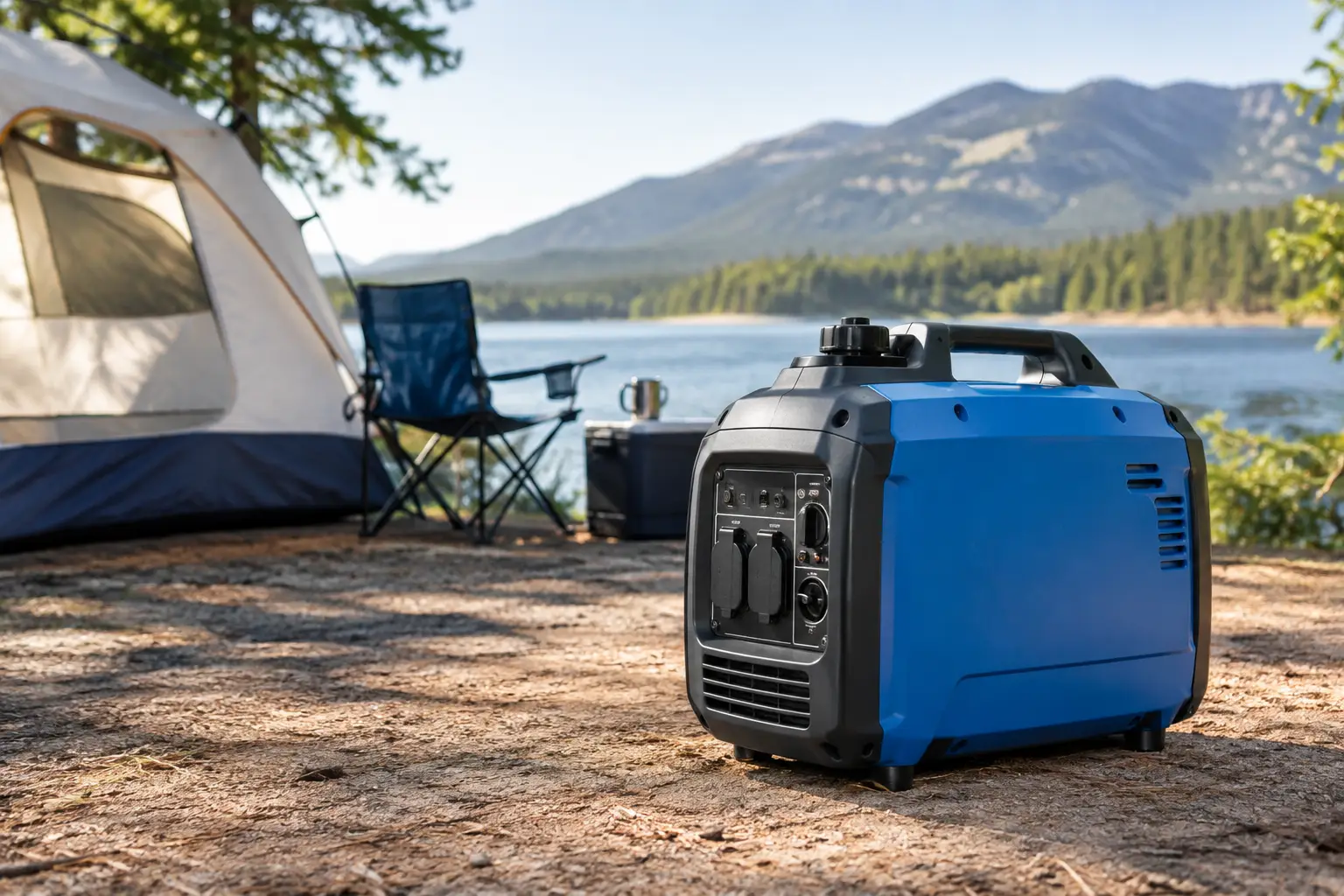
A quiet inverter generator running behind the garage can feel less threatening than a loud open-frame unit, but appearances can be misleading. Are inverter generators safer? In several meaningful ways, they can be: they generally deliver cleaner power, adjust engine speed to match demand on many models, and often include useful protective features. But they can still create carbon monoxide, start fires, overload cords, and backfeed utility lines if they are used carelessly.
For homeowners, RV owners, campers, and anyone preparing for outages, the better question is not simply whether an inverter generator is safe. It is whether its design reduces the risks that matter in your specific setup, and whether the rest of that setup — cords, inlet box, transfer equipment, and operating location — is properly rated and installed.
Are Inverter Generators Safer Than Conventional Generators?
An inverter generator produces AC power, converts it to DC, then electronically inverts it back into regulated AC power. That extra power-conditioning step is the main difference from a traditional portable generator, where engine speed is more directly tied to output frequency and voltage.
The result is usually a steadier electrical output with low total harmonic distortion. In plain terms, the cleaner power and typically lower total harmonic distortion (THD) of an inverter generator can be a better fit for sensitive electronics such as laptops, CPAP machines, modern TVs, phone chargers, and RV control boards. A conventional generator in good condition can also run these items safely, but an inverter model generally provides more margin when loads change suddenly.
Many inverter units also vary engine speed to match demand. When you are charging a few devices or running a refrigerator, the engine can slow down instead of constantly running at full speed. That can reduce noise and fuel consumption when the load is light, although the generator will still increase engine speed when demand rises. It does not eliminate fire or exhaust hazards, but it can make normal operation more controlled.
Still, “inverter” is not a safety certification. A poorly maintained inverter generator with a damaged fuel line is more dangerous than a well-maintained conventional model operated properly. Treat the inverter design as one potential safety advantage, not a substitute for proper installation and safe operating habits.
Where an Inverter Generator Can Reduce Risk
Cleaner power protects connected equipment
The most practical safety benefit is electrical stability. Refrigerators, battery chargers, routers, medical equipment, and the electronic controls on newer appliances can benefit from stable voltage and frequency. Some variable-speed equipment and sensitive electronic loads may be less tolerant of poor power quality than simple resistive loads. An inverter generator is typically better at holding output quality as appliances cycle on and off.
This does not mean every item needs an inverter generator. A basic resistive load, such as a work light or simple space heater, is far less sensitive. The benefit grows when your outage plan includes electronics, variable-speed motors, RV appliances, or a collection of chargers and communication gear.
Built-in protection is more common
Many portable inverter generators include low-oil shutdown, overload protection, circuit breakers, and fuel shutoff features. Some models may also include carbon monoxide (CO) sensors that automatically shut the generator down when the system detects potentially dangerous CO levels.
Features vary by model and production year, so verify the exact specifications rather than assuming every inverter generator includes CO shutoff or GFCI-protected outlets.
CO shutdown is helpful, but it has limits. Wind direction, placement, sensor condition, and the way exhaust moves around walls or vehicles all affect what the system detects. It is a backup layer, not permission to run a generator in a garage, carport, shed, basement, or near open windows.
Lower noise can improve decision-making
Noise is not just a comfort issue. A quieter generator makes it easier to hear an alarm, a person calling for help, unusual engine sounds, or a tripped pump cycling repeatedly. It can also make communication easier at a campsite or around the home during an extended outage, while reducing the disturbance caused by continuous generator operation.
That said, quiet operation can create complacency. People may be more tempted to place a low-noise inverter generator too close to the house because it is not disruptive. Exhaust safety distances do not shrink just because the engine is quieter.
The Hazards That Do Not Go Away
Carbon monoxide remains one of the most serious dangers associated with gasoline, propane, or dual-fuel combustion generators. Never operate one indoors or in partially enclosed spaces. Place it outdoors, well away from doors, windows, vents, and attached structures, with exhaust directed away from occupied areas. Working carbon monoxide alarms should be installed and maintained inside the home, particularly near sleeping areas, and should be tested regularly.
Fuel handling is another non-negotiable concern. Shut the generator off and let it cool before refueling. Store gasoline in an approved container away from ignition sources, and do not leave fuel spills on the tank or ground. Propane systems avoid gasoline storage issues, but cylinders, hoses, and fittings still need inspection for leaks and damage.
Then there is backfeeding. Plugging a generator into a wall outlet with a homemade double-male cord can energize utility lines, threaten lineworkers, and damage your generator or home wiring. An inverter generator does not make this practice safer. For home circuits, use a properly installed inlet box with an approved transfer switch or interlock installed according to local electrical requirements.
Your Cords, Plugs, and Inlet Box Matter as Much as the Generator
A safe generator setup is a system. The generator is only one part of it.
Choose an
outdoor-rated extension cord with a wire gauge sized for the load and cord length. A light-duty household cord may be fine for a small LED lamp but can overheat when asked to carry high current to a refrigerator, microwave, or jobsite tool. For many portable-generator applications, 12-gauge cords are used for moderate loads, while 10-gauge cords may be appropriate for higher-current loads or longer runs. The correct gauge depends on the cord’s length, amp rating, and the actual load being connected.
Do not use damaged cords, loose adapters, or outlets that feel hot. A quality generator adapter can solve a legitimate connector mismatch, but it cannot turn a 15-amp circuit into a 30-amp supply. Match the plug type, voltage, and amperage from end to end.
For a house connection,
the inlet box should match the generator’s output and the transfer equipment. A homeowner with a 30-amp 120/240-volt generator outlet may use an L14-30 inlet arrangement when the generator and transfer equipment are designed for that connection. A smaller 120-volt inverter generator may use a different connection strategy. The right choice depends on the generator and which circuits you intend to support. Well pumps deserve particular attention because their startup surge can exceed their normal running wattage.
Grounding, GFCI Protection, and the Floating-Neutral Question
Grounding causes understandable confusion because portable generators are not all configured the same way. Many inverter generators use a floating neutral, which can work correctly when powering appliances directly through the generator’s receptacles. Some transfer switch configurations, however, require a bonded neutral or a specific grounding arrangement.
Do not add a bonding plug just because you saw one recommended online. A bonding plug is appropriate only for certain generator and transfer-switch combinations. Using one where it is not needed can interfere with GFCI protection or create a fault path that was not intended. Check the generator manual and the instructions for your transfer equipment, or have a qualified electrician verify the setup.
If you are operating outdoors in wet conditions, GFCI-protected outlets add another layer of protection against shock. They are especially valuable around RVs, campsites, patios, and jobsites where cords can be exposed to moisture. Keep electrical connections off wet ground and protected from rain and standing water, while never enclosing the generator to shield it from the weather.
How to Use an Inverter Generator Safely
Safe use comes down to repeatable habits:
- Set the generator outdoors on a stable, level surface in a location with plenty of open space around it, keeping the exhaust pointed away from the home, people, doors, windows, and vents.
- Test CO alarms, inspect oil level and fuel connections, and look over cords before each use.
- Start the generator with major loads disconnected, then add appliances one at a time to avoid overload.
- Keep total running watts below the generator’s continuous rating and account for motor startup watts.
- Shut down and cool the unit before refueling, moving it, or performing any maintenance.
For long outages, give the generator regular checks rather than assuming it will run unattended for days. Watch for oil consumption, overloaded circuits, damaged cord insulation, and shifting wind that could send exhaust toward the house. If a refrigerator, sump pump, or well pump is central to your emergency plan, test that load before an actual outage.
Choosing the Safer Option for Your Needs
An inverter generator can be the safer fit for smaller to mid-sized loads, electronics-heavy backup plans, camping, RV travel, and situations where lower noise matters. Its power quality, variable engine speed, and common built-in protection features can reduce certain risks, but only when the generator is correctly sized, positioned, connected, and maintained.
A conventional generator may still be the better fit for high-output needs, especially when starting large motors, supporting multiple heavy appliances, or powering demanding jobsite equipment. In those situations, overall safety depends more on correct sizing, GFCI protection where required, a properly installed transfer switch, appropriate cords, and disciplined operating practices than on whether the generator uses inverter technology.
The generator that best protects your family and equipment is the one sized for your real loads, connected with compatible hardware, and operated outdoors in a location that keeps its exhaust away from the home, doors, windows, vents, and occupied areas. In other words, inverter technology can reduce some risks, but safe operation still comes down to the entire setup.
Frequently Asked Questions
Are inverter generators safer than regular generators?
Inverter generators can be safer in some respects because they typically provide cleaner power, adjust engine speed according to demand, and often include protective features. However, they still produce carbon monoxide, contain flammable fuel, and can cause electrical hazards if connected or operated incorrectly. The generator’s design is only one part of overall safety.
Are inverter generators safer for sensitive electronics?
They can be. Inverter generators typically produce cleaner, more stable power with lower total harmonic distortion than many conventional portable generators. This can make them a good choice for laptops, chargers, modern electronics, and some RV equipment. You should still check the generator’s specifications and the requirements of the equipment you plan to power.
Do inverter generators produce carbon monoxide?
Yes. An inverter generator uses an internal combustion engine and can produce deadly carbon monoxide regardless of how quiet or compact it is. Never operate one inside a home, garage, shed, basement, or other enclosed or partially enclosed space. Keep the unit outdoors and position its exhaust away from occupied areas.
Are inverter generators safer to use in an RV?
An inverter generator can be a practical choice for RV use because it is typically quieter and produces clean power for many electronic loads. However, RV generator safety still depends on proper placement, ventilation, electrical connections, grounding or bonding requirements, and carbon monoxide protection. Follow the generator and RV manufacturer’s instructions for the specific setup.
Can an inverter generator backfeed a house?
Yes. Inverter technology does not prevent backfeeding. Connecting a generator to a household wall outlet with an improper cord can energize utility lines and create a serious shock hazard. A home backup connection should use compatible transfer equipment or an approved interlock and generator inlet installed according to applicable electrical requirements.