As an Amazon Associate I earn from qualifying purchases.
A portable generator can keep the refrigerator cold, the sump pump running, and the lights on when the grid goes down. It can also fill a home, garage, or RV-adjacent space with deadly exhaust in minutes if it is used the wrong way. That is why generator carbon monoxide safety is not a side topic – it is the first thing to get right before fuel type, wattage, or runtime.
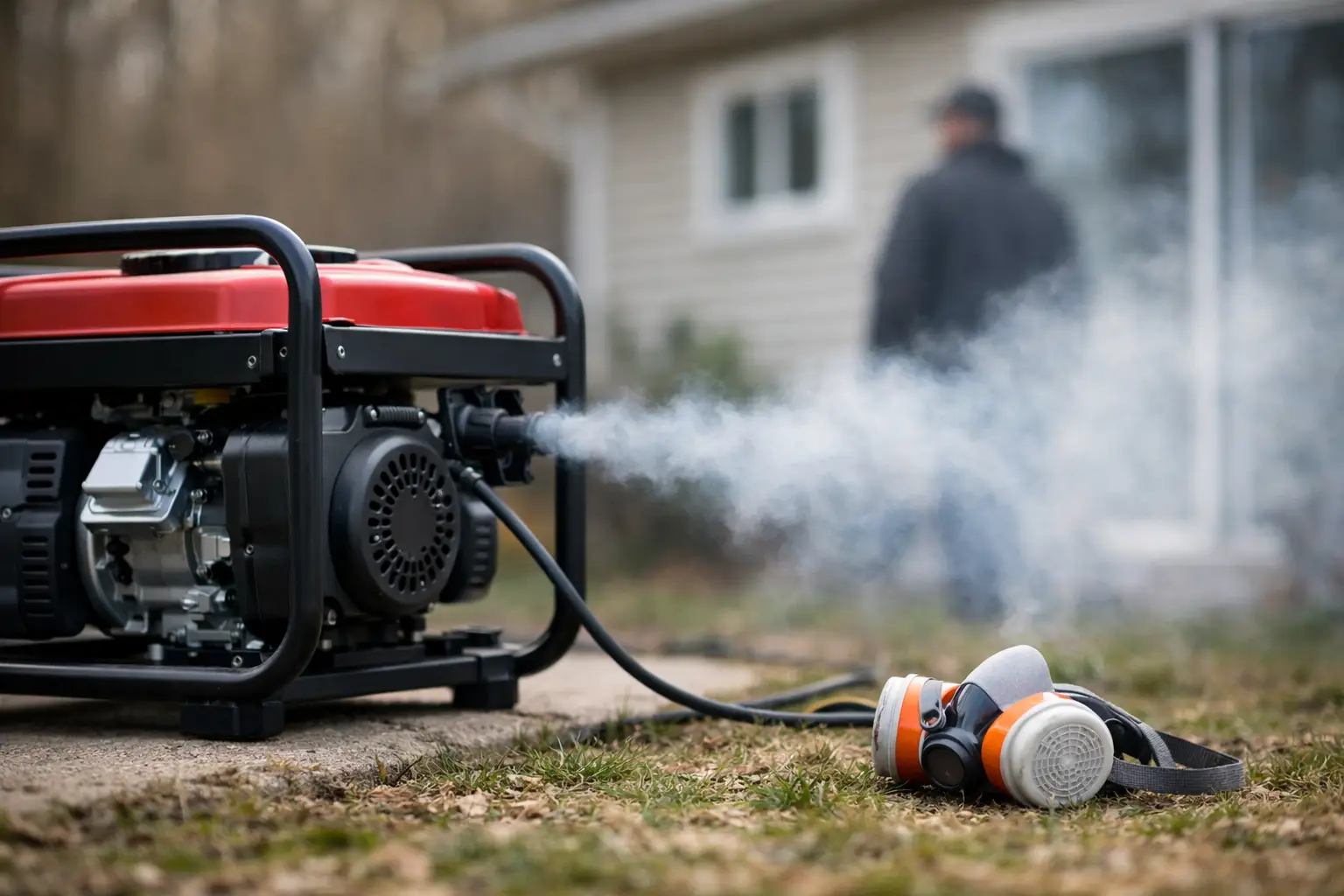
Carbon monoxide, or CO, is especially dangerous because you cannot see it or smell it. A generator may seem to be running “outside,” but if it is near an open door, under a carport, beside a basement window, or too close to a vent, exhaust can still move indoors. People often assume a little distance is enough. Sometimes it is not.
Why generator carbon monoxide safety matters so much
Every generator owner should understand one basic fact: the engine does not need to be inside the house to create a life-threatening problem inside the house. Exhaust gases can drift, pool, and enter through openings you would not think about during a storm or outage. Wind direction changes. Doors open and close. Fans and HVAC systems pull air in.
This is why the common bad setups are so risky. A generator in a garage with the door open is unsafe. A generator on a covered porch is unsafe. A generator under a deck can be unsafe. Even a unit placed just outside a back door may be too close, especially if the home has nearby windows, crawlspace vents, or soffit intake points.
For buyers comparing
inverter generators, open-frame portables, and larger backup units, this matters across the board. A quieter model is not a safer indoor-adjacent model. A premium brand with CO shutoff is not permission to place it closer to the home. Safety features help, but placement still does the real work.
Safe placement for generator carbon monoxide safety
The safest rule is simple: run portable generators outdoors only, far from the house, and never in any enclosed or partially enclosed area. Manufacturers often recommend keeping the unit at least 20 feet from the home, doors, windows, and vents. You should always check the manual for your specific model, because the required clearance can vary.
That 20-foot guideline is a strong starting point, but placement is not only about distance. Direction matters too. Point the exhaust away from the house and away from occupied areas. If weather forces you to think creatively, do not improvise with a garage, shed, tent, or covered breezeway. If rain is the issue, use a generator tent or rain cover specifically made for generator operation, with proper ventilation and clearance, rather than trying to shelter the machine in a dangerous spot.
For homeowners shopping for a portable unit, this is one reason wheel kits, longer heavy-duty extension cords, and
transfer switch planning matter. The right accessories make it easier to place the generator where it should be instead of where it happens to fit.
Places that are never safe
Some locations cause repeated confusion, so it is worth being direct. Do not run a generator in a garage, even with the door fully open. Do not run it in a basement, crawlspace, shed, trailer, van, or enclosed jobsite area. Do not place it on a porch, near sliding doors, under open windows, or directly outside an attached garage.
Carports and covered patios also create problems because exhaust can collect and drift. People often focus on whether there is “some airflow.” That is not a reliable standard. If the space traps exhaust or channels it toward the structure, it is a poor setup.
CO detectors are not optional backup
A good generator plan includes battery-powered or battery-backup carbon monoxide alarms inside the home. Put them outside sleeping areas and on each level of the home, following the detector manufacturer’s placement guidance. If your house already has hardwired alarms, make sure they are functional and not past their replacement date.
Detectors are not a substitute for correct generator placement, but they are a critical second layer of protection. During an outage, people may be tired, stressed, and focused on preserving food or managing heat and cold. That is exactly when preventable mistakes happen.
If you use a generator with an integrated CO shutoff system, that is a meaningful safety benefit and worth considering during a purchase. Many newer portable models include this feature. It can automatically shut the unit down if CO accumulates around the generator. Still, it has limits. It does not measure what is happening inside your home, and it should never be treated as permission to place the generator closer than recommended.
Choosing products that make safe use easier
Not every safety decision happens after purchase. Some happen when you choose the generator.
If you only need essentials during an outage, a smaller inverter generator may be easier to place correctly, easier to move farther from the home, and quieter for neighborhood use. If you need to power multiple circuits, a larger portable with electric start and a transfer switch setup may be the better fit, but you will need to plan cable runs and placement more carefully.
Whole-house standby generators are different. These are installed permanently outside with code-based clearances and professional setup. They still produce CO, but they are designed around fixed installation standards rather than improvised emergency placement. For some homeowners, especially those in storm-prone areas, that predictability is a major safety advantage.
Accessories matter here too. A transfer switch or interlock setup can help you avoid running cords through cracked doors or windows. A weather-rated
generator cover designed for operation can protect the unit without trapping exhaust. Extra-long, properly sized extension cords can give you safer placement flexibility. Cheap undersized cords, on the other hand, create their own hazards.
Common mistakes people make during outages
The most dangerous generator setups usually happen when someone is cold, in the dark, and trying to solve three problems at once. They drag the unit into the garage because it is raining. They move it closer to save cord length. They leave a basement door cracked and assume that counts as ventilation. They hear the generator running normally and take that as proof everything is fine.
Another common mistake is overlooking neighboring structures and shared spaces. In tighter residential areas, generator exhaust can affect not only your home but nearby homes, especially if units are placed between buildings or near property lines with limited airflow.
Camping and RV users make a similar error in a different setting. A generator may be outside, but if it is too close to an RV window, storage bay opening, or neighboring campsite, exhaust can still become a serious problem. Quiet operation helps with comfort, not with carbon monoxide risk.
What to do if a CO alarm sounds
Treat a carbon monoxide alarm as a real emergency. Move everyone to fresh air right away and call emergency services if anyone feels sick, dizzy, weak, confused, or short of breath. Shut the generator off only if you can do so quickly and safely. Do not ignore the alarm because the generator is outdoors. That assumption has cost people their lives.
If no one has symptoms and you are outside safely, keep people out of the home until it has been evaluated and ventilated appropriately. Then fix the setup problem before using the generator again. Usually that means moving it farther away, changing exhaust direction, checking nearby openings, and confirming your detectors are working.
A safer routine before the next outage
The best time to solve generator safety is before the weather turns. Test your CO alarms. Read the generator manual. Decide exactly where the unit will sit. Measure the distance from doors, windows, and vents. Make sure your extension cords reach that location without strain, and store fuel safely according to the manufacturer’s guidance.
If you are still shopping, look beyond surge wattage and runtime. Ask whether the generator’s size, wheel kit, noise level, outlet layout, and available accessories will help you use it safely in the real world. That question often leads to a better purchase than chasing maximum power alone.
Reliable backup power should make an emergency easier, not more dangerous. The safest generator is not just the one with good specs – it is the one you can place correctly, monitor properly, and use without cutting corners when conditions are bad.