As an Amazon Associate I earn from qualifying purchases.
A generator that starts easily in the driveway can still let you down when the power goes out, the well pump needs to run, or your RV is far from shore power. Knowing when to replace a generator spark plug can help prevent hard starts, rough running, and ignition problems when you need backup power most.
The spark plug ignites the air-fuel mixture in a gasoline engine and, on many dual-fuel generators, provides the spark needed for combustion when the engine runs on gasoline or propane. It is inexpensive, usually simple to access, and easy to overlook until the generator becomes difficult to start. A practical maintenance schedule, paired with a quick inspection before storm season or a long trip, prevents many avoidable no-start problems.
When to Replace a Generator Spark Plug
The owner’s manual should be your first reference because spark plug service intervals vary by engine, plug type, and manufacturer. Some generators call for regular inspection followed by replacement at a specified number of operating hours, while others use different schedules. Inverter generators and engines equipped with long-life plugs may also have different requirements, so avoid applying a generic replacement interval to your specific model. The owner’s manual should be your first reference because spark plug service intervals vary by engine, plug type, and manufacturer. Some generators call for regular inspection followed by replacement at a specified number of operating hours, while others use different schedules. Inverter generators and engines equipped with long-life plugs may also have different requirements, so avoid applying a generic replacement interval to your specific model.
For homeowners, hours alone can be misleading. A backup generator may run only a few hours each year, yet sit through hot summers, freezing winters, humidity, dust, and fuel vapor. In that situation, an annual inspection can be a practical precaution, but replacement should still follow the manufacturer’s time-based maintenance recommendations. The cost of a new plug is modest compared with discovering a starting issue during an outage.
Replace it sooner if the engine starts hard, surges, misfires, loses power under load, or
uses model fuel than normal. A plug can also be due for replacement after a generator has been stored with stale gasoline, run in extremely dusty conditions, or operated heavily during an extended outage. Jobsite generators and camping units often reach their service intervals faster than occasional home-backup models.
A plug should not be blamed for every rough-running generator. Old fuel, a dirty air filter, a clogged carburetor, low oil shutdown issues, a weak battery on electric-start models, and an overloaded generator can create similar symptoms. Still, the spark plug is one of the fastest and least expensive places to begin a basic tune-up. If replacing the plug does not solve the problem, stop replacing parts at random and troubleshoot the fuel, air, ignition, and load conditions instead.
How Many Hours Does a Generator Spark Plug Last?
There is no single hour limit that applies to every generator spark plug. Replacement intervals depend on the engine, plug type, operating conditions, and the manufacturer’s maintenance schedule. Some plugs may need replacement after a few hundred operating hours, while others can last longer. Check the owner’s manual rather than using a universal replacement interval.
Can a Bad Spark Plug Cause a Generator Not to Start?
Yes. A worn, fouled, damaged, or incorrectly gapped spark plug can contribute to hard starting or a no-start condition on a gasoline engine. However, a generator that will not start can also have stale fuel, a clogged carburetor, a restricted air filter, low oil, an ignition problem, or another fault. Check the spark plug as part of a broader troubleshooting process rather than assuming it is always the cause.
Signs Your Generator Spark Plug Needs Replacing
A normally operating spark plug may show light-colored deposits, but appearance alone is not enough to diagnose an engine problem. Look for obvious damage, heavy deposits, wet fuel, or an electrode that is worn beyond the manufacturer’s specifications.
- The engine cranks repeatedly before starting, especially after it has been sitting.
- The generator loses power, surges, or runs unevenly when you connect a normal load such as an RV air conditioner, refrigerator, or properly sized well pump.
- The plug has cracked porcelain, damaged threads, a burnt electrode, heavy black soot, wet fuel deposits, or excessive white blistering.
Black, dry soot often points to a rich fuel mixture, a restricted air filter, or extended low-load operation. A wet plug may mean flooding, a fuel delivery problem, or repeated failed starting attempts. White deposits or an overheated-looking electrode can indicate an overly lean condition, incorrect plug heat range, cooling trouble, or sustained heavy loading. Replacing the plug may restore ignition, but unusual deposits deserve attention because they can reveal a larger engine issue.
If the plug looks unusual, take a photo before cleaning or replacing it. The condition of the old plug can help a technician identify an underlying fuel or combustion problem.
| Symptom | Possible plug clue | What to check | | —————— | ————————— | ————————- | | Hard starting | Fouled or worn plug | Plug, fuel, air filter | | Rough running | Fouling or incorrect gap | Plug and gap | | Misfire under load | Weak ignition or plug issue | Plug, ignition, load | | Wet plug | Fuel flooding | Carburetor/fuel system | | Black deposits | Rich mixture or fouling | Air filter/fuel system | | Damaged electrode | Excessive wear/heat | Plug and engine condition |
How Usage Changes the Replacement Schedule
A portable generator used to keep a refrigerator, sump pump, and a few lights running during occasional outages has a very different life from an open-frame model powering saws on a dusty jobsite. The same is true for a quiet inverter generator used regularly at campsites or a dual-fuel unit kept beside an RV.
Dusty operating conditions can contribute to combustion and air-filter problems, which may increase the chance of spark-plug fouling. Frequent short runs can leave deposits because the engine may not fully warm up. Long periods at very light load can contribute to carbon buildup, while continuous operation near the generator’s maximum rated output raises engine temperature and wear.
Fuel choice matters as well. Propane typically burns cleaner than gasoline, but it does not eliminate the need for inspections. Stale gasoline or fuel left in the carburetor can contribute to hard starts, poor running, and spark-plug fouling. If your generator is part of a home backup plan, run it periodically with an appropriate load and follow the manual’s fuel-storage guidance. Do not wait for a storm forecast to find out whether it will start.
How Often Should You Check a Generator Spark Plug?
Check the spark plug according to the maintenance schedule in your generator’s owner’s manual, and inspect it sooner if the engine develops hard starting, misfires, surging, or other ignition-related symptoms. Annual inspection can be practical for a standby or emergency generator that runs infrequently, while high-use or dusty applications may require more frequent checks.
Choosing the Right Replacement Plug
Use the exact spark plug part number listed in the generator manual whenever possible. Generator engines may look similar, but thread diameter, reach, electrode design, heat range, and resistor configuration can differ. A plug that physically threads into the cylinder head is not automatically the correct plug. The correct replacement is determined by the engine manufacturer’s specification, not simply by the generator’s brand name.
The wrong reach can extend too far into the combustion chamber or sit too far out of the cylinder head, creating a fit or operating problem. The wrong heat range can promote fouling or overheating. A resistor plug may also be required to reduce electrical interference, which matters on inverter generators with sensitive electronics and when charging devices or operating RV equipment.
A replacement plug from the original equipment manufacturer or a reputable plug manufacturer can be a good choice when it matches the exact specification listed for your engine. Avoid buying by appearance alone. Cross-reference the generator model and engine model, particularly when shopping for common engines used across several generator brands.
Check the gap before installation, even if the plug is marketed as pre-gapped. Shipping and handling can alter it. Use a wire-style gap gauge and set the gap to the specification in the manual. Do not force an adjustment on a fine-wire precious-metal plug unless the plug manufacturer permits it.
How to Replace a Generator Spark Plug Safely
Start with a cool generator on a level surface outdoors. Turn the engine switch off and follow the owner’s manual for fuel-valve and battery-disconnection procedures. Never work around a hot muffler or attempt maintenance in an enclosed garage where gasoline vapor and carbon monoxide are concerns. Never work around a hot muffler or attempt maintenance in an enclosed garage where gasoline vapor and carbon monoxide are concerns.
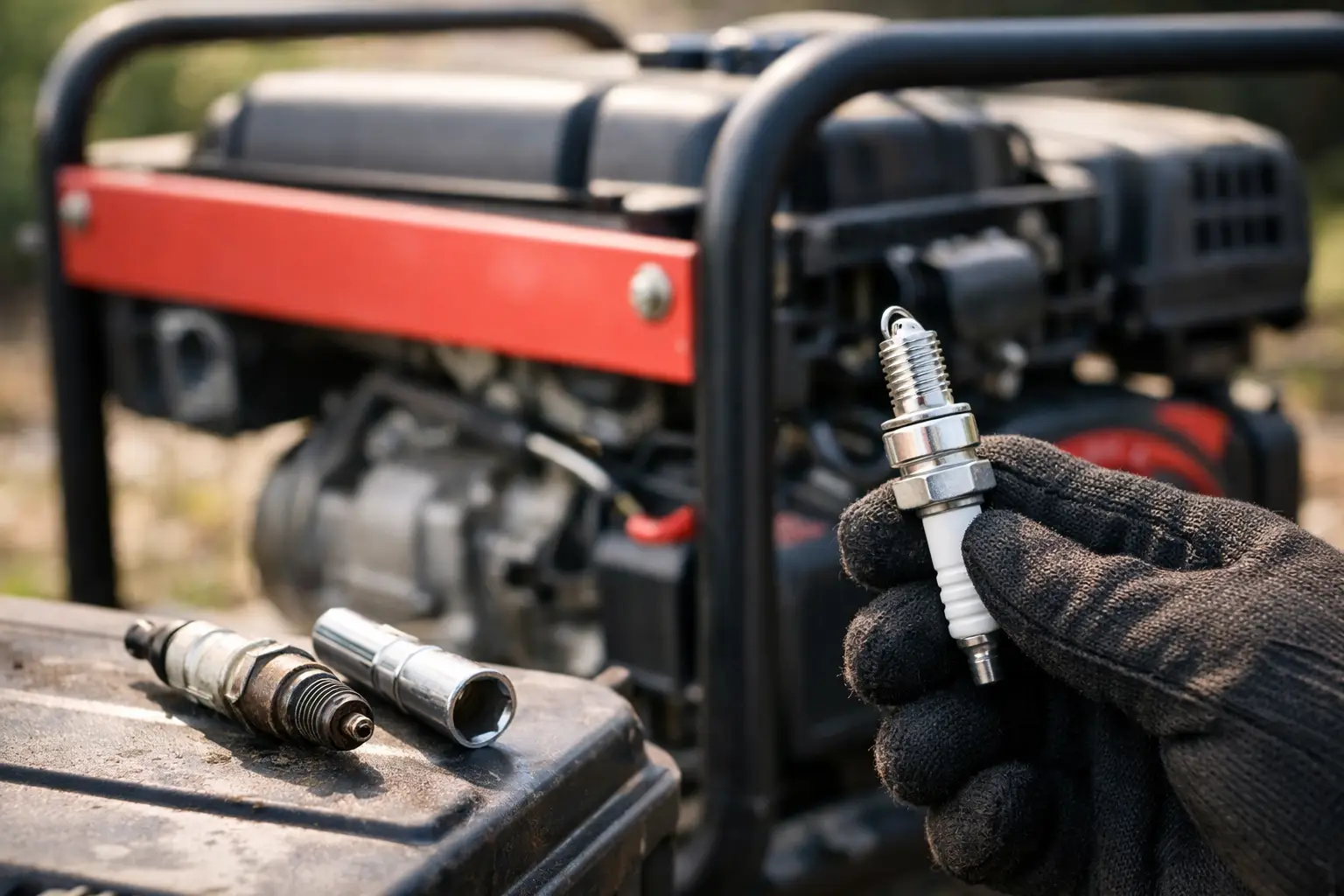
Pull the spark plug boot straight off the plug, gripping the boot rather than yanking the wire. Brush or blow debris away from the plug well before removal so grit does not fall into the cylinder. Use the correct spark plug socket and loosen the old plug carefully.
Thread the new plug in by hand first. This is the best way to avoid cross-threading the aluminum cylinder head. Once the plug is seated, tighten it to the torque specification in the manual. If you do not have a torque wrench, use the plug manufacturer’s seating guidance, but a small torque wrench is worthwhile for anyone maintaining generators, lawn equipment, and other small engines.
Reconnect the boot firmly, restore the battery connection if removed, and start the generator outdoors. Let it stabilize, then test it with a normal operating load that stays within the generator’s rated capacity. For a home backup setup, that may mean testing the generator through the correct
power inlet box and generator cord arrangement. For an RV or jobsite unit, it may mean powering a known appliance or tool within the generator’s running-watt capacity. The goal is to confirm steady operation, not to overload the machine as a test.
What Else Should You Check When Replacing a Generator Spark Plug?
A new spark plug works best as part of routine generator care. Check engine oil, inspect the air filter, look for loose fuel lines, and make sure the cooling vents are clear. If you use extension cords, adapters, inlet boxes, or
transfer equipment, inspect those too. A generator running well cannot compensate for a damaged cord, an undersized connection, or an unsafe backfeeding setup.
Keep a correctly matched spare spark plug, spark plug socket, gap gauge, and the generator manual with your emergency supplies. This is especially helpful for homeowners with a sump pump or well pump, RV owners traveling far from service centers, and contractors relying on portable power at a jobsite.
Replacing a worn spark plug is a small part of generator maintenance, but it can help prevent an avoidable starting problem when backup power matters most. Check the plug as part of your regular maintenance routine, follow the manufacturer’s service interval, and address other engine or fuel problems instead of assuming every starting issue is caused by the spark plug.
Frequently Asked Questions
How often should you replace a generator spark plug?
Generator spark plugs should be inspected and replaced according to the maintenance schedule for the specific engine. There is no universal replacement interval because plug type, engine design, operating conditions, and manufacturer recommendations vary. Replace the plug sooner if it is damaged, heavily fouled, excessively worn, or associated with hard starting or other ignition problems.
How many hours does a generator spark plug last?
There is no universal lifespan for a generator spark plug. Some plugs require replacement after a specified number of operating hours, while others may last longer. The correct interval depends on the engine, plug type, operating conditions, and manufacturer recommendations. Check the owner’s manual and inspect the plug sooner if the engine develops starting, misfire, or performance problems.
Can a bad spark plug cause a generator not to start?
Yes, a bad spark plug can prevent a generator from starting. A worn, fouled, cracked, or incorrectly gapped spark plug may produce a weak spark or no spark at all. Without a strong spark, the engine cannot properly ignite the air-fuel mixture. If your generator cranks but will not start, inspecting the spark plug is an important troubleshooting step.
What does a bad generator spark plug look like?
A bad generator spark plug may have heavy black carbon deposits, oil residue, a damaged electrode, excessive wear, or a cracked ceramic insulator. A plug that is unusually wet with fuel can also indicate an ignition or fuel-related problem. Light-colored deposits can be consistent with normal operation, but severe fouling, physical damage, or unusual deposits warrant further inspection and may require replacement.
What happens if you don’t replace a generator spark plug?
Failing to replace a worn generator spark plug can cause hard starting, rough idling, engine misfires, reduced power, poor fuel economy, and unreliable operation. As the electrode wears, the spark may become weaker or inconsistent. In severe cases, the generator may stop running or fail to start when you need backup power. Regular inspection and replacement help maintain dependable engine performance.
Can a generator run with a bad spark plug?
A generator may run temporarily with a partially worn or fouled spark plug, but performance can become unreliable. The engine may misfire, run roughly, lose power, consume more fuel, or shut down unexpectedly. If the spark plug is severely damaged or cannot produce a proper spark, the generator may not start at all. Replacing a faulty plug is usually the best solution.
What spark plug does my generator need?
The correct spark plug depends on the generator’s engine, model, and manufacturer specifications. Spark plugs are not universally interchangeable because they can differ in thread size, reach, heat range, electrode design, and gap requirements. Check the owner’s manual or the engine manufacturer’s specifications for the exact replacement plug. Never choose a plug based only on appearance or physical fit.
How do you change a spark plug on a portable generator?
Turn off the generator, allow the engine to cool, and remove the spark plug boot. Remove the spark plug using the correct socket and inspect the replacement plug for the specified gap. Install the new plug by hand first to avoid cross-threading, then tighten it to the manufacturer’s recommended torque. Reconnect the spark plug wire and start the generator to verify proper operation.