As an Amazon Associate I earn from qualifying purchases.
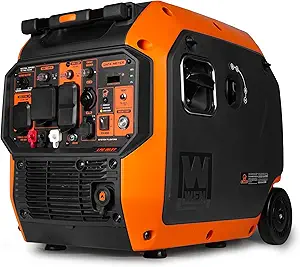
Inverter generators have become a practical choice for camping, RV travel, tailgating, emergency preparedness, and backup power because they combine portable designs with stable electrical output and generally quieter operation than traditional open-frame generators.
The challenge is finding a model that gives you enough running watts, reasonable fuel consumption, useful runtime, and the safety features you actually need without paying for more generator than your situation requires.
For 2026, the budget inverter generator market includes compact models for electronics and camping, mid-size units for RV use and emergency essentials, and larger inverter generators capable of supplying substantial home loads. Features such as CO shutoff systems, Eco Mode, parallel capability, dual-fuel operation, RV-ready outlets, and electric or remote starting can make a meaningful difference depending on how you plan to use the generator.
In this guide, I compare several affordable inverter generator options available to U.S. buyers, focusing on usable power, portability, noise, fuel flexibility, safety, and the type of equipment each model can realistically handle.
Best Affordable Inverter Generators for 2026
| Model | Running / Peak Watts | Fuel | Weight | Best For |
|---|---|---|---|---|
| WEN DF680iX | 5,100 / 6,800W gas | Gas / Propane | — | RVs and larger backup loads |
| Champion 4000W 100809 | 3,000 / 4,000W | Gas | 48.8 lb | RVs and camping |
| ERAYAK 2400P | 1,800 / 2,400W | Gas | 42–43 lb | Camping and small essentials |
| WEN 56360i / 56360iX | 2,900 / 3,600W | Gas | ~46 lb | RV and emergency essentials |
| Westinghouse iGen11000DFc | 9,000 / 11,000W gas | Gas / Propane | 187.4 lb | Larger home backup |
WEN Quiet 6800-Watt Dual Fuel Inverter Generator
The WEN DF680iX is the largest mid-size option in this group and makes more sense for buyers who need substantially more output than a compact camping generator can provide. Its 224cc engine produces up to 6,800 starting watts and 5,100 running watts on gasoline, or 6,000 starting watts and 4,500 running watts on propane.
It supports both fuels, includes WEN’s Watchdog carbon monoxide shutdown system, and has a 120/240V L14-30R outlet along with RV and household connections. The fuel-shutoff feature is also useful for storage because it helps run fuel out of the carburetor before shutdown.
This is not the generator to choose simply because it has the highest wattage. Its size makes more sense for RV use, larger backup loads, or situations where a 2,000- to 4,000-watt generator would leave too little headroom.
Champion 4000-Watt RV Ready Inverter Generator
The Champion 4000-Watt Inverter Generator is aimed at RV owners, campers, and anyone who wants more output without moving up to a much heavier generator. It produces 4,000 starting watts and 3,000 running watts on gasoline and weighs about 48.8 pounds.
Champion lists the generator at 64 dBA from 23 feet and equips it with a 120V 30A TT-30R RV outlet, household outlets, CO Shield, and parallel capability.
One important limitation is that this model is gasoline-powered rather than dual fuel. Its combination of weight, RV-ready connectivity, and 3,000 running watts makes it more appropriate for camping and RV essentials than whole-home backup.
ERAYAK 2400W Compact Inverter Generator
The ERAYAK 2400P is the lightweight option in this group, with 1,800 running watts and 2,400 peak watts from a gasoline engine. At roughly 42 to 43 pounds, it is easier to move than the larger units here, making it better suited to camping, tailgating, charging devices, lights, routers, laptops, and other smaller loads.
The generator also includes an Eco Mode that adjusts engine speed according to demand, helping reduce unnecessary fuel consumption and engine noise when the electrical load is light.
The trade-off is output. This model is intended for small essentials rather than whole-home backup or large RV air conditioners. That makes the ERAYAK 2400P more useful as a compact portable generator than as a substitute for a high-output emergency generator.
WEN 3600-Watt Lightweight Inverter Generator
The WEN 56360i is a useful middle-ground option for buyers who want more continuous output than a compact 2,000- to 2,400-watt inverter can provide without moving into the size of a large home-backup generator.
It produces 3,600 surge watts and 2,900 rated watts from a 149cc engine and includes a 120V 30A RV receptacle, household outlets, USB ports, Eco Mode, and a fuel-shutoff function.
If the Amazon listing linked above is specifically the WEN 56360iX, identify it as the 56360iX in the article because that version includes WEN’s CO Watchdog system. Check the exact model number before publishing so the safety information matches the product being promoted.
Westinghouse 11000W Dual Fuel Portable Inverter Generator
The Westinghouse iGen11000DFc is in a completely different class from the compact generators above. It produces 11,000 peak and 9,000 running watts on gasoline, or 10,000 peak and 8,100 running watts on propane.
It uses a 457cc engine and has a 7.92-gallon fuel tank that can provide up to 17 hours of runtime at 25% load on gasoline. The generator also includes electric start, remote-start capability, a CO sensor with automatic shutdown, a 120/240V L14-30R outlet, and a 14-50R outlet.
The downside is portability. At about 187 pounds dry, this is not a grab-and-go camping generator. It makes much more sense for homeowners who want a portable inverter generator with enough output for several major household loads.
Why Choose an Inverter Generator in 2026?
Inverter generators are particularly useful when portability, lower operating noise, fuel efficiency at lighter loads, and stable electrical output matter. Instead of running the engine at one fixed speed all the time, many inverter generators use an Eco Mode that adjusts engine speed according to the electrical load.
Depending on the model, the main advantages can include:
- Stable electrical output: Inverter technology is designed to provide clean power for many modern electronic devices.
- Better fuel efficiency at lighter loads: Eco Mode can reduce engine speed when demand is low.
- Lower operating noise: Enclosed inverter designs are generally quieter than many open-frame conventional generators.
- Portable designs: Smaller models can be practical for camping, tailgating, and RV use.
- Modern safety features: Some current models include automatic CO shutoff systems.
- Parallel capability: Certain generators can be connected to another compatible unit to increase available output.
Top Considerations Before Buying
1. Running Watts vs. Starting Watts
Start by adding the running watts of the appliances you expect to use at the same time. Then account for equipment with motors or compressors, such as refrigerators, freezers, sump pumps, and air conditioners, because these can require additional starting power.
A generator rated at 2,400 peak watts does not provide 2,400 watts continuously. For example, the ERAYAK 2400P is rated at 1,800 running watts and 2,400 peak watts.
Before buying, make a simple list of the appliances you actually need during an outage and check their nameplates or manuals for both running and starting requirements.
2. Fuel Type
Gasoline remains common because it is widely available and many portable generators are designed around it. Dual-fuel generators add propane as another option, which can be useful when you want to keep multiple fuel sources available.
The important point is that propane and gasoline usually do not provide identical output. For example, the WEN DF680iX is rated at 5,100 running watts on gasoline versus 4,500 watts on propane, while the Westinghouse iGen11000DFc is rated at 9,000 running watts on gasoline and 8,100 on propane.
3. Portability
Weight becomes important if you will load the generator into an SUV, move it around a campsite, or store it between uses. The Champion 4000W weighs about 48.8 pounds, while the ERAYAK 2400P is around 42 to 43 pounds.
Larger generators are a different proposition. The Westinghouse iGen11000DFc weighs about 187 pounds, so its wheels and handles are important for positioning even though it is not realistically a carry-by-hand generator.
4. Noise Level
Do not assume that every inverter generator is equally quiet. Compare the manufacturer’s dBA rating and, when available, the distance at which that rating was measured.
For example, Champion lists the 4000W model at 64 dBA at 23 feet, while Westinghouse lists the iGen11000DFc at 64 dBA. Smaller generators can be quieter under light loads, but noise depends on engine speed, electrical load, distance, and the measurement method.
5. Carbon Monoxide and Electrical Safety
A built-in CO shutoff is an important feature, but it should not replace safe generator placement. Always check the exact model number because CO protection can vary between closely related generator versions.
The CPSC and CDC recommend operating portable generators outdoors and at least 20 feet from homes, windows, doors, and vents, with the exhaust directed away from the building. A portable generator should never be operated inside a home, garage, basement, shed, or other enclosed space.
A transfer switch or properly installed interlock may be required when connecting a portable generator to household circuits. That work should follow the generator manufacturer’s instructions and applicable electrical requirements.
What Can a Budget Inverter Generator Actually Power?
The easiest way to choose an inverter generator is to start with the equipment you actually need rather than buying based only on the peak-watt number.
A compact 2,000- to 2,400-watt inverter can be useful for phones, laptops, lights, routers, small appliances, and other essential electronics. Moving into the 3,000-watt running range gives you more flexibility for RV equipment and combinations of household essentials.
Larger 5,000- to 9,000-watt running generators can support substantially heavier loads, but their size, fuel consumption, and price increase as well.
Keep in mind that refrigerators, freezers, pumps, and air conditioners can have higher starting requirements than their normal running wattage. Add the starting demand of motor-driven appliances before deciding how much generator capacity you need.
For that reason, a generator with 2,400 peak watts should not automatically be described as a “2,400-watt generator” for continuous use. The ERAYAK 2400P, for example, is rated at 1,800 running watts and 2,400 peak watts.
Frequently Asked Questions
What is the best budget inverter generator?
The right budget inverter generator depends on the amount of continuous power you need. Smaller models are easier to carry and can cost less, while 3,000 running watts or more gives you considerably more flexibility for RVs and emergency backup.
Are inverter generators worth it?
They can be a good choice when you value quieter operation, portability, fuel efficiency at lighter loads, and stable electrical output. They are especially useful for camping, RV travel, electronics, and portable emergency power.
Can an inverter generator power a house?
Some larger inverter generators can supply multiple household circuits during an outage, but they do not automatically power an entire home. The generator must have sufficient capacity, and any connection to household wiring should use an appropriate transfer switch or interlock installed according to applicable requirements.
How far should an inverter generator be from a house?
The CDC and CPSC recommend operating portable generators outdoors at least 20 feet from the home, windows, doors, and vents, with exhaust directed away from the building.
Are inverter generators safe for laptops and other electronics?
Inverter generators are designed to provide stable electrical output and are commonly used for sensitive electronics. However, you should still follow the generator’s specifications and the requirements of the devices you connect to it.
Final Thoughts
The best budget inverter generator is not necessarily the one with the highest peak-watt number. The better match depends on how much power you actually need, how often you will move the generator, whether you want gasoline or dual-fuel capability, and which safety and convenience features matter to you.
A compact model such as the ERAYAK 2400P makes more sense for camping and smaller essentials, while the Champion 4000W and WEN 3600W provide more output for RV and emergency-use scenarios. The WEN DF680iX moves into a higher-capacity category, while the Westinghouse iGen11000DFc is intended for buyers who need substantially more portable power for larger backup loads.
Before buying, compare running watts, starting watts, fuel type, noise, weight, runtime, outlet configuration, CO protection, and warranty coverage. Most importantly, choose a generator based on the loads you actually need to operate rather than simply choosing the biggest number on the product box.
Regardless of which model you choose, follow the manufacturer’s operating instructions and current generator-safety guidance. Portable generators must be operated outdoors and at least 20 feet from the home, with exhaust directed away from windows, doors, and vents.