As an Amazon Associate I earn from qualifying purchases.
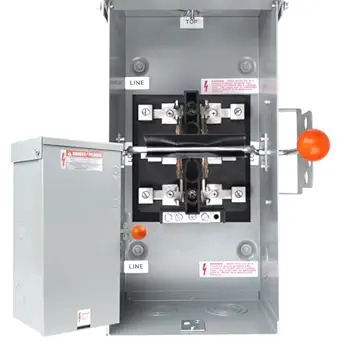
A generator is only useful for home backup power if it can safely deliver electricity to the circuits you actually need. That is where a generator transfer switch comes in.
A transfer switch connects a backup generator to a home’s electrical system while keeping utility power and generator power separated. This prevents dangerous backfeeding and gives you a controlled way to power hardwired appliances and circuits during an outage.
In 2026, homeowners have several ways to accomplish this. A manual transfer switch can be a practical choice for a portable generator, while an automatic transfer switch (ATS) is generally used with permanently installed standby generators. There is also a third option worth understanding: a panel interlock kit, which allows a compatible electrical panel to switch between utility and generator power using the panel’s existing breakers.
The right choice depends on more than the number of amps printed on the front of the switch. You also need to consider your generator’s output, electrical panel, number of circuits, installation location, generator inlet, and local electrical requirements.
Generator Transfer Switches
| Model | Type | Rated Capacity | Best For |
|---|---|---|---|
| MUJURUR 100A Generator Transfer Switch | Manual | 100A | Larger selected-load installations |
| Generac 200 Amp Automatic Transfer Switch | Automatic | 200A | Standby whole-home systems |
| MUJURUR 100A Manual Transfer Switch | Manual | 100A | Manual generator backup |
| Reliance Controls A510C Pro/Tran2 50-Amp 10-Circuit | Manual | 50A | Multiple essential circuits |
| Connecticut Electric EmerGen 30 Amp Transfer Switch Kit | Manual | 30A | Portable generator setups |
What Is a Generator Transfer Switch?
A generator transfer switch is electrical equipment that controls the connection between a backup generator and a home’s electrical system.
Its most important job is isolation.
When utility power is available, the home receives electricity from the utility. When an outage occurs, a properly installed transfer system allows generator power to supply the designated circuits without allowing generator electricity to flow backward into the utility lines.
That matters because simply connecting a portable generator to a household receptacle or attempting to energize a home’s electrical panel without the proper transfer equipment can create a serious backfeed hazard.
A transfer switch also makes generator operation much more practical. Instead of running extension cords to individual appliances, a properly designed installation can supply selected hardwired circuits such as a refrigerator, furnace blower, sump pump, well pump, lights, or other essential loads.
The exact circuits you can operate depend on the generator, transfer equipment, electrical panel, and how the installation was designed.
Manual vs. Automatic Transfer Switches
One of the first decisions to make is whether you need a manual or automatic system.
Manual Transfer Switch
A manual transfer switch requires someone to operate the switch when utility power goes out.
This setup is commonly paired with portable generators. You start the generator, connect it to the appropriate inlet, and operate the transfer equipment according to the installation instructions.
The main advantage is simplicity. You do not need a permanently installed standby generator or an automatic control system.
The tradeoff is that someone has to be available to start and manage the generator.
Automatic Transfer Switch
An automatic transfer switch, or ATS, is generally designed for a permanently installed standby generator.
When the system detects a utility outage, the standby generator can start automatically. After the generator reaches the required operating conditions, the transfer equipment moves the home’s electrical load from utility power to generator power.
When utility power returns, the system transfers the load back and the generator can shut down according to its programmed sequence.
This is particularly useful for homeowners who want backup power without having to be home when an outage occurs.
What About a Generator Interlock?
A panel interlock is another approach that should not be overlooked.
Instead of installing a separate multi-circuit transfer switch, a compatible interlock allows the home’s existing electrical panel to mechanically prevent the utility main breaker and generator breaker from being on at the same time.
However, interlock kits are panel-specific. You cannot assume that an interlock designed for one panel brand or model will work with another.
This is one reason it is important to identify your electrical panel before purchasing generator connection equipment. Current 2026 buying guides increasingly distinguish manual transfer switches, interlocks, and automatic transfer switches rather than treating them as the same product category.
Best Generator Transfer Switches for 2026
MUJURUR 100A Generator Transfer Switch
The MUJURUR 100A Generator Transfer Switch is designed for installations that require substantially more switching capacity than a typical 30A portable-generator transfer kit.
The 100A rating gives this type of manual transfer equipment considerably more capacity than the smaller 30A and 50A models commonly used for selected circuits.
The original product information describes a galvanized-steel enclosure, aluminum connections, and a NEMA 3R rating for outdoor applications.
A NEMA 3R enclosure is intended to provide protection against rain and other environmental exposure, although the exact installation requirements still need to be followed.
What to Consider
The important point with a 100A transfer switch is that its rating does not mean a 100A generator is required.
Your generator still determines how much power is actually available. The transfer equipment must also be correctly matched to the home’s wiring and the installation configuration.
For that reason, this type of switch makes more sense for a properly planned higher-capacity backup system than for someone simply looking for the easiest way to connect a small portable generator.
Generac 200 Amp Automatic Transfer Switch
A 200A automatic transfer switch is intended for a very different type of backup system than a 30A portable-generator transfer kit.
The 200A class is commonly associated with whole-home electrical services, making these switches suitable for installations where a permanently installed standby generator is intended to supply the home’s electrical system.
Generac offers 200A automatic transfer equipment in both service-entrance-rated and non-service-entrance configurations, so buyers should not assume that every 200A Generac transfer switch has the same installation requirements. Current Generac product listings show both configurations as well as models with integrated features such as surge protection or load-center functionality.
Why Service-Entrance Rating Matters
A service-entrance-rated transfer switch can be installed in a configuration where it serves as part of the home’s service equipment, subject to the specific electrical design.
A non-service-entrance-rated model has different installation requirements.
This distinction is important enough that you should identify which configuration your electrician needs before ordering.
Generac’s documentation also identifies its 200A automatic transfer equipment as 240V equipment designed for standby generator applications.
Best Use
This type of transfer switch makes the most sense when you are installing a compatible standby generator and want the backup system to operate automatically.
It is not simply a larger version of a portable-generator manual transfer switch.
MUJURUR 100A Manual Transfer Switch
The second MUJURUR 100A model in this comparison is another option for homeowners looking for a higher-capacity manual transfer arrangement.
The product information describes a double-throw safety switch, which is an important concept in generator installations because the switching arrangement is designed to keep the utility and generator sources separated.
It is also described as supporting up to 100A and 24,000 watts, with a weather-resistant NEMA 3R enclosure.
Why a Double-Throw Design Matters
A transfer switch is not simply a large on/off switch.
The equipment needs to provide a controlled method of transferring the electrical load between two sources. A properly designed double-throw arrangement helps prevent both sources from being connected to the same circuits at the same time.
However, the switch’s maximum rating should never be interpreted as the amount of electricity your generator can produce.
For example, if your generator produces substantially less power than the transfer switch is capable of handling, the generator remains the limiting factor.
Who Should Consider It?
This type of equipment is better suited to a professionally planned higher-capacity manual installation than to a homeowner looking for a basic plug-and-play solution.
Because installation involves the home’s electrical system, professional installation is strongly recommended.
Reliance Controls A510C Pro/Tran2 50-Amp 10-Circuit
The Reliance Controls A510C Pro/Tran2 50-Amp 10-Circuit takes a different approach from the larger 100A and 200A transfer equipment.
Instead of being designed around a 200A whole-house standby system, this type of manual transfer switch is intended to let homeowners select multiple essential circuits for generator operation.
The 50A rating provides more capacity than a typical 30A transfer setup, while the 10-circuit configuration gives you more flexibility when deciding which loads should receive backup power.
Why Circuit Count Matters
Circuit count is often misunderstood.
A 10-circuit transfer switch does not mean that a generator can run ten large appliances simultaneously.
The generator’s actual wattage remains the limiting factor.
For example, you might transfer circuits serving a refrigerator, furnace, lights, sump pump, internet equipment, and selected receptacles, but that does not mean all of those loads should be operated at their maximum demand at the same time.
Load planning is especially important with portable generators because their available output is usually much lower than the electrical service rating of the home.
A Practical Choice for Selected Loads
A 50A manual transfer switch can make sense when you have a portable generator with sufficient output and want more flexibility than a smaller 30A system provides.
The exact installation must still be compatible with your electrical panel, generator inlet, wiring, and local requirements.
Connecticut Electric EmerGen 30 Amp Transfer Switch Kit
The Connecticut Electric EmerGen 30 Amp Transfer Switch Kit is aimed at a more conventional portable-generator application.
With a 30A rating and multiple circuit positions, it can be used to transfer selected household circuits rather than attempting to operate the entire home from a relatively small portable generator.
The original product description identifies a 10-circuit configuration, NEMA 3R protection, and compatibility with portable generator applications.
Why 30A Can Be Enough
A 30A transfer system can be sufficient when your goal is to keep the most important household loads running rather than powering everything.
During an outage, many homeowners do not need every circuit in the house.
Instead, they may prioritize:
- Refrigerator and freezer
- Furnace blower
- Sump pump
- Well pump
- Selected lighting
- Internet equipment
- Garage door opener
- A few kitchen or living-area receptacles
The key is to calculate the starting and running wattage of those loads and compare them with the generator’s actual output.
A 30A transfer switch should therefore be viewed as a selected-circuit solution, not automatically as a whole-house backup system.
How to Choose the Right Generator Transfer Switch
The best transfer switch is the one that matches the entire electrical system rather than simply having the largest amp rating.
Before buying, consider these factors.
1. Match the Switch to the Generator
Start with your generator.
Check its:
- Running wattage
- Starting or surge wattage
- Voltage
- Maximum output amperage
- Number and type of generator receptacles
- Whether it provides 120V, 240V, or both
A transfer switch cannot increase your generator’s available power.
If your generator can produce 7,500 watts, installing a transfer switch rated for 24,000 watts does not turn the generator into a 24,000-watt machine.
2. Check Your Electrical Panel
Your electrical panel is just as important as the generator.
Before purchasing a transfer switch or interlock, identify:
- Panel manufacturer
- Panel model
- Main breaker rating
- Available breaker spaces
- Existing circuit configuration
- Service type
- Whether the installation requires a neutral switching arrangement
This information can determine which equipment is actually compatible with your installation.
3. Decide Between Selected-Circuit and Whole-Home Backup
This is one of the biggest decisions.
Selected-Circuit Backup
A manual transfer switch can let you choose specific circuits to power during an outage.
This is often a practical approach with portable generators.
Instead of trying to operate every appliance, you prioritize the loads that matter most.
Whole-Home Backup
Whole-home backup generally involves a permanently installed standby generator and an appropriately sized automatic transfer switch.
The generator still has a maximum output, so “whole-home” does not necessarily mean every appliance can run simultaneously at full capacity.
Load management may be necessary when the home’s potential electrical demand exceeds the generator’s available output.
What Does 30A, 50A, 100A or 200A Mean?
The amp rating tells you how much electrical current the transfer equipment is designed to handle under its specified conditions.
It should not be confused with generator wattage.
For a single-phase 240V system, watts can be roughly estimated using:
Watts = Volts × Amps
However, actual generator sizing is more complicated because appliances have different running and starting demands, and electrical installations have additional requirements.
This is why a 200A residential electrical service does not automatically mean you need a 200A generator.
Likewise, a 50A transfer switch does not mean that your generator must produce 50A continuously.
The generator, transfer equipment, wiring, breakers, and connected loads all need to work together.
NEMA 3R: What Does It Mean?
You may see NEMA 3R listed on transfer switches designed for outdoor installation.
A NEMA 3R enclosure is intended to provide protection against rain and other environmental exposure.
That can be useful when transfer equipment is mounted outdoors, but the enclosure rating does not eliminate the need to follow the manufacturer’s mounting requirements.
The installation location, conduit, connections, clearances, and weather exposure all matter.
Never assume that because a transfer switch is labeled NEMA 3R, it can be installed anywhere outdoors without additional considerations.
Service-Entrance Rated vs. Non-Service-Entrance Rated
This distinction becomes particularly important with automatic transfer switches.
A service-entrance-rated ATS can be used in certain configurations as part of the home’s service equipment.
A non-service-entrance-rated transfer switch has different installation requirements and may be installed downstream of the main service equipment.
For a 200A whole-home installation, choosing between these configurations is not simply a matter of preference.
Your electrician needs to determine which type fits the home’s existing electrical design.
Current Generac listings demonstrate how different 100A and 200A automatic transfer switches are offered in service-entrance and non-service-entrance configurations.
Do You Need a Transfer Switch for a Portable Generator?
If you want to connect a portable generator to your home’s hardwired circuits, you need properly installed transfer equipment or another code-compliant method of isolating the generator from utility power.
The important safety principle is simple:
The generator and utility supply must not be allowed to energize the same circuits simultaneously.
Never attempt to backfeed a home through a wall outlet, dryer outlet, or other improvised connection.
A properly designed transfer system is intended to prevent this dangerous condition.
Can a Transfer Switch Power the Whole House?
It depends on the transfer equipment, generator, electrical service, and system design.
A 200A automatic transfer switch may be suitable for a whole-home standby generator installation, but the generator itself still has a maximum output.
A smaller portable generator connected through a manual transfer switch is normally better suited to selected essential circuits.
This distinction is important because the electrical service rating of the home and the output rating of the generator are two completely different specifications.
Manual or Automatic: Which Type Makes Sense?
Choose a manual transfer switch if:
- You use a portable generator.
- You are comfortable starting the generator manually.
- You want to power selected household circuits.
- You want a relatively straightforward backup configuration.
- You do not need the system to start during an outage while you are away.
Consider an automatic transfer switch if:
- You have a permanently installed standby generator.
- You want the generator to start automatically.
- You want the house to switch to backup power without manual intervention.
- You need a system designed for automatic whole-home or larger-load backup.
- You are having a professional standby-generator installation completed.
Consider an interlock if:
- Your electrical panel is compatible.
- You want to use the existing panel breakers.
- Your generator and inlet configuration support this arrangement.
- A qualified electrician confirms that the specific interlock is approved for your panel.
Generator Transfer Switch Safety Tips
Generator installations involve potentially dangerous electrical voltages. This is not an area where improvisation is worthwhile.
Keep these points in mind:
- Never backfeed your home’s electrical system.
- Never connect a generator directly to a household receptacle.
- Use transfer equipment appropriate for the generator and panel.
- Follow the manufacturer’s installation instructions.
- Have electrical connections installed or inspected by a qualified electrician as required by local rules.
- Verify the correct generator inlet and wiring configuration.
- Do not exceed the generator’s rated output.
- Account for motor starting loads from equipment such as pumps, furnaces, refrigerators, and air conditioners.
- Operate portable generators outdoors and away from doors, windows, and other openings.
- Follow the generator manufacturer’s clearance and carbon-monoxide safety requirements.
- Check local permitting and electrical-code requirements before installation.
A transfer switch solves the electrical isolation problem, but it does not make unsafe generator placement safe. Generator operation and electrical installation are separate safety issues.
Frequently Asked Questions
What is the main purpose of a generator transfer switch?
A generator transfer switch safely controls the connection between a backup generator and selected household circuits or the home’s electrical system. Its most important function is preventing the generator from energizing utility lines while allowing generator power to supply the intended loads.
Is a manual transfer switch better for a portable generator?
A manual transfer switch is commonly used with portable generators because the generator is normally started and connected by the homeowner. It can provide selected household circuits with generator power without requiring a permanently installed standby generator or automatic starting system.
Is a 200A transfer switch required for a 200A electrical panel?
Not necessarily. A home’s 200A service rating does not mean the generator must provide 200A. The appropriate transfer equipment depends on the generator, electrical panel, installation configuration, and whether the system is designed for whole-home or selected-load backup.
Can a 30A transfer switch power an entire house?
A 30A transfer switch is generally intended for selected circuits rather than unlimited whole-house operation. Whether it can supply your desired loads depends on the generator’s output and the circuits being transferred.
What is the difference between a transfer switch and an interlock?
A transfer switch is separate equipment that controls the transfer between utility and generator power. An interlock is a mechanical device designed for a compatible electrical panel that prevents the utility main breaker and generator breaker from being on simultaneously.
Does an automatic transfer switch start the generator?
An ATS can initiate the automatic backup sequence in a properly configured standby-generator system. The generator, controls, transfer switch, and installation all need to be compatible. An automatic transfer switch should not be assumed to automatically start every type of portable generator.
Can I install a generator transfer switch myself?
Electrical installation requirements vary by equipment and jurisdiction. Because transfer equipment connects directly to a home’s electrical system, installation should be handled by a qualified electrician when required and should follow the manufacturer’s instructions and applicable local electrical codes.
Final Thoughts
The right generator transfer switch for 2026 depends primarily on the type of generator you have and how much of your home’s electrical system you want to keep running during an outage.
For a portable generator, a manual transfer switch such as the Reliance Controls A510C Pro/Tran2 or Connecticut Electric EmerGen can provide a practical way to supply selected circuits. Higher-capacity manual equipment, such as the 100A MUJURUR models listed above, is intended for a different type of installation and should be evaluated together with the home’s electrical design.
For a permanently installed standby generator, a 200A automatic transfer switch is a much more appropriate category to consider, particularly when whole-home backup is the goal.
The biggest mistake is choosing a transfer switch based only on its amp rating. Before purchasing, make sure the equipment matches your generator, electrical panel, voltage, circuit requirements, installation location, and local electrical requirements.
Most importantly, treat the transfer switch as part of a complete backup-power system rather than an isolated accessory. When the generator, transfer equipment, electrical panel, and installation are properly matched, you can have a much more controlled and dependable way to keep essential household systems operating when utility power goes down.