As an Amazon Associate I earn from qualifying purchases.
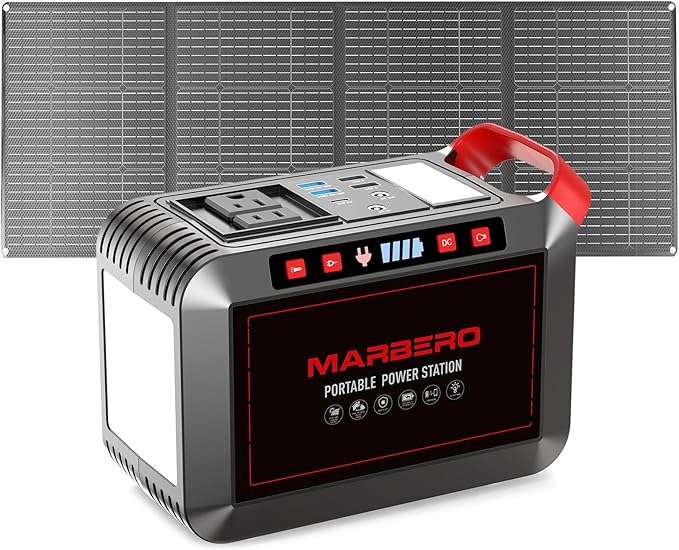
Portable solar power kits have become a practical way to keep essential devices running when you are away from the electrical grid. Whether you are camping, traveling in an RV, preparing for a power outage, or building a small off-grid setup, a portable power station paired with solar panels can provide quiet, rechargeable electricity without gasoline.
Unlike traditional gas generators, solar generator kits do not burn fuel while operating. They store electricity in a battery and use an inverter to provide AC power for compatible appliances and electronics. Solar panels can then recharge the battery when sunlight is available.
The right setup depends on what you need to power. A small 200Wh to 300Wh system may be enough for phones, cameras, lights, and other electronics, while a 1,000Wh or larger power station is more appropriate for refrigerators, medical equipment, laptops, CPAP machines, and longer off-grid use.
In this guide, we look at several portable solar power kits and panels, including compact options for camping and larger systems for users who need more battery capacity. We also explain the specifications that matter most so you can choose a setup based on your actual power requirements rather than simply buying the biggest battery available.
Portable Solar Generator Kits for 2026
| Product | Battery Capacity | Output | Solar Panel | Best For |
|---|---|---|---|---|
| MARBERO 237Wh Solar Generator Kit | 237Wh | 300W | 60W | Camping and small electronics |
| Jackery Solar Generator 1000 V2 Kit | 1,070Wh | 1,500W | 200W | Camping, RVs and emergency backup |
| Jackery Solar Generator 300 Kit | 293Wh | 300W | 100W | Portable electronics |
| ZeroKor 300W Solar Generator Kit | 280Wh | 300W | 60W | Budget-friendly outdoor use |
| BALDR 200W Folding Solar Panel | N/A | N/A | 200W | Adding solar charging capacity |
Specifications and included accessories can vary by configuration and seller listing. Check the current product listing before purchasing.
What Is a Portable Solar Generator Kit?
A portable solar generator is essentially a battery-powered power station combined with one or more solar panels.
The power station stores electricity in its internal battery. Its inverter converts that stored energy into usable AC power, while USB and DC outputs can directly power compatible electronics.
The solar panel provides another way to recharge the battery when you are away from an electrical outlet.
This makes a solar generator different from a conventional fuel generator. A gas generator produces electricity by burning gasoline, propane, or another fuel. A solar generator stores electricity in a battery and can replenish that energy using solar power.
For portable applications, the system usually consists of three basic components:
- Power station: Stores electrical energy and provides AC, USB, and/or DC outputs.
- Solar panel: Converts sunlight into electricity to recharge the power station.
- Charging cables: Connect the solar panel to the compatible power station.
Some products are sold as complete kits, while others are sold separately so you can build a system around an existing power station.
Complete Kits vs. Standalone Solar Panels
Not every product marketed alongside solar generators is a complete kit.
A complete solar generator kit normally includes both the battery power station and compatible solar panel. This is convenient because the components are designed to work together.
A standalone solar panel is different. It is intended to recharge a compatible power station that you already own or plan to purchase separately.
Before buying a panel, check the power station’s maximum solar input, voltage range, connector type, and recommended panel configuration. A panel with a higher wattage rating is not automatically a better match if the power station cannot accept that much solar input.
Best Portable Solar Power Kits for 2026
1. MARBERO 237Wh Solar Generator Kit
Check the MARBERO Solar Generator Kit on Amazon
The MARBERO 237Wh Solar Generator Kit is designed for users who want a small and portable source of backup power without carrying a large battery station.
The original configuration listed for this article combines a 237Wh power station with a 60W solar panel and a 300W output rating. That makes it more appropriate for relatively light loads than for large household appliances.
For camping, it can be useful for charging phones, cameras, lights, tablets and other small electronics. The compact design also makes it easier to keep in a vehicle or camping kit.
The built-in LED light can be useful during nighttime emergencies, while multiple output options make it possible to charge several types of devices.
Best suited for:
- Camping
- Emergency electronics
- Phones and tablets
- Cameras
- LED lights
- Small DC devices
- Short outdoor trips
The main limitation is battery capacity. At 237Wh, this is a compact system rather than a whole-home backup solution.
2. Jackery Solar Generator 1000 V2 Kit
Check the Jackery Solar Generator 1000 V2 Kit on Amazon
The Jackery Solar Generator 1000 V2 is a much larger system than the compact 200Wh to 300Wh models above.
Jackery lists the power station at 1,070Wh of capacity and 1,500W of output. The current model uses LiFePO₄ battery cells and supports up to 200W of solar charging with the appropriate SolarSaga configuration. Jackery also advertises a 4,000-cycle battery life and 10+ years of use under its stated conditions.
This capacity range is more practical for users who want a portable system that can handle several devices during a camping trip or provide useful backup power during a short outage.
The 1,500W inverter also gives it considerably more flexibility than a 300W-class power station.
Potential uses include:
- Refrigerators, depending on starting/surge requirements
- Laptops
- CPAP machines
- TVs
- Wi-Fi equipment
- Small appliances
- Phones and tablets
- Camping equipment
The important point is that 1,070Wh does not mean that every appliance will run for 1,070 hours. Runtime depends on the wattage consumed by the connected equipment and the efficiency losses of the system.
Best suited for:
- RV trips
- Camping
- Emergency backup
- Remote work
- CPAP and essential electronics
- Users who need more capacity without moving to a very large power station
3. Jackery Solar Generator 300 Kit
Check the Jackery Solar Generator 300 Kit on Amazon
The Jackery Solar Generator 300 Kit is intended for people who value portability more than high capacity.
The configuration used in this article includes a 293Wh power station with a 300W output rating and a 100W solar panel.
That makes it a practical option for charging smaller electronics while camping, traveling or working away from a conventional outlet.
It is better suited to devices such as:
- Smartphones
- Tablets
- Cameras
- Laptops with relatively low power requirements
- Lights
- Small camping equipment
Its biggest advantage is portability. You do not need a large battery station for a weekend trip if your actual electricity requirements are limited to electronics and lighting.
Best suited for:
- Weekend camping
- Travel
- Photography
- Small electronics
- Emergency communication equipment
For refrigerators, heaters, microwaves and other high-draw appliances, a larger power station is generally more appropriate.
4. ZeroKor 300W Portable Solar Generator Kit
Check the ZeroKor Solar Generator Kit on Amazon
The ZeroKor 300W Portable Solar Generator Kit is another compact option for users who need basic off-grid electricity.
The configuration originally selected for this guide provides approximately 280Wh of battery capacity and 300W of output, together with a 60W solar panel.
Its size makes it suitable for outdoor activities where portability is more important than long runtimes.
The built-in emergency light and multiple charging outputs can also make it useful as part of a basic emergency kit.
Best suited for:
- Camping
- Hiking trips
- Emergency charging
- Phones and tablets
- Small electronics
- Portable lighting
As with other 300W-class power stations, the important limitation is the relatively small battery. It should not be treated as a replacement for a large home backup battery.
5. BALDR 200W Folding Solar Panel
Check the BALDR 200W Folding Solar Panel on Amazon
The BALDR 200W Folding Solar Panel is different from the other products in this list because it is a solar panel rather than a complete battery power station.
That makes it useful for someone who already owns a compatible portable power station and wants additional solar charging capacity.
A 200W panel can be particularly useful with larger power stations, provided the station’s solar input specifications support the panel’s voltage and connector configuration.
The original product configuration also includes a multi-connector cable and USB charging capability, giving users additional flexibility.
However, the advertised 200W rating represents the panel’s maximum rated output under specified test conditions. Actual production can be lower because of sunlight intensity, panel angle, temperature, shading and other environmental conditions.
Best suited for:
- Existing portable power stations
- Camping
- RV travel
- Off-grid charging
- Expanding solar charging capability
How Much Battery Capacity Do You Need?
Battery capacity is measured in watt-hours (Wh).
This number tells you approximately how much electrical energy the battery can store, although usable energy will be lower than the nameplate capacity because of inverter losses, battery-management limits and the power requirements of the connected device.
A simple way to estimate runtime is:
Runtime ≈ Battery capacity (Wh) ÷ Device power consumption (W)
For example, a 1,000Wh power station connected to a device drawing 100W would theoretically provide around 10 hours of operation before accounting for conversion losses and other factors.
Real-world runtime will normally be shorter.
This is why buying based only on watt-hours can be misleading. You should consider both capacity and the power consumption of the devices you want to run.
Continuous Output vs. Surge Output
Another important specification is inverter output.
Continuous output is the amount of power the inverter can provide continuously under the manufacturer’s specified conditions.
Surge output is the temporary amount of additional power available when certain appliances start.
This matters because some appliances, particularly those with electric motors or compressors, can briefly require significantly more power when starting.
Examples include:
- Refrigerators
- Freezers
- Pumps
- Power tools
- Some compressors
A power station with enough battery capacity can still fail to start an appliance if its inverter cannot handle the appliance’s starting demand.
Always check the appliance’s running and starting requirements before connecting it.
How Much Solar Power Do You Need?
The solar panel determines how quickly your power station can replenish its battery when sunlight is available.
A 100W panel is generally appropriate for smaller power stations, while 200W or more can make more sense for larger batteries.
However, panel wattage should be matched to the power station’s maximum solar input.
For example, if a power station accepts only a certain maximum amount of solar power, connecting a much larger panel array will not necessarily make it charge faster. The station’s solar charge controller will limit the input according to its specifications.
Solar charging is also affected by:
- Cloud cover
- Panel angle
- Shade
- Time of day
- Temperature
- Panel orientation
- Cable losses
- Solar input limits of the power station
For that reason, the rated wattage printed on a panel should be viewed as a maximum rating rather than the amount of electricity you will receive continuously.
What Can a Portable Solar Generator Power?
The answer depends on the capacity and inverter rating of the specific model.
Small 200Wh–300Wh systems
These are generally better for:
- Smartphones
- Tablets
- Cameras
- LED lights
- Small fans
- Small electronics
- Emergency communication equipment
Around 1,000Wh systems
These provide significantly more flexibility and can be useful for:
- Laptops
- Wi-Fi routers
- CPAP machines
- TVs
- Refrigerators, if the starting requirements are compatible
- Small appliances
- Multiple electronic devices
2,000Wh and larger systems
Larger portable power stations are more appropriate when you need longer runtimes or want to support higher-demand equipment.
Current 2026 buying guides increasingly focus on the 1,000Wh to 4,000Wh range for serious backup applications, with products from EcoFlow, Jackery, BLUETTI and Anker competing in this segment.
Portable Solar Power Kits for Camping
Camping is one of the easiest applications for a solar generator.
A compact power station can provide electricity for lights, phones, cameras, laptops and other equipment without the noise and fuel storage associated with a conventional generator.
For occasional weekend trips, a 200Wh to 500Wh power station may be enough.
If you are traveling in an RV or staying off-grid for several days, moving toward a 1,000Wh or larger system can provide considerably more flexibility.
The key is to calculate your daily energy consumption before purchasing.
Portable Solar Generators for Emergency Backup
A portable solar generator can also be useful during short power outages.
For emergency preparation, focus on the equipment that you actually need to keep operating.
For example, a household might prioritize:
- Refrigerator
- Medical equipment
- Internet modem and router
- Phones
- Emergency lighting
- Small electronics
Instead of trying to power an entire home, a portable power station can be used to keep essential equipment operating.
For larger loads or long-duration outages, however, a much larger expandable power station or a permanently installed backup system may be more appropriate.
Are Solar Generators Safe to Use Indoors?
One of the major differences between battery power stations and fuel-burning generators is combustion.
A battery power station does not produce exhaust from burning gasoline or propane while it is operating. That means there is no engine exhaust or carbon monoxide produced by the power station itself.
That does not mean every component or situation is automatically safe.
Always follow the manufacturer’s instructions for:
- Charging
- Operating temperature
- Ventilation requirements
- Water exposure
- Cable connections
- Battery storage
- Maximum loads
Never use a fuel-burning generator inside a home, garage or other enclosed space because of the carbon monoxide hazard.
What to Look for When Buying a Portable Solar Power Kit
Before buying, compare these specifications instead of focusing only on the advertised battery capacity.
1. Battery Capacity
Look at the Wh rating to determine how much energy the battery can store.
For occasional electronics, a smaller battery may be enough.
For refrigerators, CPAP machines or extended backup, consider a larger capacity.
2. Continuous AC Output
Make sure the inverter can handle the running wattage of your devices.
A large battery is not useful if the inverter cannot power the appliance you need.
3. Surge Capacity
If you plan to operate refrigerators, pumps or other motor-driven equipment, check the starting requirements.
4. Solar Input
Look at the maximum solar input in watts and the supported voltage range.
This tells you how much solar power the station can actually use.
5. Battery Chemistry
LiFePO₄, also called lithium iron phosphate, has become common in newer portable power stations because of its long cycle life.
For example, Jackery lists LiFePO₄ cells in its current Explorer 1000 v2 and 4,000 charge cycles under its stated conditions.
6. Port Selection
Consider whether you need:
- AC outlets
- USB-A
- USB-C
- 12V DC
- Car charging
- Solar input
7. Weight
A 2,000Wh power station can provide substantially more energy, but it is also much heavier than a 300Wh camping unit.
Choose capacity based on how you actually intend to transport and use it.
8. Expandability
Some newer power stations can connect to additional batteries.
This can be useful if you initially need a portable setup but may want more capacity later.
9. Charging Speed
Fast AC charging can reduce the amount of time the station needs to remain connected to the grid before an emergency.
Solar charging speed is equally important if you expect to operate primarily off-grid.
Portable Solar Generator Kits vs. Gas Generators
Neither technology is suitable for every situation.
Portable solar generator
Advantages:
- Quiet operation
- No gasoline required during operation
- No engine exhaust
- Low routine maintenance
- Can be recharged using solar power
- Convenient for camping and indoor emergency power
Limitations:
- Battery capacity is finite
- Solar charging depends on weather and sunlight
- Large battery systems can be expensive
- High-power appliances may require a much larger inverter
Gas generator
Advantages:
- Can run for extended periods as long as fuel is available
- Suitable for high-power loads
- Refueling is faster than waiting for solar charging
Limitations:
- Produces exhaust and carbon monoxide
- Requires fuel
- Produces engine noise
- Requires more maintenance
- Must be operated outdoors in a safe location
For many users, the choice comes down to the type of backup they need rather than simply choosing one technology over the other.
How to Build a Simple Off-Grid Solar Power Setup
A basic portable system can be built around three components:
Power station + compatible solar panel + appropriate cables
Start by calculating your daily electricity requirements.
Then select a power station with enough battery capacity and inverter output for those loads.
Finally, choose a solar panel or panel array that stays within the power station’s solar input specifications.
For example, someone using a power station primarily for phones, lights and laptops can build a relatively compact system. Someone trying to operate a refrigerator for multiple days will need substantially more battery and solar capacity.
The important thing is to size the system around actual electricity consumption rather than buying based solely on the largest advertised wattage.
Final Thoughts on Portable Solar Power Kits in 2026
Portable solar power kits have become much more capable than the small battery packs that dominated the category several years ago. Current systems range from compact 200Wh-class units for camping and electronics to multi-kilowatt-hour systems designed for more demanding backup applications. Current 2026 comparisons commonly evaluate brands such as Jackery, EcoFlow, BLUETTI and Anker across capacity, output, solar input, battery chemistry and expandability.
The most important thing is not choosing the largest or most powerful system. It is choosing a power station and solar panel combination that matches your actual electricity needs.
For lightweight camping and basic electronics, a compact 200Wh to 300Wh kit can be practical. If you need more flexibility for RV travel, emergency backup or longer off-grid stays, a system around 1,000Wh or more provides considerably more capacity.
The Jackery Solar Generator 1000 V2, for example, combines 1,070Wh of battery capacity with a 1,500W inverter and solar charging capability, making it a substantially more capable setup than the smaller 300W-class options in this guide.
Before purchasing, compare battery capacity, continuous output, surge capability, solar input, battery chemistry, portability and connector compatibility. Once those specifications match your requirements, a portable solar power kit can provide a convenient source of electricity for camping, RV travel, remote work and short-term emergency backup.