As an Amazon Associate I earn from qualifying purchases.
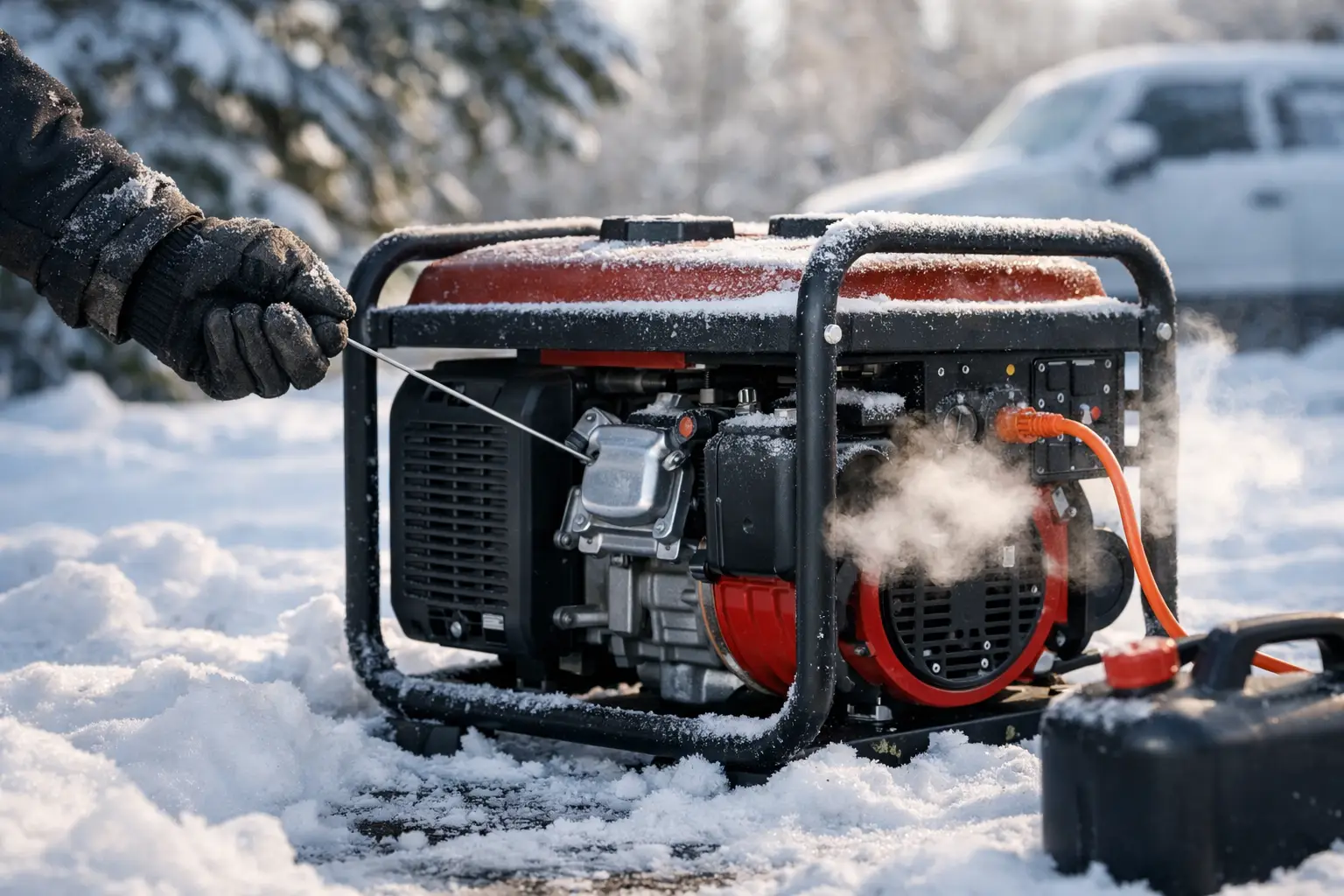
Starting a generator in cold weather is not just about pulling the recoil cord harder or pressing the electric-start button again. Cold temperatures thicken oil, weaken batteries, reduce fuel vaporization, and expose maintenance problems that were easy to overlook in mild weather.
For homeowners preparing for an outage, RV travelers, and crews relying on portable power at a jobsite, the goal is simple: make sure the generator starts reliably before conditions become urgent.
Why Generators Are Harder to Start in Cold Weather
Small gasoline engines need the right mix of fuel, air, spark, compression, and cranking speed. Winter works against several of those requirements at once. Engine oil becomes thicker as temperatures fall, so the starter or recoil system has more resistance to overcome. A battery also produces less available power in the cold, which is why an electric-start generator may click or crank slowly even though it worked normally a few weeks earlier.
Fuel is another common factor. Gasoline does not vaporize as readily in low temperatures, especially when it is old or has absorbed moisture. On a carbureted generator, that can make the correct choke setting more important during a cold start. Propane avoids the problem of stale gasoline, but it has its own cold-weather limitation: the fuel in the tank must vaporize properly before the engine can use it. A dual-fuel generator can provide useful flexibility, but switching fuels does not eliminate the need for cold-weather preparation.
The cold can also reveal a marginal spark plug, dirty carburetor, weak battery connection, or low-quality extension cord. What looks like a winter starting issue is often an ordinary maintenance issue made worse by temperature.
How to Prepare a Generator for Cold Weather
The best time to test a backup generator is on a calm day, not during an ice storm. Exercise it under a modest load at the interval recommended by the owner’s manual, then address any starting hesitation while you still have light, heat, and time to troubleshoot.
Start with the oil. Use only the viscosity recommended by the generator manufacturer for the temperatures where you operate it. Many portable generators use a multi-viscosity oil that flows better in cold weather than a heavier summer-grade oil, but the correct choice varies by engine. Check the oil level on level ground. An overfilled or underfilled crankcase can both create problems, and low-oil shutdown systems can prevent starting when the unit is not sitting level.
Fresh fuel matters just as much. Keep gasoline in approved containers, use fuel stabilizer when appropriate, rotate stored fuel on a regular schedule, and do not assume fuel stored since last season is still suitable without checking its condition and following the manufacturer’s recommendations. If the generator will sit for extended periods, follow the manual’s storage procedure for the fuel valve, carburetor bowl, and stabilizer. If you use propane, inspect the tank valve, hose, and regulator for damage. Keep the cylinder upright and choose a tank size appropriate for your expected runtime. Small cylinders can struggle to vaporize enough fuel in deep cold under a heavy electrical load.
For an electric-start model, inspect the starting battery and its terminals for corrosion, and confirm that the battery is being maintained as the manufacturer specifies. Some generators charge the starting battery only while running, while others have a dedicated charging connection. A battery tender designed for the battery type can be a sensible accessory for a generator stored in an unheated shed or garage.
How to Start a Generator in Cold Weather
Move the generator outdoors first, with clear airflow and protection from direct blowing snow or rain. Never run a generator in a garage, basement, enclosed porch, or near doors, windows, or vents. Carbon monoxide can build up rapidly and travel into living spaces. Keep the generator well away from openings where exhaust could enter the house.
Before starting, disconnect large loads. Turn off the generator’s output breaker if the manual calls for it, and unplug appliances from receptacles. Starting an engine while it is already carrying a space heater, well pump, or RV air conditioner adds unnecessary resistance and can make a difficult start worse.
Set the fuel valve and engine switch as directed, then use the choke for a cold engine. After the engine fires, allow it to stabilize briefly before gradually moving the choke toward the run position as it warms. If it stumbles, briefly return the choke toward the starting position rather than repeatedly shutting the engine down and restarting it.
With a recoil-start generator, use steady, controlled pulls. Fast, erratic yanking can damage the starter assembly and rarely solves a fuel or ignition problem. With electric start, avoid holding the starter button too long. Short attempts with a brief pause help protect the starter and battery. Consult the manual for the exact maximum cranking time.
Do not use starting fluid unless the manufacturer specifically approves it. Ether-based sprays can be hard on small engines and may create a dangerous backfire risk. A generator that needs starting fluid regularly needs diagnosis, not a stronger shortcut.
Once it is running, allow several minutes of warm-up before applying major loads. Then connect equipment in stages. Start with essential electronics or lighting, followed by larger motor loads. A well pump, refrigerator compressor, or furnace blower can draw substantially more power when starting, so the generator needs enough starting-watt capacity as well as sufficient running wattage.
Choosing Fuel, Battery, and Storage Options for Winter
If winter reliability is a priority, an electric-start inverter generator offers real convenience, especially for homeowners who may need to operate it at night or during a storm. Inverter models also provide cleaner power for sensitive electronics and often use less fuel at light loads. The trade-off is that smaller inverter generators may not have enough output for a central well pump, electric heat, or multiple large appliances.
A larger open-frame generator may better support a home backup plan, but it should be paired with the right connection equipment. A properly installed inlet box and
transfer switch or interlock allow selected household circuits to be powered safely. Never connect a portable generator to a home outlet with a double-male cord. That dangerous practice can backfeed utility lines and put utility workers, neighbors, and your equipment at risk.
Cold weather also changes how you should think about cords. Long,
undersized extension cords create voltage drop, which is especially troublesome for motors trying to start in low temperatures. Choose outdoor-rated cords with a wire gauge matched to the load and length. For higher-power connections, use the generator’s correct locking receptacle and a compatible generator cord rather than adapting several smaller household cords together.
Store the generator where it remains accessible after snow or ice, but do not run it in the storage area. Keep a clear path to the outdoor operating location. A weather-resistant generator tent or purpose-built running cover can help shield the unit from precipitation while maintaining the open sides and airflow required for safe operation. A tarp draped over a running generator is not a safe substitute.
What Temperature Is Too Cold for a Generator?
There is no single temperature that is too cold for every generator. Many portable generators can operate below freezing, but starting problems become more likely as temperatures drop. As temperatures fall below freezing, cold oil and reduced battery performance can make starting more difficult. At extremely low temperatures, the generator may require winter-grade oil, battery maintenance, or a cold-weather starting system.
What to Check When a Generator Will Not Start in Cold Weather
Work through the basics methodically. Confirm there is fresh fuel, the fuel valve is open, the engine switch is on, the choke is correctly set, and the oil level is correct. Check that the battery connections are tight on electric-start models. If the recoil starter feels unusually hard to pull, do not force it. Thick oil, a mechanical problem, or a flooded cylinder may be involved.
A flooded engine often smells strongly of gasoline after repeated start attempts. Follow the manufacturer’s clearing procedure, which may involve turning the choke off and allowing time for excess fuel to clear. If the engine cranks normally but never fires, inspect the spark plug condition and verify that the fuel is reaching the carburetor. Old fuel deposits can block the tiny passages that matter most during cold starting.
If your generator starts but dies when you add a load, the problem may not be the engine itself. Add loads one at a time and verify that the generator’s running and surge ratings match the equipment. Check cords, adapters, plugs, and inlet-box connections for heat damage, loose fit, or incorrect ratings. A generator can be healthy while an incompatible cord or overloaded circuit creates the failure.
Frequently Asked Questions
Can you start a generator in freezing temperatures?
Yes, you can start a generator in freezing temperatures, but cold weather can make starting more difficult. Low temperatures thicken engine oil, reduce battery performance, and can affect fuel vaporization. Before starting, check the oil level, keep the generator protected from snow and moisture, and follow the manufacturer’s cold-weather starting instructions. Never operate a portable generator inside a home, garage, or enclosed space.
What temperature is too cold for a generator?
There is no single temperature that is too cold for every generator. Many portable generators can operate below freezing, but starting problems become more likely as temperatures drop. Below 32°F (0°C), cold oil and weak batteries can make starting harder. At extremely low temperatures, the generator may require winter-grade oil, battery maintenance, or a cold-weather starting system.
Why won’t my generator start when it is cold?
A generator may fail to start in cold weather because the engine oil becomes thicker, the battery loses cranking power, or fuel does not vaporize as easily. A dirty carburetor, old gasoline, restricted fuel flow, or an incorrect choke setting can also cause problems. Check the oil, fuel, battery, choke, and air filter before attempting repeated starts.
What oil should I use in a generator during winter?
The best generator oil for winter depends on the engine and the temperatures where you operate it. Some manufacturers recommend a multi-viscosity oil such as 5W-30 for colder conditions because it can flow more easily during startup than heavier oil. such as 5W-30 for colder conditions because it flows more easily during startup than heavier oil. Always check the generator owner’s manual for the recommended oil viscosity and temperature range before changing the oil.
Can cold weather weaken a generator battery?
Yes. Freezing temperatures can significantly reduce a generator battery’s available starting power, especially when the battery is already weak or partially discharged. Cold weather also makes the engine harder to crank because the oil becomes thicker. Keep the battery fully charged, inspect its condition before winter, and consider using a battery maintainer if the generator will sit unused for long periods.
How do you keep a generator from freezing?
Keep the generator in a dry, protected location when it is not running, and protect it from snow, ice, and freezing rain. Do not cover a running generator in a way that restricts ventilation or traps exhaust gases. Keep the fuel system maintained, use the correct engine oil, and follow the manufacturer’s recommendations for storing and operating the generator in cold weather.
Can a propane generator run in cold weather?
Yes, a propane generator can run in cold weather, but very low temperatures can affect propane pressure and fuel delivery. This can become more noticeable as the propane tank gets colder or the fuel level drops. Keep the tank outdoors in a safe, well-ventilated location, use the correct regulator and connections, and follow the generator manufacturer’s cold-weather operating instructions.
Should I warm up my generator before using it in winter?
Allowing a generator to warm up briefly can help the engine stabilize in cold weather, but you should not let it idle unnecessarily for a long time. Start the generator according to the owner’s manual and allow it to run for a short period before applying heavy electrical loads. Once the engine is running smoothly, connect appliances gradually rather than turning everything on at once.
In severe cold, generator reliability depends more on preparation than brute force. Maintain the engine, keep the right fuel and connection equipment on hand, and test the complete setup before you need it. The first winter outage should be the moment your generator proves your preparation, not the moment you begin it.