As an Amazon Associate I earn from qualifying purchases.

When the power goes out, having a generator that can run on more than one fuel can make a big difference. Dual fuel generators give you the option to use gasoline or propane, which can be especially useful during extended outages, camping trips, RV travel, outdoor projects, and emergency situations.
Gasoline is often the better choice when you need maximum output, while propane offers convenient long-term storage and gives you another fuel option when gasoline is difficult to find. The important thing is choosing a generator with enough running watts, adequate starting power, the right outlets, and safety features for the loads you actually plan to use.
For this 2026 guide, the focus is on power output, fuel flexibility, portability, noise, runtime, safety features, and practical applications rather than simply choosing the generator with the biggest wattage number.
Dual Fuel Generators at a Glance
| Model | Gasoline Output | Propane Output | Best For |
|---|---|---|---|
| Westinghouse 12500 Watt Dual Fuel | 9,500 running / 12,500 peak | 8,500 running / 11,200 peak | Home backup |
| Westinghouse 4000W Dual Fuel | 3,300 rated / 4,000 peak | 2,970 rated / 3,600 peak | Camping and smaller backup loads |
| Westinghouse 13500W Dual Fuel | 10,500 running / 13,500 peak | 9,500 running / 12,500 peak | High-demand backup |
| DuroMax XP13000EH | 10,500 running / 13,000 peak | Up to 9,975 running / 12,350 peak | Large loads and home backup |
| WEN DF680iX | 5,100 rated / 6,800 surge | 4,500 rated / 6,000 surge | RVs, backup power, and EV charging |
Westinghouse 12500-Watt Dual Fuel Generator – Strong Option for Home Backup
Check Amazon Price Click Here!
The Westinghouse 12500 Watt Dual Fuel Generator is designed for buyers who need substantially more power than a small camping generator can provide. It produces 9,500 running watts and 12,500 peak watts on gasoline, while propane output is rated at 8,500 running watts and 11,200 peak watts.
That makes it a practical option for homeowners who want to keep several important circuits operating during a power outage. Depending on the starting requirements of your appliances, this type of generator can provide enough capacity for refrigerators, freezers, sump pumps, well pumps, lighting, selected kitchen appliances, and some central air-conditioning systems.
One advantage is its remote electric start. Instead of relying exclusively on a recoil starter, you can start the generator using the included key fob. It also has a VFT display that provides information such as voltage, frequency, and operating hours.
The generator is transfer-switch ready and includes a 120V/240V 50A RV-ready outlet, along with a 30A transfer-switch-ready connection. That gives it more flexibility for home backup and RV applications.
Specifications
- Gasoline output: 12,500 peak watts / 9,500 running watts
- Propane output: 11,200 peak watts / 8,500 running watts
- Fuel: Gasoline and propane
- Engine: 457cc 4-stroke OHV
- Starting: Electric, remote key fob, and recoil
- Gasoline runtime: Up to 12 hours, depending on load
- Fuel tank: 6.6 gallons
- Transfer switch ready: Yes
- RV outlet: 120/240V 50A
- Display: VFT
- Low-oil shutdown: Yes
Who Should Consider It?
This is better suited to homeowners who need high-output portable backup power than to campers looking for something easy to carry. It is a large generator, so portability is limited despite its wheels.
Westinghouse 4000-Watt Dual Fuel Inverter Generator – Compact Option for Camping and Smaller Loads
Check Amazon Price Click Here!
A 12,000-watt generator is unnecessary if your main goal is powering an RV, camping equipment, refrigerators, lights, electronics, or a few essential appliances. The Westinghouse 4000W Dual Fuel Generator is designed for a different type of buyer.
This model can produce 4,000 peak watts and 3,300 rated watts on gasoline, while propane output is listed at 3,600 peak watts and 2,970 rated watts.
Because it uses an inverter design, it is better suited to portable applications where cleaner power and reduced noise are important. It can be useful for camping, tailgating, RV use, and smaller emergency loads.
Its dual-fuel capability also gives you more flexibility. You can use gasoline when you need the higher available output or propane when storage convenience is more important.
Specifications
- Gasoline output: 4,000 peak / 3,300 rated watts
- Propane output: 3,600 peak / 2,970 rated watts
- Fuel: Gasoline and propane
- Generator type: Inverter
- Starting: Recoil start
- Runtime: Up to approximately 7 hours at 25% load
- LED data center: Yes
- RV/camping use: Yes
- CO safety system: Check the current product configuration before purchase
Who Should Consider It?
This is a better fit for camping, tailgating, RV use, and lighter emergency backup than for powering a large home.
Westinghouse 13500 Peak Watt Dual Fuel Generator – High-Output Backup Power
Check Amazon Price Click Here!
If your priority is maximum portable power, the Westinghouse 13500 Peak Watt Dual Fuel Generator moves into a higher-output category.
It provides 13,500 peak watts and 10,500 running watts on gasoline. On propane, it delivers 12,500 peak watts and 9,500 running watts. It also has a large 9.5-gallon fuel tank and can run for up to 19 hours under the manufacturer’s specified conditions.
The larger fuel capacity can be particularly useful during extended outages because you can go longer between refueling intervals when operating at a relatively light load.
This model also includes remote electric start, recoil backup, a digital hour meter, low-oil protection, and carbon monoxide shutdown. It is transfer-switch ready and includes both 30A and 50A connections.
Specifications
- Gasoline output: 13,500 peak / 10,500 running watts
- Propane output: 12,500 peak / 9,500 running watts
- Fuel: Gasoline and propane
- Engine: 500cc 4-stroke OHV
- Starting: Remote electric start and recoil
- Gasoline tank: 9.5 gallons
- Runtime: Up to 19 hours, depending on load
- Transfer switch ready: Yes
- CO shutdown: Yes
- RV-ready outlet: 120/240V 50A
- Low-oil shutdown: Yes
Who Should Consider It?
This generator makes more sense for large homes, demanding backup loads, job sites, and users who prioritize high output and longer runtime.
The trade-off is size and weight. A generator in this class is not something you want to move frequently without planning ahead.
DuroMax XP13000EH Dual Fuel Generator – High-Power Portable Backup
Check Amazon Price Click Here!
The DuroMax XP13000EH is another high-output dual fuel generator designed for buyers who need substantial portable power.
It produces up to 13,000 peak watts and 10,500 running watts on gasoline, with lower output when operating on propane. Its 120/240V capability makes it suitable for applications involving larger appliances and electrical loads that require 240 volts.
The electric start makes operation easier, while the generator’s large frame, wheels, and heavy-duty design make it more appropriate for home backup and job-site use than casual camping.
One of its important features is the ability to use 120V or 240V output depending on how the power panel is configured. The MX2 technology can also provide additional flexibility for selected 120V loads.
Specifications
- Gasoline output: 13,000 peak / 10,500 running watts
- Propane output: Up to approximately 12,350 peak / 9,975 running watts
- Fuel: Gasoline and propane
- Starting: Electric start
- Voltage: 120V/240V
- Transfer switch capable: Yes
- Generator type: Conventional portable generator
- Noise: Around the mid-70 dBA range
- Weight: Approximately 230+ pounds
Who Should Consider It?
The XP13000EH is aimed at users who need high-output portable backup power and don’t mind a heavier generator.
It can make sense for larger homes, workshops, job sites, and situations where multiple high-demand appliances need to be considered.
WEN DF680iX 6800-Watt Dual Fuel Inverter Generator – Quiet RV and Backup Power
Check Amazon Price Click Here!
The WEN DF680iX takes a different approach from the large open-frame generators above. It combines dual-fuel capability with an inverter design, making it particularly interesting for RV owners and users who want quieter portable power.
On gasoline, it produces 6,800 surge watts and 5,100 rated watts. With propane, output drops to 6,000 surge watts and 4,500 rated watts.
It also includes WEN’s CO Watchdog shutdown system, which automatically shuts the generator down when dangerous carbon monoxide levels are detected.
Another unusual feature is its 120/240V bonded-neutral configuration, which allows low-power Level 2 charging for compatible battery and hybrid electric vehicles. WEN also lists a 120/240V L14-30R outlet, RV-ready TT-30R connection, USB ports, and other receptacles.
The 224cc engine is rated at about 64 dBA at quarter load. The manufacturer also states that the inverter produces power with less than 0.3% THD at no load and less than 1.2% at full load.
Specifications
- Gasoline output: 6,800 surge / 5,100 rated watts
- Propane output: 6,000 surge / 4,500 rated watts
- Fuel: Gasoline and propane
- Engine: 224cc
- Generator type: Inverter
- Starting: Electric start and recoil backup
- CO protection: WEN Watchdog
- Noise: Approximately 64 dBA at quarter load
- Gasoline tank: 2.9 gallons
- Gasoline runtime: Up to 6.1 hours at half load
- Propane runtime: Up to 9 hours at half load with a 20-pound LPG tank
- RV ready: Yes
- EV charging: Low-power Level 2 capability
- Fuel shutoff: Yes
- Warranty: 3 years
Who Should Consider It?
The DF680iX is particularly interesting for RV owners, campers, mobile workspaces, emergency backup, and users who want inverter power without moving down to a very small generator.
How to Choose a Dual Fuel Generator in 2026
Buying a dual fuel generator is not simply about finding the largest wattage number. The right model depends on what you need to run, how long you expect outages to last, and where you will use the generator.
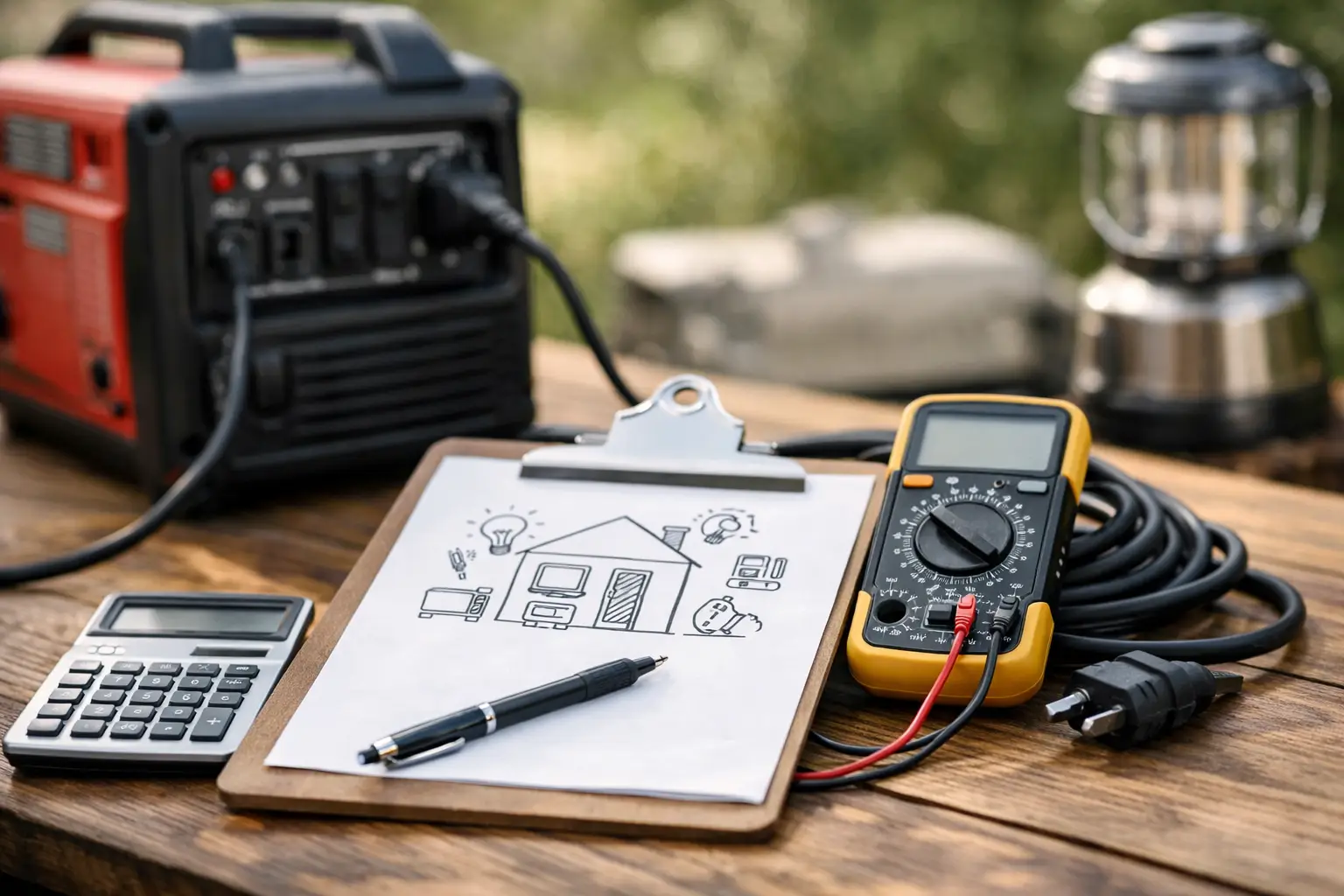
1. Calculate Running and Starting Watts
Start by making a list of everything you expect to power.
Refrigerators, freezers, pumps, air conditioners, furnaces, and some power tools can require considerably more power when their motors start.
For example, a refrigerator may have a relatively modest running wattage but require substantially more starting power for a few seconds.
Your generator needs enough running watts to handle the continuous load and enough starting watts to handle appliances that start simultaneously.
Do not choose a generator based only on the peak-watt number.
2. Compare Gasoline and Propane Output
One of the biggest advantages of dual fuel is flexibility.
Gasoline generally provides the higher output on these portable generators, making it useful when you need maximum capacity.
Propane offers a convenient alternative, especially for emergency preparedness because properly stored propane does not deteriorate in the same way gasoline does.
However, propane usually produces less power than gasoline. The difference varies by generator, so always check the manufacturer’s specifications for both fuels.
For example, the Westinghouse 12500W model produces 9,500 running watts on gasoline but 8,500 running watts on propane.
3. Decide Between an Inverter and Conventional Generator
This is one of the most important distinctions when comparing generators.
Inverter generators
Inverter models are generally the better choice when you prioritize:
- Lower noise
- Camping and RV use
- Portable electronics
- More efficient operation at lighter loads
- Cleaner, stable electrical output
The WEN DF680iX is an example of a dual-fuel inverter generator designed to combine these characteristics with higher output than many compact inverter models.
Conventional generators
Traditional open-frame generators are usually more attractive when raw power is the priority.
They are common for:
- Home emergency backup
- Job sites
- Large appliances
- Pumps
- Workshops
- High-demand equipment
The trade-off is usually more noise, greater weight, and less portability.
4. Check the Outlets Before Buying
The outlets can be just as important as the wattage.
For home backup, look for features such as a 120/240V outlet and a transfer-switch-ready connection if your electrical system requires them.
For RV use, an appropriate RV outlet can make setup much easier.
Do not assume that two generators with similar wattage have the same electrical connections.
5. Understand Transfer-Switch Compatibility
A transfer-switch-ready generator can be connected to selected household circuits through the appropriate equipment.
A transfer switch should be installed according to applicable electrical requirements and, where necessary, by a qualified electrician.
Do not attempt to power household wiring by plugging a generator into a wall outlet. That can create dangerous backfeeding conditions.
6. Consider Runtime, Not Just Tank Size
A large fuel tank does not automatically mean a generator will run for a specific number of hours.
Runtime depends heavily on the load.
A generator running a refrigerator, lights, and a few electronics will consume considerably less fuel than one powering an air conditioner, well pump, water heater, and several kitchen appliances at the same time.
When comparing models, look at the manufacturer’s stated runtime and the load condition used to obtain that figure.
7. Pay Attention to Carbon Monoxide Protection
Carbon monoxide is one of the most important safety concerns with portable fuel-burning generators.
Features such as automatic CO shutdown can provide an additional layer of protection, but they do not replace proper generator placement.
A portable generator should be operated outdoors and well away from doors, windows, vents, and other openings into the home.
Never operate a gasoline or propane generator inside a house, garage, basement, shed, or other enclosed or partially enclosed area.
8. Think About Weight and Storage
High-output dual fuel generators can weigh more than 200 pounds.
Wheels help, but they do not make a large generator genuinely lightweight.
Before purchasing, think about:
- Where the generator will be stored
- How it will reach its operating location
- Whether one person can move it
- Where propane cylinders will be stored
- How you will protect it from weather while keeping it properly ventilated during operation
For camping and RV travel, a smaller inverter generator can be much easier to live with.
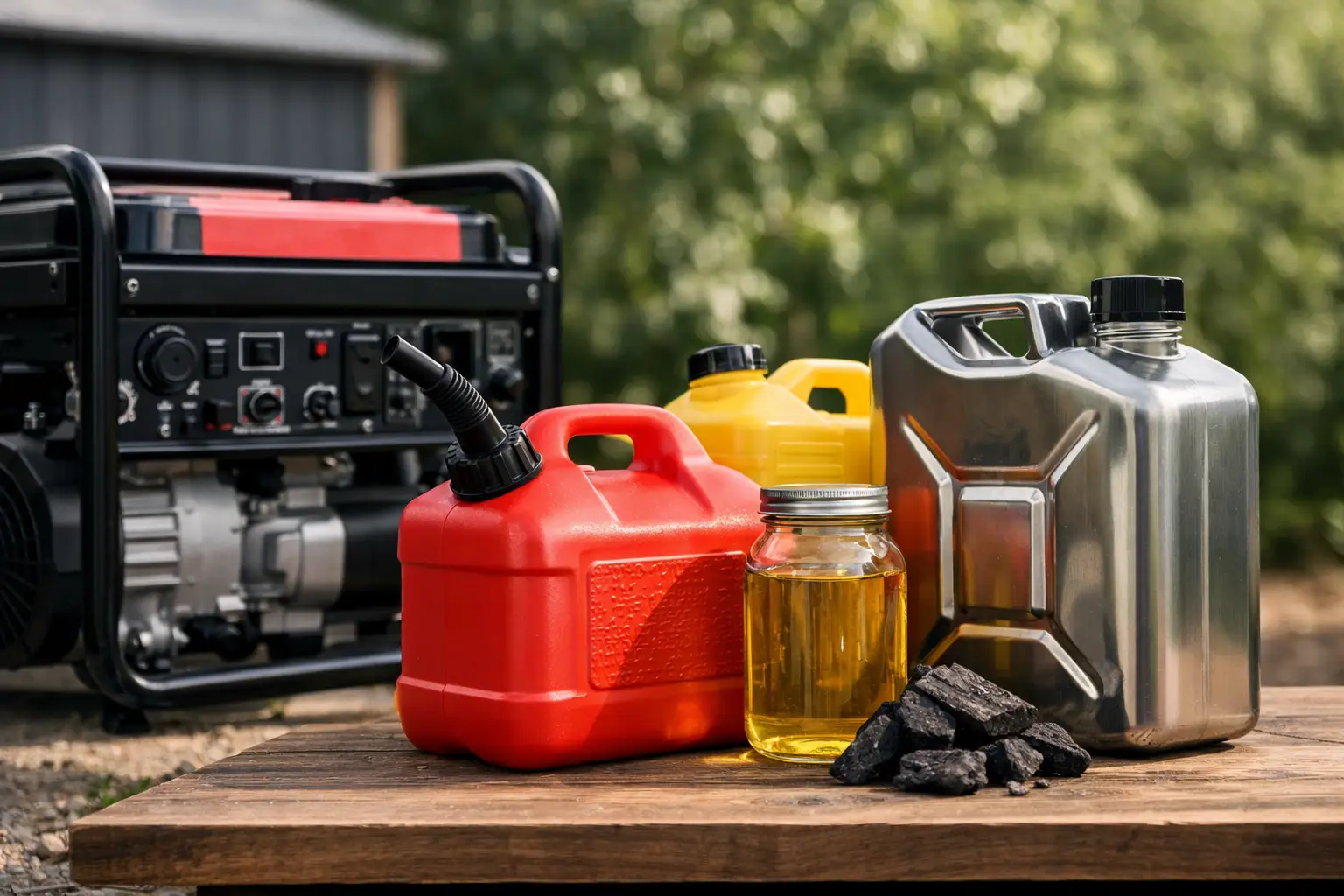
Gasoline vs. Propane: Which Fuel Should You Use?
There is no single fuel that is ideal for every situation.
| Feature | Gasoline | Propane |
|---|---|---|
| Maximum generator output | Usually higher | Usually lower |
| Long-term storage | Requires more care | Convenient for long-term storage |
| Fuel availability | Widely available | Depends on local supply |
| Emergency flexibility | Good | Excellent as a backup fuel |
| Starting in cold weather | Can vary | Can be affected by temperature |
| Fuel flexibility | Single fuel | Useful alternative to gasoline |
The main advantage of dual fuel is that you do not have to choose only one.
You can use gasoline when you need the generator’s maximum available output and switch to propane when storage convenience or fuel availability makes it more practical.
Which Dual Fuel Generator Is Right for You?
For larger home backup
Look at high-output models such as the Westinghouse 12500W, Westinghouse 13500W, or DuroMax XP13000EH.
These generators are designed around substantially higher loads than compact inverter models.
For RVs and camping
A smaller inverter generator makes more sense when portability and noise are important.
The Westinghouse 4000W is designed for lighter portable applications, while the WEN DF680iX provides more output while retaining an inverter design.
For extended outages
Look closely at fuel tank capacity, propane runtime, fuel consumption, and the loads you actually expect to run.
A generator with a large fuel tank can reduce how frequently you need to refuel, but actual runtime will always depend on the electrical load.
For sensitive electronics
An inverter generator is worth considering when you regularly need to power laptops, monitors, televisions, chargers, and similar electronics.
The WEN DF680iX, for example, uses inverter technology and is specifically designed to provide stable power for sensitive electronics.
Frequently Asked Questions About Dual Fuel Generators
Are dual fuel generators worth it?
For many buyers, the biggest advantage is fuel flexibility. You can use gasoline for higher available output and keep propane available as an alternative fuel. This can be particularly useful during extended outages when fuel availability may change.
Is it better to run a dual fuel generator on gas or propane?
Gasoline generally provides more power, while propane offers convenient long-term storage and an alternative fuel source. The best option depends on your required wattage, fuel availability, storage plans, and the generator’s specifications.
Can a dual fuel generator power a whole house?
A sufficiently powerful generator can power many essential household circuits, but the actual answer depends on your home’s electrical loads. Large appliances such as central air conditioners, electric water heaters, well pumps, and electric ranges can require substantial starting and running power.
Can I connect a dual fuel generator to my house?
A properly configured generator can be connected to selected household circuits using compatible equipment such as a transfer switch. This work should follow local electrical requirements and should be performed by a qualified professional when installation is required.
Are dual fuel generators safe indoors?
No. Portable gasoline and propane generators produce carbon monoxide and must be operated outdoors in a properly ventilated location away from doors, windows, vents, and other openings. Never operate one inside a home, garage, basement, or enclosed structure.
Does propane reduce generator power?
Usually, yes. Most dual fuel generators produce less running and peak wattage when operating on propane than when operating on gasoline. Always compare the gasoline and propane ratings for the specific model you are considering.
What size dual fuel generator do I need for a house?
There is no universal wattage based simply on the size of the house. Calculate the running watts of the appliances and circuits you need, then account for the starting watts of equipment with motors or compressors.
Final Thoughts
The best dual fuel generator for you depends on how you plan to use it.
For high-output home backup, the Westinghouse 12500W, Westinghouse 13500W, and DuroMax XP13000EH provide the power capacity needed for substantially larger loads.
For camping, RV use, and lighter backup, the Westinghouse 4000W offers a more compact approach.
The WEN DF680iX sits between those categories, combining dual-fuel flexibility, inverter technology, RV compatibility, CO protection, and a higher output level than many smaller portable inverter generators.
Before buying, focus on the numbers that actually matter: running watts, starting watts, gasoline and propane output, runtime, outlet configuration, noise, safety features, and portability.
Most importantly, choose a generator based on the loads you genuinely need during an outage rather than simply buying the largest model available. A properly sized dual fuel generator can give you more flexibility when the grid goes down while also being useful for RV trips, outdoor work, and other situations where portable power is needed.
When comparing models in 2026, remember that specifications, availability, and retailer pricing can change. Check the current manufacturer’s specifications and the product listing before purchasing.