As an Amazon Associate I earn from qualifying purchases.
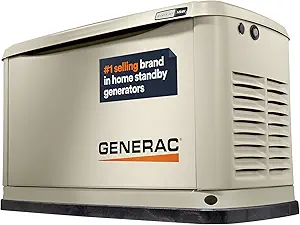
Home backup power has changed significantly in 2026. Homeowners can now choose between traditional standby generators that run on natural gas or propane and battery-based power stations that can be recharged from the grid, solar panels, or other sources. The right option depends on how much of your home you want to keep running, how long outages typically last, and whether you need automatic backup or a portable system.
Top Whole-Home Backup Generators and Power Stations for 2026
| Product | Where to Check It |
|---|---|
| Generac Guardian 14kW Home Standby Generator | Check Amazon Price |
| EcoFlow DELTA 2 Max Portable Power Station | Check Amazon Price |
| Anker SOLIX C1000 Portable Power Station | Check Amazon Price |
| EcoFlow DELTA Pro Ultra 6144Wh Power Station | Check Amazon Price |
| Jackery Portable Power Station Explorer 3000 Pro | Check Amazon Price |
Important: These products are not interchangeable. A permanently installed standby generator can automatically power selected household circuits or a properly sized whole-home electrical system during an outage. Portable power stations are better suited to essential appliances and smaller loads unless they are combined with the appropriate home-integration equipment. Always check the manufacturer’s requirements and have a qualified electrician handle permanent electrical connections.
Understanding the Modern Backup Power Landscape
The home backup market now includes two very different categories. Standby generators are permanently installed outside the home and are connected to the electrical system through a transfer switch. When utility power fails, the system can start automatically and supply the circuits it was designed to support. Fuel availability, generator size, installation requirements, and local codes all matter when choosing this type of system.
Battery power stations, on the other hand, store electricity instead of generating it with an engine. They produce no exhaust while operating and can often be recharged from an AC outlet or solar panels. Some can also connect to a home’s electrical system through compatible transfer equipment or a dedicated home panel. Their main limitation is stored energy: once the battery is depleted, you need another way to recharge it.
Product Overview and Use Case
Below, I break down what each system is designed to do, where it fits in a home backup setup, and what type of outage or household load it makes the most sense for.
Generac Guardian 14kW Home Standby Generator
The Generac Guardian 14kW is a permanently installed standby generator designed for residential backup. Unlike a portable power station, it uses an external fuel source and is intended to work with the home’s electrical system through an automatic transfer switch. With the proper installation and load management, a standby system can keep important household circuits running automatically when utility power fails.
It can operate on natural gas or liquid propane, depending on the installation configuration. When utility power is interrupted, the automatic transfer equipment starts the generator and transfers the connected electrical loads to generator power.
It can make sense for:
- Homes that experience frequent or extended outages
- Homeowners who want automatic backup instead of manually starting a portable generator
- Essential household circuits such as refrigeration, lighting, internet equipment, sump pumps, and appropriately sized HVAC loads
The exact loads a 14kW generator can support depend on their starting and running wattage, the home’s electrical configuration, and the transfer-switch setup.
Because it is permanently installed and automatically activated, it is designed for a much more hands-off backup experience than a portable generator.
EcoFlow DELTA 2 Max Portable Power Station
The EcoFlow DELTA 2 Max takes a different approach to backup power. It is a portable battery system with a 2,048Wh capacity and 2,400W AC output, with support for additional batteries that can expand total storage to 6kWh. EcoFlow also lists a maximum X-Boost output of 3,400W for compatible appliances.
It can be useful for:
- Refrigerators
- Wi-Fi routers
- Lights
- TVs and electronics
- Laptops
- Selected power tools
- Other moderate electrical loads
It supports AC charging and up to 1,000W of solar input. EcoFlow also states that combined AC and solar charging can reach an 80% charge in about 43 minutes under its specified test conditions. Actual charging time will vary with the input source, battery level, temperature, and setup.
For home use, the DELTA 2 Max is better viewed as an essential-load backup system unless it is paired with compatible home-transfer equipment. It can keep appliances such as a refrigerator, router, lights, and selected electronics operating without the noise or exhaust associated with a fuel generator.
Anker SOLIX C1000 Portable Power Station
The Anker SOLIX C1000 is a smaller portable battery option with a 1,056Wh capacity and 1,800W AC output. Anker also lists a 2,400W SurgePad capability for compatible appliances, along with up to 600W of solar input.
Its relatively compact size makes it easier to move around the house than larger whole-home battery systems. It can be useful for:
- Refrigerators
- LED lighting
- Wi-Fi equipment
- Fans
- Laptops
- Phones and other emergency electronics
Its UltraFast charging system can reach 80% in about 43 minutes and 100% in about 58 minutes when using the specified AC charging mode.
The C1000 is best suited to shorter outages and essential loads rather than trying to operate an entire house. Think refrigerator, lights, Wi-Fi equipment, fans, laptops, and other moderate electrical loads.
EcoFlow DELTA Pro Ultra 6144Wh Power Station
The EcoFlow DELTA Pro Ultra is the most home-focused battery system in this lineup. The current system starts at approximately 6kWh of storage and 7.2kW of output and can be expanded substantially with additional batteries and inverter units. EcoFlow currently lists expansion up to 90kWh of storage and 21.6kW of output when multiple units are combined.
With the appropriate home-integration equipment, such as EcoFlow’s Smart Home Panel 2, the DELTA Pro Ultra can be configured as a whole-home backup system rather than simply being used as a large portable battery. EcoFlow states that the system can provide 120/240V power and support high-demand household loads when properly configured.
It is particularly relevant for:
- Extended power outages
- Homes that need substantial battery storage
- Solar-integrated backup systems
- Households with larger electrical loads
- Homeowners who want battery backup without relying exclusively on gasoline or propane
Depending on the configuration, the system can accept power from solar, the electrical grid, generators, and compatible EV charging equipment.
Keep in mind that battery capacity, electrical load, weather, solar production, and the number of connected batteries all affect actual runtime.
Jackery Portable Power Station Explorer 3000 Pro
The Jackery Explorer 3000 Pro provides 3,024Wh of battery capacity and up to 3,000W of AC output, giving it substantially more stored energy than smaller portable power stations. Jackery’s current specifications list a pure sine wave output and a battery cycle life of 2,000 cycles to at least 70% capacity.
It can be useful for:
- Refrigerators
- Portable air conditioners within its rated limits
- CPAP machines
- Coffee makers
- Electronics
- Emergency lighting
- RV and camping equipment
Jackery also supports solar charging, with the maximum solar input depending on the charging configuration and compatible panels. This makes the Explorer 3000 Pro useful for emergency backup, RV use, remote work, and other situations where access to the electrical grid is limited.
Its nearly 64-pound weight is also worth considering. This is a portable system, but it is not something most people will want to carry long distances during an emergency.
Which Backup Systems Can Actually Power a Whole Home?
Not every product marketed for home backup is a true whole-home generator. A permanently installed standby generator is designed to connect to a home’s electrical system and can automatically supply selected circuits or a properly sized whole-home setup.
Large battery systems can also provide whole-home backup when paired with compatible transfer equipment or a dedicated home energy panel. The EcoFlow DELTA Pro Ultra, for example, is designed to integrate with the Smart Home Panel 2 and can provide 120/240V power in the appropriate configuration.
Smaller portable power stations such as the Anker SOLIX C1000, DELTA 2 Max, and Jackery Explorer 3000 Pro should generally be considered essential-load backup systems, unless they are connected to a compatible home electrical setup.
Before buying, calculate the running and startup wattage of the appliances you actually need during an outage. A refrigerator, sump pump, well pump, central air conditioner, electric water heater, and electric range can have very different power requirements.
How to Choose a Whole-Home Backup Generator or Battery Backup System
1. Power Output and Starting Loads
Start by listing the appliances you want to operate during an outage and check both their running wattage and startup requirements. Motors in refrigerators, well pumps, sump pumps, and HVAC equipment can briefly require much more power when they start.
A generator’s rated output should therefore be compared with the actual electrical loads in your home rather than with the size of the house alone. If you want whole-home coverage, a qualified electrician or generator installer can perform a load calculation and determine the appropriate system size.
2. Battery vs. Fuel
Fuel-powered standby generators can run for extended periods as long as the fuel supply remains available, making them particularly useful for long outages. Battery systems operate quietly and produce no exhaust while discharging, but their runtime is limited by stored energy and available recharging.
Never operate a fuel-burning generator inside a home, garage, basement, or other enclosed area. Portable battery systems should also be used according to the manufacturer’s installation, ventilation, charging, and temperature requirements.
3. Charging and Fuel Options
Consider how you will replenish the system if an outage lasts several days. A standby generator may use natural gas or propane, while a battery system can potentially recharge from AC power, solar panels, a compatible generator, or other supported sources.
Solar charging becomes especially useful during prolonged outages, but actual solar production depends on weather, panel size, orientation, shading, and the system’s maximum solar input.
4. Portability
Portable power stations are useful when you want to move backup power between rooms, take it on an RV trip, or use it away from home. The trade-off is that larger battery systems can become heavy. For example, the Jackery Explorer 3000 Pro weighs about 64 pounds, so “portable” does not necessarily mean lightweight.
A permanently installed standby generator has the opposite trade-off: it cannot be moved, but it can provide automatic backup without requiring you to carry equipment or run extension cords during an outage.
5. Expandable Battery Capacity
Battery capacity determines how much energy the system can store, while output determines how many devices it can operate at once. These are not the same thing.
For example, the DELTA 2 Max starts with 2,048Wh of capacity and supports additional batteries, while the DELTA Pro Ultra can scale from approximately 6kWh to much larger storage configurations.
If you expect multi-day outages, expandable storage can be more useful than simply buying a system with a high peak wattage.
6. Monitoring and Automatic Operation
App connectivity can make it easier to check battery level, power consumption, alerts, and system status remotely. But monitoring should not be confused with automatic whole-home backup.
A true standby setup requires compatible transfer equipment and an appropriate electrical installation. Portable battery systems may provide app-based monitoring while still requiring the homeowner to connect individual appliances or use compatible transfer equipment.
Safety and Installation Considerations
Backup power equipment should never be treated as a simple plug-in purchase when it is being connected to a home’s electrical system. A permanently installed generator or battery system may require a transfer switch, load-management equipment, permits, and professional installation depending on the configuration and local requirements.
Fuel-burning generators also produce carbon monoxide. They must be operated outdoors and positioned according to the manufacturer’s clearance requirements, away from doors, windows, vents, and other openings.
For battery systems, follow the manufacturer’s instructions for charging, temperature limits, storage, and electrical connections. If you want backup power through the home’s breaker panel, use equipment specifically designed for that application and have the installation completed by a qualified professional.
What Is Changing in Home Backup Power in 2026?
Home backup systems are increasingly combining battery storage, solar input, smart energy management, and multiple charging sources. Instead of relying on a single fuel source, newer systems can be designed around several ways of obtaining electricity.
Another important development is the move toward modular systems. Rather than buying a very large battery on day one, homeowners can choose a system that allows additional storage or inverter capacity as their needs change.
At the same time, traditional natural-gas and propane standby generators remain important for homeowners who need automatic operation and long-duration backup. The choice is therefore less about replacing one technology with another and more about matching the backup system to the home’s electrical loads, outage patterns, and installation requirements.
Frequently Asked Questions About Whole-Home Backup Generators
What size generator do I need to power my whole house?
There is no single generator size that works for every home. The correct size depends on the appliances and electrical loads you want to operate, including their startup wattage. A professional load calculation is the safest way to determine the appropriate generator size.
Can a portable power station power an entire house?
Some large battery systems can provide whole-home backup when connected to compatible transfer equipment or a home energy panel. Smaller portable power stations are generally better for essential appliances unless the manufacturer specifically supports a home-integration setup.
How long can a whole-home generator run during an outage?
A fuel-powered standby generator can continue operating as long as it has an adequate fuel supply and remains within its operating requirements. Battery systems are limited by their stored capacity, household load, and ability to recharge.
Are battery backup systems better than gas generators?
They solve different problems. Battery systems are quiet and produce no exhaust while operating, while fuel-powered standby generators can provide long-duration backup without relying on stored battery capacity. The better fit depends on the home’s loads, outage duration, and installation requirements.
Can I connect a generator directly to my home’s outlets?
A generator should never be connected to a home’s electrical system using an improvised connection that can backfeed the utility lines. Whole-home or partial-home backup should use the appropriate transfer equipment installed according to local electrical requirements.
Do I need an electrician to install a whole-home generator?
Permanently connecting a generator or large battery system to a home’s electrical panel generally requires specialized electrical work, and permits or inspections may apply depending on the location and installation. Use a qualified professional and follow the manufacturer’s installation instructions.
Final Thoughts
The best home backup system depends on what you actually need to keep running during an outage. A permanently installed standby generator such as the Generac Guardian is designed for automatic backup and long-duration operation when connected to an appropriate fuel supply and electrical system.
Portable battery systems take a different approach. The EcoFlow DELTA 2 Max, Anker SOLIX C1000, and Jackery Explorer 3000 Pro are better suited to essential appliances and portable backup, while the EcoFlow DELTA Pro Ultra can be configured as a much larger whole-home battery system with compatible home-integration equipment.
Before buying, calculate your essential loads, consider startup wattage, determine how many hours or days of backup you need, and decide how the system will be recharged during a prolonged outage. If you want the system connected to your home’s electrical panel, check local requirements and use a qualified installer.
The right backup system is ultimately the one that matches your home’s electrical demand, outage duration, available fuel or charging sources, and the level of automation you want.