As an Amazon Associate I earn from qualifying purchases.
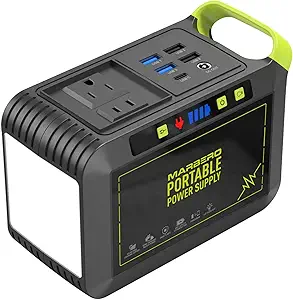
When you are camping away from a wall outlet, a reliable camping battery generator can make a big difference. Instead of carrying gasoline, dealing with engine noise, or running an exhaust-producing generator, you can bring a portable power station and recharge it from an AC outlet, your vehicle, or a compatible solar panel.
These battery-powered generators are useful for much more than charging a phone. Depending on the model and battery capacity, they can run LED lights, cameras, laptops, fans, CPAP machines, small coolers, and other camping equipment.
The important part is choosing a power station that matches the way you actually camp. A lightweight 80–100Wh unit makes sense for a short solo trip, while a 250–500Wh station is considerably more practical for weekend car camping. If you want to run a 12V refrigerator or several larger devices for extended periods, moving into the 1,000Wh class may make more sense.
Below are five portable battery generators worth considering, followed by a detailed guide to choosing the right capacity and power output for your camping setup.
Leading Portable Battery Generators for Camping in 2026
| Model | Battery Capacity | Rated Output | Best For |
|---|---|---|---|
| MARBERO Portable Power Station | 88Wh | 80W | Lightweight camping and basic electronics |
| GRECELL Portable Power Station | 230.8Wh | 330W | Weekend camping and multiple devices |
| Jackery Explorer 300 | 293.8Wh | 300W | Compact general-purpose camping |
| ALLWEI PPS300 | 280Wh | 300W | Budget-friendly camping power |
| Giomre Portable Power Station | Approx. 297Wh | Up to 600W* | Higher-output compact setups |
*Always verify the exact model and current Amazon listing before buying because specifications can vary between versions.
What Is a Camping Battery Generator?
A camping battery generator is essentially a rechargeable battery system combined with an inverter and multiple charging ports.
Unlike a conventional gas generator, it does not burn fuel while operating. It stores electrical energy in its battery and provides power through AC outlets, USB ports, and DC outputs.
The term “battery generator” is commonly used by shoppers, but manufacturers generally call these products portable power stations or solar generators.
For camping, the advantages are straightforward:
- No gasoline to carry
- No engine exhaust while operating
- Much quieter than a gas generator
- USB ports for phones and electronics
- AC outlets for compatible appliances
- Car charging capability on many models
- Solar charging on compatible models
- Easy monitoring through a display on many units
- Compact enough for car camping and road trips
The main limitation is battery capacity. Once the battery is depleted, you need access to a charging source.
That is why choosing the correct watt-hour capacity is more important than simply buying the station with the highest wattage number.
1. MARBERO 88Wh Portable Power Station – Best for Lightweight Camping
Check Amazon Price [Click Here]
This MARBERO is the smallest option in this group and is designed primarily around portability. With an approximately 88Wh battery and 80W rated AC output, it is better suited to low-power electronics than demanding appliances.
The biggest advantage is its size. At roughly 3.2 pounds, it is considerably easier to carry than larger camping power stations.
It provides AC, DC, USB-A, and USB-C connections, along with an integrated LED light and SOS function. A compatible solar panel can also be used to recharge the unit when you are away from a wall outlet.
MARBERO 88Wh Specifications
- Battery capacity: approximately 88Wh
- Rated AC output: 80W
- Peak output: 120W
- Weight: approximately 3.2 lb
- AC output: 110V
- USB and USB-C charging
- DC output
- Built-in LED lighting
- Solar charging supported with compatible panel
The key thing to understand is that this is not a replacement for a large camping power station.
It makes more sense for charging phones, cameras, lights, tablets, and other relatively low-power devices.
Best For
Solo campers, hikers, photographers, and anyone who values low weight over battery capacity.
If your typical camping load consists of a phone, camera batteries, small lights, and perhaps a tablet, carrying several pounds of extra battery capacity may not be worthwhile.
2. GRECELL 230.8Wh Portable Power Station – A Practical Weekend Option
Check Amazon Price [Click Here]
The GRECELL is a more substantial option for campers who need more than basic USB charging.
The current T300S specification lists a 230.8Wh battery, 330W rated output, and 600W peak output. It also provides AC, USB-C, USB-A, and 12V outputs.
At approximately 10.2 pounds, it is noticeably heavier than the MARBERO, but the additional battery capacity makes it much more useful for weekend car camping.
GRECELL Specifications
- Battery capacity: 230.8Wh
- Rated output: 330W
- Peak output: 600W
- Battery chemistry: NCM lithium-ion
- USB-C output up to 60W
- Additional USB-C and USB-A ports
- 12V car-style output
- AC output
- Solar charging support
- LED light and SOS mode
- Weight: approximately 10.2 lb
One useful feature is the ability to charge several devices simultaneously, provided their combined power consumption stays within the station’s limits.
That makes it more practical for couples or families who need to keep several small electronics charged during a camping weekend.
What Can It Power?
The GRECELL can handle many common camping electronics, including:
- Smartphones
- Tablets
- Cameras
- Laptops
- LED lights
- Small fans
- Some CPAP setups
- Low-power camping appliances
A refrigerator or other motor-driven appliance requires more careful consideration because startup power can be considerably higher than its normal running consumption.
Best For
Weekend campers who need more capacity and more output than a small 80–100Wh power station provides.
3. Jackery Explorer 300 – Compact and Versatile Camping Power
Check Amazon Price [Click Here]
The Jackery Explorer 300 remains a recognizable name in portable camping power, but there is an important detail shoppers should know before buying.
The original Explorer 300 uses a 293.8Wh NCM lithium-ion battery, not LiFePO₄. Jackery now also sells an Explorer 300 V2, which uses a 288Wh LiFePO₄ battery and is a different generation.
If you are buying the original Explorer 300 through an older listing, check the exact model and specifications before ordering.
Jackery Explorer 300 Specifications
- Battery capacity: approximately 293.8Wh
- Battery chemistry: NCM lithium-ion on the original Explorer 300
- Rated AC output: 300W
- Pure sine wave AC output
- USB ports
- USB-C charging
- Car charging
- Solar charging capability
- Weight: approximately 7.1 lb
The original Explorer 300 is a useful middle ground between ultra-light power banks and much larger 1,000Wh stations.
Its approximately 300Wh capacity is enough for a range of everyday camping electronics without becoming too difficult to transport.
For example, a camper could use it for phones, camera batteries, lights, a laptop, and other low-power equipment during a weekend trip.
One Important 2026 Buying Tip
If battery chemistry is important to you, compare the original Explorer 300 with the Explorer 300 V2 rather than assuming they are identical.
The newer 300 V2 uses LiFePO₄ cells and has a 288Wh capacity, 300W-class output, and a significantly higher rated cycle life.
Best For
Campers who want a compact power station from an established portable-power brand.
4. ALLWEI PPS300 280Wh Portable Power Station – Good Balance of Size and Features
Check Amazon Price [Click Here]
The ALLWEI PPS300 offers a 280Wh battery and 300W continuous output, with up to 600W peak power.
It is an interesting option for campers who want a compact station with several useful outputs without stepping up to a much heavier 500Wh or 1,000Wh model.
ALLWEI PPS300 Specifications
- Battery capacity: 280Wh
- Continuous output: 300W
- Peak output: 600W
- Pure sine wave AC output
- 60W USB-C PD
- USB-A outputs
- Regulated 12V output
- DC outputs
- Solar charging support
- Two AC outlets
- LED light with SOS mode
- Weight: approximately 6.5 lb
The regulated 12V output is particularly useful for camping equipment designed to run from a vehicle-style DC connection.
The 60W USB-C PD output is also helpful for modern laptops, tablets, phones, and other USB-C devices.
What Makes the ALLWEI Useful for Camping?
The main attraction is balance.
You get substantially more battery capacity than an 88Wh unit without carrying a 20- or 30-pound power station.
That makes the PPS300 suitable for:
- Weekend camping
- Photography trips
- Laptop charging
- Portable lighting
- Small fans
- Phones and tablets
- Some CPAP applications
- Low-power DC camping equipment
As with any portable power station, check the actual wattage requirements of a CPAP, refrigerator, heater, or other appliance before relying on it for an entire trip.
Best For
Campers who want a reasonably light 280Wh-class station with useful AC, USB-C, and DC outputs.
5. Giomre Portable Power Station – Higher Output in a Compact Class
Check Amazon Price [Click Here]
The Giomre option in the original article was presented as a roughly 297Wh station with up to 600W of output.
This puts it in an interesting category because it attempts to provide relatively high inverter output without the weight of a much larger battery.
However, shoppers should pay particular attention to the exact model number and current listing because portable power station specifications can change between product generations.
Giomre Features to Look For
Depending on the exact version, the unit is designed around:
- Approximately 300Wh battery capacity
- Higher AC output than many basic 300W-class stations
- USB charging
- DC outputs
- AC outlet
- Solar charging compatibility
- Fast recharge capability
- Compact construction
The important distinction here is between battery capacity and inverter output.
A station can have a relatively high wattage rating but still have a limited runtime because its battery is only around 300Wh.
For example, a 600W load could theoretically consume approximately 300Wh in about 30 minutes before accounting for inverter losses. In real use, runtime will vary.
Best For
Campers who occasionally need higher output but do not want to carry a large 1,000Wh power station.
How to Choose the Right Camping Power Station
Buying a portable power station based only on wattage is one of the easiest mistakes to make.
You should look at at least five specifications.
1. Battery Capacity: Look at Watt-Hours
Battery capacity is measured in watt-hours (Wh).
Think of Wh as the size of the fuel tank.
A larger number generally means more stored energy.
Rough Camping Categories
80–120Wh
Good for:
- Phones
- Cameras
- LED lights
- Small USB devices
- Short trips
200–300Wh
Good for:
- Weekend camping
- Laptops
- Multiple phones
- Cameras
- Lights
- Small fans
- Some CPAP setups
500–1,000Wh
Better for:
- Longer camping trips
- 12V refrigerators
- Multiple people
- More demanding electronics
- Extended off-grid use
1,000Wh and above
Useful for:
- Multi-day camping
- Van life
- Large refrigerators
- Multiple appliances
- Base-camp setups
For many weekend campers, the 250–500Wh range is a practical sweet spot because it provides meaningful battery capacity without becoming excessively heavy.
2. Check Continuous Wattage
The continuous output rating tells you how much power the inverter can provide during normal operation.
For example, a 300W power station is intended for devices whose combined continuous consumption stays within that limit.
If your devices require 350W continuously, a 300W station is not the right choice even if the battery has plenty of capacity.
3. Understand Peak or Surge Power
Some appliances draw extra power when their motors start.
This can happen with:
- Refrigerators
- Freezers
- Pumps
- Certain power tools
- Some compressors
A station rated at 300W continuous and 600W peak may handle a short startup surge that exceeds 300W.
However, peak power is not intended to be used continuously.
4. Consider Battery Chemistry
Battery chemistry has become more important when comparing portable power stations.
Many newer models use LiFePO₄, also called lithium iron phosphate.
The advantages generally include:
- Long cycle life
- Good thermal stability
- Long-term durability
- Better suitability for frequent charging cycles
However, not every product carrying a familiar model name uses the same battery chemistry.
The original Jackery Explorer 300, for example, uses NCM lithium-ion cells, while the newer Explorer 300 V2 uses LiFePO₄. Always check the exact generation.
5. Think About Weight
A power station is only useful at the campsite if you are willing to bring it.
For backpacking or hiking, every pound matters.
For car camping, weight becomes less important because the vehicle does most of the transportation.
This creates two very different buying priorities.
Backpacking
Look for:
- Low weight
- USB-C
- Compact dimensions
- Approximately 80–150Wh
Car Camping
Look for:
- 250–500Wh
- AC outlets
- 12V DC output
- Solar charging
- Multiple charging ports
Van Life or Base Camp
Consider:
- 1,000Wh or more
- Higher inverter output
- Faster solar charging
- Larger DC output
- Expandable batteries where available
How Long Will a Camping Power Station Last?
A simple calculation can help estimate runtime.
Use:
Runtime ≈ Battery Capacity × 0.85 ÷ Device Wattage
The 0.85 factor provides a rough allowance for inverter and conversion losses. Actual results vary by device and power station.
For example, a 280Wh power station running a 40W device might provide approximately:
280 × 0.85 ÷ 40 = 5.95 hours
That is an estimate rather than a guarantee.
A device’s real-world power consumption can fluctuate, and some appliances cycle on and off instead of drawing their rated wattage continuously.
Can You Run a CPAP With a Camping Battery Generator?
Yes, a portable power station can be useful for CPAP camping, but you should check the CPAP manufacturer’s specifications before relying on a particular setup.
The biggest factors are:
- CPAP wattage
- Whether the heated humidifier is enabled
- Whether heated tubing is enabled
- Battery capacity
- AC inverter losses
- Ambient temperature
A CPAP running without the heated humidifier may consume substantially less energy than the same machine with all heating features enabled.
For overnight CPAP use, a 250–500Wh power station is generally a much more comfortable starting point than an 88Wh unit.
If you need several nights of CPAP operation, consider a larger battery capacity or a compatible DC power solution.
Can a Portable Power Station Run a Camping Refrigerator?
It can, but this is another situation where battery capacity matters more than simply looking at the refrigerator’s advertised wattage.
A refrigerator may consume relatively little power once it reaches its target temperature, but the compressor can draw more power when starting.
For a refrigerator used throughout an entire weekend, a 500Wh or larger station may be considerably more practical than an 80–100Wh model.
For extended off-grid trips, campers often benefit from a 1,000Wh-class station combined with solar charging.
Solar Charging for Camping
Solar charging can turn a portable power station into a much more useful off-grid system.
The basic setup is simple:
Solar panel → portable power station → camping equipment
But solar charging is not always as fast as the panel’s advertised wattage suggests.
Actual solar production depends on:
- Sun intensity
- Panel angle
- Clouds
- Shade
- Temperature
- Cable losses
- The station’s maximum solar input
A 200W panel does not necessarily deliver 200W continuously throughout the day.
For this reason, solar should be viewed as a way to extend your available energy rather than assuming you will receive the panel’s maximum rating all day.
Real-World Camping Scenarios
Solo Weekend Camping
An 80–150Wh station can be enough if you mainly need phones, lights, and camera charging.
The MARBERO is particularly attractive when low weight is the priority.
Two-Person Weekend Camping
A 200–300Wh station is more flexible.
You can charge several phones, camera batteries, lights, tablets, and other electronics without carrying a large battery.
The GRECELL, Jackery Explorer 300, and ALLWEI are better suited to this type of use than a very small 88Wh unit.
CPAP Camping
Prioritize battery capacity and calculate the CPAP’s actual overnight energy consumption.
A 250–500Wh station gives you considerably more margin than a sub-100Wh model.
Car Camping With a Refrigerator
Move toward the 500–1,000Wh class if you want to run a 12V refrigerator for extended periods.
A larger battery is especially useful when the vehicle will be parked for several days.
Multi-Day Off-Grid Camping
For longer trips, consider 1,000Wh or more, particularly if you need refrigeration, laptops, cameras, lighting, and other equipment simultaneously.
At this point, weight becomes less important than total stored energy and solar recharge capability.
Camping Battery Generator Safety Tips
Portable power stations are easier to use than fuel generators, but they still need to be treated as electrical equipment.
Keep the unit dry
Unless the manufacturer specifically states that the power station is water-resistant, protect it from rain and splashing water.
Avoid extreme temperatures
Do not leave a lithium battery sitting in a hot vehicle for extended periods.
Follow the manufacturer’s specified charging and operating temperature range.
Allow ventilation
Do not cover cooling vents while the inverter is operating.
Do not exceed the rated output
Check the combined wattage of the devices connected to the station.
Use the correct charging equipment
Use the supplied charger or a compatible charger approved for the specific model.
Inspect cables
Damaged charging cables should not be used.
Store the battery correctly
If you are not going camping for several months, follow the manufacturer’s recommended storage charge level rather than leaving the battery completely empty.
Battery Generator vs. Gas Generator for Camping
A portable power station and a gasoline generator serve different purposes.
Portable Power Station
Advantages:
- Quiet operation
- No fuel
- No engine exhaust
- Easy USB charging
- Convenient for electronics
- Can be recharged with solar
- Good for campsites where noise is a concern
Limitations:
- Finite battery capacity
- Must eventually be recharged
- Large-capacity models can be heavy
- High-power appliances can drain batteries quickly
Gas Generator
Advantages:
- Can run for extended periods with additional fuel
- High output is available from larger models
- Better suited to sustained heavy loads
Limitations:
- Noise
- Fuel storage
- Exhaust
- More maintenance
- Not appropriate for enclosed tents, vehicles, or other poorly ventilated spaces
For quiet camping and electronics, a battery power station is often much more convenient.
Which Camping Battery Generator Should You Choose?
The best option depends on how you camp.
Choose the MARBERO 88Wh if:
You want the lightest option for phones, lights, cameras, and other low-power electronics.
Choose the GRECELL if:
You want a larger battery and more output for weekend camping and several devices.
Choose the Jackery Explorer 300 if:
You want a compact, established-brand power station and are comfortable with the specifications of the original Explorer 300. If buying new in 2026, compare it carefully with the newer Explorer 300 V2.
Choose the ALLWEI PPS300 if:
You want approximately 280Wh of capacity, 300W continuous output, useful USB-C charging, and a relatively compact design.
Consider the Giomre if:
Higher inverter output is more important to you than maximizing battery capacity, provided the exact model’s current specifications meet your requirements.
Final Verdict: Choosing the Right Portable Power Station for Camping
There is no single best camping battery generator for every outdoor adventure.
The right choice depends on what you need to power and how far you have to carry the station.
For lightweight trips where you mainly need phones, cameras, and lights, an approximately 88Wh unit can make sense.
For weekend car camping, the 200–300Wh range provides a much better balance between portability and usable energy.
If you need to run a CPAP overnight, use a portable refrigerator, or support several devices for multiple days, moving into the 500Wh to 1,000Wh class is worth considering.
The most important specifications to compare are watt-hours, continuous AC output, peak output, battery chemistry, weight, charging speed, and solar input.
Do not choose a station simply because it has the largest wattage number on the box. A 600W inverter paired with a small battery may run a high-power appliance, but it can drain quickly. Conversely, a larger battery with a lower inverter rating may provide much longer runtime for modest loads.
For most casual weekend campers, a compact 250–500Wh portable power station offers a practical balance. For longer off-grid adventures, a larger station with solar charging can provide considerably more flexibility.
Before purchasing, always verify the exact model number, battery chemistry, output ratings, included accessories, and current specifications on the product listing. Portable power station manufacturers frequently introduce updated versions under similar names, and the differences can be significant.