As an Amazon Associate I earn from qualifying purchases.
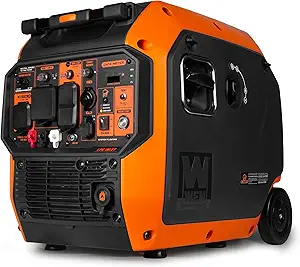
If you need a generator that can supply both 120V and 240V power, a 240V inverter generator gives you more flexibility than a typical 120V portable inverter. These generators can be useful for RVs with larger electrical loads, home backup systems, workshops, and equipment that requires 240V power.
For this 2026 guide, I’m focusing on the specifications that matter most in real use: running and starting watts, 120/240V output, fuel type, noise, runtime, outlet configuration, and carbon monoxide protection. I’ve also kept the models that make sense for different use cases instead of treating every 240V generator as if it were designed for the same job.
Best 240V Inverter Generators for Power Backup and RV Use in 2026
| Model | Starting / Running Watts | Fuel | Voltage | Best For |
|---|---|---|---|---|
| WEN DF680iX | 6,800 / 5,100W gas | Gasoline / Propane | 120/240V | RVs and essential home backup |
| Westinghouse iGen11000DFc | 11,000 / 9,000W gas | Gasoline / Propane | 120/240V | Higher-demand home backup |
| Champion Power Equipment 201238 | 6,500 / 5,000W | Gasoline | 120/240V | RVs and portable backup |
| Champion Power Equipment 201175 | 8,500 / 7,000W gas | Gasoline / Propane | 120/240V | RVs and home backup |
| A-iPower SUA7600iED | 7,600 / 6,100W gas | Gasoline / Propane | 120/240V | Flexible dual-fuel backup |
This guide compares five 240V inverter generators that cover several common needs, from RV power and portable backup to higher-demand home applications. Not every generator here is designed for the same load, so the comparisons focus on usable running power, 120/240V capability, fuel flexibility, noise, runtime, outlets, and safety features.
One important point is that 240V output does not automatically mean a generator can run an entire house. Your electrical load, transfer equipment, outlet configuration, and the generator’s continuous wattage all matter. Always check the generator’s specifications and have a qualified electrician handle a permanent home connection.
Why Choose a 240V Inverter Generator?
Inverter generators create electricity through an electronic conversion process that helps produce stable AC power. Many models are designed to provide low-THD output, making them suitable for electronics and other equipment that can be sensitive to poor-quality power.
A 240V generator is particularly useful when you need equipment that operates at 240V or when you want a generator that can supply both 120V and 240V loads. This can make a difference for certain home appliances, pumps, workshop equipment, and larger RV electrical systems.
Many models also offer dual-fuel operation, allowing you to use gasoline or propane. Gasoline generally provides the higher output on these models, while propane provides another fuel option for emergency preparedness.
Carbon monoxide protection is another useful feature, but it does not make a portable generator safe to operate indoors, inside an RV, in a garage, or in another enclosed space. CO sensors are designed to shut the generator down when dangerous conditions are detected; they are not a substitute for proper generator placement.
Always operate a portable generator outdoors, well away from doors, windows, vents, and other openings where exhaust could enter an occupied space.
120V vs. 240V: What Does a 240V Generator Actually Do?
A 240V inverter generator is useful when you need more than standard 120V household power. Many larger appliances, well pumps, air-conditioning equipment, workshop tools, and some RV setups can use 240V power, while everyday electronics and smaller appliances generally use 120V.
The important thing is not simply choosing a generator with a “240V” label. Look at the continuous running wattage, the available 240V receptacle, amperage at 240V, and whether the generator can supply 120V and 240V loads at the same time.
For home backup, the generator also needs to be connected correctly through equipment designed for generator power. Never connect a portable generator directly to a household wall outlet. A properly installed transfer switch or approved interlock and inlet system helps prevent dangerous backfeeding.
Key Features to Consider in 240V Inverter Generators
- Power Output: Rated or running watts indicate the continuous power available, while starting watts provide short-term capacity for equipment with higher startup demands.
- 120/240V Configuration: Check whether the generator provides true 120/240V output and which receptacle supplies it.
- Fuel Type: Gasoline-only models are straightforward, while dual-fuel generators provide gasoline and propane flexibility.
- Starting Mechanism: Electric start, remote start, or recoil start can affect convenience.
- Noise Level: A lower dBA rating can make a generator more comfortable around homes and campsites.
- Safety: Look for carbon monoxide monitoring, low-oil shutdown, overload protection, and appropriate outlet protection.
- Portability: Weight, wheels, handles, and overall dimensions matter if the generator will be moved frequently.
- Runtime: Compare runtime at a stated load rather than assuming the maximum advertised runtime represents heavy-load operation.
- Power Quality: Low THD inverter output can be useful for electronics and equipment that require stable power.
- Outlet Configuration: Check the exact receptacles, amperage, and whether an RV-ready connection is included.
Detailed Reviews of the Top 240V Inverter Generators
WEN DF680iX 6800-Watt Dual Fuel Inverter Generator
The WEN DF680iX is one of the more practical choices in this group if you need 120/240V capability without moving into the much larger high-output generator category. It produces 6,800 starting watts and 5,100 running watts on gasoline, or 6,000 starting watts and 4,500 running watts on propane.
For RV owners, the combination of a 120V TT-30R outlet and a 120/240V L14-30R outlet gives the DF680iX useful flexibility. The voltage selector allows the generator to be configured for 120V or 240V operation, so buyers should check the manual and outlet configuration before connecting a particular load.
The dual-fuel design is another practical advantage. Gasoline provides more output, while propane gives you another fuel option for emergency preparedness. The generator also includes electric start, an economy mode, a data display, and automatic CO shutdown.
Best for: RV owners and homeowners who want a relatively compact 120/240V inverter generator with dual-fuel capability.
Keep in mind: At 5,100 running watts on gasoline, it is better suited to essential loads and moderate RV demands than to trying to run an entire electrically heated or heavily air-conditioned home.
Westinghouse iGen11000DFc 11000-Watt Dual Fuel Inverter Generator
The Westinghouse iGen11000DFc is the high-output option in this comparison. It produces 11,000 peak watts and 9,000 running watts on gasoline, while propane provides 10,000 peak watts and 8,100 running watts.
This generator is designed more around home backup and high-demand applications than lightweight RV travel. It provides 120/240V output and includes a 14-50R 120/240V outlet and an L14-30R outlet. It is also designed to work with a transfer switch for properly installed home backup systems.
The 7.92-gallon gasoline tank can provide up to 17 hours of runtime at 25% load under the manufacturer’s stated conditions. Remote start, electric start, economy mode, a digital data center, GFCI outlets, automatic low-oil shutdown, and a CO sensor add useful convenience and protection features.
Best for: Homeowners who need more continuous wattage for larger essential loads or higher-demand equipment.
Keep in mind: At roughly 187 pounds dry, this is not a generator you will want to move around like a small RV inverter. Its higher output also comes with a larger footprint and higher purchase cost.
Champion Power Equipment 201238 6500-Watt Inverter Generator
The Champion 201238 is a gasoline-powered 120/240V inverter generator with 6,500 starting watts and 5,000 running watts. Unlike the dual-fuel models in this comparison, it uses gasoline only, which keeps the fuel system straightforward but gives you fewer fuel options during an extended outage.
Champion rates the generator at 64 dBA from 23 feet and up to 15 hours of runtime at 25% load. It includes a 120V TT-30R RV outlet, a 120/240V L14-30R locking outlet, two GFCI household outlets, and a 12V automotive-style outlet.
The generator also includes Economy Mode, an Intelligauge with Power Meter, low-oil shutdown, and CO Shield automatic carbon monoxide shutdown. Champion specifies less than 3% THD for its clean-power output.
Best for: RV owners and homeowners who want 120/240V inverter power and do not need dual-fuel capability.
Keep in mind: The recoil-start design and gasoline-only fuel system may be less convenient for buyers who specifically want electric start or propane as a backup fuel.
Champion Power Equipment 201175 8500-Watt Dual Fuel Inverter Generator
The Champion 201175 sits between the WEN DF680iX and the larger Westinghouse in terms of output. It provides 8,500 starting watts and 7,000 running watts on gasoline, with lower output when operating on propane. Champion designed this model around dual-fuel flexibility, electric start, quiet operation, and portable backup power.
Its 120/240V configuration makes it useful for larger RV loads and selected home backup applications. The generator also includes CO Shield, Quiet Technology, Economy Mode, GFCI protection, and a large 5.33-gallon fuel tank.
Electric start is particularly useful when the generator is being kept as emergency equipment because you do not have to rely on repeated recoil pulls to start it.
Best for: Buyers who want more running capacity than the WEN DF680iX while keeping dual-fuel capability.
Keep in mind: This is a substantially larger and heavier machine than the smaller models, so portability matters if you expect to move it frequently.
A-iPower SUA7600iED 7600W Dual Fuel Inverter Generator
The A-iPower SUA7600iED delivers 7,600 starting watts and 6,100 running watts on gasoline, or 6,900 starting watts and 5,500 running watts on propane. It provides 120/240V output and uses an inverter system rated at less than 3% THD.
A-iPower includes electric and recoil starting, low-idle technology, parallel capability, a digital data center, CO automatic shutdown, and a 3.6-gallon gasoline tank. The technical specifications list a noise level of 62 dBA at half load from 21 feet.
One feature that makes this model particularly interesting for emergency use is its Fuel Sense technology, which can automatically transition between propane and gasoline when the propane supply is depleted or disconnected, according to A-iPower.
Best for: Buyers who want dual-fuel flexibility, electric start, parallel capability, and 120/240V output.
Keep in mind: At 130 pounds, it is portable because of its wheels and mobility kit, but it is not a lightweight generator for frequent lifting.
Which 240V Inverter Generator Fits Your Needs?
The right generator depends more on your electrical load than on the highest wattage number on the box.
For RV use: The WEN DF680iX and Champion 201238 are worth considering because both provide RV-oriented outlets alongside 120/240V capability. The WEN adds dual-fuel flexibility, while the Champion uses gasoline only.
For higher-demand home backup: The Westinghouse iGen11000DFc provides substantially more continuous power than the smaller models in this comparison. Its 9,000 running watts on gasoline and 8,100 on propane give you more headroom for multiple essential circuits, although your actual load still needs to be calculated before choosing a generator.
For dual-fuel flexibility: The WEN DF680iX, Champion 201175, Westinghouse iGen11000DFc, and A-iPower SUA7600iED all give you gasoline and propane options.
For a mid-range power requirement: The Champion 201175 and A-iPower SUA7600iED sit between the smaller 5,000-watt-class models and the 9,000-watt Westinghouse.
Before buying, add up the running watts of the equipment you expect to operate and pay particular attention to appliances with high starting loads, such as compressors, pumps, and air conditioners.
Starting Watts vs. Running Watts
When comparing 240V inverter generators, do not choose a model based only on its highest wattage number.
Running watts are the amount of power the generator can continuously provide under normal operating conditions. This is the number you should pay close attention to when estimating the total load you need to support.
Starting watts, sometimes called surge watts, provide additional short-term capacity for equipment that requires extra power when its motor starts. Refrigerators, sump pumps, well pumps, air conditioners, and some power tools can have significant starting demands.
For example, a generator advertised as 8,500 starting watts and 7,000 running watts should not be treated as a continuous 8,500-watt power source. The 7,000-watt figure is the more important number when sizing the generator for an extended load.
How to Use a 240V Inverter Generator Safely
A portable generator should always be operated outdoors in a location with plenty of ventilation and well away from doors, windows, and vents. Carbon monoxide is colorless and odorless, and a generator can produce dangerous concentrations of CO even when it appears to be operating normally.
Never operate a portable generator inside a house, garage, basement, shed, RV, or other enclosed or partially enclosed space. A built-in CO sensor is an additional safety feature, not permission to use the generator indoors.
For home backup, use a properly installed transfer switch, interlock system, or other approved connection method. Never plug a generator into a household wall outlet to backfeed a home.
Before connecting equipment, check the generator’s rated running wattage, starting wattage, receptacle amperage, and voltage configuration. If you are unsure about a permanent home connection, consult a qualified electrician.
Frequently Asked Questions
Can a 240V inverter generator power an RV?
Yes, depending on the RV’s electrical system and the generator’s outlet configuration. A 240V generator may provide useful flexibility for larger loads, but you should verify the RV’s amperage, plug type, and the generator’s available receptacles before connecting it.
Can a 240V inverter generator power a whole house?
It can power selected household circuits, and larger models may provide enough capacity for many essential loads. However, whether it can support an entire home depends on the home’s electrical demand, the generator’s running wattage, and which appliances are operating at the same time.
Are 240V inverter generators safe for sensitive electronics?
Many inverter generators produce cleaner power with low THD, which can be suitable for sensitive electronics. However, always check the manufacturer’s specifications for the specific model and use appropriate surge protection where recommended.
Is a dual-fuel 240V inverter generator better than a gasoline-only model?
Dual-fuel models give you the option of using gasoline or propane, which can be useful during extended outages or when one fuel is less convenient to obtain. A gasoline-only model may be simpler if you do not need that flexibility.
Can I run a 240V inverter generator inside an RV?
No. A portable gasoline or propane generator should not be operated inside an RV or other enclosed space because of carbon monoxide and fire hazards. Operate the generator outdoors and away from openings where exhaust could enter.
What is more important: starting watts or running watts?
Running watts are more important when determining how much continuous electrical load the generator can support. Starting watts provide temporary extra capacity for motor-driven appliances and equipment that require more power when they start.
Conclusion
The best 240V inverter generator depends on what you actually need to power. A smaller model can make more sense for an RV or essential home circuits, while a higher-output generator is better suited to larger electrical loads.
The WEN DF680iX offers a useful combination of 120/240V output, dual-fuel capability, electric start, and RV-oriented features. The Westinghouse iGen11000DFc moves into a higher-output class for buyers who need more continuous power. The Champion 201238 keeps things simpler with gasoline-only operation, while the Champion 201175 and A-iPower SUA7600iED provide additional dual-fuel options.
Before purchasing, check your actual running and starting watt requirements, the 120/240V configuration, available outlets, fuel type, noise rating, and the way you plan to connect the generator. For home backup, proper transfer equipment is just as important as the generator itself.
A 240V inverter generator can be a versatile backup-power solution, but the right choice is the one that matches your electrical load and intended use rather than simply having the highest peak-wattage number.