As an Amazon Associate I earn from qualifying purchases.
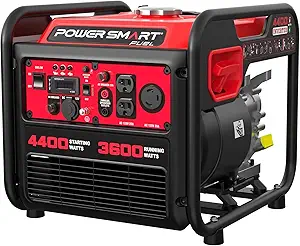
Choosing a fuel-efficient generator is not simply about finding the model with the longest advertised runtime. Fuel consumption depends on generator size, electrical load, engine design, fuel type, and whether the unit can reduce engine speed when demand is low.
For camping, RV use, emergency backup, or job-site power, the right generator is usually the one that provides enough capacity without running unnecessarily oversized. A smaller inverter generator can make more sense for a light electrical load, while a larger dual-fuel or tri-fuel generator may be more practical when you need to power several appliances during an outage.
Below, I compare five portable generators with different power capacities and fuel configurations. The comparison focuses on the factors that matter most for fuel-conscious buyers: generator type, rated output, fuel flexibility, advertised runtime, inverter technology, load management, noise, and safety features.
Because a 2,500-watt inverter generator serves a very different purpose from a 14,500-watt tri-fuel generator, these models should not be treated as interchangeable options. The best fit depends on how much power you actually need and how you plan to use the generator.
Fuel-Efficient Generators for 2026
| Generator | Fuel | Best suited for |
|---|---|---|
| PowerSmart 2500-Watt Portable Inverter | Gasoline | Camping and light backup |
| Westinghouse WGen9500DFc | Gasoline / Propane | Larger home backup |
| WEN DF680iX | Gasoline / Propane | RVs and moderate backup loads |
| Westinghouse WGen11500TFc | Gasoline / Propane / Natural Gas | High-demand home backup |
| WEN TF-1450 | Gasoline / Propane / Natural Gas | Large 120/240V loads |
1. PowerSmart 2500-Watt Portable Inverter Generator
For light-duty power needs, the PowerSmart 2500-Watt Portable Inverter Generator is a compact option for camping, tailgating, charging electronics, and selected emergency loads.
It produces 2,500 starting watts and 1,900 running watts and uses inverter technology to provide clean power for electronics. Current specifications also list a 79cc engine, Eco Mode, parallel capability, and a runtime of about 5.5 to 5.7 hours at 50% load, depending on the listed version and retailer.
The small size is one of its main advantages. At roughly 40 to 44 pounds depending on the listed configuration, it is considerably easier to move than the larger generators in this comparison. The unit also provides 120V outlets, USB connections, and a 12V DC outlet.
Its Eco Mode is particularly relevant when fuel consumption matters. Rather than treating the generator’s maximum output as the amount of power it should produce continuously, load management allows the engine to operate according to the electrical demand.
The limitation is just as important: 1,900 running watts is not enough for many large home appliances. This is a light-duty portable generator, not a substitute for a high-output home backup generator.
2. Westinghouse WGen9500DFc Dual-Fuel Generator
The Westinghouse WGen9500DFc moves into a completely different power class from the PowerSmart. It produces 12,500 peak watts and 9,500 rated watts on gasoline, or 11,200 peak watts and 8,500 rated watts on propane.
This dual-fuel configuration gives you the option of using gasoline or propane depending on what is available. Westinghouse lists up to 12 hours of gasoline runtime at 25% load and approximately 7 hours on a 20-pound propane tank. At 50% load, the listed gasoline runtime is 8 hours.
The generator includes electric start, remote start, recoil backup, 120/240V output, GFCI outlets, a transfer-switch-ready L14-30R connection, and a 14-50R outlet. It also has a carbon monoxide sensor with automatic shutdown.
For home backup, this model is much more appropriate than a compact 2,500-watt inverter when several major appliances need to operate at the same time. However, its larger engine and open-frame design mean that buyers should not assume that more wattage automatically means better fuel efficiency.
The more useful question is whether the generator’s capacity matches the electrical load you actually expect during an outage.
3. WEN DF680iX 6800-Watt Dual-Fuel Inverter Generator
The WEN DF680iX occupies an interesting middle ground between compact inverter generators and large open-frame backup generators.
Its 224cc dual-fuel engine produces 6,800 surge watts and 5,100 rated watts on gasoline, or 6,000 surge watts and 4,500 rated watts on propane.
Unlike the larger Westinghouse models above, this WEN uses inverter technology. Its design allows the engine to adjust fuel consumption according to electrical demand, which can be useful when the connected load changes throughout the day. WEN specifically describes the Eco Mode as a way to adjust engine operation as items are plugged into or unplugged from the generator.
The DF680iX has a 2.9-gallon gasoline tank and WEN lists up to 6.1 hours of runtime at half load, or up to 9 hours at half load when using a 20-pound LPG tank. Actual runtime will vary with load and operating conditions.
It also includes a TT-30R RV receptacle, a 120/240V L14-30R connection, 120V outlets, USB ports, electric start, fuel shutoff, and CO Watchdog protection. Its bonded-neutral 240V configuration can also provide low-power Level 2 charging for compatible battery and hybrid electric vehicles.
For buyers who need more power than a compact camping generator but still want inverter technology, this is a substantially different proposition from a conventional open-frame generator.
4. Westinghouse WGen11500TFc Tri-Fuel Generator
The Westinghouse WGen11500TFc is designed for substantially larger electrical loads and adds a third fuel option to the equation.
It produces 14,500 peak watts and 11,500 running watts on gasoline, 13,500 peak watts and 10,500 running watts on propane, and 12,000 peak watts and 9,500 running watts on natural gas.
The ability to use gasoline, propane, or natural gas can be useful during an extended outage because the availability of each fuel source can vary. The important distinction is that tri-fuel capability provides fuel flexibility, not necessarily lower fuel consumption.
The WGen11500TFc provides 120/240V output, transfer-switch-ready connections, electric and remote start, GFCI outlets, USB ports, and a carbon monoxide sensor with automatic shutdown. Westinghouse lists an operating volume as low as approximately 74 dBA.
This generator makes more sense for high-demand emergency backup or larger 120/240V loads than for camping or basic electronics.
Its size also means that portability is relative. A generator in this power class is considerably heavier and less convenient to move than an inverter generator designed for recreational use.
5. WEN TF-1450 14,500-Watt Tri-Fuel Generator
The WEN TF-1450 is another high-output tri-fuel generator designed for users who need 120/240V portable power and want the flexibility to switch between gasoline, propane, and natural gas.
On gasoline, it produces 14,500 surge watts and 11,500 running watts. Propane output is rated at 12,500 surge watts and 10,300 running watts, while natural gas provides 10,500 surge watts and 8,750 running watts.
WEN lists an 8.2-gallon gasoline tank with up to 12 hours of runtime at half load. The generator uses a 500cc four-stroke OHV engine and includes electric start with recoil backup.
The control panel includes four 120V 5-20R outlets, a 120/240V L14-30R connection, a 120/240V 14-50R outlet, and a 12V DC automotive outlet. It is also transfer-switch ready for emergency backup applications.
The standard TF-1450 and the TF1450X should not be confused. WEN’s TF1450X adds the company’s CO Watchdog shutdown sensor.
As with the Westinghouse tri-fuel model, the advantage here is not simply fuel economy. The main benefits are high output, 120/240V capability, and the ability to select among three fuel sources.
How Fuel Efficiency Works in Portable Generators
Fuel efficiency depends on more than the amount of fuel in the tank. The most important factors include generator size, electrical load, engine control, fuel type, and operating conditions.
An inverter generator can reduce engine speed when electrical demand falls. This can be useful for loads that cycle throughout the day, such as refrigerators, freezers, lights, fans, routers, and chargers.
The benefit is not that an inverter generator automatically uses very little fuel. Instead, its variable-speed operation can reduce unnecessary engine operation when maximum output is not required.
Generator sizing is equally important.
A 10,000-watt generator is not automatically more fuel efficient than a 2,500-watt generator simply because it has a larger fuel tank or can produce more electricity. If your actual load is only a few hundred watts, using a much larger generator may be an inefficient way to produce that amount of power.
This is why the right-sized generator is often more important than simply looking for the generator with the biggest fuel tank.
Gasoline vs. Propane vs. Natural Gas
Gasoline is widely available and is commonly used with portable generators. It is especially practical when you need to transport fuel for an outage, camping trip, or job site.
Propane adds another fuel option for compatible dual-fuel and tri-fuel generators. It can be useful for emergency preparedness because it can be stored separately from gasoline, but output and runtime can differ between fuels.
Natural gas can be convenient for a property that already has an appropriate natural-gas connection. Unlike gasoline or propane, however, it is not a portable fuel source that you can simply carry to a remote location.
Output also varies by fuel. For example, the Westinghouse WGen11500TFc produces different rated wattage on gasoline, propane, and natural gas. The WEN TF-1450 follows the same pattern.
For this reason, fuel flexibility and fuel efficiency are not the same thing.
A tri-fuel generator gives you more ways to operate the unit. Actual fuel consumption still depends on the load and operating conditions.
Noise, Inverter Technology, and Usability
Noise matters when a generator is used near a campsite, RV, home, or neighboring property.
Inverter generators generally have an advantage when loads vary because the engine can adjust its speed rather than maintaining maximum engine speed continuously.
The PowerSmart 2500-Watt inverter is listed at approximately 52 to 69 dBA from 23 feet depending on operating load, while the WEN DF680iX is designed as a quieter inverter generator and is rated by WEN at approximately 64 dBA at quarter load.
The larger Westinghouse generators serve a different purpose. The WGen9500DFc is listed at approximately 74 dBA, while the WGen11500TFc is also listed at approximately 74 dBA.
These figures should not be treated as perfectly equivalent laboratory measurements because manufacturers may use different testing conditions.
Electric start is another practical feature, particularly during a power outage. Remote start can also be convenient when the generator is positioned outside.
However, convenience features do not change the basic requirement that portable generators must be operated outdoors and away from occupied buildings.
Generator Safety: CO Protection Matters
Fuel efficiency should never be considered separately from safe operation.
Portable generators produce carbon monoxide, an odorless and colorless gas that can become lethal quickly. The U.S. Consumer Product Safety Commission specifically warns consumers about carbon monoxide poisoning from portable generators during power outages and severe weather events.
The CPSC recommends operating portable generators outdoors and at least 20 feet from homes and buildings, with the exhaust directed away from windows, doors, and vents. Portable generators should never be operated inside a home, garage, basement, crawlspace, shed, or other enclosed area, even when doors or windows are open.
A CO shutdown feature provides an additional layer of protection. The WEN DF680iX uses the company’s Watchdog CO Shutdown Sensor, while the Westinghouse WGen9500DFc and WGen11500TFc include CO sensors with automatic shutdown.
A CO sensor does not make indoor operation safe. It is a safety feature, not a substitute for proper generator placement, ventilation, and following the manufacturer’s instructions.
The CPSC also recommends maintaining working carbon monoxide and smoke alarms in the home and following the generator manufacturer’s operating and maintenance instructions.
How to Choose a Fuel-Efficient Generator
Start with the appliances and equipment you actually need to run.
Make a list of their running wattage and consider the additional starting power required by equipment with electric motors, such as refrigerators, sump pumps, air conditioners, and certain power tools.
Once you understand your expected load, choose a generator with enough capacity without buying substantially more output than you need.
For camping and light loads
The PowerSmart 2500-Watt is designed around portability and lighter electrical loads. Its 1,900 running watts make it suitable for applications where you do not need to operate several large appliances simultaneously.
For RVs and moderate backup loads
The WEN DF680iX provides substantially more output while retaining inverter technology and dual-fuel capability. Its 5,100 rated gasoline watts, RV-ready outlet, 120/240V capability, Eco Mode, and CO protection make it a different class of portable generator from the PowerSmart.
For larger home backup
The Westinghouse WGen9500DFc provides 9,500 rated watts on gasoline and 8,500 on propane. Its 120/240V output, transfer-switch-ready connection, remote start, and dual-fuel design make it suited to larger emergency loads.
For high-demand 120/240V backup
The Westinghouse WGen11500TFc and WEN TF-1450 move into a higher-output category and support gasoline, propane, and natural gas. Both are designed for larger electrical loads and 120/240V applications.
Fuel-Efficient Generator FAQs
What is the most fuel-efficient type of generator?
For many portable applications, an appropriately sized inverter generator can be fuel efficient because it can reduce engine speed when electrical demand decreases. The key is matching the generator to the actual load rather than automatically choosing the largest available unit.
Does a bigger generator use more fuel?
A larger generator has greater power capacity, but fuel consumption depends on the engine, load, fuel type, and operating conditions. Running a large generator to supply a very small load may not be the most efficient approach, which is why proper generator sizing matters.
Is propane more fuel efficient than gasoline?
There is no universal answer because generator output, fuel consumption, load, and operating conditions vary by model. Dual-fuel generators can produce different wattage and runtime figures on gasoline and propane, so compare the manufacturer’s specifications for the specific generator.
Are inverter generators more fuel efficient?
They can be, particularly when the electrical load varies. An inverter generator can reduce engine speed at lower loads instead of maintaining maximum engine speed continuously. Actual fuel savings depend on the generator, connected load, and operating conditions.
How far should a portable generator be from a house?
The U.S. Consumer Product Safety Commission recommends operating portable generators outdoors at least 20 feet from homes and buildings, with the exhaust directed away from windows, doors, and vents.
What is the advantage of a tri-fuel generator?
A tri-fuel generator can operate on gasoline, propane, or natural gas, giving the owner more flexibility when one fuel source is unavailable. However, output and runtime can differ depending on the fuel being used, so the manufacturer’s specifications should be checked for each fuel.
Is a fuel-efficient generator good for home backup?
It can be, provided the generator has enough running and starting wattage for the appliances you need. A compact inverter generator may work for essential electronics and selected appliances, while larger 120/240V generators are designed for substantially higher loads.
Conclusion
The most appropriate fuel-efficient generator depends on the amount of electricity you actually need, how often the load changes, which fuel sources are available, and whether portability or high output is more important.
The PowerSmart 2500-Watt is designed around light-duty portable power, while the WEN DF680iX adds substantially more capacity along with inverter technology and dual-fuel operation. The Westinghouse WGen9500DFc moves into larger emergency-backup applications, while the Westinghouse WGen11500TFc and WEN TF-1450 are designed for high-output 120/240V applications with multiple fuel options.
Before buying, calculate the running and starting wattage of the equipment you need to power and compare the manufacturer’s runtime figures at a stated load. Also consider whether gasoline, propane, or natural gas will be realistically available when you need the generator.
Most importantly, follow current safety guidance. Portable generators should be operated outdoors, at least 20 feet from homes and buildings, with exhaust directed away from windows, doors, and vents.