As an Amazon Associate I earn from qualifying purchases.
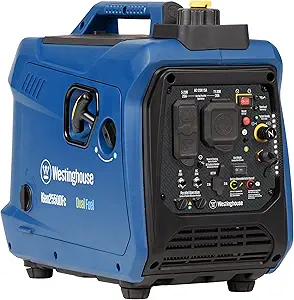
A quiet 30 amp RV generator can make a big difference when you are camping without shore power. The right model should do more than simply produce electricity. It needs enough running power for your RV appliances, enough starting capacity for demanding loads such as an air conditioner, a 30 amp RV connection, and a noise level that will not make your campsite feel like a job site.
For most 30 amp RV owners, an inverter generator in the 3,000- to 4,500-watt class offers a practical balance between power, portability, fuel consumption, and noise. Smaller generators can work well for basic electrical loads, while larger models make more sense when you need additional power or want more starting headroom.
One important point is easy to overlook: a typical 30 amp RV electrical system is limited to about 3,600 watts at 120 volts. A larger generator can provide extra starting capacity, but it does not turn a 30 amp RV into a 50 amp system.
Below, we look at the key features to consider and several quiet RV-ready generators worth considering in 2026.
Quiet 30 Amp RV Generators for 2026
| Generator | Running Watts | Peak Watts | Fuel | RV Connection | Noise |
|---|---|---|---|---|---|
| Westinghouse 2550 Super Quiet | 1,900W | 2,550W | Gas/Propane | TT-30R | About 52 dBA |
| Champion 4000W Inverter | 3,000W | 4,000W | Gasoline | TT-30R | 64 dBA |
| Westinghouse iGen5000DF | 3,900W | 5,000W | Gas/Propane | RV-ready | About 52 dBA |
| WEN DF360iX | 2,900W | 3,600W | Gas/Propane | TT-30R | 65 dBA at 25% load |
| WEN DF680iX | 5,100W | 6,800W | Gas/Propane | TT-30R | See manufacturer specifications |
Specifications can vary by fuel, operating conditions, and measurement method. Always check the manufacturer’s current specifications before purchasing.
Why a Quiet 30 Amp RV Generator Matters
Generator noise becomes much more noticeable when you are camping in a quiet campground, boondocking near other RVs, or spending several hours outside your trailer.
A generator rated around 50 to 60 dBA can be considerably more pleasant than a loud open-frame generator, although the actual sound you hear depends on load, distance, surroundings, and operating conditions.
Inverter generators are particularly popular for RV use because they can adjust engine speed according to electrical demand. That can reduce fuel consumption and noise when the generator is not working hard.
But quiet operation should not be the only consideration.
When shopping for a 30 amp RV generator, pay attention to:
- Running watts: The amount of power the generator can continuously produce.
- Starting watts: Extra power available for short periods when motors start.
- RV compatibility: Look for a dedicated TT-30R or clearly specified 30 amp RV outlet.
- Noise level: Check how and from what distance the manufacturer measured the dBA rating.
- Fuel type: Gasoline is common, while dual-fuel models can also use propane.
- Weight: A powerful generator may be much harder to load into a truck or move around camp.
- Runtime: A larger fuel tank can reduce the number of refueling stops.
- CO protection: A carbon monoxide shutdown system is an important additional safety feature.
How Many Watts Do You Need for a 30 Amp RV?
A standard 30 amp RV electrical service operates at 120 volts.
The theoretical maximum is:
120 volts × 30 amps = 3,600 watts
That does not mean you should automatically buy a generator rated at exactly 3,600 watts.
The generator also has to deal with starting loads. An RV air conditioner, for example, can require considerably more power for a brief moment when its compressor starts.
This is why generators in the 4,000- to 4,500-watt range are often attractive for 30 amp RV owners. They can provide additional starting capacity while still being manageable for portable camping use.
A smaller 2,000- to 2,500-watt inverter can be perfectly adequate if your primary needs are:
- LED lighting
- Refrigerators
- Fans
- TVs
- Laptops
- Phone chargers
- Small kitchen appliances
- Battery charging
However, if you want to run a rooftop air conditioner along with other appliances, moving into the 3,500- to 4,500-watt range can provide much more practical headroom.
Westinghouse 2550 Peak Watt Super Quiet
The Westinghouse 2550 is aimed at RV owners who prioritize portability and lower power requirements.
With approximately 1,900 running watts and 2,550 peak watts, it is considerably smaller than the 4,000- and 5,000-watt generators in this guide. That makes it attractive for lightweight camping, but it also means you need to be more careful about what you operate at the same time.
Its approximately 52 dBA noise rating is one of its biggest attractions, while the compact design makes it easier to transport than many larger RV generators.
The key limitation is power. A generator in this output class should not be treated as a universal solution for every 30 amp RV. It is better suited to lighter electrical loads and carefully managed appliance use.
Best suited for
- Lightweight RV camping
- Basic electrical loads
- Travelers who prioritize portability
- Campers who do not need to run several high-draw appliances simultaneously
If running a rooftop air conditioner is your main reason for buying a generator, consider stepping up to a more powerful model.
Champion Power Equipment 4000-Watt Inverter Generator
The Champion 4000-watt inverter generator is a much better fit for RV owners who need additional power for demanding appliances.
The gasoline-powered 149cc engine produces 4,000 starting watts and 3,000 running watts. It includes a 120V 25A TT-30R RV outlet, making it directly useful for many 30 amp RV applications. Champion rates the unit at 64 dBA from 23 feet and lists up to 10 hours of runtime at 25% load.
The generator also uses Champion’s CO Shield system, which can automatically shut the generator down if dangerous carbon monoxide levels are detected.
Another useful feature is parallel capability. With the appropriate optional equipment, compatible Champion inverter generators can be connected to increase available power.
Key specifications
| Feature | Champion 4000W Inverter |
|---|---|
| Starting watts | 4,000W |
| Running watts | 3,000W |
| Fuel | Gasoline |
| RV outlet | 120V TT-30R |
| Noise | 64 dBA at 23 ft |
| Engine | 149cc |
| Runtime | Up to 10 hours at 25% load |
| Weight | Less than 49 lb |
| CO protection | CO Shield |
This is a practical option for RVers who want more power than a compact 2,000-watt inverter without moving into a much heavier generator.
Westinghouse iGen5000DF Dual Fuel Inverter Generator
For RV owners who want more running power and dual-fuel flexibility, the Westinghouse iGen5000DF is a more substantial option.
The generator produces 3,900 running watts and 5,000 peak watts on gasoline, while its propane output is lower. Westinghouse documentation lists 3,900 running/5,000 peak watts on gasoline and 3,500 running/4,500 peak watts on LPG.
That additional capacity can be useful when an RV air conditioner starts while other appliances are operating.
Dual-fuel capability is also useful for extended trips. Gasoline is widely available, while propane can be convenient for campers who already carry propane cylinders for their RV appliances.
The larger output does come with a trade-off: this class of generator is less convenient to move than a small 2,000-watt inverter.
Why consider it?
- High running wattage
- Dual-fuel flexibility
- Inverter technology
- RV-oriented output
- More starting capacity for demanding appliances
If you frequently camp in hot weather and rely heavily on your rooftop AC, this type of generator is worth considering.
WEN DF360iX 3600-Watt Dual Fuel Inverter Generator
The WEN DF360iX is a useful choice for campers who want dual-fuel capability in a relatively compact package.
On gasoline, it produces 3,600 surge watts and 2,900 rated watts. On propane, output drops to 3,500 surge watts and 2,600 rated watts. It includes a dedicated TT-30R RV receptacle and WEN’s Watchdog carbon monoxide shutdown system.
WEN lists the generator at 65 dBA at quarter load. It weighs about 49 pounds, making it considerably easier to handle than many larger RV generators.
The generator also includes an economy mode that adjusts engine operation according to the electrical load.
Key specifications
| Feature | WEN DF360iX |
|---|---|
| Gasoline output | 3,600 surge / 2,900 rated watts |
| Propane output | 3,500 surge / 2,600 rated watts |
| Fuel | Gasoline and propane |
| RV outlet | TT-30R |
| Noise | 65 dBA at 25% load |
| Weight | About 49 lb |
| CO protection | WEN Watchdog |
| Start | Recoil |
| Warranty | 3 years |
The main consideration is its 2,900-watt gasoline running output. It can be a good match for moderate RV loads, but you should manage your appliances carefully if your air conditioner has a high startup demand.
WEN DF680iX Quiet 6800-Watt Dual Fuel RV-Ready Inverter Generator
The WEN DF680iX takes a completely different approach. Instead of focusing on minimum weight, it provides substantially more power for RV users who want additional capacity.
On gasoline, the 224cc engine produces 6,800 surge watts and 5,100 rated watts. On propane, it produces 6,000 surge watts and 4,500 rated watts. It also includes a 120V TT-30R RV outlet, a 120V/240V L14-30R receptacle, household outlets, USB ports, wheels, and a telescoping handle.
The generator also uses WEN’s Watchdog CO shutdown system and produces inverter power with very low total harmonic distortion according to the manufacturer’s specifications.
One important point: buying a 6,800-watt generator does not mean a 30 amp RV can use 6,800 watts through its TT-30 connection. The RV’s electrical service remains limited by its 30 amp system.
The extra generator capacity can nevertheless provide more starting headroom and may be useful for other loads outside the RV.
Best suited for
- Larger RV electrical demands
- Heavy appliance loads
- Campers who want substantial starting capacity
- Dual-fuel flexibility
- Users who also need generator power outside the RV
The downside is size and weight. If your only goal is to power a small travel trailer, this may be more generator than you need.
What Can a 30 Amp RV Generator Run?
The exact answer depends on your appliances, but a generator around the 3,500- to 4,500-watt class can provide a useful combination of running and starting capacity for many 30 amp RVs.
Typical RV loads can include:
| Appliance | Approximate Power Range |
|---|---|
| LED lights | 10–100W |
| TV | 50–200W |
| Laptop | 40–100W |
| Refrigerator | 100–600W depending on operating mode |
| Microwave | 1,000–1,500W |
| Coffee maker | 800–1,500W |
| Hair dryer | 1,000–1,800W |
| RV air conditioner | Varies significantly |
| Electric water heater | Often 1,000–1,500W |
These numbers are only general examples. Actual consumption varies by appliance, model, operating mode, and startup requirements.
The important lesson is not to add every appliance’s maximum rating and assume that is your normal load.
Instead, identify the appliances you are likely to run simultaneously.
For example, running the RV air conditioner, microwave, coffee maker, and electric water heater at the same time can quickly push a 30 amp system toward its limit.
Can a Quiet 30 Amp Generator Run an RV Air Conditioner?
It can, but the answer depends on the air conditioner and generator.
A rooftop AC compressor can require considerably more power when starting than it consumes while running. This is why peak or starting watts matter.
A 2,000-watt inverter may be excellent for electronics and light camping but may struggle with a conventional RV air conditioner.
A generator in the 4,000- to 4,500-watt class generally gives you more starting headroom, although it still does not guarantee that every AC will start successfully.
A soft-start device can also reduce the startup demand of some RV air-conditioning systems. If your AC is difficult to start with your generator, check compatibility with the air-conditioner manufacturer and the soft-start manufacturer before installation.
Gasoline vs. Dual Fuel for RV Camping
Gasoline generators remain popular because gasoline is widely available and many portable generators are optimized around gasoline operation.
Dual-fuel generators provide another option by allowing gasoline or propane operation.
Gasoline
Advantages:
- Widely available
- Often provides higher output than propane
- Convenient for short trips
- Easy to refuel at many locations
Disadvantages:
- Gasoline can degrade during long-term storage
- Requires appropriate storage and handling
- Can be less convenient for extended emergency use
Propane
Advantages:
- Convenient to store
- Useful for long-term preparedness
- Can be cleaner-burning
- Allows you to use propane already carried for RV appliances
Disadvantages:
- Usually produces less power than gasoline
- Requires propane cylinders
- Cold-weather performance can vary
For frequent RV travel, dual fuel can be particularly useful because it gives you another fuel option when one source is inconvenient.
How Quiet Should a 30 Amp RV Generator Be?
There is no single dBA number that guarantees a generator will be quiet in every campsite.
The measurement distance matters. So does the electrical load.
A generator rated at 52 dBA under a light load can sound substantially different when working near maximum capacity.
For RV camping, an inverter generator in approximately the 50-65 dBA range, depending on the measurement conditions and load, can be considerably more comfortable than a traditional open-frame generator.
Always compare noise ratings using the same measurement distance and operating condition whenever possible.
Also check campground rules. Some campgrounds have designated generator hours or specific noise restrictions, and a quiet generator does not override those rules.
Important Safety Tips for RV Generators
Noise is important, but carbon monoxide safety is even more important.
Never operate a gasoline or propane generator inside an RV, garage, enclosed storage compartment, or other enclosed space.
Keep the generator outside and position the exhaust away from the RV and other occupied areas. Do not place it where exhaust can enter through windows, doors, vents, or other openings.
Built-in CO shutdown systems such as Champion CO Shield and WEN Watchdog provide an additional layer of protection, but they do not replace safe generator placement or a working carbon monoxide alarm.
Also follow the owner’s manual for:
- Minimum clearance
- Fuel storage
- Oil changes
- Grounding requirements
- Extension cords
- Maintenance
- Weather protection
- High-altitude operation
Do not operate a generator in rain or wet conditions unless the manufacturer specifically permits that setup with appropriate protection.
What to Look for in a Quiet 30 Amp RV Generator
Before buying, work through these questions.
1. Does it have a real 30 amp RV outlet?
Look for a TT-30R or another outlet specifically identified by the manufacturer as an RV 30 amp connection.
Do not assume that a generator’s total wattage automatically means it is RV-ready.
2. How many running watts does it provide?
Running watts are more important for continuous appliance use.
For many 30 amp RV owners, roughly 3,000 to 4,000 running watts provides a useful range, depending on the appliances being used.
3. How much starting power is available?
If you need to start an RV air conditioner, refrigerator compressor, or another motor-driven appliance, additional starting capacity can be valuable.
4. Is it an inverter generator?
Inverter technology is often preferable for camping because of its cleaner electrical output, variable engine speed, and generally quieter operation.
5. How heavy is it?
A 50-pound generator and a 100-pound generator can have very different practical value when you need to move them around a campsite.
6. Do you need dual fuel?
If propane is already part of your RV setup, a dual-fuel generator can add flexibility.
7. Does it have CO protection?
A carbon monoxide shutdown system is a useful safety feature, but it should be considered an additional protection rather than permission to operate a generator in an unsafe location.
Final Thoughts
The right quiet 30 amp RV generator depends more on your actual electrical needs than on the biggest wattage number printed on the box.
A compact model such as the Westinghouse 2550 can make sense for lighter camping loads where portability and lower noise are priorities. A 3,000-watt-class inverter such as the Champion 4000W provides more practical capacity for everyday RV use, while a 4,000- to 5,000-watt dual-fuel inverter gives you more starting headroom and fuel flexibility.
For heavier requirements, the WEN DF680iX provides considerably more generator capacity while retaining an RV-ready TT-30R connection.
Remember that a 30 amp RV still has a practical electrical ceiling of about 3,600 watts at 120 volts. The goal is not simply to buy the largest generator. It is to choose enough running and starting capacity to handle the appliances you actually use while keeping the generator manageable, quiet enough for your camping environment, and safe to operate.
Before purchasing, compare the generator’s running watts, starting watts, TT-30R connection, noise rating, fuel type, weight, runtime, and CO safety features. That combination will tell you much more about whether a generator is a good fit for your RV than its peak wattage alone.