As an Amazon Associate I earn from qualifying purchases.
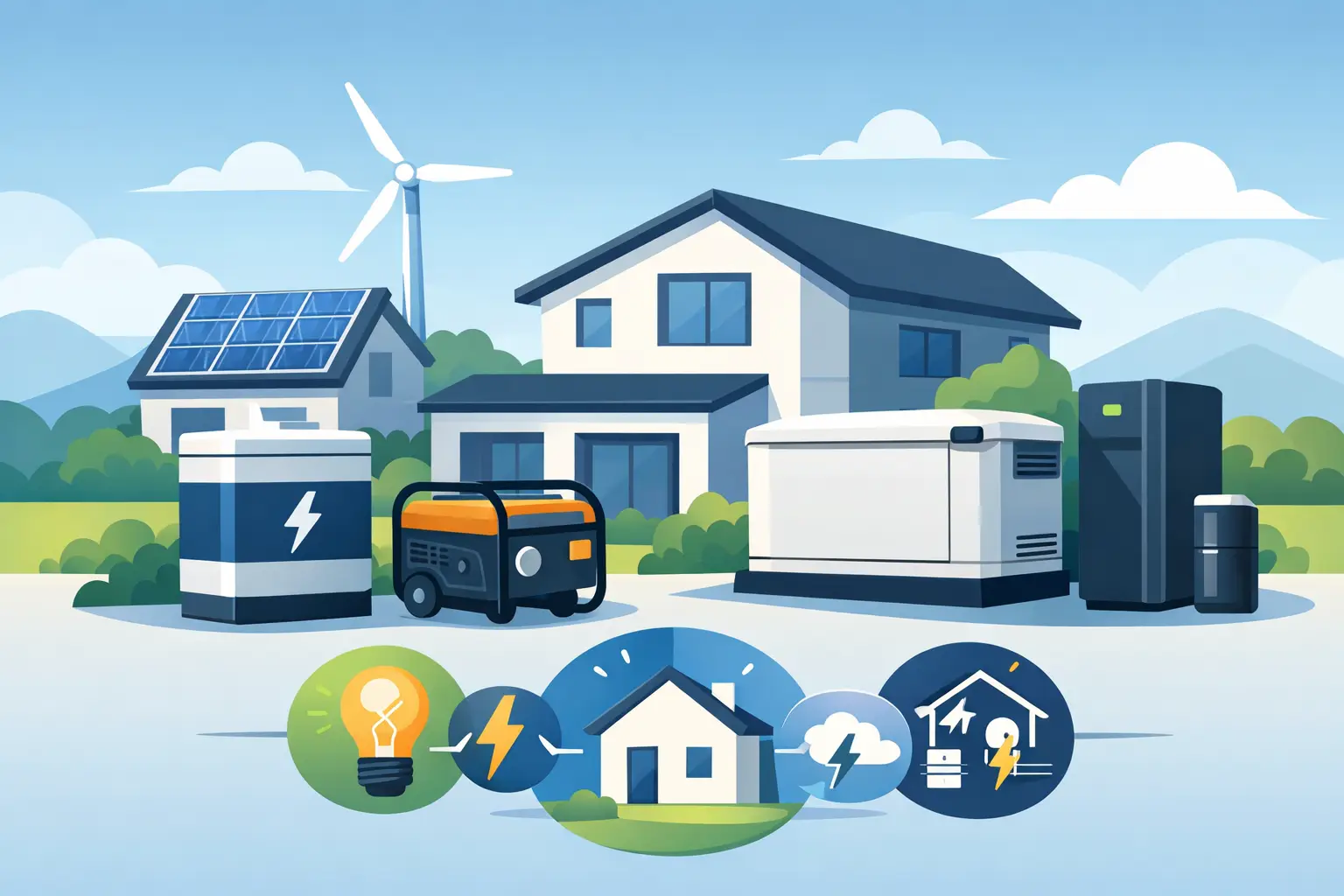
If you need dependable portable power for camping, RV trips, emergency backup, tailgating, remote work, or off-grid projects, a 1000W-class solar generator can be a practical middle ground between a small power bank and a much larger home backup system.
In this guide, I’m using “solar generator” in the way most shoppers do: a portable power station with a battery, AC inverter, and solar charging capability. The watt rating tells you how much power the inverter can deliver, while the watt-hour (Wh) rating tells you how much energy the battery stores.
For 2026, the most interesting models in this class are no longer defined by the 1,000W number alone. Battery chemistry, usable capacity, solar input, charging speed, inverter output, portability, and the types of appliances you plan to run all matter.
I also found an important problem with the original list: one of the products previously described as a 1,000W unit does not actually belong in this category. I have corrected that rather than recommending a product simply because its listing was labeled incorrectly.
Best 1000W-Class Solar Generators in 2026
| Model | Battery Capacity | AC Output | Battery Type | Best For |
|---|---|---|---|---|
| GRECELL 1000W | 999Wh | 1000W | NCM Lithium | Camping and emergency backup |
| Jackery Explorer 1000 v2 | 1070Wh | 1500W | LiFePO4 | Higher-power portable use |
| EBL Voyager 1000 | 999Wh | 1000W | NCM Lithium | Budget off-grid power |
| BALDR PIONEER1000 | 808Wh | 1000W | Lithium | Compact backup and camping |
| Barphygo | See note below | Not a true 1000W-class unit | Lithium | Original listing should be verified |
1. GRECELL 999Wh Solar Generator 1000W
Check Amazon Price Click Here!
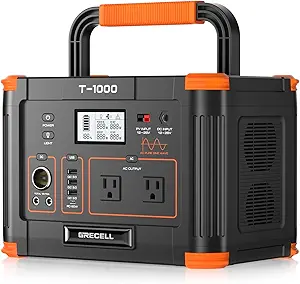
The GRECELL 999Wh Solar Generator 1000W remains a straightforward option for shoppers who want a portable power station around the 1kWh mark without moving into a much larger and heavier system.
Its 999Wh battery is paired with a 1000W pure sine wave inverter with a 2000W peak rating. GRECELL also specifies a 60W USB-C output, USB-A ports, DC outputs, a 12V vehicle outlet, and wireless charging. The unit can be recharged from AC power, a vehicle, or a compatible solar panel using its built-in MPPT controller.
Key specifications
- Battery capacity: 999Wh
- AC output: 1000W
- Peak output: 2000W
- Battery chemistry: NCM lithium-ion
- USB-C: Up to 60W
- Solar charging: Yes
- MPPT controller: Built in
- Wireless charging: 10W
- Recharge options: AC, solar, and vehicle
- Pure sine wave inverter: Yes
What can it power?
A 999Wh station is suitable for electronics and many moderate loads, including laptops, lights, televisions, fans, CPAP equipment, routers, cameras, and some small appliances.
It can also handle certain higher-wattage appliances, provided their continuous power requirements remain within the inverter’s rating and their startup surge does not exceed what the station can handle.
Remember that a 999Wh battery does not mean you will receive 999Wh at the AC outlet. Conversion losses and the station’s own electronics reduce the energy available to connected devices.
Why consider the GRECELL?
The main attraction is the combination of nearly 1kWh of battery capacity, a 1,000W inverter, multiple output options, and solar charging in a relatively portable package.
It makes the most sense for buyers who want a general-purpose power station rather than a large expandable home backup system.
Best for: Camping, emergency electronics, RV use, and general-purpose portable power.
2. Jackery Explorer 1000 v2
Check Amazon Price Click Here!
The Jackery Explorer 1000 v2 is one of the most important corrections to the original article.
Despite its name, this is not a 1,000W-output power station. The current model actually provides 1,070Wh of LiFePO4 battery capacity and 1,500W of continuous AC output, with a 3,000W surge rating. That additional inverter capacity makes it more capable than a conventional 1,000W station.
Key specifications
- Battery capacity: 1070Wh
- Battery chemistry: LiFePO4
- Continuous AC output: 1500W
- Peak/surge output: 3000W
- AC outlets: 3
- USB-C: Up to 100W on the high-output USB-C port
- USB-A: Up to 18W
- 12V car outlet: 120W maximum
- Solar input: Up to 400W under the supported dual-input configuration
- Weight: Approximately 23.8 lb
- Cycle life: 4000 cycles to at least 70% capacity
Jackery currently lists approximately 1.58 hours for AC charging, while its emergency Super Charge mode can reach 0–100% in about one hour when the appropriate mode is enabled. Solar charging with a 200W SolarSaga panel is listed at approximately 7.5 hours under the stated conditions.
Why the 1500W inverter matters
This is where the Explorer 1000 v2 differs from many traditional 1000W-class power stations.
A 1500W inverter gives you more room for appliances and tools that would be too demanding for a 1000W inverter. It can also provide more headroom for startup loads.
That doesn’t mean every 1500W appliance should automatically be connected. Always check the appliance’s running wattage and startup requirements against the power station’s specifications.
LiFePO4 advantage
The Explorer 1000 v2 uses LiFePO4 cells, which have become increasingly common in modern portable power stations because of their long cycle life.
Jackery specifies 4,000 cycles to at least 70% capacity.
Best for: Buyers who want a compact 1kWh-class battery but need more than 1,000W of AC output.
3. EBL Voyager 1000 Portable Power Station
Check Amazon Price Click Here!
The EBL Voyager 1000 is another genuine 1,000W-class option, with a 999Wh lithium battery and a 1,000W pure sine wave AC inverter.
EBL currently lists a 999Wh battery, 1000W rated output, 2000W peak output, USB-C PD up to 60W, USB-A outputs, DC ports, a car outlet, and wireless charging. It can be charged from AC power, solar panels, or a vehicle.
Key specifications
- Capacity: 999Wh
- Rated AC output: 1000W
- Peak output: 2000W
- Battery: Lithium
- Inverter: Pure sine wave
- USB-C: Up to 60W
- Solar input: Up to approximately 200W depending on configuration
- Wireless charging: 10W
- Weight: Approximately 18.5 lb net according to EBL
- Recharge methods: AC, solar, and car
The EBL is particularly interesting if portability is important. Its relatively compact size and folding-handle design make it easier to move between a vehicle, campsite, workshop, or emergency storage area.
EBL also states that the Voyager can support pass-through charging, although the manufacturer recommends using it after charging when practical.
Runtime expectations
A 999Wh battery can provide substantial runtime for low-power electronics, but the actual result depends heavily on the load.
For example, a device consuming approximately 50W will use considerably less energy per hour than a 500W appliance.
A useful rough calculation is:
Estimated runtime = Battery capacity × efficiency ÷ Device wattage
The actual efficiency varies by load, inverter operation, temperature, and the power station itself.
Best for: Budget-conscious campers, RV users, emergency backup, and people who want a lightweight 1,000W power station.
4. BALDR PIONEER1000 Portable Power Station
Check Amazon Price Click Here!
The BALDR PIONEER1000 takes a slightly different approach. It has a smaller 808Wh battery, but it still provides a 1000W pure sine wave inverter with up to 2000W surge output.
Key specifications
- Battery capacity: 808Wh
- Continuous output: 1000W
- Surge output: 2000W
- Inverter: Pure sine wave
- USB-C PD: 60W
- USB-A: Up to 18W
- Solar charging: Yes
- MPPT: Built in
- Weight: Approximately 18.5 lb
- Charging: AC, solar, and vehicle
The smaller battery means you shouldn’t expect the same runtime as a 999Wh or 1070Wh station under identical loads.
However, if your priority is inverter output rather than maximum battery capacity, the BALDR still makes sense.
For example, someone who mainly wants to run a laptop, lights, a small refrigerator intermittently, a fan, camera equipment, or other moderate loads may not need a full 1,000Wh battery.
BALDR also includes an ECO mode and pass-through charging, while its battery management system is designed to provide protection against conditions such as overcharging, short circuits, and over-temperature situations.
Best for: Camping, portable backup power, and buyers who want 1000W AC output without moving to a much larger battery system.
5. Important Correction: The Original Barphygo Listing
Check the original Amazon listing Click Here!
This product needs to be treated differently from the other models in this guide.
The original article described the Barphygo product as a 1000W solar generator, but the specifications provided in that article identified approximately 294Wh of battery capacity and 300W of rated AC output.
That means it should not be presented as one of the best 1000W solar generators.
This is exactly the kind of specification mismatch that can make a product roundup less trustworthy. A product title, an Amazon variation, or an older listing can sometimes create confusion between battery capacity, inverter output, and the name of the product.
For that reason, I have retained the original affiliate link but removed the Barphygo from the actual 1000W recommendations.
Best for: Only consider this product if the Amazon listing currently confirms the exact output and battery specifications you need. It should not be treated as a 1000W-class recommendation without verification.
What Does “1000W Solar Generator” Actually Mean?
One of the easiest mistakes when shopping for a portable power station is confusing watts with watt-hours.
Watts (W)
Watts indicate how much electrical power the inverter can deliver at a given moment.
A 1000W inverter is designed to handle loads up to approximately 1000W continuously, subject to the manufacturer’s specifications.
Watt-hours (Wh)
Watt-hours describe the amount of energy stored in the battery.
For example:
- 500Wh = smaller energy reserve
- 800Wh = medium portable capacity
- 1000Wh = approximately 1kWh
- 1500Wh = larger energy reserve
This is why a 1000W/808Wh station and a 1000W/999Wh station can have the same inverter output but different runtimes.
How Long Will a 1000Wh Solar Generator Run?
There isn’t one universal runtime because appliances consume different amounts of electricity.
A simple estimate is:
Runtime ≈ Battery capacity × efficiency ÷ device wattage
Using a hypothetical 1000Wh station with an assumed 85% usable efficiency:
| Device | Approx. Load | Rough Runtime |
|---|---|---|
| LED lights | 10W | Up to 85 hours |
| Wi-Fi router | 15W | Up to 56 hours |
| Laptop | 60W | Up to 14 hours |
| TV | 100W | Up to 8.5 hours |
| CPAP | 40W | Up to 21 hours |
| Fan | 50W | Up to 17 hours |
| Mini refrigerator | 80W average | Up to 10.6 hours |
| Coffee maker | 1000W | Less than 1 hour |
These are planning estimates, not guaranteed runtimes. Refrigerators, pumps, compressors, and other equipment with cycling or startup surges can produce very different results.
What Can a 1000W Solar Generator Power?
A 1000W-class power station is generally well suited to lower-power electronics and many moderate appliances.
Depending on the specific model, examples can include:
- Smartphones
- Tablets
- Laptops
- Cameras
- LED lights
- Wi-Fi routers
- TVs
- Fans
- CPAP machines
- Small refrigerators
- Portable monitors
- Small power tools
- Battery chargers
- Some coffee makers
- Some small kitchen appliances
The key is to check both continuous wattage and startup/surge requirements.
A device that normally consumes 700W may still have a substantially higher startup demand.
What Should You Avoid Running?
A 1000W-class station is not a replacement for a large home backup battery or a whole-house generator.
Be especially careful with appliances that have high continuous loads or significant startup surges, such as:
- Central air conditioners
- Large space heaters
- Electric dryers
- Electric water heaters
- Large ovens
- Large electric ranges
- High-powered pumps
- Large compressors
- Multiple high-wattage appliances simultaneously
Even when the inverter can technically handle the wattage, the battery can drain very quickly.
For example, a 1500W heater can consume the energy in a 1kWh-class battery extremely quickly, even before accounting for conversion losses.
Why Pure Sine Wave Matters
A pure sine wave inverter produces AC electricity that is closer to the power supplied by a conventional household electrical outlet.
This is particularly useful for sensitive electronics and equipment that uses motors, compressors, or more sophisticated power supplies.
Most of the models discussed here use pure sine wave output, which is one reason they are more versatile than basic modified-sine-wave portable inverters.
LiFePO4 vs. NCM Batteries
Battery chemistry is another important difference between today’s portable power stations.
LiFePO4
Lithium iron phosphate batteries are increasingly common in newer premium power stations.
Advantages can include:
- Long cycle life
- Good thermal stability
- Long-term durability
- Better suitability for frequent charging and discharging
The Jackery Explorer 1000 v2, for example, uses LiFePO4 cells and is rated for 4,000 cycles to at least 70% capacity.
NCM Lithium
NCM lithium batteries can still provide excellent energy density and portability.
The GRECELL 999Wh and EBL Voyager 1000 models use NCM lithium chemistry according to their current manufacturer specifications.
For occasional camping or emergency use, battery chemistry should not be the only factor you consider. Capacity, inverter output, warranty, solar input, price, weight, and the manufacturer’s support are also important.
Solar Charging: What You Need to Know
Calling a product a “solar generator” doesn’t mean it will automatically recharge quickly from the sun.
Solar charging depends on:
- Panel wattage
- Panel voltage
- Panel current
- MPPT controller
- Sun intensity
- Panel orientation
- Weather
- Temperature
- Cable losses
- The power station’s maximum solar input
For example, a 1000Wh battery connected to a small 100W solar panel cannot realistically recharge as quickly as the same battery connected to a compatible 400W solar system.
The Jackery Explorer 1000 v2 supports substantially more solar input than many basic 1,000W stations, making solar recharge capability one of its more important advantages.
Always verify the power station’s allowable voltage and current before connecting third-party solar panels.
Which 1000W-Class Solar Generator Should You Choose?
Choose the GRECELL 999Wh if:
You want a traditional 1000W/999Wh combination with multiple ports, solar charging, pure sine wave output, and a practical capacity for camping and emergency use.
Choose the Jackery Explorer 1000 v2 if:
You want a larger 1500W inverter, LiFePO4 battery chemistry, fast charging, and a compact 1kWh-class package.
Its 1500W output also means it isn’t strictly a 1000W-output machine, despite the “1000” in its name.
Choose the EBL Voyager 1000 if:
You want a straightforward 999Wh/1000W portable power station with multiple charging options and a relatively portable design.
Choose the BALDR PIONEER1000 if:
You care about 1000W inverter output and portability but don’t necessarily need a full 1,000Wh battery.
Be cautious with the Barphygo listing if:
The Amazon listing you’re viewing still shows the approximately 300W/294Wh specifications from the original article. It doesn’t belong in a true 1000W-class roundup unless the exact model and specifications have changed.
1000W vs. 1500W: Which Is Better?
The answer depends on what you actually plan to run.
A true 1000W inverter is enough for many everyday portable loads.
However, moving to a 1500W inverter gives you additional headroom for appliances and tools.
This is why the Jackery Explorer 1000 v2 is worth considering even though its name contains “1000.” Its 1070Wh battery and 1500W continuous output put it in a higher-output class than conventional 1000W stations.
If your equipment frequently approaches 800–1000W, a 1500W model may be a more comfortable choice.
If your typical loads are 300–600W, a conventional 1000W unit may be sufficient.
Are 1000W Solar Generators Good for RVs?
They can be very useful in an RV, particularly for smaller loads.
A 1kWh-class power station can handle many common RV electronics, including:
- Phones
- Laptops
- Lights
- TVs
- Fans
- Camera equipment
- Small refrigerators
- CPAP machines
- Internet equipment
The limitation is high-power RV appliances.
An electric air conditioner, microwave, induction cooktop, or electric heater can consume a large portion of a 1kWh battery very quickly.
For extended RV boondocking, solar input and battery expansion can become more important than inverter wattage alone.
Are 1000W Solar Generators Good for Power Outages?
Yes, for essential loads, they can be extremely useful.
Instead of trying to power an entire house, use the station to keep critical equipment operating.
For example, during a short outage you could prioritize:
- Internet router
- Phones
- Laptops
- LED lighting
- Medical electronics
- Refrigerator
- Small fans
This approach can stretch the available battery energy much further than trying to run high-wattage heating or cooking appliances.
For longer outages, solar recharge becomes especially valuable because you can replenish the battery during daylight hours.
Important Safety Considerations
Portable power stations are convenient, but they still contain substantial amounts of stored electrical energy.
Before using one:
- Read the manufacturer’s manual.
- Do not exceed the rated continuous output.
- Check appliance startup requirements.
- Use compatible solar panels.
- Keep ventilation openings clear.
- Protect the unit from excessive heat and moisture unless it has an appropriate water-resistance rating.
- Use the correct charging cables and adapters.
- Do not attempt unauthorized battery modifications.
- Follow the manufacturer’s storage and charging recommendations.
A portable power station is also different from a fuel-powered generator. It produces no exhaust while operating, but that does not mean every installation or use case is automatically safe indoors. Follow the manufacturer’s instructions for charging, ventilation, and operating conditions.
Final Verdict
The best 1000W-class solar generator in 2026 isn’t necessarily the model with “1000W” printed in its name.
The more useful way to compare portable power stations is to look at the complete package: battery capacity, inverter output, battery chemistry, solar input, charging speed, portability, ports, warranty, and the devices you actually need to power.
The GRECELL 999Wh 1000W is a conventional 1kWh-class option with a broad selection of outputs and solar charging.
The Jackery Explorer 1000 v2 stands out because it combines a 1070Wh LiFePO4 battery with a substantially more powerful 1500W inverter.
The EBL Voyager 1000 offers a genuine 999Wh/1000W configuration and multiple charging options, while the BALDR PIONEER1000 trades some battery capacity for a compact 1000W output package.
Most importantly, don’t buy based on the watt number alone. If you know the wattage of your appliances and how long you need them to run, you can choose a power station that actually matches your needs instead of paying for capacity or output you won’t use.
For camping and everyday portable electronics, a 1kWh-class power station can be an excellent balance of capacity, portability, and useful AC power. For extended outages or serious off-grid living, however, you’ll likely want a larger battery system, greater solar input, or an expandable power station.