As an Amazon Associate I earn from qualifying purchases.
When planning an RV trip, preparing for a camping adventure, or getting ready for a power outage, a reliable portable generator can provide practical backup power for appliances, tools, and recreational equipment. The right size depends on the equipment you need to run, the generator’s rated output, and whether you need 120V power, 240V power, or an RV-ready connection.
Portable generators in the 5,000- to 6,500-watt range can cover a wide variety of applications, from RV air conditioners and refrigerators to sump pumps, well pumps, tools, and selected home appliances. This category includes both inverter generators and conventional open-frame generators, so it is important to understand the difference before buying.
Inverter technology can provide lower electrical distortion and quieter operation, while conventional generators often offer high output and 120/240V capability. This guide compares five portable generators based on output, fuel type, runtime, starting system, portability, and intended use.
Best 6500-Watt Portable Generators for 2026
| Model | Type | Fuel | Rated Output |
|---|---|---|---|
| Champion Power Equipment 6500W Inverter | Inverter | Gasoline | 5,000W |
| Westinghouse 6500W Dual Fuel | Conventional | Gasoline / Propane | 5,300W / 4,800W |
| Champion 6500W Tri-Fuel | Conventional | Gasoline / Propane / Natural Gas | 6,500W / 6,000W / 5,500W |
| Generac GP6500 | Conventional | Gasoline | 6,500W |
| Honda EM6500SX | Conventional | Gasoline | 5,500W |
Detailed Overview of Each Generator
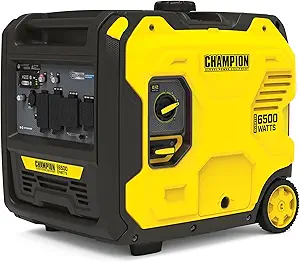
Champion Power Equipment 6500W Inverter Generator
Best for: RVs, camping, and users who want inverter technology
The Champion 6500W Inverter is the only true inverter generator in this lineup. It produces 6,500 starting watts and 5,000 running watts from gasoline.
Champion lists up to 18 hours of runtime at 25% load, with a noise rating of 64 dB(A) at 23 feet. The generator also includes a 120V 30A TT-30R RV outlet, making it a practical option for many travel trailers and RV setups.
It also has a 120/240V locking outlet and household 120V outlets. Champion specifies less than 3% THD, which makes this model more appropriate for users who specifically want the electrical characteristics associated with an inverter generator.
The main limitation is that this model uses gasoline only and has a recoil start rather than electric start. Its 5,000 running watts also means buyers should calculate their continuous and startup loads before connecting a large RV air conditioner or multiple high-draw appliances.
Westinghouse 6500 Watt Dual Fuel Home Backup Portable Generator
Best for: Dual-fuel RV and home backup
The Westinghouse 6500-watt dual-fuel generator is a conventional portable generator rather than an inverter model. It produces 5,300 running watts and 6,500 peak watts on gasoline, or 4,800 running watts and 5,800 peak watts on propane.
Westinghouse lists up to 14.5 hours of runtime from its 4.7-gallon gasoline tank. The generator also includes a 120V 30A TT-30R RV outlet and a 120/240V connection for compatible home backup applications.
Its dual-fuel design gives buyers the option of using gasoline or propane. The model also includes a carbon monoxide sensor with automatic shutdown, along with automatic low-oil shutdown, voltage regulation, and overload protection.
For home use, it is important to remember that a portable generator in this power class is intended for selected loads rather than automatically powering an entire house. A proper transfer-switch installation is required when connecting a portable generator to household circuits.
Champion Power Equipment 6500W Tri-Fuel Portable Generator
Best for: Maximum fuel flexibility
The Champion 6500W Tri-Fuel generator is designed for buyers who want gasoline, propane, and natural gas capability in one portable generator.
It produces 8,125 starting watts and 6,500 running watts on gasoline, 7,500 starting watts and 6,000 running watts on propane, and 6,875 starting watts and 5,500 running watts on natural gas.
Champion lists up to 12 hours of gasoline runtime at 50% load with its 8.5-gallon fuel tank. When using a 20-pound propane tank, the listed runtime is up to 6.5 hours at 50% load.
This is a conventional generator, not an inverter generator. Its 74 dB(A) noise rating also makes it a very different type of machine from the quieter Champion 6500W inverter.
The main advantage is fuel flexibility. Buyers who already have access to natural gas or want gasoline and propane as alternatives may find the tri-fuel configuration particularly useful for emergency preparedness.
The electric-start system is another practical feature, especially when the generator may be used during cold weather or extended outages.
Generac 6500-Watt Gas-Powered Portable Generator
Best for: Portable home backup
The Generac GP6500 is a conventional gasoline-powered portable generator rated at 6,500 running watts and 8,125 starting watts.
Generac’s PowerRush technology is designed to provide additional starting capacity for motor-driven equipment. This can be useful when starting appliances and equipment with higher initial power demands.
The generator has a large fuel tank and is rated for up to 11.5 hours of runtime at 50% load. It also features COsense technology, which provides carbon monoxide monitoring and automatic shutdown when hazardous CO levels are detected.
The GP6500 can be useful for selected home circuits and essential appliances during an outage. However, it should not be described as a whole-house generator. Homeowners who want to connect a portable generator to household circuits should use an appropriate transfer-switch setup installed according to applicable electrical requirements.
Its wheels and fold-down handle also make it easier to move and store than a stationary standby generator.
Honda EM6500SX 6500-Watt Portable Generator
Best for: Premium conventional portable power
The Honda EM6500SX is a conventional 120/240V portable generator powered by a Honda iGX390 engine. It provides 6,500 watts maximum output and 5,500 watts rated output.
Honda’s iAVR system can provide 7,000 watts for up to 10 seconds to help start larger equipment. The generator also includes electric and recoil starting, CO-MINDER carbon monoxide detection, GFCI-protected outlets, and a 120/240V selector.
Honda lists a 6.2-gallon fuel tank and up to 9.8 hours of runtime at 50% load.
One important distinction is that the EM6500SX is not an inverter generator. Its iAVR voltage regulation system should not be described as inverter power.
For buyers who need a conventional 120/240V generator with electric start and are willing to pay for a premium model, the EM6500SX offers a different feature set from the smaller and quieter inverter options.
Why Choose a 5000–6500-Watt Portable Generator?
A portable generator in the 5,000- to 6,500-watt range can provide enough capacity for many RV and emergency-power applications without moving into the much larger class of high-output generators.
However, the actual appliances you can run depend on their running wattage and startup requirements.
Common applications can include:
- RV air conditioners
- Refrigerators and freezers
- Sump pumps
- Well pumps
- Furnaces and blowers
- TVs and laptops
- Lighting
- Selected power tools
- Battery chargers
- Other essential household equipment
Before connecting equipment, add the running watts of the devices you expect to operate simultaneously and account for the higher starting wattage required by motors and compressors.
Running Watts vs. Starting Watts
The most important numbers to understand when choosing a portable generator are running watts and starting watts.
Running watts describe the power the generator can continuously provide, while starting watts represent the additional capacity available for equipment that requires a surge when its motor starts.
Refrigerators, air conditioners, sump pumps, well pumps, and some power tools can require significantly more power during startup.
For that reason, choosing a generator based only on the advertised peak wattage can lead to an overloaded system.
Start with the running watts you need and then check whether the generator provides enough starting capacity for your largest motor-driven appliance.
For example, a generator with 6,500 starting watts does not necessarily provide 6,500 watts continuously. Always use the manufacturer’s rated or running wattage when calculating the continuous electrical load.
Inverter vs. Conventional Portable Generators
Inverter generators use a different power-generation and conversion system than conventional portable generators.
They are often chosen for lower noise, fuel efficiency at lighter loads, and electrical characteristics that can be useful for sensitive electronics.
Conventional generators can provide high output and 120/240V capability, but they should not be labeled as inverter generators simply because they use electronic voltage regulation.
This distinction matters when comparing the models in this guide.
The Champion 6500W is an actual inverter generator. The Westinghouse dual-fuel generator, Champion tri-fuel generator, Generac GP6500, and Honda EM6500SX are conventional portable generators.
Key Features to Consider When Buying
1. Fuel Type
Gasoline is widely available and is the primary fuel for many portable generators.
Propane can be useful for longer-term fuel storage because it is stored in sealed containers rather than as liquid gasoline.
Tri-fuel models add natural gas as another option, which can be useful for home backup when a suitable natural-gas connection is available.
Keep in mind that output and runtime can change depending on the fuel being used. Always use the manufacturer’s published specifications rather than assuming the generator produces the same wattage on every fuel.
2. Runtime
Pay attention to the load used for the advertised runtime.
A generator rated for 10 or more hours may achieve that figure at 25% or 50% load rather than at maximum output.
Compare fuel-tank capacity, rated-load runtime, and your expected electrical demand before making a decision.
For example, Champion lists up to 18 hours at 25% load for its 6500W inverter, while its tri-fuel model is rated for up to 12 hours at 50% load on gasoline.
3. Start Type
Portable generators in this category can use different starting systems.
Electric start: Convenient for home backup and frequent use.
Recoil start: Simple and does not depend on a starter battery.
Remote start: Available on some models and useful when the generator is positioned in an appropriate outdoor location.
If you choose an electric-start model, remember that the starting battery requires periodic maintenance and should be kept charged.
4. Noise Level
Noise ratings can make a major difference at campgrounds, RV parks, and residential properties.
Compare the manufacturer’s dB(A) rating and, when available, the distance at which the measurement was taken.
Do not assume that every generator in this wattage range will be quiet simply because it is marketed for RV use.
For example, Champion lists 64 dB(A) at 23 feet for its 6500W inverter, while the Champion 6500W tri-fuel model is listed at 74 dB(A).
5. Portability
Check the generator’s actual dry weight, wheel design, handle configuration, and overall dimensions.
A generator in this power class can be heavy enough that moving it by yourself may be difficult.
Wheels and folding or locking handles can make a significant difference when positioning the unit for use or storage.
Also consider where the generator will be stored between uses and whether you have enough space to move it safely into position outdoors.
RV Considerations
RV owners should pay particular attention to the generator’s outlet configuration.
A 120V 30A TT-30R outlet can provide a direct connection for many travel trailers equipped with a 30-amp RV electrical system.
However, having enough total wattage does not automatically mean that every RV appliance can run simultaneously.
An RV air conditioner, microwave, refrigerator, water heater, battery charger, and other equipment can create a substantial combined load.
Before traveling, determine which appliances you normally use at the same time and calculate their approximate running and starting requirements.
For a larger RV with a 50-amp electrical service, check whether the generator provides the appropriate voltage and connection arrangement for your particular setup.
Never exceed the generator’s rated output.
Home Backup Considerations
A 5,000- to 6,500-watt portable generator can be useful during a power outage, but it is important to think in terms of essential circuits rather than automatically attempting to power an entire house.
Common priorities may include a refrigerator, freezer, sump pump, furnace blower, selected lights, internet equipment, and other essential devices.
Large central air-conditioning systems, electric water heaters, electric ranges, and other high-demand appliances may require more power than a portable generator in this class can continuously provide.
If you intend to connect a portable generator to household wiring, use an appropriate transfer-switch or other approved connection method. Never attempt to energize household wiring by plugging a generator into a wall outlet.
Portable Generator Safety
Portable generators produce carbon monoxide, an odorless and potentially deadly gas.
Always operate a gasoline or propane generator outdoors, away from doors, windows, and vents, and follow the clearance requirements in the owner’s manual.
Never operate a portable generator inside a home, garage, basement, crawlspace, or other enclosed area.
Do not connect a generator directly to household wiring unless the installation uses an appropriate transfer-switch system installed according to applicable electrical requirements.
Carbon monoxide shutdown technology is an important additional safety feature, but it does not replace correct generator placement and ventilation.
Allow the generator to cool before refueling, keep combustible materials away from the hot engine and exhaust, and perform maintenance according to the manufacturer’s instructions.
Which Type of Generator Should You Choose?
If quiet operation, inverter technology, and RV use are your main priorities, the Champion 6500W inverter is the model in this lineup that specifically matches those requirements.
If fuel flexibility is more important, the Westinghouse dual-fuel generator offers gasoline and propane operation, while the Champion tri-fuel model adds natural gas.
For portable home backup with 6,500 running watts, the Generac GP6500 provides high continuous output along with COsense technology.
The Honda EM6500SX is a conventional 120/240V generator with electric start, CO-MINDER, and Honda’s iAVR voltage-regulation system.
The right choice depends on the equipment you need to power, the fuel available to you, the amount of noise you can tolerate, and whether you specifically need inverter technology.
Conclusion: Choosing the Right 6500-Watt-Class Generator
The best generator for your situation depends on how you plan to use it.
The Champion 6500W inverter is designed for buyers who specifically want inverter technology, relatively quiet operation, and an RV-ready outlet.
The Westinghouse dual-fuel model adds gasoline and propane flexibility, while the Champion tri-fuel model expands fuel choice further with natural gas.
Generac offers high rated output and COsense protection for portable home backup, while the Honda EM6500SX provides 120/240V output, electric start, and Honda’s iAVR technology.
Before buying, compare running watts, starting watts, fuel type, runtime at a stated load, noise level, outlet configuration, and the generator’s actual weight.
Most importantly, make sure the generator matches the equipment you need to power and follow the manufacturer’s safety instructions.
The key point is simple: not every 6500-watt portable generator is an inverter generator. Understanding that distinction will help you choose a model based on its actual technology and specifications rather than the wattage printed on the product name.