As an Amazon Associate I earn from qualifying purchases.
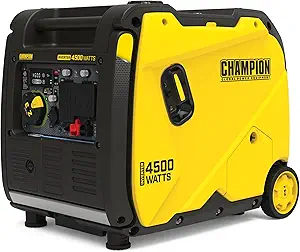
A 4500-watt generator is one of the most useful sizes for buyers who need more power than a compact 2000- or 3000-watt inverter generator can provide without stepping up to a much larger and heavier unit.
For many RV owners, campers, homeowners, tailgaters, and DIY users, this class offers a practical middle ground. Most models produce somewhere around 3,500 to 3,900 running watts, while their higher starting output gives them additional capacity for appliances and equipment with short startup surges.
The important thing to remember is that 4500 watts usually refers to starting or peak output, not continuous output. If you plan to run a refrigerator, microwave, lights, battery chargers, an RV air conditioner, or power tools, the running-watt rating is the number you should pay close attention to.
I compared the models below based on output, fuel options, noise, portability, inverter technology, safety features, and the types of situations where each generator makes the most sense.
Top 4500-Watt Generators in 2026
| Generator | Peak Watts | Running Watts | Fuel | Type | Best For |
|---|---|---|---|---|---|
| Champion 4500W | 4,500W | 3,500W | Gasoline | Inverter | RVs, backup power, camping |
| WEN DF451i 4500W | 4,500W | 3,500W gas / 3,150W propane | Gasoline/Propane | Inverter | Dual-fuel users |
| Westinghouse 5000 Peak Dual Fuel | 5,000W | 3,900W | Gasoline/Propane | Portable generator | Higher-output backup |
| ERAYAK 4500W | 4,500W | 3,500W | Gasoline | Inverter | Camping and portable backup |
| AMERISUN 4500W | 4,500W | 3,600W | Gasoline | Portable generator | Outdoor work and backup |
These models cover several different priorities rather than trying to make every generator fit the same buyer.
Champion Power Equipment 4500-Watt Generator
Check Amazon Price: Click Here
The Champion 4500W is a strong choice for people who want a portable inverter generator that can work for both recreational and emergency situations. It produces 4,500 starting watts and 3,500 running watts, giving it enough continuous output for many common RV and household loads.
One of its biggest advantages is the combination of inverter technology and relatively quiet operation. Champion lists this generator at approximately 61 dBA, making it considerably more practical around an RV or campsite than many traditional open-frame generators.
The generator also includes CO Shield, Champion’s carbon monoxide detection and automatic shutdown technology. This is an important safety feature, although it does not replace proper generator placement or ventilation.
For RV owners, the available RV-ready outlet and parallel capability can make this model particularly useful. Parallel operation can allow compatible generators to work together when additional output is required.
Recent customer feedback continues to mention quiet operation, RV use, easy starting, and useful power during outages, although individual experiences naturally vary.
Why consider the Champion 4500W?
- 4,500 starting watts
- 3,500 running watts
- Inverter technology
- Approximately 61 dBA
- CO Shield carbon monoxide protection
- RV-ready design
- Parallel capability
- Suitable for camping, RVs, and emergency backup
If you want one generator that can move between RV trips and home emergency use, the Champion is one of the more versatile options in this size class.
WEN DF451i Dual Fuel Inverter Generator
Check Amazon Price: Click Here
The WEN DF451i takes a slightly different approach by giving you the ability to use either gasoline or propane.
On gasoline, it provides 4,500 surge watts and 3,500 rated watts. When running on propane, output drops to approximately 3,150 running watts, so buyers should account for that difference when calculating their expected load.
The dual-fuel design is particularly useful for emergency preparedness. Gasoline is convenient when you need maximum available output, while propane can be stored for extended periods and gives you another option when gasoline is difficult to obtain.
The DF451i is also designed for quieter operation, with a published noise level around 58 dBA under specified testing conditions. It includes electric starting and an RV-ready configuration.
One important advantage of this model is that it does not force you to choose one fuel source permanently. You can select the fuel that makes the most sense for the situation.
The current product listing also shows continued buyer interest in its quiet operation and ease of use, including positive feedback from RV owners.
Why consider the WEN DF451i?
- 4,500 peak watts on gasoline
- 3,500 running watts on gasoline
- Approximately 3,150 running watts on propane
- Dual-fuel operation
- Inverter technology
- Around 58 dBA under specified conditions
- Electric start
- RV-ready design
For someone who specifically wants gasoline and propane flexibility, the WEN is worth considering.
Westinghouse 5000 Peak Dual Fuel Generator
Check Amazon Price: Click Here
The Westinghouse model in the original list deserves special attention because its 5,000-watt peak output and 3,900 running watts put it slightly above the typical 4500-watt category.
That extra continuous capacity can matter when you’re running several appliances simultaneously or dealing with equipment that has significant startup requirements.
It also supports gasoline and propane, giving you additional fuel flexibility. Features such as remote electric start, an RV-ready 30-amp outlet, and a digital information center make it practical for users who want convenient controls rather than a basic pull-start generator.
For RV use, the 30-amp outlet is especially relevant. However, buyers should still calculate the actual electrical demand of their RV before assuming that a 5,000-peak-watt generator will run every appliance at once.
The newer 2026 generator market also includes the Westinghouse iGen4500DF, which is frequently highlighted for its 4,500 peak/3,700 running-watt output and low published noise rating. Some current comparisons place the iGen4500DF at approximately 52 dBA under its specified test conditions.
Why consider a Westinghouse 4500–5000W model?
- Up to 5,000 peak watts in the model listed above
- Approximately 3,900 running watts
- Dual-fuel capability
- Remote electric start
- RV-ready 30A outlet
- Useful for higher continuous loads
- Multiple current models in the family offer inverter technology
If your priority is more usable continuous power, rather than simply having “4500 watts” on the product name, Westinghouse deserves a close look.
ERAYAK 4500-Watt Portable Inverter Generator
Check Amazon Price: Click Here
The ERAYAK 4500W is aimed at buyers who want a relatively compact inverter generator for camping, outdoor activities, and emergency power.
It produces approximately 4,500 surge watts and 3,500 running watts and uses inverter technology to provide cleaner electrical output than many traditional portable generators.
Its published noise level is around 60.5 dB, while ECO mode can reduce fuel consumption when the electrical demand is lower.
That makes the ERAYAK interesting for users who don’t necessarily need a dual-fuel generator but still want a balance between power, portability, and noise.
It’s a particularly sensible category for camping and outdoor events because you get substantially more capacity than with many smaller inverter generators without moving into the size of a large home-backup unit.
Why consider the ERAYAK 4500W?
- 4,500 peak watts
- 3,500 running watts
- Inverter technology
- Approximately 60.5 dB
- ECO mode
- Gasoline powered
- Portable design
- Suitable for camping and emergency essentials
The main reason to consider it is its balance of power and portability, rather than fuel flexibility.
AMERISUN 4500-Watt Gas-Powered Generator
Check Amazon Price: Click Here
The AMERISUN 4500W takes a more straightforward approach. It is designed for buyers who need useful portable power without necessarily prioritizing the quiet operation associated with smaller inverter generators.
The model provides approximately 4,500 starting watts and 3,600 running watts on gasoline.
With a published noise level around 76 dB, it is significantly louder than the quieter inverter options in this comparison. That’s an important consideration if you plan to use a generator close to an RV, campsite, or residential property.
On the other hand, its straightforward design can make sense for outdoor work, tools, emergency backup, and situations where noise is less important than having dependable portable power.
Why consider the AMERISUN 4500W?
- 4,500 peak watts
- Approximately 3,600 running watts
- Gasoline powered
- Around 76 dB
- Designed for portable outdoor power
- Useful for tools and backup applications
If noise is one of your biggest concerns, an inverter generator may make more sense. If your priority is straightforward portable power for outdoor work, the AMERISUN remains an option.
What Can a 4500-Watt Generator Actually Run?
This is one of the most important questions to answer before buying.
A generator rated at 4,500 peak watts and 3,500 running watts should generally be treated as a 3,500-watt continuous-power generator, not a 4,500-watt continuous-power generator.
For example, depending on the actual electrical requirements and startup surges, a generator in this class may be capable of powering several essentials such as:
- Refrigerator
- Freezer
- LED lights
- Wi-Fi router
- Television
- Laptop and phone chargers
- Microwave
- Small kitchen appliances
- Battery chargers
- Some power tools
- RV appliances
- An RV air conditioner, depending on its startup requirements
The exact combination matters.
Motors and compressors can require significantly more power when starting than when running. That’s why simply adding the running wattage of appliances can sometimes produce an inaccurate estimate.
Before connecting equipment, check the wattage information on each appliance and account for startup requirements.
For home backup, a transfer switch or properly installed interlock system is necessary when connecting a portable generator to household circuits. Never connect a portable generator directly to a home’s electrical panel through an ordinary outlet.
Inverter vs. Conventional 4500-Watt Generators
Not every generator marketed around 4500 watts works the same way.
Inverter generators
Inverter generators typically offer:
- Cleaner electrical output
- Lower noise
- Better fuel efficiency at lighter loads
- More compact designs
- ECO modes
- Parallel capability on some models
That’s why inverter generators are popular for RVs, camping, electronics, and residential backup.
Conventional generators
Traditional portable generators can offer:
- Straightforward designs
- Strong output
- Larger fuel tanks on some models
- Good performance for power tools and heavy outdoor work
The tradeoff can be higher noise and less refined operation.
If you’re primarily powering an RV or sensitive electronics, inverter technology deserves serious consideration.
If you’re running construction equipment or tools in an outdoor work area where noise is less important, a conventional generator can still make sense.
Which 4500-Watt Generator Is Right for an RV?
For RV owners, the first thing to check is the RV’s electrical connection.
A 30-amp RV has different requirements from a 50-amp RV, and generator output should be evaluated accordingly.
The Champion and WEN models are particularly relevant because they combine portable inverter technology with RV-oriented features.
You should also consider your RV air conditioner’s startup requirements. A generator may have enough running watts to operate an air conditioner but still struggle with the initial compressor surge.
If you’re unsure, check the air conditioner’s LRA/startup specifications rather than relying solely on the generator’s advertised peak wattage.
For RV use, also consider:
- Noise at the campsite
- 30A outlet availability
- Electric start
- Remote start
- Fuel capacity
- Parallel capability
- Generator weight
- Wheel and handle design
The quietest published number is not always directly comparable between brands because manufacturers can use different testing distances and load conditions.
Are 4500-Watt Generators Good for Home Backup?
They can be useful for essential-load backup, but they are not the same thing as a whole-home generator.
A 4500-watt-class portable generator can be appropriate for selected circuits such as refrigeration, lighting, communications equipment, and other essential appliances.
It generally should not be viewed as a way to run an entire modern house with central air conditioning, electric water heating, electric cooking, laundry appliances, and other major loads simultaneously.
The right approach is to decide which circuits are essential before an outage.
For a home installation, have a qualified electrician install the appropriate transfer switch, interlock, inlet box, and wiring for your generator.
Noise Levels: What Should You Expect?
Noise is one of the biggest differences between generators in this category.
For reference, the models in this article range from approximately the high-50s dBA to the mid-70s dBA under their respective published testing conditions.
That difference is substantial in practical use.
The WEN DF451i is listed around 58 dBA, the ERAYAK around 60.5 dB, and the Champion around 61 dBA. The AMERISUN, by comparison, is around 76 dB.
Current 2026 comparisons also highlight the Westinghouse iGen4500DF at approximately 52 dBA at quarter load, illustrating why it’s important to compare the exact model rather than assuming every “4500W” generator has similar noise performance.
Remember that generator noise changes with load. A unit running close to maximum output will normally sound different from the same generator operating at a light load.
Fuel Choice: Gasoline or Propane?
Gasoline remains popular because it generally provides strong output and is widely available.
Propane has a different advantage: it can be stored for long periods without the same concerns about gasoline degradation.
That’s why dual-fuel generators are attractive for emergency preparedness.
However, propane generally produces less available wattage on many dual-fuel generators. For example, the WEN DF451i produces approximately 3,150 running watts on propane compared with 3,500 on gasoline.
If maximum output matters, gasoline may be preferable.
If long-term fuel storage and having a second fuel source are more important, dual-fuel operation provides useful flexibility.
4500-Watt Generator Safety Tips
Every gasoline or propane generator produces carbon monoxide, an odorless and potentially deadly gas.
Follow these basic safety practices every time you operate one:
- Run the generator outdoors only.
- Keep it at least 20 feet away from the house, with the exhaust directed away from doors, windows, and vents.
- Never run a portable generator inside a garage, basement, shed, crawlspace, or other enclosed area.
- Never operate it next to an open window or door.
- Allow the engine and exhaust system to cool before refueling.
- Use the fuel recommended by the manufacturer.
- Follow the owner’s manual for oil changes and maintenance.
- Never backfeed a home’s electrical system through a standard wall outlet.
- Use a properly installed transfer switch or interlock when connecting generator power to household circuits.
- Treat the generator’s CO shutdown system as an additional safety feature, not permission to operate the generator indoors.
Carbon monoxide protection is valuable, but proper placement remains the first line of defense.
Maintenance Tips for a 4500-Watt Generator
Regular maintenance can make a significant difference in how reliably a portable generator performs when you actually need it.
Before storing the generator for an extended period, follow the manufacturer’s instructions for fuel storage or fuel shutoff.
Other routine checks include:
- Checking engine oil
- Inspecting air filters
- Checking spark plugs according to the maintenance schedule
- Inspecting fuel lines and connections
- Keeping the generator clean and dry
- Testing the electric starter if equipped
- Inspecting the battery on models with electric start
- Running the generator periodically as recommended by the manufacturer
Always follow the maintenance schedule in the owner’s manual because service intervals can differ between models.
How to Choose the Right 4500-Watt Generator
Before buying, consider these five questions.
1. How much power do you actually need?
Start with the appliances or equipment you expect to use simultaneously.
Focus on running watts and startup watts, not just the headline 4500-watt number.
2. Do you need an inverter generator?
For RVs, camping, electronics, and residential use, inverter technology can be a major advantage because of lower noise and cleaner power.
3. Do you want dual-fuel capability?
If you want gasoline and propane as options, the WEN and compatible Westinghouse models are worth considering.
4. How important is noise?
For campsites and residential neighborhoods, look closely at the published dBA rating.
A difference of several decibels can make a noticeable difference, but make sure you’re comparing measurements taken under similar conditions.
5. Do you need an RV-ready outlet?
If you’re purchasing a generator specifically for an RV, check whether the generator has the appropriate 30-amp RV outlet and whether its available output matches your RV’s needs.
4500-Watt Generator FAQs
Is 4500 watts enough to power a house?
A 4500-watt generator can provide useful emergency power for selected household essentials, but it generally isn’t intended to power an entire home with all major electrical loads operating simultaneously. Most generators in this category provide closer to 3,500–3,900 watts continuously.
Can a 4500-watt generator run an RV air conditioner?
It can, depending on the RV air conditioner’s running and startup requirements. Check the compressor’s startup demand before buying. An appliance may have a manageable running wattage but require substantially more power during startup.
Is a 4500-watt inverter generator worth it?
For RVs, camping, electronics, and essential home backup, an inverter generator can be useful because it typically combines cleaner electrical output with lower noise and better efficiency at lighter loads.
How long can a 4500-watt generator run?
Runtime depends on the fuel tank size, fuel type, load, engine design, and operating mode. A generator running at a light load can generally operate longer per tank than one operating near maximum capacity.
What is the difference between 4500 starting watts and 3500 running watts?
Starting watts are the additional short-term power available for equipment with startup surges. Running watts represent the amount of power the generator is designed to provide continuously.
Can I run a 4500-watt generator overnight?
A portable generator can be operated for extended periods when the manufacturer permits it, but it must remain outdoors in a properly ventilated location and away from doors, windows, and other openings. Always follow the manufacturer’s operating and maintenance instructions.
Final Thoughts on the Best 4500-Watt Generators for 2026
A 4500-watt generator can be an excellent middle ground for buyers who need meaningful portable power without moving up to a much larger generator.
The right model depends on how you intend to use it.
The Champion 4500W is a practical option for buyers interested in RV use, inverter power, CO protection, and parallel capability.
The WEN DF451i stands out for buyers who want gasoline and propane flexibility while keeping noise relatively low.
The Westinghouse option makes sense when additional continuous output and features such as remote starting are more important.
The ERAYAK 4500W is aimed at users who want portable inverter power with ECO operation for camping, outdoor use, and emergency essentials.
The AMERISUN 4500W is better suited to buyers who prioritize straightforward outdoor power and can tolerate considerably more noise.
Before making a purchase, don’t choose based only on the “4500W” label. Compare running watts, starting watts, fuel type, noise, RV compatibility, outlets, weight, safety features, and the actual appliances you need to power.
That approach will give you a much better idea of whether a particular 4500-watt generator is appropriate for your RV, home backup plan, campsite, job site, or outdoor event.