As an Amazon Associate I earn from qualifying purchases.
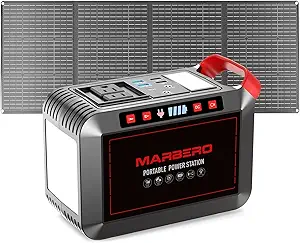
A good portable power station does not have to cost hundreds or thousands of dollars. In 2026, shoppers can find compact budget solar generators with lithium batteries, multiple charging ports, AC outlets, and solar charging capability for camping, road trips, emergency backup, remote work, and other off-grid situations.
The key is knowing what you are actually buying.
A portable power station stores electricity in a rechargeable battery and uses an inverter to provide AC power. When you connect a compatible solar panel, it can recharge from sunlight, which is why these systems are commonly marketed as solar generators. Unlike gas generators, they produce no exhaust fumes and make very little noise while operating.
For occasional camping or emergency use, a small 150Wh–300Wh power station may be enough. If you want to run a refrigerator, CPAP machine, larger electronics, or several devices for longer periods, moving into the 500Wh–1,000Wh range makes more sense.
Below are five affordable options from the original lineup, followed by a practical guide to choosing the right capacity, output, and solar charging setup for your needs.
Best Budget-Friendly Solar Generators for 2026
| Solar Generator | Battery Capacity | AC Output | Best For | Amazon |
|---|---|---|---|---|
| MARBERO 237Wh Solar Generator | 237Wh | 300W | Small electronics and camping | Amazon Link |
| Jackery Solar Generator 1000 v2 | 1070Wh | 1500W | RVs, emergency backup, off-grid use | Amazon Link |
| Apowking 146Wh Solar Generator | 146Wh | 100W class | Lightweight electronics | Amazon Link |
| GRECELL 230.88Wh Solar Generator | 230.88Wh | 330W | Camping and flexible solar setups | Amazon Link |
| ZeroKor 300W Portable Generator | Approx. 280Wh | 300W | Camping and basic emergency power | Amazon Link |
Important: Portable power station configurations and bundled solar panels can change over time. Always check the current Amazon listing for the exact battery capacity, included accessories, solar panel, and charging specifications before purchasing.
1. MARBERO 237Wh Solar Generator – A Compact Option for Everyday Essentials
Check Amazon Price: Click Here!
The MARBERO 237Wh Solar Generator is aimed at people who need a small and relatively easy-to-carry power source rather than a replacement for a full-size home backup system.
With around 237Wh of stored energy and a 300W-class AC output, this type of power station is better suited to phones, tablets, cameras, lights, small fans, and other relatively low-power electronics.
It makes the most sense when portability matters more than long runtime.
Key Features
- Approximately 237Wh of battery capacity.
- 300W-class AC output, with the specific surge rating depending on the current configuration.
- Compact design for camping, travel, and emergency kits.
- Multiple charging options for small electronics.
- Solar charging capability when paired with a compatible panel.
What Can You Run?
A small station in this class can be useful for:
- Smartphones and tablets
- LED lights
- Cameras
- Small fans
- Laptops
- Wi-Fi equipment
- Other low-power electronics
It is not the right size for continuously running high-wattage appliances such as space heaters, electric kettles, hair dryers, or large cooking appliances.
Ideal For
Weekend campers, emergency kits, travelers, and anyone who primarily needs backup power for small electronics.
2. Jackery Solar Generator 1000 v2 – More Capacity for Serious Off-Grid Use
Check Amazon Price: Click Here!
If you need substantially more capacity than a small 200Wh-class power station can provide, the Jackery Solar Generator 1000 v2 moves into a different category.
The current Explorer 1000 v2 uses a 1070Wh LiFePO4 battery and provides 1500W of continuous AC output with a 3000W surge rating. It weighs approximately 23.8 pounds, making it portable enough for RVs, camping, vehicle-based adventures, and emergency backup without being an ultralight option.
The LiFePO4 battery chemistry is also a major difference from many older lithium-ion power stations. Jackery currently lists a rated cycle life of 4,000 cycles to 70% or more of original capacity.
Key Features
- 1070Wh battery capacity
- 1500W rated AC output
- 3000W surge capability
- LiFePO4 battery chemistry
- Approximately 23.8 lb
- USB-C, USB-A, AC, and 12V outputs
- Fast AC charging
- Solar charging capability
- Compatible with Jackery SolarSaga panels
The current manufacturer specifications list up to 400W of solar input when using the appropriate dual-input configuration, although the actual solar charging setup depends on the panels and connection method used.
Jackery also lists approximately 1.58 hours for AC charging under its stated conditions. Solar charging takes considerably longer and depends on the available solar input and weather.
What Can You Run?
A 1,000Wh-class station can handle considerably more than the smaller models on this list, including many:
- Laptops
- CPAP machines
- Portable refrigerators
- Small coolers
- Lights
- Fans
- TVs
- Routers
- Cameras
- Chargers
- Selected power tools
However, battery capacity and inverter output are two different specifications. A device may be within the 1500W output limit but still drain a 1070Wh battery relatively quickly.
Ideal For
RV users, emergency backup, extended camping trips, remote work, and people who need more than a few hours of power for essential electronics.
3. Apowking 146Wh Solar Generator – Lightweight Power for Small Devices
Check Amazon Price: Click Here!
The Apowking 146Wh Solar Generator targets a different type of buyer: someone who wants to keep weight and size to a minimum.
At approximately 146Wh, it is a small power station designed primarily for personal electronics rather than household appliances.
This capacity makes it useful for short trips when you need additional battery power but do not want to carry a larger 300Wh or 1,000Wh station.
Key Features
- Approximately 146Wh of stored energy
- Compact, lightweight design
- AC, DC, and USB charging options
- LED lighting for emergency situations
- Solar charging capability with a compatible panel
- Designed for small electronic loads
What Can You Run?
Depending on the actual power draw of the device, a station in this capacity range can be useful for:
- Smartphones
- Tablets
- GPS devices
- Cameras
- LED lights
- Small fans
- Other USB-powered electronics
The important limitation is runtime. A 146Wh battery simply stores much less energy than a 500Wh or 1,000Wh power station.
Ideal For
Backpackers, hikers, cyclists, travelers, and emergency kits where minimizing weight is more important than running appliances.
4. GRECELL 230.88Wh Solar Generator – Compact Power With Flexible Charging
Check Amazon Price: Click Here!
The GRECELL 230.88Wh Solar Generator sits in the middle of the small-capacity options.
With approximately 230Wh of stored energy and a 330W-class continuous output, it offers more output capability than many ultra-small battery packs while remaining considerably more portable than a 1,000Wh power station.
One advantage of this type of setup is flexibility. Instead of assuming that every buyer needs the same solar panel, users can choose a compatible panel based on their charging requirements and travel setup.
Key Features
- 230.88Wh battery capacity
- Approximately 330W continuous AC output
- Higher surge capability for compatible devices
- Multiple AC, DC, and USB outputs
- Solar charging support
- Compact form factor
- Multiple built-in protection systems
What Can You Run?
This capacity is appropriate for:
- Phones
- Tablets
- Laptops
- LED lighting
- Small fans
- Cameras
- Networking equipment
- Other small electronics
It is better suited to short-duration loads than high-wattage appliances.
Ideal For
Campers, travelers, DIY solar users, and people who want a compact power station without moving into the size and weight of a 1,000Wh model.
5. ZeroKor 300W Portable Solar Generator – Simple Camping and Emergency Backup
Check Amazon Price: Click Here!
The ZeroKor 300W Portable Solar Generator is another compact option for buyers who want AC power without carrying a large battery system.
With a battery capacity in the roughly 280Wh class and a 300W inverter, it is designed around basic electronics and short-duration loads.
Some configurations are sold with a foldable solar panel, but because bundles can change, check the current Amazon listing to confirm exactly what is included.
Key Features
- Approximately 280Wh-class battery capacity
- 300W inverter
- AC, DC, and USB outputs
- Portable design
- Solar charging capability
- Useful for camping and emergency preparedness
What Can You Run?
This type of power station can be useful for:
- LED lights
- Smartphones
- Tablets
- Laptops
- Small fans
- Cameras
- Small electronics
As with the other compact models, the 300W inverter is the limiting factor for larger appliances.
Ideal For
Tent camping, backyard projects, road trips, and basic emergency preparedness.
How to Choose a Budget Solar Generator in 2026
Buying the cheapest power station is not necessarily the same as getting the best value.
The most important specifications are battery capacity, inverter output, battery chemistry, solar input, charging speed, weight, and the ports you actually need.
1. Battery Capacity: How Many Wh Do You Need?
Battery capacity is normally expressed in watt-hours (Wh).
Think of Wh as the amount of energy stored in the battery.
For example:
- 100–200Wh: Phones, lights, cameras, tablets, and small electronics
- 200–400Wh: Weekend camping and larger collections of small electronics
- 500–700Wh: Longer camping trips and moderate emergency backup
- 1,000Wh+: Refrigerators, CPAP machines, multiple electronics, and longer outages
Actual runtime will always be lower than a simple Wh calculation suggests because power stations lose some energy through the inverter and other electronics.
A useful estimate is:
Estimated runtime = Battery capacity × efficiency ÷ device wattage
For example, a 1,000Wh station should not be expected to deliver exactly 1,000Wh to an AC appliance.
2. Check Continuous Output, Not Just Peak Watts
Power stations advertise two important wattage numbers.
Continuous or rated output is the amount of power the inverter can normally provide.
Surge or peak output is the temporary higher output available for compatible devices that need additional power when starting.
This distinction matters with appliances containing motors or compressors.
A refrigerator, for example, may have a relatively modest running wattage but require more power when the compressor starts.
For basic electronics, 100W–300W may be sufficient.
For appliances and larger equipment, look for a station with enough continuous output as well as sufficient surge capacity.
3. Look for LiFePO4 if Long-Term Use Matters
Battery chemistry has become one of the biggest differences between budget power stations.
LiFePO4, also called lithium iron phosphate or LFP, is widely used in newer portable power stations because of its long cycle life and durability.
For example, Jackery lists the Explorer 1000 v2 with a LiFePO4 battery and a rated cycle life of 4,000 cycles to at least 70% capacity.
That does not automatically make every LiFePO4 station better for every buyer. Price, weight, output, warranty, solar input, and charging speed still matter.
But if you expect to recharge your power station frequently, battery chemistry deserves serious attention.
4. Pay Attention to Solar Input
A power station being “solar compatible” does not mean it will recharge quickly from any solar panel.
Check:
- Maximum solar input wattage
- Supported voltage range
- Maximum input current
- Whether an MPPT solar controller is included
- Compatible panel types
- Whether additional adapters are required
For example, the Explorer 1000 v2 currently supports solar input through its DC ports, with Jackery specifying up to 400W under its dual-input configuration.
Solar charging also depends on real-world conditions. A 200W panel does not necessarily produce 200W continuously throughout the day. Clouds, shade, panel angle, temperature, and the time of day all affect production.
5. Don’t Confuse a Solar Panel’s Wattage With Battery Capacity
These numbers measure completely different things.
A 200W solar panel describes its potential electrical output under specified conditions.
A 1,000Wh battery describes how much energy the battery can store.
You need both numbers to understand the complete solar setup.
For example, pairing a 1,000Wh station with a larger solar array can significantly reduce recharge time compared with using a small 60W panel.
6. Check the Ports Before Buying
A budget power station should have the ports you actually use.
Useful connections include:
- 120V AC outlets
- USB-C
- USB-A
- 12V DC
- Car outlet
- Solar input
USB-C is particularly useful for modern laptops, tablets, phones, cameras, and other devices that support USB-C charging.
Also check the maximum output of each port. Having a USB-C port does not automatically mean it can provide enough wattage for a laptop.
7. Consider Weight and Portability
Battery capacity usually increases weight.
A 146Wh power station can be practical for carrying by hand or taking on a lightweight trip. A 1,000Wh model is much more appropriate for vehicle-based camping, RVs, cabins, and emergency backup.
Before buying, ask yourself where the station will actually be used.
If you will carry it several miles, weight matters.
If it will stay in an RV or emergency closet, capacity and output may matter more.
How Long Will a Budget Solar Generator Run?
There is no single runtime for a power station because every device consumes a different amount of electricity.
A simple estimate is:
Runtime ≈ Wh × 0.85 ÷ appliance watts
The 0.85 factor is only a rough example for accounting for conversion losses. Real efficiency varies by model, load, battery condition, and operating mode.
For example, a theoretical 300Wh station powering a 30W device could provide roughly:
300 × 0.85 ÷ 30 = 8.5 hours
Actual runtime may be different.
The same station would last much less time with a 100W appliance.
This is why battery capacity should always be considered together with the wattage of the device you want to power.
Can a Solar Generator Run a Refrigerator?
Sometimes, but the battery size and inverter output matter.
A refrigerator has a compressor, which means it can require a higher startup load than its normal running wattage suggests.
A small 150Wh or 200Wh power station is generally not the type of unit you would choose for extended refrigerator backup.
A larger 1,000Wh-class station with an appropriately sized inverter is much more practical for emergency refrigerator use.
Even then, runtime depends on the refrigerator’s actual energy consumption, ambient temperature, how often the compressor cycles, and the condition of the battery.
Can You Run a CPAP Machine With a Solar Generator?
Yes, many portable power stations can power a CPAP machine, but runtime depends heavily on the CPAP model and whether features such as heated humidification are enabled.
For overnight use, check:
- CPAP wattage
- Heated humidifier settings
- Heated tubing
- Required voltage
- Number of hours you need
- Battery capacity
A larger power station may be worthwhile if you need multiple nights of backup power.
Solar Generator vs. Gas Generator
Portable power stations and conventional gas generators serve different purposes.
| Feature | Solar Generator / Power Station | Gas Generator |
|---|---|---|
| Fuel | Electricity / solar | Gasoline, propane, or other fuel |
| Exhaust | None during operation | Yes |
| Noise | Very low | Higher |
| Maintenance | Generally low | Higher |
| Refueling | Recharge battery | Add fuel |
| Long high-power loads | Limited by battery | Better suited |
| Indoor operation | Follow manufacturer guidance; never assume AC output makes an unsafe location safe | Never operate indoors |
| Solar recharge | Yes, with compatible equipment | Not applicable |
For quiet camping, electronics, and short emergency outages, a battery power station can be convenient.
For long-duration high-power loads, conventional generators remain a different category of equipment.
Best Budget Solar Generator by Use Case
| Use Case | Approximate Capacity | Suitable Options From This List |
|---|---|---|
| Smartphone and small electronics | 100–200Wh | Apowking 146Wh |
| Lightweight camping | 100–300Wh | Apowking, MARBERO |
| Weekend camping | 200–400Wh | GRECELL, ZeroKor, MARBERO |
| Laptop and remote work | 200–1,000Wh | GRECELL, MARBERO, Jackery |
| CPAP backup | 300–1,000Wh+ | Jackery 1000 v2 |
| Refrigerator backup | 1,000Wh+ preferred | Jackery 1000 v2 |
| RV power | 500–1,000Wh+ | Jackery 1000 v2 |
| Emergency home backup | 1,000Wh+ | Jackery 1000 v2 |
| Ultralight emergency kit | Under 200Wh | Apowking 146Wh |
These are general categories rather than guarantees of runtime. Always compare the power requirements of your specific devices with the station’s continuous output and battery capacity.
How to Get More Value From a Budget Solar Generator
You can improve the usefulness of a small power station without immediately buying a much larger one.
Use DC or USB power when practical
Converting battery power to AC and then converting it back down to DC inside an electronic device can create additional losses.
If your device supports direct USB-C or DC charging, that can sometimes be more efficient.
Avoid unnecessary standby loads
Turn off the AC inverter when you are not using AC equipment. Some power stations consume energy simply by keeping certain systems active.
Keep solar panels in direct sunlight
Shade can dramatically reduce solar production. Position panels where they receive direct sunlight and adjust their orientation during the day when practical.
Leave room for unexpected power needs
If you need emergency backup, do not size your system only for your normal daily consumption.
A refrigerator, medical device, communication equipment, or other essential load may become more important during a blackout.
What Makes a Budget Solar Generator a Good Value in 2026?
Price should not be the only factor.
A $200 power station with a small battery may be less useful for your situation than a $300–$500 model with substantially more capacity and a longer-life battery.
When comparing models, look at:
- Price per Wh
- Continuous AC output
- Battery chemistry
- Expected cycle life
- Maximum solar input
- AC charging speed
- USB-C output
- Weight
- Warranty
- Expansion capability
- Available accessories
- Your actual power requirements
Current 2026 budget comparisons increasingly emphasize LiFePO4 batteries, fast charging, capacity, and output instead of simply advertising the lowest purchase price.
Are Cheap Solar Generators Worth It?
They can be, provided you buy one for the right job.
A small budget power station can be an excellent solution for charging phones, powering lights, keeping a laptop running, or providing short-term emergency electricity.
The mistake is expecting a 150Wh or 250Wh unit to perform like a 1,000Wh or 2,000Wh system.
Before buying, write down the devices you want to power and their wattage. Then estimate how many hours you need them to operate.
That simple exercise will usually tell you more than choosing a product based solely on its advertised peak wattage.
Frequently Asked Questions
What is the best size solar generator for camping?
For basic weekend camping, a 200Wh–500Wh portable power station is often a practical starting point. If you need a refrigerator, CPAP machine, cooking equipment, or several devices for extended periods, consider a larger 1,000Wh-class station.
How many watts should a budget solar generator have?
For phones, lights, cameras, and laptops, 100W–300W can be enough. For appliances with motors or heating elements, look for substantially higher continuous output and check the appliance’s startup requirements.
Is LiFePO4 worth it in a solar generator?
LiFePO4 can be valuable for people who expect to recharge their power station frequently because these batteries are designed for long cycle life. The Jackery Explorer 1000 v2, for example, is currently specified with LiFePO4 cells and 4,000 cycles to 70%+ capacity.
Can I recharge a portable power station with solar panels?
Yes, if the power station has a compatible solar input. Check the station’s voltage, current, and maximum solar input specifications before connecting a panel.
Can I leave a solar generator charging all day?
Follow the manufacturer’s charging and temperature guidelines. Solar charging is affected by sunlight, temperature, shading, and the panel’s orientation, so actual charging performance varies throughout the day.
Are solar generators silent?
Portable battery power stations are generally much quieter than combustion generators because they do not use an engine. Cooling fans may still operate depending on the load and internal temperature.
Can a portable power station replace a whole-house generator?
Usually not. A portable power station is designed around a finite battery capacity. A whole-house standby generator can continue producing electricity as long as its fuel supply and operating conditions allow. The two systems are designed for different levels of backup power.
Final Thoughts: Choosing an Affordable Solar Generator in 2026
The best budget solar generator is not necessarily the model with the lowest price.
For a lightweight emergency kit, a compact 146Wh station can make sense. For weekend camping, a 200Wh–400Wh model offers more flexibility. If you need to support a refrigerator, CPAP machine, RV equipment, or multiple devices during a longer outage, moving into the 1,000Wh class is a much more practical approach.
The Jackery Solar Generator 1000 v2, for example, combines a 1070Wh LiFePO4 battery with a 1500W inverter and 3000W surge capability, giving it considerably more capacity than the compact options in this list.
The smaller MARBERO, Apowking, GRECELL, and ZeroKor models can make more sense when portability, lower purchase cost, or basic electronics are the priority.
Before purchasing, compare the numbers that actually matter: Wh capacity, continuous watts, surge watts, battery chemistry, solar input, charging speed, weight, and the devices you need to power.
That approach will help you spend your money on the capacity and features you will actually use rather than paying for specifications that look impressive on a product page but do not match your needs.
Choose Your Portable Solar Power Setup
Whether you are preparing for a power outage, planning a camping trip, working remotely, or building an off-grid setup, a portable power station can provide a convenient source of stored electricity without the noise and fuel handling associated with conventional generators.
Use the links above to check the current Amazon price, availability, specifications, and included solar panel configuration before making your purchase. Product bundles and specifications can change, so verify the exact configuration listed at the time you buy.