As an Amazon Associate I earn from qualifying purchases.
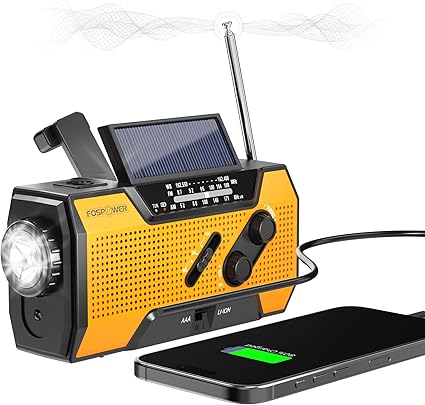
When severe weather, hurricanes, tornadoes, wildfires, or a long power outage disrupt normal life, having a way to receive reliable information and keep essential devices powered can make a big difference.
The best emergency radios combine NOAA weather reception with several backup power options, such as a rechargeable battery, hand crank, solar charging, or replaceable batteries. Some can also provide emergency phone charging and built-in lighting.
A portable power station, on the other hand, is designed primarily to store electricity and provide usable power through AC, USB, and DC outputs. It can keep phones, lights, small fans, tablets, and other low-power devices running when the electrical grid is unavailable.
For 2026, these are five useful options to consider if you want to build a practical emergency communication and backup-power kit.
Quick Comparison: Emergency Radios and Portable Power Stations
| Product | Type | Main Power Options | Battery | Best For |
|---|---|---|---|---|
| FosPower Emergency Weather Radio | Emergency weather radio | USB-C, solar, hand crank | 4,000mAh / 14,800mWh | All-around emergency communication |
| MARBERO 88Wh Portable Power Station | Portable power station | AC, car, solar | 88.8Wh | Phones, small electronics and lights |
| RunningSnail 4000mAh Emergency Radio | Hand crank weather radio | USB, solar, hand crank | 4,000mAh | Power outages and emergency kits |
| Givoust Emergency Radio | Emergency weather radio | USB-C, solar, hand crank | 22,200mWh | Longer emergency use |
| RunningSnail Emergency Hand Crank Radio | Basic emergency radio | USB, solar, hand crank | Varies by model | Simple, budget-friendly preparedness |
The important thing to remember is that these products do different jobs. A radio is primarily an information and communication tool, while a portable power station is primarily a stored-energy source.
1. FosPower Emergency Weather Radio
Check Amazon Price Click Here!
The FosPower Emergency Weather Radio is a compact option for people who want several emergency functions in one device.
The current FosPower 4,000mAh version combines AM/FM/SW and NOAA weather reception with USB-C charging, a hand crank, solar charging, a flashlight, SOS functionality and a power-bank function. FosPower lists the internal battery at 14,800mWh (4,000mAh at 3.7V).
Key Features
- Battery: 4,000mAh / 14,800mWh
- Radio: AM/FM/SW/NOAA weather band
- Charging: USB-C, solar and hand crank
- Phone charging: Yes
- Flashlight: Built-in LED
- Emergency function: SOS alarm
- Bluetooth: Bluetooth 5.4 on the current version
- Water resistance: IPX3
- Weight: About 0.77 lb
- Best for: Home emergency kits, camping and backup communication
Why It Makes Sense for Emergency Preparedness
The main advantage is redundancy. If the electrical grid is down, you can still use the crank or solar panel to extend the radio’s operating time.
The built-in battery also gives you the ability to provide a limited emergency charge to a phone. However, it should not be treated as a replacement for a dedicated power station if you need to run several electronic devices.
The solar panel is most useful for maintaining or slowly replenishing the battery rather than rapidly recharging it. That is an important distinction with virtually all small emergency radios.
Best Use
Choose the FosPower if you want one compact emergency radio with multiple power options, lighting and basic phone charging.
2. MARBERO 88.8Wh Portable Power Station
Check Amazon Price Click Here!
The MARBERO 88.8Wh Portable Power Station fills a different role from an emergency radio. Instead of primarily providing emergency information, it stores enough energy to power or recharge several small devices during a blackout or outdoor trip.
MARBERO lists this version with a 24,000mAh/88.8Wh lithium-ion battery and multiple AC, USB-A and USB-C outputs. The current configuration can provide up to 150W peak through its AC outputs, while the USB-C ports include a 30W PD output.
Key Features
- Capacity: 88.8Wh
- Battery: 24,000mAh lithium-ion
- AC output: 110V AC
- AC capacity: Up to 100W continuous / 150W peak on the listed version
- USB-A: Multiple USB-A outputs
- USB-C: PD charging, including up to 30W on the listed configuration
- Car output: Yes
- Recharge options: AC, car and compatible solar input
- Weight: About 2.27 lb
- Best for: Phones, tablets, lights, small fans and other low-power electronics
What Can an 88Wh Power Station Actually Do?
An 88.8Wh power station is useful for small electronics, but capacity numbers can be misleading if you assume that every watt-hour reaches your device.
Power conversion creates losses, and AC devices are generally less efficient than direct USB charging. Actual runtime also depends on the device’s power consumption.
For example, a small LED light may operate for many hours, while a high-draw appliance can use the available energy much faster.
MARBERO’s current product information gives examples including multiple smartphone charges, several hours for a light bar, and extended runtime for very low-power devices.
Best Use
This is a better choice than an emergency radio when your priority is keeping electronic devices charged during a short-term power outage.
It is not designed to replace a full-size home backup battery or generator.
3. RunningSnail 4000mAh Emergency Crank Weather Radio
Check Amazon Price Click Here!
The RunningSnail 4000mAh Emergency Crank Weather Radio is built around the features most people expect from a basic emergency preparedness radio: NOAA weather information, multiple charging methods, lighting and phone charging.
RunningSnail’s current information lists a 4,000mAh rechargeable battery, solar charging, USB-C charging and hand-crank power. The radio receives AM/FM and NOAA weather broadcasts and includes a three-mode flashlight and SOS function.
Key Features
- Battery: 4,000mAh rechargeable battery
- Power options: Solar, hand crank, USB-C and battery power
- Radio: AM/FM/NOAA weather band
- NOAA: Seven weather channels
- Phone charging: USB output
- Flashlight: Three modes
- Emergency signaling: SOS alarm
- Portability: Compact design
- Best for: Home emergency kits, cars, camping and go-bags
Why the Multiple Power Sources Matter
During a normal day, USB charging will be the easiest option. During an outage, however, having alternatives becomes much more useful.
The hand crank can provide emergency power when the battery is depleted, while the solar panel can help maintain the device over time.
Neither method should be viewed as a fast replacement for wall charging. The crank is particularly useful as a backup power source, rather than as the main way you plan to recharge the device every day.
Best Use
The RunningSnail makes sense if you want a feature-rich emergency radio with a relatively large internal battery and several backup power methods.
4. Givoust Emergency Radio 22,200mWh
Check Amazon Price Click Here!
The Givoust Emergency Radio 22,200mWh stands out because of its larger battery capacity compared with many compact emergency radios.
The product is listed with a 22,200mWh lithium-ion battery, NOAA/AM/FM reception, solar and hand-crank charging, USB charging, a flashlight, reading lamp and SOS functionality. Current product information identifies the model with a 6,000mAh configuration.
Key Features
- Battery: 22,200mWh
- Battery configuration: Approximately 6,000mAh depending on the listed configuration
- Radio: AM/FM/NOAA weather
- Charging: USB-C, solar and hand crank
- Phone charging: Yes
- Lighting: Flashlight and reading lamp
- Emergency function: SOS alarm
- Other features: Compass and headphone connection
- Best for: Extended outages and preparedness kits
Why Battery Capacity Matters
A larger battery gives you more stored energy than many of the smaller emergency radios in this category.
That can be useful when you want to operate the radio, use the flashlight and still have some energy available for emergency phone charging.
However, battery capacity should not be confused with total runtime. Speaker volume, lighting, charging a phone and other functions all consume energy at different rates.
The Givoust is therefore better viewed as a multi-function emergency power and communication device, rather than a replacement for a dedicated portable power station.
Best Use
Consider this model if battery capacity is one of your priorities and you want a radio that combines communication, lighting and emergency charging functions.
5. RunningSnail Emergency Hand Crank Radio
Check Amazon Price Click Here!
The basic RunningSnail Emergency Hand Crank Radio is aimed at people who want the core functions of an emergency radio without necessarily buying a larger power station.
Depending on the exact RunningSnail model and variant, features can include solar charging, hand-crank charging, USB charging, NOAA weather reception and an LED flashlight.
Key Features
- Power: Hand crank, solar and USB
- Radio: AM/FM/NOAA weather
- Flashlight: Built in
- Emergency function: SOS on supported variants
- Phone charging: Available on supported models
- Best for: Basic emergency kits, vehicles and backup preparedness
One important point when shopping for RunningSnail radios is that the brand sells multiple models with different battery capacities and features. Always verify the specifications for the exact version before purchasing.
Best Use
This is a practical choice when you want a simple emergency radio for basic communication and lighting rather than a large battery system.
Emergency Radio vs. Portable Power Station: Which Do You Need?
These two categories overlap, but they should not be considered interchangeable.
Choose an Emergency Radio If:
- You need access to NOAA weather broadcasts.
- You want information when the internet or cellular service is unavailable.
- You want hand-crank or solar backup power.
- You need an integrated flashlight.
- You want something small enough for a go-bag or vehicle.
- You need basic emergency phone charging.
Choose a Portable Power Station If:
- Your main concern is keeping electronics charged.
- You need AC outlets.
- You want to recharge multiple USB devices.
- You need to run a small fan, light or other low-power equipment.
- You want stored electricity rather than primarily an information source.
For a Serious Emergency Kit, Consider Both
An emergency radio and a portable power station solve different problems.
The radio helps you receive information. The power station helps you store and distribute electricity.
Using both gives you more redundancy than depending entirely on a smartphone.
What to Look for in the Best Emergency Radio
Not every product marketed as an emergency radio offers the same level of preparedness.
1. NOAA Weather Reception
This is one of the most important features for U.S. emergency preparedness.
NOAA Weather Radio broadcasts official National Weather Service warnings, watches, forecasts and other hazard information continuously. The system uses seven VHF frequencies between 162.400 and 162.550 MHz, so a standard AM/FM radio alone cannot receive these broadcasts.
Before an emergency, identify the NOAA station that serves your area and test the radio where you plan to keep it.
2. Automatic Weather Alerts
There is an important difference between receiving NOAA weather broadcasts and having a radio that can automatically alert you when a warning is issued.
For serious preparedness, look for radios with a dedicated alert function. Higher-end NOAA receivers may also support SAME (Specific Area Message Encoding), which can help target alerts to specific geographic areas.
Not every inexpensive hand-crank radio offers the same alert functionality, so check the product specifications rather than assuming that every NOAA-labeled radio has identical capabilities.
3. Multiple Power Sources
A good emergency radio should not depend on a single charging method.
Useful combinations include:
- Rechargeable battery
- USB charging
- Hand crank
- Solar panel
- Replaceable batteries
The more independent options you have, the less likely one failure leaves you without power.
4. A Useful Battery
Battery capacity is normally listed in mAh or Wh.
For portable power stations, Wh is usually the more useful number because it describes stored energy directly.
For small radios, manufacturers frequently use mAh. Remember that mAh by itself does not tell you exactly how much usable energy a device contains unless you also know the battery voltage.
5. USB Phone Charging
A phone can become an important communication tool during an emergency.
A radio with a USB output can provide an emergency top-up, but this should be viewed as a backup. A small emergency radio does not contain enough energy to function like a large power bank indefinitely.
6. Flashlight and Emergency Lighting
A built-in flashlight can be surprisingly useful during an outage.
It means you do not have to search for a separate flashlight when the lights go out, and some models also include reading lamps for use around a bed, table or shelter.
7. Portability
An emergency device is only useful if you can reach it when you need it.
For a home kit, compact size is convenient. For a car or go-bag, weight becomes even more important.
A large power station may provide much more energy, but a small crank radio is easier to carry during an evacuation.
How to Prepare Your Emergency Radio Before You Need It
Buying an emergency radio is only the first step.
1. Charge the Battery
Fully charge the internal battery before storing the radio.
2. Test NOAA Reception
Turn on the weather band and confirm that you can receive the appropriate local NOAA broadcast.
3. Test the Flashlight
Make sure the light works and that you understand its operating modes.
4. Test the Hand Crank
Operate the crank occasionally so you know how the mechanism feels and how the radio responds.
5. Store Extra Batteries When Supported
If your model accepts replaceable batteries, keep a fresh set with the emergency kit.
6. Store the Radio Where You Can Find It
Do not bury your emergency radio at the bottom of a storage box.
A nightstand, emergency cabinet, evacuation bag or other accessible location may be more practical.
7. Check It Periodically
Emergency equipment can sit unused for months. Check the battery, cables, flashlight and radio operation periodically rather than discovering a problem during a storm.
What About Solar Charging?
Solar charging sounds ideal for an emergency, but it is important to understand its limitations.
The small solar panels found on compact emergency radios are generally intended to extend battery life or provide slow charging, not to replace a wall charger for rapid charging.
Cloud cover, window glass, shade, panel size and the angle of the sun all affect charging performance.
For this reason, the best emergency strategy is not to depend on solar alone. Instead, use a combination of:
Wall/USB charging + stored battery + hand crank + solar backup.
That gives you multiple ways to keep the device operational.
What About Hand-Crank Charging?
A hand crank is one of the most useful backup features on an emergency radio, but it is often misunderstood.
You should not expect a few seconds of cranking to fully recharge a smartphone.
The purpose of the crank is to provide emergency power when other sources are unavailable.
It can keep the radio, flashlight or other low-power functions operating when the internal battery is depleted.
Think of the crank as your last line of defense—not your preferred everyday charging method.
Which Emergency Radio Should You Choose?
Best for an All-Around Emergency Radio
FosPower Emergency Weather Radio
Its combination of NOAA reception, multiple charging options, flashlight, SOS functionality and 4,000mAh battery makes it a versatile option for a home emergency kit.
Best for a Portable Power Source
MARBERO 88.8Wh Portable Power Station
Choose this when your priority is keeping phones, lights and other low-power electronics operating rather than receiving weather broadcasts.
Best for a Larger Emergency Radio Battery
Givoust 22,200mWh Emergency Radio
The larger listed battery makes it interesting for users who want more stored energy in a radio-style emergency device.
Best for a Feature-Rich Crank Radio
RunningSnail 4000mAh Emergency Crank Weather Radio
Its combination of a 4,000mAh battery, solar, crank and USB charging makes it a practical choice for emergency kits and outdoor use.
Best for a Basic Emergency Kit
RunningSnail Emergency Hand Crank Radio
If you mainly want NOAA reception, emergency lighting and multiple ways to generate or replenish power, a basic RunningSnail model can cover the fundamentals without the size of a power station.
Final Thoughts
The best emergency preparedness setup does not necessarily involve buying the biggest battery or the most expensive radio.
The goal is redundancy.
A good NOAA emergency radio gives you a way to receive weather and emergency information even when normal communication methods are disrupted. A portable power station adds stored electrical power for phones, lights and other small devices.
For a compact preparedness setup, the FosPower Emergency Weather Radio and RunningSnail 4000mAh Emergency Crank Weather Radio provide multiple ways to stay informed and powered. The Givoust 22,200mWh Emergency Radio is worth considering if battery capacity is a higher priority.
If your main concern is keeping electronics running during a blackout, the MARBERO 88.8Wh Portable Power Station is the more appropriate type of device.
For the strongest overall setup, consider keeping an emergency radio and a separate portable power station rather than expecting one device to do everything.
The most important part is to buy the equipment before the storm, outage or evacuation—not after you need it.
Frequently Asked Questions
What is the best emergency radio for a power outage?
The best emergency radio for a power outage should have NOAA weather reception, multiple power sources, a rechargeable battery, a flashlight and preferably USB phone charging. Hand-crank and solar charging provide additional backup when wall power is unavailable. The right model depends on whether portability, battery capacity or automatic alerts is your main priority.
Are emergency radios worth having?
Yes. NOAA Weather Radio provides continuous official weather and hazard information from the National Weather Service. A battery-powered emergency radio can continue operating when the electrical grid is down, making it a useful backup source of information during severe weather and other emergencies.
Can an emergency radio charge a phone?
Many emergency radios include a USB output that can provide an emergency phone charge. However, the amount of energy available is limited by the radio’s internal battery. A dedicated portable power station is a better option if you need to recharge multiple devices or require more stored energy.
Is a hand-crank emergency radio better than a battery-only radio?
A hand-crank model provides an additional power source when batteries or grid electricity are unavailable. That makes it particularly useful for extended outages. However, hand cranking is relatively slow, so it is best considered a backup rather than the primary charging method.
How long can a portable power station run during an outage?
Runtime depends on the power station’s usable watt-hours and the power consumption of the connected device. An 88.8Wh unit may run a low-power LED light for many hours but will drain much faster when powering a higher-wattage AC device. Always calculate runtime based on the actual wattage of your equipment.
Do all NOAA radios automatically alert you?
No. Some radios can receive NOAA weather broadcasts without providing automatic alerts. More advanced NOAA receivers may include dedicated alert functions and SAME programming. Check the exact product specifications before buying if automatic warning alerts are important to you.
Should I keep an emergency radio in my car?
A compact emergency radio can be a useful addition to a vehicle emergency kit, particularly during severe weather, road closures or extended travel disruptions. A small model with a flashlight, NOAA reception, hand crank and USB charging can provide several useful functions without taking up much space.