As an Amazon Associate I earn from qualifying purchases.
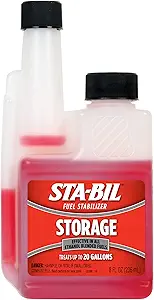
A generator is only useful in an emergency if it starts when you need it. One of the easiest ways to improve long-term fuel storage is to use a fuel stabilizer for generators before putting gasoline-powered equipment away.
Gasoline can deteriorate during storage, especially when it is exposed to oxygen, heat, moisture, and repeated temperature changes. As fuel ages, it can contribute to gum, varnish, deposits, corrosion, and hard starting. A good gasoline stabilizer helps slow that process and keeps the fuel system better prepared for the next startup.
But not every fuel treatment is the same. Some products are designed primarily for storage, while others combine stabilization with cleaning, corrosion protection, or additional engine treatment.
Below, I compare five options and explain what each one is best suited for, how much fuel it can treat, and what to consider before using it in a generator.
Quick Comparison: Best Gas Stabilizers for Generators in 2026
| Product | Best For | Treatment Capacity* | Main Advantage |
|---|---|---|---|
| STA-BIL Storage Fuel Stabilizer | Long-term gasoline storage | Up to 40 gallons | Simple, established storage formula |
| STP Multi-Purpose Motor Treatment | Fuel stabilization + engine cleaning | Up to 21 gallons | Multi-purpose treatment |
| Star Tron Stabilizer+ Fuel Storage | Long-term storage and corrosion protection | Depends on bottle size | Storage-focused formula with corrosion inhibitors |
| HappyFuel Premium Fuel Stabilizer | Vehicle and equipment storage | 16–20 gallons with HF-20 | Focus on oxidation and moisture management |
| STAR BRITE PRO Star Gasoline Stabilizer | Storage + fogging protection | Up to 160 gallons with 32 oz | Concentrated formula and corrosion protection |
*Treatment capacity can vary by package size and product version. Always follow the current label directions.
1. STA-BIL Storage Fuel Stabilizer
Check Amazon Price Click Here!
If your main goal is keeping gasoline suitable for a generator that may sit unused for months, STA-BIL Storage Fuel Stabilizer is one of the most straightforward choices.
The 16-ounce version is designed to treat up to 40 gallons of gasoline, and current product information lists protection for up to 24 months when used as directed. It is intended for gasoline-powered equipment, including small engines such as generators.
Key Specifications
- Size: 16 fl oz
- Treatment capacity: Up to 40 gallons
- Storage protection: Up to 24 months
- Fuel: Gasoline, including ethanol-blended gasoline
- Best use: Generator and equipment storage
Why Use STA-BIL for a Generator?
The biggest advantage is simplicity. If you have a portable generator that spends most of the year sitting in a garage, shed, or workshop, you generally do not need a complicated fuel-treatment routine.
STA-BIL is designed to help protect stored gasoline from problems associated with fuel degradation, including gum, varnish, rust, and corrosion.
It is important to understand what it does not do. A fuel stabilizer is primarily a preventive product. It should be added to fresh gasoline before storage, rather than being treated as a cure for severely degraded fuel.
For many generator owners, that makes STA-BIL a practical choice for seasonal storage and emergency-preparedness equipment.
Best for: Generator owners who want a simple storage-focused fuel stabilizer.
2. STP Multi-Purpose Motor Treatment
Check Amazon Price Click Here!
The STP Multi-Purpose Motor Treatment takes a slightly different approach because it is more than a storage stabilizer.
STP describes this product as helping stabilize fuel while also cleaning deposits and supporting fuel-system maintenance. One bottle treats up to 21 gallons of gasoline or diesel.
Key Specifications
- Fuel capacity: Up to 21 gallons per bottle
- Fuel compatibility: Gasoline and diesel
- Primary functions: Fuel stabilization and engine/fuel-system treatment
- Best use: Regular maintenance plus periods of storage
Why Consider STP?
This product makes sense if you want a treatment that can serve more than one purpose.
According to STP, the formula helps prevent oxidative fuel degradation and supports protection against rust and sediment while also helping clean deposits in fuel injectors and valves.
That can be useful for generators that are used periodically rather than stored continuously.
However, I would not choose it simply because it is a “cleaner.” For a generator being prepared for long-term storage, the most important thing is still following the generator manufacturer’s storage procedure and using the correct amount of stabilizer.
Best for: Owners who want fuel stabilization combined with broader engine and fuel-system maintenance.
3. Star Tron Stabilizer+ Fuel Storage
Check Amazon Price Click Here!
Star Tron Stabilizer+ is specifically aimed at gasoline storage and adds corrosion protection to the equation.
Star brite says the product is designed for ethanol and non-ethanol gasoline and uses a combination of enzymes and corrosion inhibitors. The manufacturer states that 1 ounce treats 5 gallons and that the product is intended to help maintain fuel quality for up to two years.
Key Specifications
- Fuel: Gasoline
- Gasoline type: Ethanol and non-ethanol gasoline
- Storage period: Up to 2 years when used as directed
- Treatment ratio: 1 fl oz per 5 gallons
- Key feature: Corrosion inhibitors
- Best use: Long-term storage
Why It Stands Out
Generators can be particularly vulnerable to fuel-system problems because they may sit for long periods between uses.
Star Tron Stabilizer+ is designed to address several storage concerns at once, including moisture buildup, gum, varnish, carbon deposits, and corrosion.
That makes it worth considering if your generator spends long periods without running or if moisture and corrosion are concerns in your storage environment.
One important distinction: Star Tron Stabilizer+ is not the same product as every Star Tron Enzyme Fuel Treatment formula. Product names, dosing instructions, and treatment capacities can differ between versions, so check the label on the exact bottle you purchase.
Best for: Generator owners looking for a storage-oriented formula with added corrosion protection.
4. HappyFuel Premium Fuel Stabilizer
Check Amazon Price Click Here!
HappyFuel Premium Fuel Stabilizer is a less mainstream option than STA-BIL or Star Tron, but it deserves consideration for users who specifically want a product focused on fuel-storage chemistry.
The original version of this article incorrectly described HappyFuel as an “eco-friendly” stabilizer. That is too broad a characterization. The manufacturer instead focuses on oxidation stability, lubrication, vapor-pressure management, and water scavenging.
HappyFuel currently offers several sizes, including HF-15, HF-20, and HF-128. The HF-20 can treat approximately 16–20 gallons of gasoline, while the larger HF-128 uses a measured dosage of 0.25 ounces per gallon.
Key Specifications
- Available sizes: Multiple bottle sizes
- HF-20 capacity: Approximately 16–20 gallons
- Larger-format dosing: 0.25 oz per gallon for HF-128
- Designed for: Gasoline storage
- Focus: Oxidation stability and moisture management
Why Consider HappyFuel?
The company describes the formula as addressing several fuel-storage concerns, including oxidation, moisture, lubrication, and vapor-pressure suppression.
For a generator owner, the appeal is primarily preventive: treat the fuel before storage rather than waiting until the generator develops a starting problem.
Because HappyFuel has several package sizes and dosing methods, make sure the Amazon listing you purchase corresponds to the bottle size you actually need.
Best for: Users interested in an alternative fuel stabilizer with a storage-focused formulation.
5. STAR BRITE PRO Star Gasoline Stabilizer
Check Amazon Price Click Here!
For people storing larger quantities of gasoline or maintaining several gasoline-powered machines, STAR BRITE PRO Star Gasoline Stabilizer with Corrosion Inhibitors is worth considering.
The current formula combines fuel stabilization with fogging protection, which is an important distinction from a basic fuel stabilizer. Star brite recommends 1 fluid ounce per 5 gallons of fuel and says the product is designed for gasoline engines and long-term storage.
Key Specifications
- Available sizes: 8, 16, 32 fl oz and larger
- Treatment ratio: 1 fl oz per 5 gallons
- 32 oz capacity: Up to 160 gallons
- Fuel: Gasoline, including ethanol blends
- Key features: Stabilization, corrosion inhibitors, fogging protection
Why Consider PRO Star?
The concentration is its biggest advantage.
A 32-ounce bottle can treat up to 160 gallons at the manufacturer’s recommended ratio, making it more attractive when you have multiple machines or larger fuel-storage requirements.
It is also designed to help protect internal engine components during storage through its fogging function. Star brite recommends filling the tank and running the engine for about 10 minutes to distribute the treated fuel.
Best for: Users who store several gasoline-powered machines or want fuel stabilization combined with fogging and corrosion protection.
Why Should You Use a Fuel Stabilizer in a Generator?
A generator can sit untouched for weeks or months. That is exactly when fuel-management problems become more likely.
1. Helps Slow Fuel Degradation
Gasoline does not remain unchanged indefinitely. Oxygen exposure, heat, moisture, and storage conditions can contribute to fuel degradation.
A stabilizer is designed to slow these processes and help the fuel remain usable for longer when stored according to the product instructions.
2. Helps Reduce Gum and Varnish Problems
Old fuel can contribute to deposits that interfere with carburetors, injectors, fuel passages, and other components.
Preventing those deposits is generally much easier than cleaning a carburetor after a generator has been sitting with degraded gasoline.
3. Helps Protect Against Corrosion
Moisture is an important concern, particularly with ethanol-blended gasoline.
Some modern fuel stabilizers include corrosion inhibitors specifically intended to protect metal components during storage. Star Tron Stabilizer+, for example, specifically lists corrosion protection as part of its storage formula.
4. Improves Your Chances of a Reliable Startup
A generator is emergency equipment.
You may not use it for months, then suddenly need it during a power outage. Proper fuel storage reduces one potential reason for a generator to fail to start.
However, a stabilizer cannot guarantee startup. Battery condition, spark plugs, oil level, carburetor condition, stale fuel, rodents, and other mechanical issues can also affect generator reliability.
5. Reduces Fuel Waste
If you routinely dispose of gasoline because it has been sitting too long, using a stabilizer correctly can help make your stored fuel last longer.
How to Use Fuel Stabilizer in a Generator
Using a stabilizer is straightforward, but the order matters.
1. Start With Fresh Gasoline
Whenever possible, add the stabilizer to fresh fuel rather than gasoline that has already been sitting for a long time.
2. Measure the Correct Amount
Do not assume every stabilizer uses the same ratio.
For example:
- STA-BIL 16 oz treats up to 40 gallons.
- STP treats up to 21 gallons per bottle.
- Star Tron Stabilizer+ uses 1 oz per 5 gallons.
- PRO Star uses 1 oz per 5 gallons.
Always follow the instructions on the specific product label because formulas and package sizes can change.
3. Add the Stabilizer to the Fuel
Add the recommended amount to the fuel tank or approved fuel container according to the manufacturer’s instructions.
4. Run the Generator
This is an important step that is often overlooked.
Adding stabilizer to the tank does not automatically mean the treated fuel has reached every part of the fuel system. Running the generator allows treated gasoline to circulate through the fuel system.
Follow the stabilizer instructions and your generator manufacturer’s storage procedure. Different products may recommend different run times.
5. Store the Generator Properly
Fuel treatment is only one part of generator storage.
Keep the generator in a dry, appropriate location and follow the manufacturer’s recommendations for oil, battery maintenance, carburetor storage, and fuel level.
Never operate or store a gasoline generator in an enclosed living space, garage, basement, or other area where carbon monoxide can accumulate.
What About Ethanol-Blended Gasoline?
Ethanol-blended gasoline is common in the United States, and it deserves special attention during storage.
Ethanol can interact with moisture, which can create additional fuel-system concerns during long storage periods.
Several modern stabilizers are formulated for ethanol-containing gasoline. For example, Star Tron specifically describes its products as suitable for ethanol-blended fuel, while PRO Star states that it works with ethanol blends such as E10.
Still, a stabilizer should not be viewed as a reason to ignore proper fuel storage.
For a generator that may sit for many months, buy fresh gasoline, use the correct stabilizer dosage, keep the fuel container properly sealed, and follow the generator manufacturer’s storage recommendations.
Can a Fuel Stabilizer Fix Old Gasoline?
This is one of the most important questions to understand.
A fuel stabilizer is primarily a preventive product.
If gasoline has already become badly degraded, smells strongly different from fresh fuel, contains visible contamination, or has caused the generator to run poorly, simply adding more stabilizer is not necessarily the solution.
Some fuel treatments are marketed as being capable of rejuvenating or treating older fuel. Star Tron, for example, describes its enzyme fuel treatment as capable of helping with degraded fuel.
But that does not mean every bottle of old gasoline should automatically be treated and burned.
When fuel is seriously contaminated or degraded, the safer approach is to follow the generator manufacturer’s guidance and use appropriate fuel-disposal procedures.
How to Choose the Best Gas Stabilizer for Your Generator
Before buying a bottle, consider these five factors.
Storage Time
If your generator sits for an entire season, choose a product specifically designed for fuel storage.
Fuel Type
Confirm that the stabilizer is compatible with the gasoline you use. If you use ethanol-blended gasoline, check the manufacturer’s specifications.
Treatment Capacity
If you only keep 5–10 gallons of gasoline, a small bottle may make more sense.
If you maintain several generators or a larger fuel reserve, a concentrated formula can provide better value per treated gallon.
Corrosion Protection
This is particularly relevant when fuel may be stored for extended periods or where moisture is a concern.
Ease of Measuring
A product that is easy to measure correctly is less likely to be accidentally under- or overdosed.
Best Gas Stabilizers for Generators: Final Comparison
| Product | Best For | Treatment Capacity | Storage Focus | Notable Feature |
|---|---|---|---|---|
| STA-BIL Storage Fuel Stabilizer | General generator storage | Up to 40 gal with 16 oz | Yes | Up to 24 months |
| STP Multi-Purpose Motor Treatment | Stabilizing + cleaning | Up to 21 gal | Yes | Multi-purpose formula |
| Star Tron Stabilizer+ | Long-term storage | 1 oz/5 gal | Yes | Corrosion inhibitors |
| HappyFuel Premium | Alternative storage formula | 16–20 gal with HF-20 | Yes | Oxidation and moisture focus |
| PRO Star Gasoline Stabilizer | Larger fuel supplies | Up to 160 gal with 32 oz | Yes | Fogging + corrosion protection |
Which Fuel Stabilizer Should You Buy?
There is no need to choose a fuel stabilizer based only on the biggest treatment number printed on the bottle.
For most portable generator owners, the more important questions are simple: How long will the fuel sit, how much gasoline do you store, and what type of gasoline are you using?
Choose STA-BIL Storage if:
You want a straightforward, widely used product specifically intended for gasoline storage.
Check Amazon Price Click Here!
Choose STP if:
You want a product that combines fuel stabilization with broader fuel-system and engine maintenance.
Check Amazon Price Click Here!
Choose Star Tron Stabilizer+ if:
Your priority is long-term gasoline storage with additional corrosion protection.
Check Amazon Price Click Here!
Choose HappyFuel if:
You want an alternative storage-focused stabilizer and prefer its approach to oxidation and moisture management.
Check Amazon Price Click Here!
Choose PRO Star if:
You store larger amounts of gasoline or want stabilization combined with fogging and corrosion protection.
Check Amazon Price Click Here!
Final Thoughts
The best gas stabilizer for a generator is the one you use correctly before the fuel becomes a problem.
For most homeowners, the basic routine is simple: start with fresh gasoline, measure the stabilizer according to the label, run the generator long enough to circulate the treated fuel, and follow the manufacturer’s complete storage procedure.
STA-BIL remains a straightforward choice for traditional fuel storage, while STP adds broader engine-treatment functions. Star Tron Stabilizer+ focuses heavily on storage and corrosion protection, HappyFuel offers another storage-oriented option, and PRO Star adds fogging protection for users who want more comprehensive storage treatment.
Most importantly, don’t treat fuel stabilization as a substitute for generator maintenance. Check the oil, battery, spark plug, air filter, fuel system, and overall condition of the generator periodically.
A few minutes of maintenance before storage can make a significant difference when the power goes out and you need the generator to start on the first attempt.