As an Amazon Associate I earn from qualifying purchases.
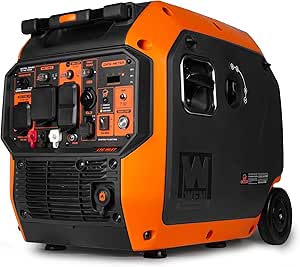
For RV owners, reliable portable power can make a big difference when shore power is unavailable. Whether you are spending a weekend at a remote campsite, boondocking in the desert, or traveling for weeks at a time, the right generator can keep your air conditioner, refrigerator, microwave, lights, and electronics running.
But choosing an RV generator is not simply about buying the model with the highest wattage. You also need to consider the type of RV you have, your air conditioner, the generator’s running and starting wattage, noise level, fuel type, weight, RV-ready outlets, and carbon monoxide safety features.
For 2026, the models below cover several different RV power needs, from lightweight inverter generators for smaller campers to higher-output dual-fuel units for RVers who need more electrical capacity.
Mobile Power Generators for RVs
| Model | Peak Watts | Running Watts | Fuel | RV Outlet | Best For |
|---|---|---|---|---|---|
| WEN DF680iX | 6,800 gas / 6,000 propane | 5,100 gas / 4,500 propane | Dual fuel | TT-30R | High-power RVs |
| Champion 4000W Inverter | 4,000 | 3,000 | Gasoline | TT-30R | Lightweight RV power |
| Westinghouse WGen3600v | 4,650 | 3,600 | Gasoline | TT-30R | High-output conventional power |
| Westinghouse iGen4500DF | 4,500 gas / 4,050 propane | 3,700 gas / 3,330 propane | Dual fuel | TT-30R | Quiet dual-fuel RV use |
| WEN 56360i | 3,600 | 2,900 | Gasoline | RV-ready | Smaller RVs and moderate loads |
1. WEN Quiet 6800-Watt Dual Fuel DF680iX Generator
Check Amazon Price Click Here!
The WEN DF680iX is designed for RV owners who need substantially more power than a compact 2,000-watt generator can provide. Its dual-fuel design allows it to run on either gasoline or propane, giving RV travelers more flexibility when spending several days away from hookups.
On gasoline, the DF680iX produces up to 6,800 peak watts and 5,100 rated watts. On propane, output is rated at up to 6,000 peak watts and 4,500 rated watts.
That extra capacity makes this WEN particularly interesting for larger RVs, demanding appliances, and situations where you may want to operate an air conditioner while also using other equipment.
Key Features
- Dual-fuel operation with gasoline and propane
- 6,800 peak watts and 5,100 rated watts on gasoline
- 6,000 peak watts and 4,500 rated watts on propane
- RV-ready TT-30R outlet
- 120V/240V L14-30R outlet
- Electric and recoil starting
- CO Watchdog automatic shutdown system
- Fuel shutoff feature for easier storage and maintenance
- Wheels and telescoping handle
- USB charging ports
- Three-year warranty
The DF680iX also has a bonded-neutral 240V configuration that WEN says supports low-power Level 2 charging for battery and hybrid electric vehicles. This is a specialized feature rather than a replacement for a dedicated high-output EV charging system.
Specifications
| Specification | WEN DF680iX |
|---|---|
| Gasoline Peak Power | 6,800W |
| Gasoline Rated Power | 5,100W |
| Propane Peak Power | 6,000W |
| Propane Rated Power | 4,500W |
| Fuel | Gasoline / Propane |
| Engine | 224cc |
| RV Outlet | TT-30R |
| Other Main Outlet | L14-30R 120V/240V |
| Start | Electric / Recoil |
| CO Protection | CO Watchdog |
| Warranty | 3 years |
The main advantage here is power. If your RV has a larger air conditioner or you regularly run several appliances at the same time, the DF680iX provides considerably more capacity than the smaller generators in this guide.
The trade-off is size and weight. This is not the generator you choose simply because you want something easy to lift in and out of an RV.
2. Champion 4000-Watt RV-Ready Portable Inverter Generator
Check Amazon Price Click Here!
The Champion 4000-Watt Inverter Generator takes a very different approach. Instead of maximizing output, it focuses on portability and practical RV power.
The current Champion 4000W inverter produces 4,000 starting watts and 3,000 running watts, while weighing about 48 pounds. Champion rates the unit at approximately 64 dBA from 23 feet, making it much more campsite-friendly than many traditional open-frame generators.
Key Features
- 4,000 starting watts
- 3,000 running watts
- Approximately 48 pounds
- 64 dBA at 23 feet
- RV-ready TT-30R outlet
- CO Shield automatic carbon monoxide shutdown
- Less than 3% THD
- Parallel capability with an optional kit
- Up to 10 hours of runtime
- Three-year limited warranty
The TT-30R outlet is particularly useful for RV owners because it allows the generator to connect directly to a typical 30-amp RV power cord.
For campers who frequently load their generator into a truck, cargo compartment, or trailer by themselves, the lower weight can be just as important as the wattage.
Specifications
| Specification | Champion 4000W Inverter |
|---|---|
| Starting Watts | 4,000W |
| Running Watts | 3,000W |
| Fuel | Gasoline |
| Engine | 149cc |
| Noise | 64 dBA at 23 ft |
| Weight | 48.1 lb |
| RV Outlet | 120V 25A TT-30R |
| THD | Less than 3% |
| Runtime | Up to 10 hours |
| CO Protection | CO Shield |
| Warranty | 3 years |
This generator makes sense for RVers who want a relatively lightweight inverter generator without moving into the much heavier 5,000- to 7,000-watt class.
Keep in mind that 3,000 running watts does not automatically mean it can operate every RV air conditioner and appliance combination. Starting demand from an air conditioner can be considerably higher than its normal running consumption.
3. Westinghouse WGen3600v Portable Generator
Check Amazon Price Click Here!
The Westinghouse WGen3600v is an important model to understand because it is different from the inverter generators in this guide.
It produces 4,650 peak watts and 3,600 running watts, uses a 212cc engine, and includes a 30-amp TT-30R RV outlet.
It can run for up to 14 hours at 25% load with its 4-gallon gasoline tank.
Key Features
- 4,650 peak watts
- 3,600 running watts
- 212cc four-stroke OHV engine
- 4-gallon gasoline tank
- TT-30R RV-ready outlet
- L5-30R outlet
- Household 120V outlets
- Built-in fuel gauge
- Automatic low-oil shutdown
- Up to 14 hours of runtime at 25% load
- Three-year limited warranty
Specifications
| Specification | Westinghouse WGen3600v |
|---|---|
| Peak Watts | 4,650W |
| Running Watts | 3,600W |
| Fuel | Gasoline |
| Engine | 212cc |
| Fuel Tank | 4 gallons |
| RV Outlet | TT-30R |
| Runtime | Up to 14 hours at 25% load |
| Weight | About 99.5 lb |
| Noise | About 68 dBA |
| THD | Up to 23% |
| Start | Recoil |
There is one important consideration with this model: it is not an inverter generator. Its published total harmonic distortion is considerably higher than the less-than-3% figures commonly found on inverter models.
That does not automatically make it unsuitable for RV use, but it does make it a different type of choice. If quiet operation and low-distortion power for sensitive electronics are priorities, an inverter model may be more appropriate.
The WGen3600v makes more sense for RVers who prioritize straightforward gasoline-powered output, a large fuel tank, and a dedicated 30-amp RV connection.
4. Westinghouse iGen4500DF Dual-Fuel Inverter Generator
Check Amazon Price Click Here!
The Westinghouse iGen4500DF is a more RV-focused option for travelers who want inverter technology combined with dual-fuel flexibility.
One correction from older specifications is important here: this generator is rated at 4,500 peak watts and 3,700 running watts on gasoline, while propane output is rated at 4,050 peak watts and 3,330 running watts.
That makes it more powerful than the 4,000/3,000-watt figure sometimes associated with this model.
Key Features
- Dual-fuel gasoline and propane operation
- 4,500 peak / 3,700 running watts on gasoline
- 4,050 peak / 3,330 running watts on propane
- Inverter technology
- TT-30R RV-ready outlet
- Electric, recoil, and remote starting
- Digital display
- Remote key-fob start
- CO protection
- Less than 3% THD
- 3.4-gallon fuel tank
- 224cc engine
Specifications
| Specification | Westinghouse iGen4500DF |
|---|---|
| Gasoline Peak Watts | 4,500W |
| Gasoline Running Watts | 3,700W |
| Propane Peak Watts | 4,050W |
| Propane Running Watts | 3,330W |
| Fuel | Gasoline / Propane |
| Engine | 224cc |
| Fuel Tank | 3.4 gallons |
| RV Outlet | TT-30R |
| THD | ≤3% |
| Start | Recoil / Electric / Remote |
| Certification | EPA / CARB / CSA |
The iGen4500DF is particularly appealing for RVers who like the idea of keeping propane available as a backup fuel while still having gasoline available when maximum output is needed.
The remote start is also convenient when the generator is positioned outside the RV and you do not want to walk outside every time you need to start or stop it.
However, remote starting does not change the safety requirements. A fuel-powered generator must remain outdoors and properly positioned away from doors, windows, vents, and other openings.
5. WEN 56360i 3600-Watt RV-Ready Portable Inverter Generator
Check Amazon Price Click Here!
The WEN 56360i is a more compact option for RV owners who do not need the output of the larger DF680iX.
It produces up to 3,600 surge watts and 2,900 rated watts, making it suitable for moderate electrical loads when properly matched to the RV’s power requirements.
Because it uses inverter technology, it is designed to provide cleaner power for electronics and can adjust engine speed according to electrical demand.
Key Features
- 3,600 surge watts
- 2,900 rated watts
- Gasoline powered
- RV-ready design
- Inverter technology
- Fuel shutoff
- Clean power for sensitive electronics
- Compact design
- Designed for RV and camping use
Specifications
| Specification | WEN 56360i |
|---|---|
| Surge Watts | 3,600W |
| Rated Watts | 2,900W |
| Fuel | Gasoline |
| Engine | 149cc |
| RV Ready | Yes |
| Technology | Inverter |
| Start | Recoil |
| Fuel Shutoff | Yes |
The 56360i can be a practical choice for smaller travel trailers, campers, and RV setups with moderate electrical requirements.
Before choosing it for an RV with rooftop air conditioning, check the actual starting and running requirements of the air conditioner. A generator’s maximum wattage should not be the only number you consider.
How Much Generator Power Does an RV Need?
This is one of the most important questions to answer before buying a generator.
There is no single wattage that works for every RV because electrical demand varies significantly between a small travel trailer, a Class C motorhome, a fifth wheel, and a larger Class A.
A rough starting point looks like this:
| RV Setup | Typical Generator Range |
|---|---|
| Small camper / pop-up | 1,800–2,500W |
| Small travel trailer | 2,500–3,500W |
| 30-amp RV with rooftop AC | 3,000–4,500W |
| Larger 30-amp RV | 4,000–5,000W |
| Large 50-amp RV | 5,000W+ or parallel generators |
These are general planning ranges rather than guarantees.
Your air conditioner’s starting requirements, microwave, refrigerator, water heater, battery charger, induction cooktop, coffee maker, and other appliances all affect the actual load.
Starting Watts vs. Running Watts
Generator specifications usually list two power figures.
Running watts indicate the amount of power the generator can continuously produce.
Starting watts, sometimes called surge watts, represent the additional short-term power available for appliances that require more electricity when their motors start.
This distinction matters with RV air conditioners.
For example, an air conditioner may consume substantially less power once it is running than it needs for the initial compressor startup. If the generator does not have enough starting capacity, the AC may fail to start even if its normal running consumption appears to be within the generator’s limits.
An RV soft-start system can sometimes reduce the startup demand of an air conditioner, but you should check compatibility and installation requirements before relying on one.
30-Amp vs. 50-Amp RV Power
Another factor that is often overlooked is the electrical service on your RV.
A typical 30-amp RV connection uses a TT-30 configuration and is designed for a maximum of about 3,600 watts at 120 volts.
A 50-amp RV uses a different configuration and can potentially handle considerably more power.
This does not mean you automatically need a huge generator if you own a 50-amp RV. Your actual electrical usage still determines the generator size you need.
However, larger fifth wheels and Class A motorhomes with multiple air conditioners may require considerably more power than a small travel trailer.
Before purchasing a generator, check:
- RV electrical service
- Number and size of air conditioners
- Microwave wattage
- Refrigerator power requirements
- Electric water heater use
- Battery charger/converter demand
- Induction cooktop or other high-wattage appliances
- Generator outlet configuration
Why an RV-Ready Outlet Matters
A generator can have plenty of wattage and still be inconvenient for an RV if it does not have the correct connection.
A TT-30R outlet is commonly found on generators designed for 30-amp RV applications.
This allows you to connect an appropriate RV power cord directly to the generator instead of relying on a collection of adapters.
When comparing generators, look beyond the large wattage number printed on the box. Check the actual outlet configuration.
Inverter Generator vs. Conventional Generator
The original version of this article grouped inverter and conventional generators together too casually.
They are not the same type of product.
Inverter Generators
Inverter generators are generally designed to provide stable, low-distortion electrical power while adjusting engine speed according to demand.
Advantages can include:
- Lower noise
- Better fuel efficiency at lighter loads
- Cleaner electrical output
- More campsite-friendly operation
- Parallel operation on some models
This is why inverter generators are so common in RV applications.
Conventional Generators
Traditional generators can still provide plenty of power, often with larger fuel tanks and relatively straightforward mechanical designs.
However, they are frequently:
- Heavier
- Louder
- Less fuel-efficient at light loads
- Higher in harmonic distortion on some models
The Westinghouse WGen3600v, for example, is a conventional generator rather than an inverter model. Its published THD is significantly higher than the less-than-3% figures listed for the inverter models in this guide.
Gasoline vs. Dual Fuel for RV Travel
Gasoline remains the most common fuel for portable generators, but dual-fuel models have become increasingly attractive for RVers.
A dual-fuel generator can run on:
- Gasoline
- Propane
Propane can be convenient for RV owners who already carry propane cylinders for cooking or heating.
It can also be useful when gasoline is less convenient to store for extended periods.
However, propane generally produces less power than gasoline on many dual-fuel generators. The WEN DF680iX is a good example: its gasoline rating is higher than its propane rating.
For that reason, check both sets of specifications instead of assuming that the advertised peak wattage applies to both fuels.
Generator Noise Matters at a Campground
Noise is more than a comfort issue when you are RV camping.
Many campgrounds have generator operating hours and noise restrictions. A generator that is acceptable at a remote boondocking location may be inappropriate at a crowded campground.
Inverter generators are generally better suited to these environments because they can reduce engine speed when electrical demand is low.
When comparing noise specifications, make sure you are comparing measurements taken at the same distance. A 64 dBA rating measured at 23 feet should not be directly compared with a number measured at a different distance.
Also remember that generator noise increases when the engine is working harder.
Generator Safety for RV Camping
Carbon monoxide is one of the most important safety issues when using a gasoline or propane generator.
A carbon monoxide shutdown system is a valuable safety feature, but it does not make it safe to operate a portable generator inside an RV, inside a storage compartment, in a garage, under a porch, or close to an RV’s doors and windows.
The U.S. Environmental Protection Agency and Consumer Product Safety Commission recommend operating portable generators outdoors and at least 20 feet away from buildings, with exhaust directed away from doors, windows, and vents.
For RV use:
- Operate fuel-powered generators outside.
- Keep the generator at least 20 feet away from the RV when conditions and manufacturer instructions permit.
- Point exhaust away from the RV.
- Keep doors, windows, and vents away from the exhaust path.
- Never operate the generator inside an RV or enclosed storage compartment.
- Never refuel a hot or running generator.
- Keep the generator away from standing water and wet conditions.
- Follow the owner’s manual.
- Make sure the RV has working carbon monoxide alarms.
A CO shutdown sensor should be considered an additional safety feature, not permission to ignore safe generator placement.
What to Look for in an RV Generator in 2026
When shopping for a portable generator for RV travel, focus on these specifications rather than simply choosing the highest wattage.
1. Running Wattage
This determines how much power the generator can continuously provide.
2. Starting Wattage
This matters for appliances with motors and compressors, especially rooftop air conditioners.
3. RV-Ready Outlet
A TT-30R outlet is particularly useful for 30-amp RVs.
4. Inverter Technology
Inverter models are generally better suited to camping environments where low noise and clean power matter.
5. Fuel Type
Gasoline is widely available, while dual-fuel models give you the additional flexibility of propane.
6. Weight
A generator that weighs close to 100 pounds is very different from one that weighs under 50 pounds.
Think about how you will load, unload, move, and store it.
7. Noise
Look for the manufacturer’s noise rating and check the measurement distance.
8. CO Shutdown
An automatic carbon monoxide shutdown system adds an important layer of protection.
9. Runtime
Longer runtime means fewer interruptions, but remember that runtime depends heavily on electrical load.
10. Warranty and Support
A generator is an engine-driven machine, so warranty coverage and parts/support availability can matter over the long term.
Which Generator Size Makes Sense for Different RVers?
There is no universal answer, but these scenarios can help narrow down the choices.
For Smaller RVs and Moderate Loads
The WEN 56360i may make sense if your electrical demands are relatively modest and you want an inverter generator with RV-oriented features.
For RVers Who Prioritize Low Weight
The Champion 4000W inverter is particularly interesting because it combines 4,000 starting watts with a weight of about 48 pounds.
For High Power Requirements
The WEN DF680iX provides considerably more output than the smaller models and offers the flexibility of gasoline or propane.
For Dual-Fuel Inverter Operation
The Westinghouse iGen4500DF combines gasoline and propane operation with inverter technology, remote starting, and RV-ready connectivity.
For Straightforward High-Output Gasoline Power
The Westinghouse WGen3600v provides 3,600 running watts and a large 4-gallon tank, but it should be considered separately from inverter generators because of its conventional design and higher THD.
Frequently Asked Questions
Can a 3,000-watt generator run an RV air conditioner?
It depends on the air conditioner and its starting requirements. A generator’s 3,000 running-watt rating does not guarantee that it can start every rooftop AC. Check both the air conditioner’s running and startup requirements before buying.
Is an inverter generator better for RV camping?
An inverter generator is often a practical choice for RV camping because inverter models are generally quieter and provide low-distortion power. However, the right choice still depends on the RV’s electrical requirements, budget, and desired portability.
Do I need a 4,000-watt generator for my RV?
Not necessarily. Smaller campers with modest electrical loads may need considerably less power, while larger RVs with multiple air conditioners may require substantially more.
Can I run a generator inside my RV?
No. Fuel-powered portable generators should never be operated inside an RV or other enclosed space because of carbon monoxide and fire hazards. The generator should be operated outdoors and positioned according to manufacturer and safety guidance.
Is dual fuel useful for RV camping?
It can be. A dual-fuel generator gives you the option of gasoline or propane, which can be useful for longer trips or situations where one fuel source is less convenient. Keep in mind that maximum output can differ between gasoline and propane.
How far should a portable generator be from an RV?
The CPSC and EPA recommend operating portable generators outdoors and at least 20 feet away from homes or buildings, with the exhaust directed away from openings. Always follow the generator manufacturer’s instructions and account for the RV’s doors, windows, vents, and exhaust path.
Are portable generators allowed at campgrounds?
Many campgrounds permit portable generators during specific hours, but rules vary by campground, park, and location. Check the campground’s current generator and quiet-hour requirements before your trip.
Is a 50-amp RV harder to power with a portable generator?
It can be, especially if the RV has multiple air conditioners and high electrical demand. A 50-amp RV does not automatically require a huge generator, but its potential electrical load can be considerably higher than that of a typical 30-amp RV.
Final Thoughts
The right portable generator for an RV depends on much more than the biggest wattage number on the label.
For smaller and lighter setups, a compact inverter generator can provide a useful balance of portability, noise, and electrical output. The Champion 4000W and WEN 56360i are examples of this approach.
For RVers who need more capacity, the WEN DF680iX offers substantially higher output along with gasoline and propane capability.
The Westinghouse iGen4500DF takes a different approach by combining dual-fuel flexibility, inverter technology, remote starting, and RV-ready connectivity.
The Westinghouse WGen3600v remains an option for buyers who want a conventional gasoline generator with a large tank and 30-amp RV connection, but it should not be confused with the inverter models because its electrical characteristics and noise profile are different.
Before buying, identify your RV’s amperage, calculate the appliances you actually expect to run simultaneously, check the startup requirements of your air conditioner, and confirm that the generator has the appropriate RV outlet.
Most importantly, treat carbon monoxide safety as a non-negotiable part of your generator setup. A good generator can make off-grid travel much more comfortable, but proper placement, ventilation, maintenance, and safe operation are just as important as the wattage printed on the front of the machine.