As an Amazon Associate I earn from qualifying purchases.
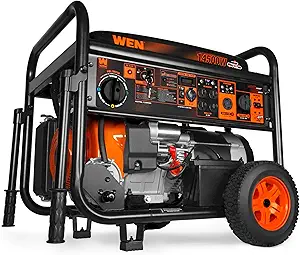
If you want a portable generator that gives you more options during a long power outage, a tri-fuel generator can be a practical choice. Unlike a conventional gasoline-only generator, a tri-fuel model can run on gasoline, propane, or natural gas, allowing you to switch fuels when availability or operating needs change.
That flexibility can be especially useful during hurricanes, winter storms, extended grid outages, and other emergencies. Gasoline can provide the highest output on many models, propane is convenient for long-term storage, and natural gas can provide an ongoing fuel source when your home is connected to a gas utility.
For 2026, the biggest thing to remember is that a generator does not produce the same wattage on every fuel. Gasoline generally provides the highest output, while propane and natural gas produce less. If you expect to use natural gas most of the time, size the generator according to its natural-gas running wattage rather than its gasoline rating.
Below is a comparison of five high-output tri-fuel generators designed for home backup and other demanding applications.
Best Tri-Fuel Generators for 2026
| Model | Gasoline Running Watts | Propane Running Watts | Natural Gas Running Watts | Key Features |
|---|---|---|---|---|
| WEN TF1450X | 11,500W | 10,300W | 8,750W | Electric start, CO Watchdog, 120/240V |
| Westinghouse 14500W | 11,500W | 10,500W | 9,500W | Remote start, low THD, 50A outlet |
| Westinghouse 12500W | 9,500W | 8,500W | Varies by configuration | Remote start, CO shutdown, transfer-switch ready |
| DuroMax XP13000HXT | 10,500W | 9,500W | 8,500W | Remote start, CO Alert, 50A outlet |
| Westinghouse 13500W | 10,500W | 9,500W | 8,500W | Remote start, CO shutdown, 14-50R outlet |
Specifications can vary by model revision, fuel, and configuration, so check the manufacturer’s current documentation before installation.
WEN TF1450X 14,500-Watt Tri-Fuel Portable Generator
Check Amazon Price: Click Here
The WEN TF1450X is one of the higher-output tri-fuel portable generators in this group. It produces up to 14,500 surge watts and 11,500 running watts on gasoline. On propane, output drops to 12,500 surge watts and 10,300 running watts, while natural gas provides 10,500 surge watts and 8,750 running watts.
That difference matters if natural gas is your preferred fuel. A homeowner who plans to connect the generator to a natural-gas line should use the 8,750-watt running rating when planning the household load rather than the 11,500-watt gasoline figure.
The TF1450X uses a 500cc four-stroke OHV engine and has an 8.2-gallon gasoline tank. WEN lists up to 12 hours of half-load runtime on gasoline. It also includes electric start, a wheel kit, 120/240V operation, and a CO Watchdog shutdown sensor.
The generator is transfer-switch ready, making it suitable for a properly installed home backup system. However, connecting a portable generator to a home’s electrical panel should be handled with the appropriate transfer equipment by a qualified professional.
WEN TF1450X Key Specifications
- Gasoline: 14,500 peak / 11,500 running watts
- Propane: 12,500 peak / 10,300 running watts
- Natural gas: 10,500 peak / 8,750 running watts
- 500cc four-stroke OHV engine
- 8.2-gallon gasoline tank
- Electric start
- 120/240V operation
- CO Watchdog shutdown sensor
- Transfer-switch ready
- Wheel kit included
The TF1450X is particularly interesting for homeowners who want a large portable generator without giving up the option of natural gas operation.
Westinghouse 14500W Tri-Fuel Generator
Check Amazon Price: Click Here
The Westinghouse 14500W Tri-Fuel Generator is designed for homeowners who need substantial output and want the ability to use three different fuels.
On gasoline, it provides 14,500 peak watts and 11,500 running watts. Its published ratings also step down when using propane or natural gas, which is normal for tri-fuel generators.
One of the most useful features is its combination of electric start and remote start, allowing you to start the generator without standing directly next to the machine. That can be particularly convenient during bad weather.
The generator also includes a large fuel tank, a fuel gauge, CO protection, and outlets designed for home backup applications. Its low-THD design is another consideration for households running electronics such as computers, televisions, routers, and other sensitive equipment.
Current 2026 product information identifies the model as the WGen11500TFc, with 14,500 peak and 11,500 running watts on gasoline, 13,500 peak and 10,500 running watts on propane, and 12,000 peak and 9,500 running watts on natural gas.
Westinghouse 14500W Key Specifications
- Gasoline: 14,500 peak / 11,500 running watts
- Propane: 13,500 peak / 10,500 running watts
- Natural gas: 12,000 peak / 9,500 running watts
- 550cc four-stroke OHV engine
- 9.5-gallon fuel tank
- Electric and remote start
- 120/240V operation
- CO sensor
- Low-THD output
- Transfer-switch ready
- 50A outlet
For a larger home, the 11,500-watt gasoline rating and 9,500-watt natural-gas rating give this generator considerable flexibility.
Westinghouse 12500W Tri-Fuel Generator
Check Amazon Price: Click Here
The Westinghouse 12500W Tri-Fuel Generator, commonly associated with the WGen9500TFc, provides a slightly lower power class than the 14,500-watt models while retaining the important advantage of three fuel choices.
On gasoline, the generator is rated at 12,500 peak watts and 9,500 running watts. Its propane rating is approximately 11,200 peak watts and 8,500 running watts.
It includes electric start, recoil start, and remote start, giving homeowners several ways to start the generator during an outage. The control panel also includes household receptacles along with connections designed for transfer-switch and RV applications.
CO protection and automatic low-oil shutdown add another layer of protection during operation.
The main reason to consider this model is that you may not need more than about 9,500 running watts on gasoline. Buying a larger generator than necessary can increase cost, weight, fuel consumption, and storage requirements.
Westinghouse 12500W Key Specifications
- Gasoline: 12,500 peak / 9,500 running watts
- Propane: 11,200 peak / 8,500 running watts
- Tri-fuel operation
- 457cc four-stroke OHV engine
- Electric and recoil start
- Remote start with key fob
- CO shutdown
- Automatic low-oil shutdown
- Transfer-switch-ready outlet
- RV-ready 120/240V outlet
The Westinghouse 12500W can make sense for households that need strong emergency power but do not require the additional output of a 14,500-watt-class generator.
DuroMax XP13000HXT Tri-Fuel Generator
Check Amazon Price: Click Here
The DuroMax XP13000HXT is another high-output option built specifically around gasoline, propane, and natural gas flexibility.
Unlike the original version of this article, its running-watt ratings are available and should not be described as unspecified. DuroMax lists 10,500 running watts on gasoline, 9,500 on propane, and 8,500 on natural gas. Peak output is 13,000 watts on gasoline, 12,000 watts on propane, and 11,000 watts on natural gas.
The XP13000HXT uses a 500cc four-stroke OHV engine and offers electric, recoil, and remote starting. It also includes CO Alert, automatic low-oil shutdown, GFCI outlets, a digital voltmeter, an hour meter, and a 50A outlet.
DuroMax lists an 8.3-gallon gasoline tank and up to 17 hours of runtime at 25% load on gasoline. At 50% load, the listed gasoline runtime is 8.5 hours.
The natural-gas rating is particularly important for homeowners who want to connect the generator to an existing gas supply. At 8,500 running watts, the generator still has substantial capacity, but the household load must be planned around that lower output.
DuroMax XP13000HXT Key Specifications
- Gasoline: 13,000 peak / 10,500 running watts
- Propane: 12,000 peak / 9,500 running watts
- Natural gas: 11,000 peak / 8,500 running watts
- 500cc four-stroke OHV engine
- 8.3-gallon gasoline tank
- Electric, recoil, and remote start
- CO Alert shutdown
- Automatic low-oil shutdown
- GFCI outlets
- 120/240V operation
- 50A outlet
- RV ready
- Home backup ready
- Less than 5% THD
One important consideration is that DuroMax lists this model as EPA certified but not CARB certified, so California buyers should verify current compliance before purchasing.
Westinghouse 13500W Tri-Fuel Generator
Check Amazon Price: Click Here
The Westinghouse 13500W Tri-Fuel Generator sits between the 12,500-watt and 14,500-watt models in this comparison.
The gasoline rating is 13,500 peak watts and 10,500 running watts. Propane produces 12,500 peak and 9,500 running watts, while natural gas produces 10,000 peak and 8,500 running watts.
It is equipped with remote start, electric start, and recoil start, so you have multiple ways to get the generator running when the power goes out.
The generator also includes a 9.5-gallon gasoline tank, fuel gauge, automatic low-oil shutdown, and carbon monoxide shutdown protection. Its outlet configuration includes household GFCI receptacles, a transfer-switch-ready L14-30R outlet, and a 120/240V 14-50R outlet.
That combination makes it useful for both emergency home backup and demanding portable applications.
Westinghouse 13500W Key Specifications
- Gasoline: 13,500 peak / 10,500 running watts
- Propane: 12,500 peak / 9,500 running watts
- Natural gas: 10,000 peak / 8,500 running watts
- 500cc four-stroke OHV engine
- 9.5-gallon gasoline tank
- Electric, recoil, and remote start
- CO shutdown
- Automatic low-oil shutdown
- Two GFCI 120V receptacles
- L14-30R transfer-switch-ready outlet
- 14-50R RV-ready outlet
- 120/240V operation
If you want a large portable generator but do not need the maximum gasoline output offered by the 14,500-watt models, this Westinghouse can be a useful middle ground.
Why Choose a Tri-Fuel Generator?
The main advantage of a tri-fuel generator is not simply having a larger engine. It is having three different fuel options available when circumstances change.
Gasoline
Gasoline generally provides the highest output on these generators and is convenient when you need maximum available wattage.
The downside is storage. Gasoline needs to be stored properly, and long-term storage requires attention to fuel quality and generator maintenance.
Propane
Propane is convenient for emergency preparedness because properly stored propane can remain usable for long periods. Many homeowners also already have propane tanks available for grills or other equipment.
The trade-off is lower generator output compared with gasoline.
Natural Gas
Natural gas can be particularly useful during a prolonged outage because the fuel is supplied through an existing utility line rather than requiring you to store large quantities of gasoline or propane.
However, natural gas output is generally lower than gasoline output. You also need an appropriate connection and adequate gas supply for the generator.
How Much Power Do You Really Need?
A common mistake when shopping for a generator is looking only at the largest number on the product page.
For example, a generator advertised as 14,500 watts does not continuously produce 14,500 watts. That is its peak or starting output on a particular fuel. The running-watt rating is the more useful number for determining what the generator can continuously power.
You also need to account for appliances with electric motors.
A refrigerator, well pump, furnace blower, air conditioner, sump pump, or other motor-driven appliance may require substantially more power when starting than while running.
A Basic Emergency Load Could Include:
- Refrigerator
- Freezer
- Gas furnace blower
- Lights
- Internet modem and router
- Television
- Sump pump
- Security system
- Selected kitchen appliances
A larger electrical load could also include:
- Central air conditioning
- Well pump
- Electric water heater
- Electric range
- Clothes dryer
- Multiple refrigerators or freezers
Do not assume that a 10,000- or 11,500-watt generator will automatically operate every appliance in a house at the same time. Calculate your actual running and starting loads first.
Can a Tri-Fuel Generator Power an Entire House?
It can power a large portion of a home, and in some situations it can support whole-home loads, but the answer depends on the home’s electrical demand.
A portable generator is not automatically equivalent to a permanently installed standby generator.
If you want to connect a portable tri-fuel generator to your home’s electrical panel, you generally need the appropriate transfer switch or approved interlock and generator inlet equipment. The installation should be performed according to local electrical codes by a qualified electrician.
The generator’s available running wattage also needs to be sufficient for the loads you want to operate.
If your central air conditioner has a high startup demand, for example, you may need to account for its starting current separately. A soft-start system can sometimes reduce air-conditioner startup demand, but it should be selected and installed appropriately for the equipment.
Important Safety Considerations
Every tri-fuel generator in this article is a combustion engine that produces carbon monoxide.
Never operate a portable generator inside a home, garage, basement, crawl space, shed, or other enclosed or partially enclosed area.
Carbon monoxide is odorless and can accumulate quickly.
Always follow the manufacturer’s instructions for outdoor placement, ventilation, grounding, fueling, and electrical connections. Keep the generator away from doors, windows, and other openings where exhaust could enter the house.
CO shutdown systems are valuable safety features, but they should never be treated as permission to operate a generator indoors.
Also allow the generator to cool before refueling and follow the manufacturer’s instructions for fuel storage and maintenance.
What to Look for When Buying a Tri-Fuel Generator in 2026
1. Running Watts on Your Preferred Fuel
This should be one of your first considerations.
If you plan to use natural gas during most outages, compare the natural-gas running-watt rating rather than the gasoline peak-watt number.
2. Starting Watts
Starting watts are important for appliances with motors and compressors.
A generator may have enough running watts for an appliance but still struggle if the appliance’s startup demand exceeds the generator’s available surge capacity.
3. 120/240V Capability
For home backup, 120/240V output can be important because many household electrical systems and larger appliances use both voltage legs.
4. Transfer-Switch Compatibility
If you want to power selected circuits through your home’s electrical panel, verify that the generator and the planned transfer equipment are compatible.
5. CO Protection
Look for a generator with a functioning carbon monoxide detection and shutdown system, but remember that this does not replace safe outdoor operation.
6. Fuel Storage and Availability
Think about which fuel you can realistically access during an outage.
A tri-fuel generator is most useful when you actually have access to multiple fuel sources.
7. Weight and Mobility
Large portable generators are heavy.
A wheel kit and handles make moving the generator considerably easier, but these are not lightweight machines that you can casually carry around.
8. Runtime
Runtime figures are only meaningful when you also look at the load percentage and fuel being used.
A generator that runs for many hours at 25% load may run considerably less time when supplying a large household load.
Tri-Fuel Generator vs. Dual-Fuel Generator
The biggest difference is the third fuel option.
A dual-fuel generator typically runs on gasoline and propane, while a tri-fuel generator adds natural gas.
If you already have a reliable natural-gas connection at your home, the additional fuel option can be valuable during a long outage.
If you do not have natural gas service, however, the third fuel may be less important to your buying decision.
In that situation, comparing gasoline and propane output, runtime, price, warranty, and available features may make more sense.
Which Fuel Should You Use During an Outage?
There is no single fuel that is best for every situation.
Gasoline is useful when maximum generator output is important.
Propane is convenient when you have stored tanks available and want a fuel that can be kept for longer periods under appropriate conditions.
Natural gas can be attractive for extended outages when your utility service remains available.
The important point is to understand the generator’s output on each fuel before the outage occurs. Switching from gasoline to natural gas can reduce the amount of power available, so your load plan should account for that difference.
Final Thoughts on Tri-Fuel Generators for 2026
Tri-fuel generators have become an appealing option for homeowners who want more flexibility than a gasoline-only or dual-fuel generator can provide.
The WEN TF1450X combines high gasoline output with electric start, CO Watchdog protection, and three-fuel operation.
The Westinghouse 14500W provides some of the highest output in this group and adds remote starting, low-THD output, and substantial home-backup capability.
The Westinghouse 12500W is a more moderate option for households that do not need the additional capacity of the largest models.
The DuroMax XP13000HXT offers strong output across all three fuels, remote starting, CO Alert, a 50A outlet, and home-backup-oriented features.
The Westinghouse 13500W sits between the smaller and larger options, with 10,500 running watts on gasoline and 8,500 running watts on natural gas.
The right choice ultimately depends on your home’s electrical load, preferred fuel, available gas supply, transfer equipment, and how much generator capacity you actually need.
Most importantly, don’t choose a generator based only on its highest advertised wattage. Look at the running watts for the fuel you expect to use, account for startup loads, and make sure your electrical installation is designed for safe generator operation.
If you’re preparing for hurricanes, winter storms, extended blackouts, or other emergencies in 2026, a properly sized tri-fuel generator can give you the flexibility to change fuels as conditions change.