As an Amazon Associate I earn from qualifying purchases.
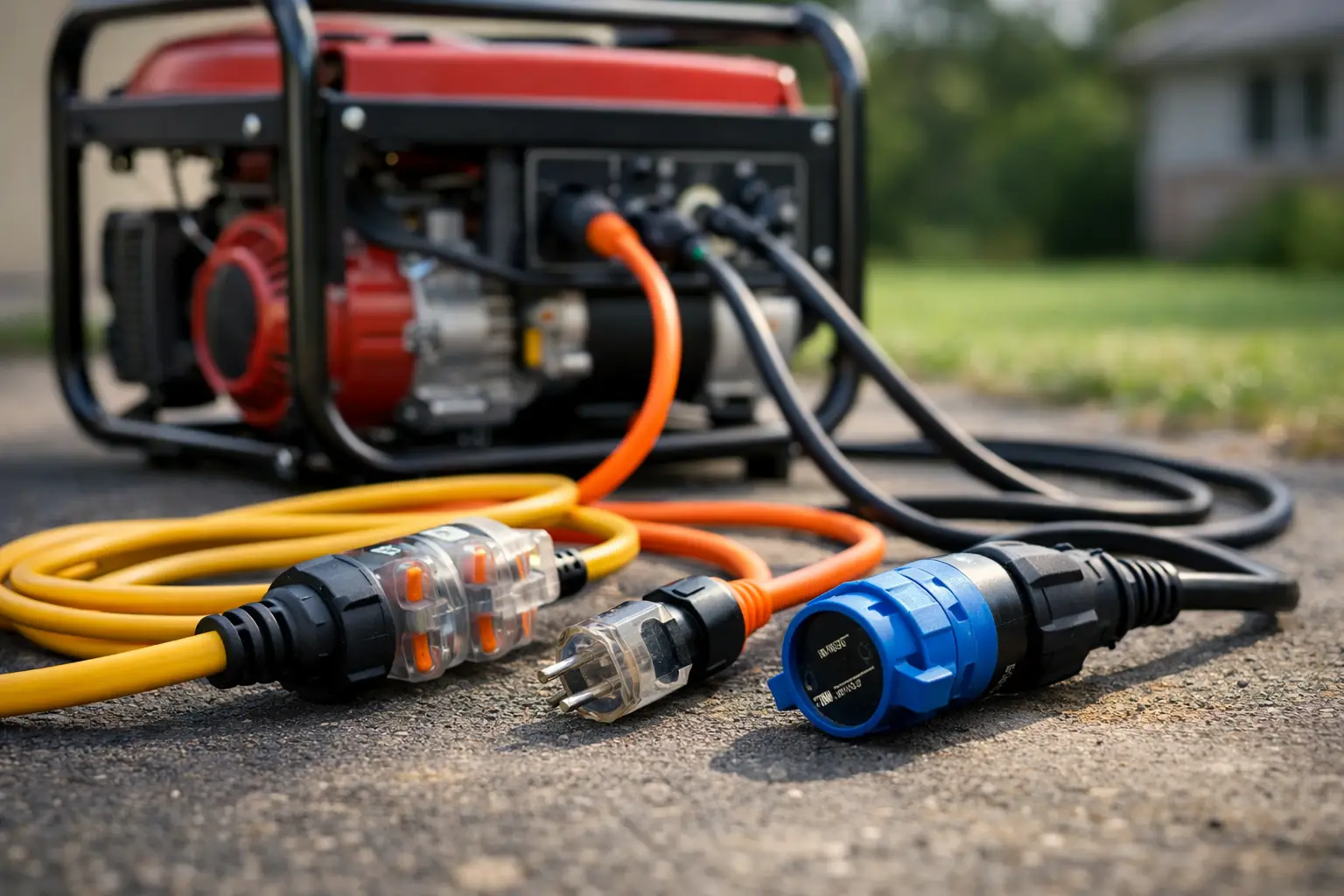
A generator can have plenty of wattage and still fail to serve the equipment you need if the cord between the generator and the load is undersized, too long, or fitted with the wrong plug. The best generator extension cords are not simply the longest heavy-duty cords on the shelf. They are matched to your generator outlet, the amperage of the circuit, and the real distance to the appliances, RV, transfer switch, or jobsite tools you plan to power.
For most buyers, cord selection comes down to three decisions: wire gauge, outlet configuration, and length. Get those right first. Features such as flexible jackets, lighted ends, and locking connectors then make the cord easier and safer to use in bad weather or low light.
What Makes the Best Generator Extension Cords?
A generator extension cord needs to carry substantial electrical load outdoors without excessive voltage drop or heat buildup. That is why generator cords usually use thicker copper conductors than ordinary household extension cords. A thin 16-gauge cord may be acceptable for a small lamp, but it is not the right choice for a refrigerator, circular saw, sump pump, or a loaded 30-amp generator outlet.
The gauge number works backward from what many people expect: lower numbers mean thicker wire. A 10-gauge cord carries more current with less resistance than a 12-gauge cord, and a 12-gauge cord is heavier-duty than a 14-gauge model. Length matters just as much. As a cord gets longer, resistance rises and voltage at the appliance falls. Motors can struggle, electronics can behave unpredictably, and the cable can get hot when a cord is too small for the load.
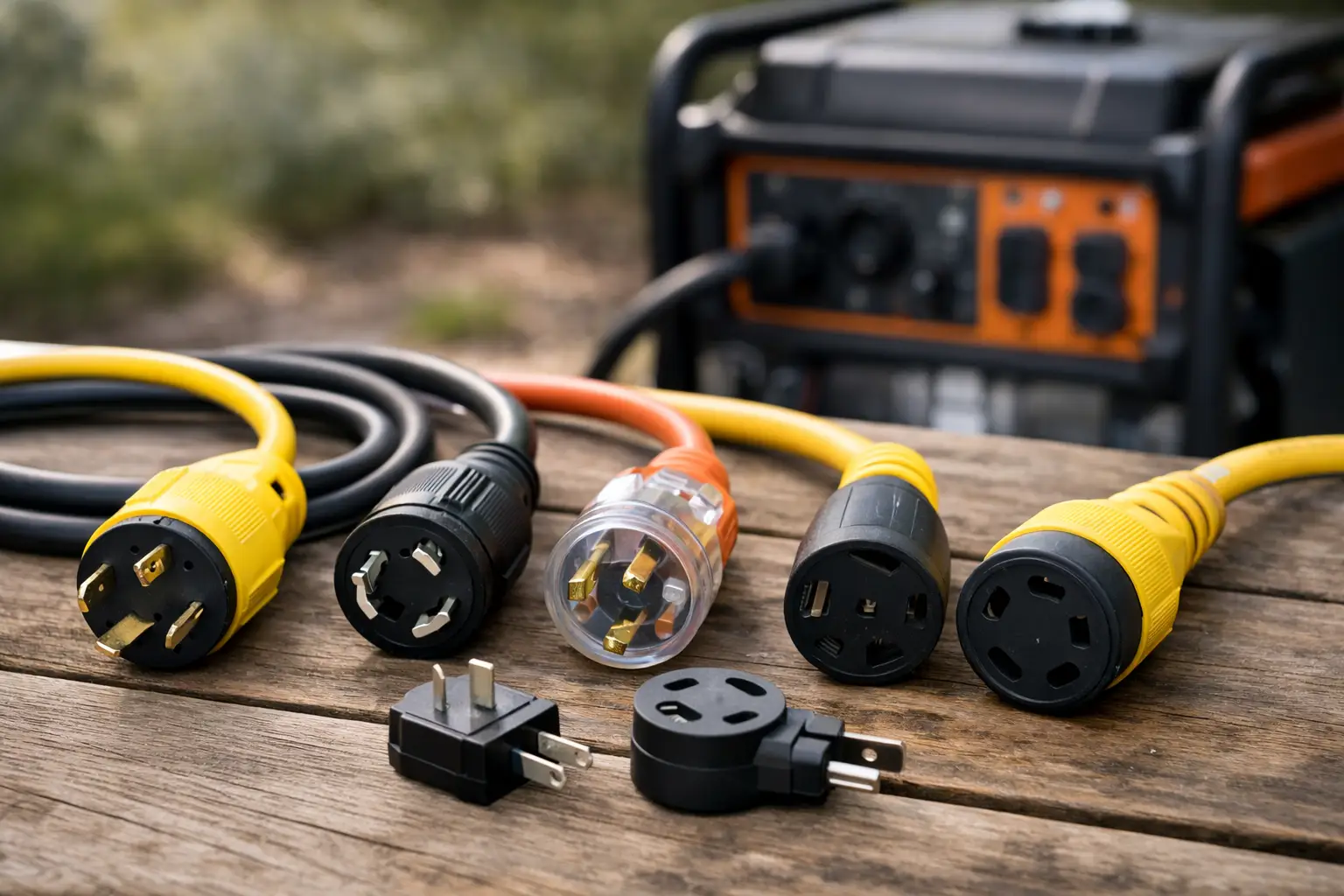
Plug style is the other non-negotiable detail. A standard 120-volt household outlet uses a straight-blade 5-15 connection. Many portable generators also have a locking 120-volt 30-amp L5-30 outlet, while generators intended for home backup often use a 120/240-volt 30-amp L14-30 outlet. Larger models may have a 50-amp 14-50 or CS-style outlet. A well-made cord is useless if its connectors do not match your generator and intended equipment.
7 Cord Types Worth Comparing
Rather than treating one cord as the answer for every generator, it is more useful to choose by application. These are the cord categories that consistently make sense for common backup-power and portable-power setups.
1. A 12/3 outdoor cord for modest 120-volt loads
A 12/3 SJTW extension cord is a practical choice for light-to-medium backup loads on a 15- or 20-amp household-style generator receptacle. It works well for a refrigerator, freezer, television, charging station, a few lights, or a gas furnace blower when the appliance has a standard 5-15 plug.
Look for a grounded, three-prong cord rated for outdoor use and keep the length reasonable, ideally 25 to 50 feet for higher-draw appliances. Southwire heavy-duty outdoor cords are widely used in this category because their jackets remain relatively manageable outdoors. Do not treat a 12-gauge cord as a 30-amp solution simply because it feels thick.
2. A 10/3 cord for demanding 120-volt equipment
For a high-draw 120-volt appliance or tool, a 10/3 outdoor cord provides more margin. It is a strong choice when using a 20-amp generator outlet and running equipment such as a heavy-duty shop vacuum, larger window air conditioner, pressure washer, or multiple loads through a properly rated splitter or power distribution box.
This cord is heavier and more expensive than 12/3, but that trade-off is worthwhile when voltage drop is a concern. A 10/3 cord is especially helpful at 50 feet or longer. Verify the generator outlet rating and the appliance’s starting watts before assuming the cord is the only limitation.
3. A 30-amp L5-30 locking cord for RVs and 120-volt loads
A generator with a 120-volt 30-amp locking outlet needs an L5-30 cord, typically built with 10-gauge, three-conductor wire. The twist-lock connection is a meaningful upgrade over a straight-blade plug for outdoor use because it resists accidental disconnection from vibration, wind, or a cord being pulled.
Champion 30-amp generator extension cords are common examples in this category. They are useful for connecting a compatible generator to an RV adapter, a manual transfer setup designed for 120 volts, or a 30-amp distribution box. Check both ends carefully: an L5-30 plug and an RV TT-30 plug are not interchangeable, even though both are associated with 30-amp 120-volt service.
4. A 30-amp L14-30 cord for home backup
For many homeowners, the most useful generator cord is a 10/4 L14-30 cord. It connects a generator’s four-prong 120/240-volt, 30-amp locking outlet to a compatible power inlet box. From there, a properly installed manual transfer switch or interlock allows selected household circuits to run from the generator.
A Reliance Controls or Southwire 30-amp generator cord is a sensible type of product to compare here. Four-conductor 10-gauge cable supports two hot legs, a neutral, and a ground, which is necessary for 120/240-volt service. Never try to replace this arrangement with improvised adapters or a three-wire cord. Home connection equipment must match the generator’s
neutral-bonding design and local electrical requirements, so an electrician is the right resource when the setup is unclear.
5. A 50-amp generator cord for larger inlets
A 50-amp cord is appropriate only when both the generator and the inlet equipment are rated for 50 amps. These cords are commonly 6/4 or 8/4 cable, depending on the length and configuration, and they are substantially heavier than 30-amp cords. Their cost and weight can surprise first-time buyers.
The benefit is greater available capacity for a larger portable generator or a home backup system with a 50-amp inlet. The limitation is simple: a 50-amp cord does not increase the output of a generator with a 30-amp receptacle. Choose it for compatible equipment, not as a future-proof upgrade you may not actually use.
6. An RV-specific 30-amp or 50-amp cord
RV owners should prioritize the connector at the RV pedestal inlet. A 30-amp RV uses a TT-30 connection, while a 50-amp RV uses a four-prong 14-50 connection. Camco Power Grip cords and adapters are familiar options because their molded grips make repeated connecting and disconnecting easier.
An adapter can be useful when the generator outlet and RV inlet differ, but it does not create more power. A 30-amp generator feeding a 50-amp RV through an adapter remains limited by the generator’s 30-amp output. Manage loads accordingly, especially air conditioners, microwaves, and electric water heaters.
7. A generator inlet cord for a temporary transfer setup
Some portable generator owners use a preassembled generator inlet cord with a
power inlet box, rather than routing a loose extension cord through a window or door. This approach is cleaner and helps keep exhaust, rain, insects, and cold air outside. It should be paired with approved transfer equipment, not connected to a dryer outlet or any other household receptacle.
A properly designed inlet cord is a safety component, not a shortcut. Backfeeding a home through an outlet can energize utility lines and seriously endanger utility workers, neighbors, and your own electrical system.
How Long Should a Generator Extension Cord Be?
Place the generator outdoors, well away from doors, windows, vents, and attached structures. The cord must therefore be long enough to maintain safe generator placement, but no longer than necessary. For many home backup situations, 25 to 50 feet is the practical range. A 100-foot cord may be necessary for a distant well pump, detached garage, or jobsite, but it often calls for heavier wire.
As a working rule, move up in wire size when you increase cord length or supply a motor-driven load. If a refrigerator starts slowly, lights dim noticeably, or a plug feels warm, stop and reassess the load, cord length, and gauge. Do not solve a voltage-drop problem by chaining two cords together.
Safety Checks Before You Run the Generator
Inspect the entire cord before each use. Look for flattened sections, cuts, cracked insulation, loose plug blades, discoloration, or melted plastic. Keep connections off wet ground when possible, and use cords marked SJTW, STW, or another rating intended for outdoor exposure.
Avoid coiling a cord tightly while it is carrying a heavy load. Heat cannot dissipate as easily from a tightly wound cable. Also avoid running cords under rugs, through pinched windows, across driveways, or where vehicles can roll over them. If several devices must be powered, use a generator-rated distribution box rather than a light-duty indoor power strip.
Buy for the Setup You Have, Not the Label You Like
The right cord begins with the receptacle on your generator and ends with the equipment you actually need to run. Record the outlet type, amperage, voltage, distance, and expected load before shopping. That short checklist prevents the two most common mistakes: buying a cord that will not connect and buying one that is too light for the work.
When the power goes out, a correctly sized cord is easy to overlook because it simply does its job. That is exactly what dependable backup equipment should do.
CHECK OUT THE BEST EXTENSION CORDS FOR GENERATORS AT THE BEST PRICE ON AMAZON 🛒