As an Amazon Associate I earn from qualifying purchases.
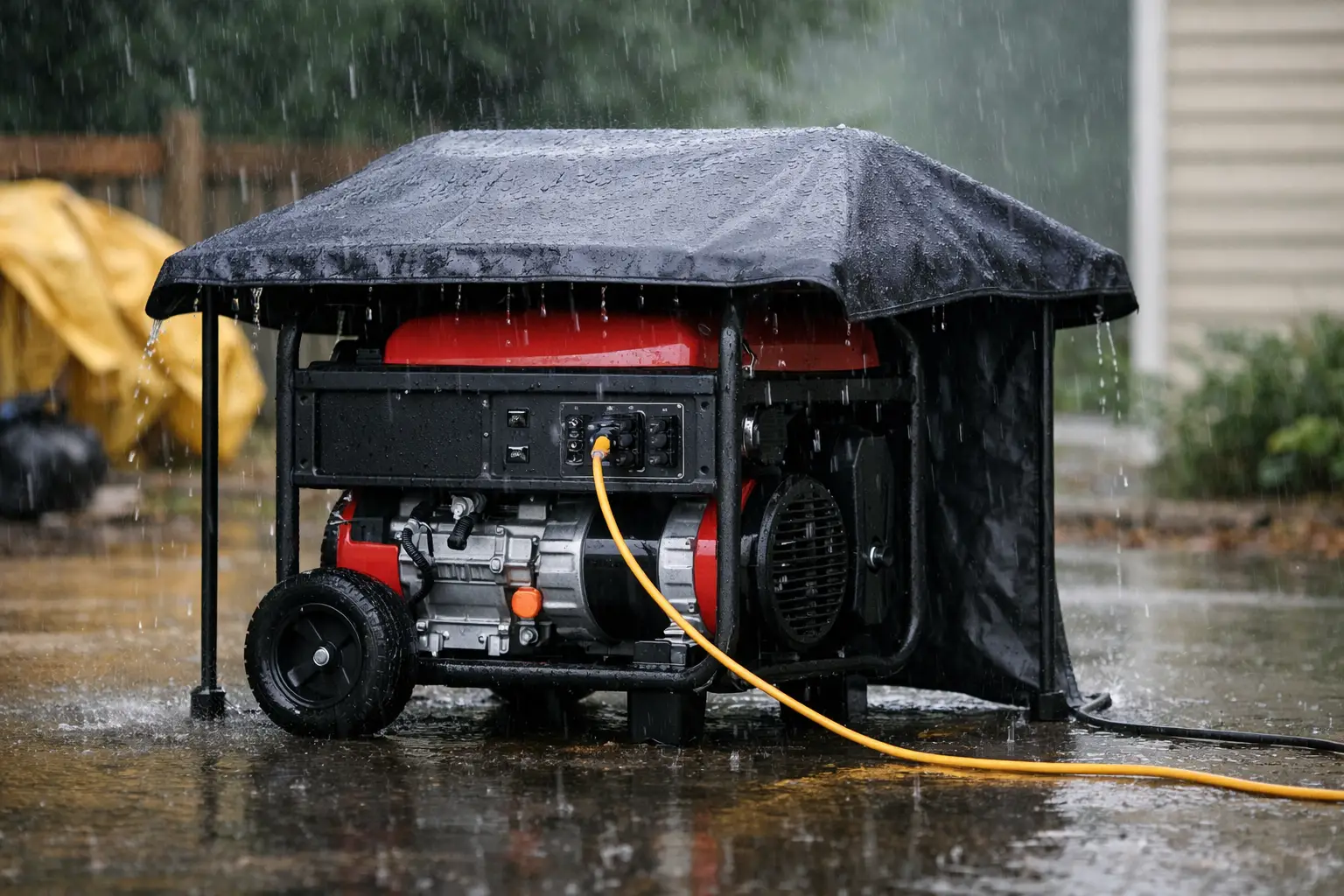
When the power goes out, a portable generator can keep a refrigerator or a few appliances running. A home standby propane generator is a different kind of backup system. It is permanently installed outside your home, connected to a fuel supply, and paired with an automatic transfer switch so it can restore power without requiring you to drag out extension cords or refuel a portable generator.
For homeowners who want dependable backup during hurricanes, winter storms, wildfires, grid failures, or extended outages, propane remains one of the most practical fuel options. Liquid propane (LP) can be stored for long periods, and many residential standby generators can run on either propane or natural gas.
However, choosing the right generator in 2026 is not simply a matter of buying the model with the highest wattage. The generator, transfer switch, electrical service, fuel supply, load-management system, installation requirements, warranty, and local service network all matter.
Below, I’ve compared five well-known standby generator options and updated the specifications and buying advice for 2026.
Why Choose a Propane Home Standby Generator in 2026?
Propane has several advantages for residential backup power.
Long-Term Fuel Storage
Unlike gasoline, propane does not deteriorate in the same way during long-term storage. That makes it practical for homeowners who want to maintain an emergency fuel supply without constantly rotating gasoline cans.
Your actual runtime will depend on the size of the propane tank, generator model, electrical load, outdoor temperature, and fuel pressure.
Automatic Backup Power
A properly installed standby generator can detect a utility failure and start automatically. The automatic transfer switch then moves the home’s electrical loads from utility power to generator power.
When utility power returns and remains stable, the system transfers the home back to the electrical grid and shuts down the generator.
The process is automatic, but it is not instantaneous. There is normally a short interruption while the generator starts and the transfer sequence occurs.
Better Option for Long Outages
A portable gasoline generator requires regular refueling. A permanently installed propane generator can run for much longer as long as the propane supply remains available.
For homes in areas where extended outages are common, having a properly sized LP tank can be a major advantage.
Dual-Fuel Flexibility
Most major residential standby generators discussed here can operate on either liquid propane or natural gas.
That gives homeowners flexibility, but remember that the generator’s output can change depending on the fuel. Always compare the LP and NG ratings instead of assuming the advertised kW figure is identical for both fuels.
Top 5 Reliable Home Standby Propane Generators for 2026
1. Generac Guardian 24–26kW Class Standby Generator
Check Amazon Price Click Here!
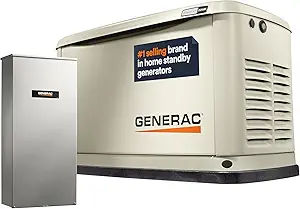
Generac remains one of the most recognizable names in residential standby power, and its Guardian lineup has expanded significantly.
For 2026, homeowners should pay particular attention to the current Guardian models rather than relying on older 2024 or 2025 specifications. Generac’s current lineup includes models reaching 26 kW, including the Guardian 26kW model 7291. The current 26kW Guardian is rated at 26,000 watts on LP and 22,500 watts on natural gas.
| Feature | Current Specification/Consideration |
|---|---|
| Fuel Type | Liquid Propane / Natural Gas |
| LP Output | Up to 26,000 watts depending on model |
| NG Output | Up to 22,500 watts on current 26kW model |
| Transfer Switch | Available in complete system configurations |
| Monitoring | Mobile Link on supported/current models |
| Enclosure | Aluminum |
| Warranty | 5-year limited on applicable models |
| Best For | Large homes and high electrical loads |
Pros
- High power output for whole-home applications
- Current models offer substantial motor-starting capability
- Aluminum enclosure helps with outdoor durability
- Automatic operation
- Mobile monitoring available on supported models
- Large installed base and established service ecosystem
Cons
- Higher purchase price than smaller standby units
- Professional installation is required
- Large homes may still require load management
- Propane consumption increases substantially at higher loads
One important point is that 26 kW does not automatically mean every appliance in your house can run simultaneously. Air conditioners, electric water heaters, ranges, dryers, pool equipment, EV chargers, and other large loads can quickly consume available capacity.
For a large home, a load calculation is more useful than choosing a generator based solely on square footage.
2. Champion 14kW aXis Home Standby Generator
Check Amazon Price Click Here!
The Champion 14kW aXis system remains an interesting option for homeowners who don’t need the capacity of a 20–26kW generator.
The 14kW system provides 14,000 watts on propane and 12,500 watts on natural gas. The 200A package includes an aXis automatic transfer switch and load-management capability. Champion lists the unit at approximately 62 dBA measured at 23 feet, while the generator produces less than 5% THD.
| Feature | Specification |
|---|---|
| Fuel Type | Propane / Natural Gas |
| LP Output | 14,000 watts |
| NG Output | 12,500 watts |
| Transfer Switch | 200A aXis ATS in this package |
| Noise | Approximately 62 dBA at 23 ft |
| THD | Less than 5% |
| Warranty | 10-year limited generator warranty |
| Best For | Smaller and mid-size homes |
Pros
- 14kW propane output
- 12,500W natural-gas output
- Relatively low published sound level
- 10-year limited generator warranty
- Automatic operation
- Load-management capability
- Less than 5% THD
Cons
- Not ideal for very large homes with multiple heavy electrical loads
- A large central air conditioner can consume a significant portion of available capacity
- ATS warranty terms differ from the generator warranty
- Dealer and installation availability varies by location
The Champion is particularly attractive when you want automatic whole-home-style backup but don’t need a 20kW or larger generator.
However, don’t interpret “whole house” as “everything can run simultaneously.” Champion’s own sizing tool asks homeowners about high-demand loads such as air conditioners, heat pumps, electric water heaters, dryers, EV chargers, pools, and well pumps.
3. KOHLER 20RCA 20kW Home Standby Generator
Check Amazon Price Click Here!
The KOHLER 20RCA is a strong choice for homeowners who want a 20kW-class standby generator with premium construction and remote monitoring.
The current 20RCA is rated at 20kW on liquid propane and 18kW on natural gas. KOHLER lists a 64 dB(A) sound output during its weekly exercise cycle and 69 dB(A) during full-speed operation. The automatic transfer switch is sold separately, while remote monitoring is included.
| Feature | Specification |
|---|---|
| Fuel Type | Natural Gas / LPG |
| LP Output | 20,000 watts |
| NG Output | 18,000 watts |
| Transfer Switch | Sold separately |
| Monitoring | Remote monitoring included |
| Exercise Sound | 64 dB(A) |
| Full-Speed Sound | 69 dB(A) |
| Warranty | 5-year limited |
| Enclosure | Aluminum |
| Best For | Mid-size to larger homes |
Pros
- 20kW output on propane
- 18kW output on natural gas
- Aluminum enclosure
- Remote monitoring
- Strong motor-starting capability
- Designed for whole-home backup applications
Cons
- Transfer switch is not included with the base generator
- Installation can become expensive
- Full-speed noise is higher than the weekly exercise figure
- Local dealer availability should be checked before purchasing
The difference between the exercise-cycle noise figure and full-speed noise is important. A generator may sound relatively quiet during its routine weekly test but become noticeably louder when operating under a significant electrical load.
4. Briggs & Stratton PowerProtect 26kW Standby Generator
Check Amazon Price Click Here!
Briggs & Stratton has made significant changes to its residential standby lineup, so the specifications in older buying guides should not be used without checking the current model.
The current PowerProtect 26kW is rated at 26kW on liquid propane and 24kW on natural gas. It uses a commercial-grade Vanguard engine and an aluminum enclosure. Briggs & Stratton lists normal operating sound at 65 dBA and a 10-year comprehensive warranty for the PowerProtect 26kW model.
| Feature | Specification |
|---|---|
| Fuel Type | Liquid Propane / Natural Gas |
| LP Output | 26,000 watts |
| NG Output | 24,000 watts |
| Engine | 993cc Vanguard Commercial-Grade |
| Voltage | 120/240V |
| Noise | Approximately 65 dBA |
| Enclosure | Corrosion-resistant aluminum |
| Warranty | 10-year comprehensive |
| Best For | Large homes and heavy loads |
Pros
- 26kW propane output
- 24kW natural-gas output
- Strong motor-starting capability
- Aluminum enclosure
- 65 dBA normal operating sound
- Long comprehensive warranty
- Designed for large residential loads
Cons
- Large physical footprint
- Installation cost can be substantial
- Dealer/service availability should be verified locally
- Higher fuel consumption when heavily loaded
Briggs & Stratton’s PowerProtect family now spans multiple sizes, from smaller residential models through the 26kW unit. The company also markets NGMax technology on its PowerProtect lineup to provide higher output on natural gas.
That makes Briggs & Stratton particularly interesting for homeowners who have natural gas available, although propane remains the higher-output fuel on the 26kW model.
5. Cummins QuietConnect RS20A
Check Amazon Price Click Here!
Cummins is another established name in standby power, and the QuietConnect series includes residential air-cooled models such as the RS13A, RS17A, and RS20A.
The RS20A is designed to operate on either natural gas or propane vapor and uses a single-phase 60Hz alternator with less than 5% THD. Cummins lists a base warranty of 5 years or 2,000 hours.
| Feature | Specification |
|---|---|
| Fuel Type | Natural Gas / Propane |
| Model | RS20A QuietConnect |
| Output Class | 20kW |
| Electrical System | 120/240V, 60Hz |
| THD | Less than 5% |
| Enclosure | Aluminum exterior |
| Warranty | 5 years / 2,000 hours |
| Best For | Homeowners prioritizing quiet operation and Cummins support |
Pros
- Strong Cummins engineering reputation
- 20kW-class residential option
- Aluminum exterior
- Less than 5% THD
- Propane and natural-gas operation
- QuietConnect design
- Automatic standby operation
Cons
- Dealer availability varies considerably by region
- Installation costs can be high
- Smaller residential lineup than some competitors
- Transfer-switch configuration must be matched to the installation
Cummins also offers smaller RS13A and RS17A models, which may make more sense when a home does not require 20kW of capacity.
Best Home Standby Propane Generators for 2026: Comparison
| Model | LP Output | NG Output | Approx. Noise | Warranty | Monitoring | Best For |
|---|---|---|---|---|---|---|
| Generac Guardian 26kW | 26,000W | 22,500W | Varies by model/load | 5 years | Mobile Link | Large homes |
| Champion aXis 14kW | 14,000W | 12,500W | ~62 dBA | 10 years | aXis system | Smaller/mid-size homes |
| KOHLER 20RCA | 20,000W | 18,000W | 64–69 dBA | 5 years | Included | Mid/large homes |
| Briggs & Stratton PowerProtect 26kW | 26,000W | 24,000W | ~65 dBA | 10 years | Model dependent | High-load homes |
| Cummins RS20A | 20kW class | 20kW class | Model/load dependent | 5 years/2,000 hr | Model dependent | Quiet backup power |
Specifications can vary by exact model, transfer-switch package, fuel configuration, and production version. Always verify the manufacturer’s current specification sheet before ordering.
How Many Watts Do You Need for a Home Standby Generator?
This is one of the most important questions to answer before buying.
A generator’s advertised wattage does not tell you exactly what size your house requires.
Start by identifying the appliances and systems you want to operate during an outage.
Common high-demand loads include:
- Central air conditioners
- Heat pumps
- Electric furnaces
- Electric water heaters
- Electric ranges
- Clothes dryers
- Well pumps
- Sump pumps
- Pool pumps
- Hot tubs
- EV chargers
- Refrigerators and freezers
- Medical equipment
- Lighting
- Internet equipment
- Garage door openers
Motors also require additional starting power. An air conditioner that appears manageable based on its running wattage may require considerably more power when its compressor starts.
That’s why motor-starting capability and load management can be just as important as the generator’s running-watt rating.
Is a 14kW Standby Generator Enough for a House?
It can be, but there is no universal answer.
A 14kW generator may be appropriate for a smaller or moderately sized home with carefully managed loads. It becomes less practical when the house has several large electric appliances running simultaneously.
For example, a home with central air conditioning, electric water heating, an electric range, a well pump, and an EV charger could exceed the available capacity of a 14kW generator very quickly.
If your goal is to power most of the home with fewer restrictions, a 20–26kW generator may make more sense.
The correct approach is to perform a load calculation rather than selecting a generator simply because a website says it is suitable for a particular square footage.
Do You Need a 200-Amp Transfer Switch?
Not necessarily.
The transfer switch should match your home’s electrical service and the way the generator system is designed.
A 200A service-rated transfer switch can be appropriate for a home with 200A electrical service, but that does not mean the generator itself has to produce enough power to operate every possible load simultaneously.
Load-management systems can disconnect or delay selected high-demand appliances so the generator stays within its available capacity.
For example, a generator may temporarily prioritize the refrigerator, HVAC system, lighting, and other essential circuits while delaying an electric water heater or other large load.
Always have the transfer-switch configuration designed by a qualified professional.
How Much Propane Does a Standby Generator Use?
Propane consumption varies dramatically with generator size and electrical load.
As an example, the current Generac 26kW Guardian lists LP consumption of approximately 2.06 gallons per hour at 50% load and approximately 3.63 gallons per hour at full load.
That means a 500-gallon propane tank should not be assumed to provide 500 gallons of usable generator fuel. Tanks are normally filled only to a percentage of their physical capacity, and actual generator runtime depends on load and operating conditions.
A better way to estimate runtime is:
Usable propane ÷ average gallons consumed per hour = approximate runtime
But because generator load changes throughout the day, the calculation should use an estimated average load rather than the generator’s maximum consumption figure.
What Size Propane Tank Do You Need?
The correct tank size depends on:
- Generator size
- Expected electrical load
- Desired runtime
- Local propane delivery availability
- Outdoor temperature
- Other propane appliances in the home
- Local installation requirements
Common residential tanks include 250-, 500-, and larger-gallon configurations, but the appropriate size should be determined with your propane supplier and generator installer.
If your home also uses propane for heating, cooking, water heating, or other appliances, the generator is sharing the available fuel supply with those systems.
For an extended outage, this becomes especially important.
Generator Placement and Installation Matter
A standby generator is not a DIY appliance that should simply be placed next to the house and connected to an outlet.
The installation typically involves:
- Preparing an appropriate generator base.
- Positioning the generator according to the manufacturer’s clearance requirements and local code.
- Installing the automatic transfer switch.
- Connecting the generator to the home’s electrical system.
- Installing the propane fuel line and regulator system.
- Verifying gas pressure and fuel capacity.
- Installing required disconnects and electrical protection.
- Obtaining required permits and inspections.
- Testing the automatic transfer sequence.
- Setting up the generator’s exercise schedule and monitoring system.
The manufacturer’s installation manual and local electrical, fuel-gas, fire, and building requirements take precedence over generic internet advice.
A professional installation is particularly important because an incorrectly installed standby generator can create electrical, fire, fuel, and carbon-monoxide hazards.
Propane vs. Natural Gas for a Standby Generator
Many standby generators give homeowners the choice between LP and natural gas.
Propane Advantages
- Fuel can be stored onsite
- Long-term storage is practical
- Useful in areas without natural-gas service
- Can provide fuel independence from the natural-gas distribution system
- Many generators produce their highest advertised output on LP
Natural Gas Advantages
- No onsite propane tank required
- Continuous utility supply under normal conditions
- Convenient for homes already connected to natural gas
- No need to schedule propane delivery
Which Is Better?
There is no universal winner.
If your area frequently experiences natural-gas interruptions or you want fuel stored onsite, propane can be attractive.
If you already have reliable natural-gas service and don’t want to maintain a large propane tank, natural gas may be more convenient.
Also remember that natural-gas output can be lower than LP output on many generator models.
Noise Level: What Should You Expect?
Generator noise is often reported in dBA at a specified distance, commonly 23 feet.
That measurement is useful for comparing models, but the real-world sound at your property can be different.
Noise can be affected by:
- Distance from the house
- Walls and fences
- Generator load
- Installation surface
- Landscaping
- Surrounding buildings
- Exhaust configuration
- Local noise requirements
For example, Champion lists approximately 62 dBA for its 14kW aXis model at 23 feet, while KOHLER lists 69 dBA during full-speed operation for the 20RCA.
Don’t compare a generator’s weekly exercise-cycle rating with another generator’s full-load rating and assume they represent the same operating condition.
What About Remote Generator Monitoring?
Remote monitoring is increasingly useful for homeowners who travel frequently or own a second home.
Depending on the manufacturer and model, monitoring can provide information such as:
- Generator operating status
- Utility power status
- Maintenance alerts
- Battery condition
- Fault notifications
- Exercise cycles
- Runtime information
Generac uses Mobile Link on supported models, while other manufacturers have their own monitoring platforms.
Remote monitoring should be viewed as a convenience and notification system, not as a substitute for maintenance or professional service.
Warranty and Local Service Are More Important Than They Look
A standby generator may remain installed outside your house for many years, so warranty coverage is only one part of the ownership equation.
Before buying, ask:
- Who is the authorized dealer?
- Who performs warranty repairs?
- How far away is the service technician?
- Are replacement parts readily available?
- Does the warranty cover labor?
- Does it cover travel?
- Is there an hour limit?
- Are there separate warranty terms for the transfer switch?
- Is remote monitoring included or subscription-based?
A generator with impressive specifications is less useful if you cannot find qualified service when it fails during a major storm.
This is one reason the local dealer network should be considered alongside wattage, noise, and price.
Maintenance for a Propane Standby Generator
Propane generators still require maintenance.
Typical maintenance tasks can include:
- Engine oil changes
- Oil filter replacement
- Air filter inspection or replacement
- Spark plug inspection/replacement
- Battery inspection
- Battery charging-system checks
- Fuel-system inspection
- Cooling-system inspection
- Enclosure inspection
- Exercise-cycle verification
- Professional annual service
Maintenance intervals vary by manufacturer and model, so follow the owner’s manual rather than applying a generic schedule.
The automatic nature of a standby generator can create a false sense of security. A generator that starts automatically is only useful if it has been properly maintained and tested.
Are Propane Standby Generators Safe?
Modern standby generators include multiple safety features, but installation and placement are critical.
Never operate a combustion generator inside a garage, basement, crawlspace, shed, or other enclosed area.
Follow the manufacturer’s required clearances and installation instructions, and install and maintain carbon-monoxide alarms in the home as required by applicable codes and manufacturer instructions.
Keep combustible materials away from the generator and make sure the exhaust is directed away from occupied areas.
Also, never attempt to connect a standby generator to a home’s electrical system using an improvised backfeed connection. The transfer equipment must properly isolate generator power from utility power.
Final Verdict: Which Propane Standby Generator Is Right for 2026?
There isn’t one standby generator that is perfect for every house.
The Generac Guardian 26kW class makes the most sense for homeowners who need substantial capacity and want a widely supported residential standby platform.
The Champion 14kW aXis is a more compact choice for homeowners whose electrical load does not justify a 20–26kW system, while its 10-year generator warranty and relatively low published sound level make it worth considering.
The KOHLER 20RCA is a strong 20kW-class option for homeowners who want premium construction, remote monitoring, and 20kW LP output.
The Briggs & Stratton PowerProtect 26kW stands out for its 26kW LP/24kW NG output and long warranty coverage, making it particularly interesting for homes with substantial electrical loads.
The Cummins QuietConnect RS20A is worth considering when quiet operation, Cummins engineering, and local dealer support are priorities.
Ultimately, the best home standby propane generator is the one that matches your home’s actual electrical load, fuel supply, transfer switch, installation requirements, and local service availability.
Before ordering, get a professional load calculation and installation quote. Then compare the complete system—not just the generator price.
That approach will help you choose a standby generator that can provide dependable backup power when you actually need it.