As an Amazon Associate I earn from qualifying purchases.
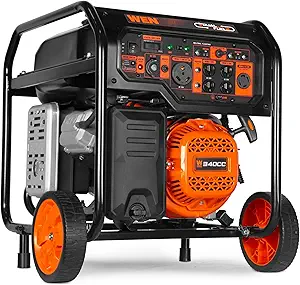
A good 6,000 watt generator can be a practical middle ground for homeowners, RV owners, DIYers, and anyone who needs more power than a small portable generator can provide without moving into the largest and heaviest generator classes.
The important detail is that 6,000 watts does not always mean 6,000 running watts. Some manufacturers advertise starting or surge watts, while others emphasize continuous rated output. That difference matters when you are trying to run refrigerators, sump pumps, well pumps, power tools, air conditioners, or other appliances with high startup demands.
For 2026, the market also offers more choices than traditional gasoline generators. Dual-fuel models can run on gasoline or propane, inverter generators can provide cleaner electrical power, and large portable power stations such as the Anker SOLIX F3800 provide 6,000 watts of battery-based 120/240V output without a gasoline engine.
Below are five models worth considering, including several options that sit just below or above the traditional 6,000-watt category.
Best 6000 Watt Generators on Amazon US for 2026
| Generator / Power Station | Power Output | Fuel / Power Source | Inverter | 120/240V | Best For |
|---|---|---|---|---|---|
| WEN DF8000X | 8,000 starting / 6,500 running gas | Gas / Propane | No | Yes | Home backup |
| K&S KS 6000iEHS CO | 5,500 starting / 5,000 running gas | Gas / Propane | Yes | Yes | Clean power and portability |
| A-iTech AT10-260001 | 6,000 starting / 5,500 running gas | Gas / Propane | No | Yes | Home, RV and jobsite use |
| Anker SOLIX F3800 | 9,000 surge / 6,000 continuous | Battery / Solar charging | Yes | Yes | Quiet home backup |
| Westinghouse WGen11500TFc | Up to 14,500 starting / 11,500 running gas | Gas / Propane / Natural Gas | No | Yes | Large home backup |
1. WEN DF8000X Dual Fuel Generator
Check Amazon Price Click Here!
The WEN DF8000X is one of the more practical choices in this group if your goal is home backup with a little more capacity than a traditional 6,000-watt generator.
It is technically above the 6,000-watt class because it produces 6,500 running watts and 8,000 starting watts on gasoline. On propane, output drops to 5,850 running watts and 7,200 surge watts.
That makes the DF8000X particularly interesting for homeowners who want enough capacity to handle several essential appliances at once.
WEN DF8000X Specifications
| Feature | Specification |
|---|---|
| Gasoline output | 8,000 starting / 6,500 running watts |
| Propane output | 7,200 starting / 5,850 running watts |
| Fuel | Gasoline / Propane |
| Engine | 340cc |
| Start | Electric + recoil |
| Voltage | 120V/240V |
| RV outlet | 120V 30A TT-30R |
| Transfer switch outlet | 120V/240V 30A L14-30R |
| CO protection | CO shutdown sensor |
| Fuel tank | 6.7 gallons |
| Warranty | 3 years |
One of the biggest advantages is the dual-fuel capability. Gasoline can provide the higher output, while propane gives you another fuel option for emergency preparedness and longer-term storage.
The generator also includes electric start, a wheel and handle kit, multiple 120V outlets, a 30A RV outlet, and a transfer-switch-ready receptacle.
Why Choose the WEN DF8000X?
The DF8000X makes sense if you want something slightly more powerful than a true 6,000-running-watt generator.
It can be a good fit for refrigerators, freezers, sump pumps, lighting, televisions, heating equipment, power tools, and other essential loads, provided the combined running and starting requirements stay within the generator’s capacity.
For home backup, remember that the generator’s total wattage is not the only consideration. A motor-driven appliance can require substantially more power for a few seconds when it starts.
Best for: homeowners who want extra capacity and dual-fuel flexibility without moving to a very large portable generator.
2. Könner & Söhnen KS 6000iEHS CO Inverter Generator
Check Amazon Price Click Here!
The Könner & Söhnen KS 6000iEHS CO is different from the larger conventional generators on this list.
Despite the model name, it is rated at 5,500 starting watts and 5,000 running watts on gasoline. Propane operation provides slightly less power.
That means it should not be purchased by someone who specifically needs a generator capable of delivering 6,000 continuous watts.
Its advantage is elsewhere: it is a dual-fuel inverter generator designed to provide cleaner electrical power in a more compact package.
KS 6000iEHS CO Specifications
| Feature | Specification |
|---|---|
| Gasoline output | 5,500 starting / 5,000 running watts |
| Propane output | Approximately 4,950 starting / 4,500 running watts |
| Fuel | Gasoline / LPG |
| Generator type | Inverter |
| Voltage | 120V/240V |
| Start | Electric / recoil |
| CO protection | Automatic CO shutoff |
| Fuel tank | 2.9 gallons |
| Noise | Approximately 58 dB at 25% load |
| Weight | About 86.9 lb |
| Outlets | 2 x 20A + 1 x 30A 120/240V |
The inverter design is particularly useful if you plan to power electronics such as computers, televisions, networking equipment, chargers, or other devices where stable electrical output is important.
It also has a relatively compact footprint compared with conventional open-frame generators.
Who Should Buy the K&S?
This is a better choice for someone who values clean power, lower noise, portability, and dual-fuel capability more than having a full 6,000 running watts.
It can also make sense for RV use and smaller home backup loads.
If your priority is running a large central air conditioner or several high-demand appliances simultaneously, however, a larger conventional generator may be a better match.
Best for: users who want an inverter generator with dual-fuel capability and cleaner power rather than maximum wattage.
3. A-iTech AT10-260001 Dual Fuel Generator
Check Amazon Price Click Here!
The A-iTech AT10-260001 is one of the closest matches to the traditional definition of a 6,000-watt portable generator in this comparison.
It produces 6,000 starting watts and 5,500 running watts on gasoline. On propane, output is slightly lower.
That makes it a useful option for people who want a conventional portable generator without moving into the much larger 8,000- to 12,000-watt range.
A-iTech AT10-260001 Specifications
| Feature | Specification |
|---|---|
| Gasoline output | 6,000 starting / 5,500 running watts |
| Propane output | 5,500 starting / 5,000 running watts |
| Fuel | Gasoline / Propane |
| Engine | 322cc OHV |
| Start | Electric |
| Fuel tank | 4 gallons |
| Runtime | Up to 12 hours at 25% load |
| 120V outlets | 2 x 20A GFCI |
| 120/240V outlet | 30A L14-30R |
| CO protection | CO sensor |
| Warranty | 2 years |
The combination of 5,500 running watts, dual-fuel capability, electric start, GFCI outlets, and a 120/240V 30A receptacle makes this generator versatile for home backup, outdoor events, RV-related applications, and jobsite use.
The four-gallon tank also keeps the unit somewhat more manageable than large-frame generators with oversized fuel tanks.
Is 5,500 Running Watts Enough?
For many households, yes—provided you prioritize essential circuits.
A generator in this range can typically handle a refrigerator, freezer, lights, electronics, a sump pump, selected kitchen appliances, and several smaller loads. The challenge comes when you try to operate multiple high-wattage heating or cooling appliances simultaneously.
Before buying, add up the running watts of the equipment you actually need and then account for the highest starting-watt requirement.
Best for: buyers who want a conventional dual-fuel generator close to the 6,000-watt class.
4. Anker SOLIX F3800 Portable Power Station
Check Amazon Price Click Here!
The Anker SOLIX F3800 is not a gasoline generator. It is a large portable power station with a 3,840Wh LiFePO4 battery and a continuous AC output of up to 6,000 watts.
That distinction is important.
Instead of filling a fuel tank and running an engine, the F3800 stores electricity in its battery and can be recharged from AC power, solar panels, or other compatible charging sources.
Anker SOLIX F3800 Specifications
| Feature | Specification |
|---|---|
| Battery capacity | 3,840Wh |
| Battery chemistry | LiFePO4 |
| Continuous AC output | 6,000W |
| Surge output | 9,000W |
| Voltage | 120V/240V |
| Solar input | Up to 2,400W |
| Expandable capacity | Up to 53.8kWh with expansion |
| UPS switching | Less than 20ms |
| Weight | About 132.3 lb |
| Warranty | 5 years |
The F3800’s biggest advantage is that it produces power without running a combustion engine.
That means no gasoline storage, no exhaust, and no engine noise while operating from the battery.
For indoor backup, this is a major difference from a portable fuel generator. However, the battery’s runtime depends directly on how much power your appliances consume.
For example, a 6,000W load would consume the available battery energy extremely quickly. A much smaller 500W or 1,000W load can run for considerably longer.
The F3800 can also be expanded with additional battery capacity, making it a more serious home-backup solution than many smaller power stations.
Who Is the Anker F3800 For?
Consider it if you want:
- Silent emergency power
- No gasoline engine
- 120V/240V output
- Solar charging
- Indoor-friendly battery backup
- UPS functionality
- Expandable energy storage
It is particularly attractive for users who want backup electricity without the maintenance and fuel management associated with a traditional portable generator.
Best for: quiet home backup, solar charging, electronics, and users who prefer battery power over gasoline.
5. Westinghouse WGen11500TFc Tri-Fuel Generator
Check Amazon Price Click Here!
The Westinghouse WGen11500TFc is the opposite of a small 6,000-watt generator.
It belongs in this article because the original product selection already included a Westinghouse tri-fuel model, but buyers should understand that this is a much higher-output generator.
The WGen11500TFc produces up to 14,500 starting watts and 11,500 running watts on gasoline. It also supports propane and natural gas.
Westinghouse WGen11500TFc Specifications
| Feature | Specification |
|---|---|
| Gasoline output | 14,500 starting / 11,500 running watts |
| Propane output | 13,500 starting / 10,500 running watts |
| Natural gas output | 12,000 starting / 9,500 running watts |
| Fuel | Gasoline / Propane / Natural Gas |
| Voltage | 120V/240V |
| Start | Electric / remote / recoil |
| Fuel tank | 9.5 gallons |
| Runtime | Up to 19 hours at 25% load |
| THD | Less than 5% |
| CO sensor | Yes |
| Transfer switch ready | Yes |
| GFCI | Yes |
| Weight | About 230 lb |
The biggest advantage is fuel flexibility.
If you have access to natural gas at your home, the ability to operate from the existing gas supply can be especially useful during longer outages because you are not completely dependent on stored gasoline.
The WGen11500TFc is also designed with home backup in mind, including transfer-switch readiness and 120/240V output.
However, it is substantially heavier and more expensive than the smaller generators in this guide.
If your actual requirement is around 5,000 to 6,000 running watts, there is little reason to buy a generator this large unless you specifically want the additional capacity.
Best for: large homes, extended outages, and users who need tri-fuel flexibility and substantially more than 6,000 watts.
6000 Watt Generator Comparison
| Model | Gasoline Running Watts | Starting Watts | Fuel | Inverter | 120/240V | CO Protection | Best Use |
|---|---|---|---|---|---|---|---|
| WEN DF8000X | 6,500W | 8,000W | Gas/Propane | No | Yes | Yes | Home backup |
| K&S KS 6000iEHS CO | 5,000W | 5,500W | Gas/Propane | Yes | Yes | Yes | Clean power |
| A-iTech AT10-260001 | 5,500W | 6,000W | Gas/Propane | No | Yes | Yes | Home/RV/jobsite |
| Anker SOLIX F3800 | 6,000W continuous | 9,000W surge | Battery/Solar | Yes | Yes | N/A | Quiet backup |
| Westinghouse WGen11500TFc | 11,500W | 14,500W | Gas/Propane/NG | No | Yes | Yes | Large home backup |
What Can a 6000 Watt Generator Run?
A generator in the 5,000- to 6,500-running-watt range can handle a substantial collection of household and outdoor equipment, but the exact combination depends on the starting and running requirements of each appliance.
Typical loads may include:
- Refrigerator
- Freezer
- Sump pump
- Well pump
- Television
- Wi-Fi router
- Computers
- Lights
- Microwave
- Coffee maker
- Small electric water heater
- Power tools
- Air compressor
- Battery chargers
- Selected heating or cooling equipment
The key is not to add only the running watts.
Motors and compressors can require significantly more power when they start. A refrigerator may have a relatively low running demand but still create a short startup surge.
The same issue applies to sump pumps, well pumps, air conditioners, compressors, and some power tools.
Can a 6000 Watt Generator Run a Central AC?
Sometimes, but you should not assume it will.
The answer depends on the size of the air conditioner, its starting requirements, its efficiency, and what else is connected to the generator.
A generator with 6,000 running watts may be able to operate a smaller HVAC system if the starting surge is within its capability, while a larger central AC system may require considerably more generator capacity.
Check the equipment nameplate or manufacturer’s specifications for both running watts and starting watts before connecting it.
6000 Watt Generator vs. 6000 Watt Power Station
These two products can have similar numbers on the box but behave very differently.
Fuel Generator
A gasoline, propane, or natural-gas generator converts fuel into electricity.
Advantages:
- Long runtime when fuel is available
- Easy to refuel
- Good for extended outages
- High power output
- Many models provide 120/240V
- Suitable for heavy loads
Disadvantages:
- Engine noise
- Exhaust emissions
- Fuel storage
- Regular engine maintenance
- Cannot be operated indoors
Portable Power Station
A battery power station stores electricity and delivers it through an inverter.
Advantages:
- Very quiet
- No exhaust
- No gasoline storage
- Minimal maintenance
- Excellent for electronics
- Solar charging can provide another charging option
Disadvantages:
- Limited by battery capacity
- Recharge time matters
- Heavy battery systems can be expensive
- High loads consume stored energy quickly
The Anker SOLIX F3800 is a good example of the second category.
Dual Fuel vs. Tri-Fuel Generators
Fuel flexibility can be particularly useful during long power outages.
A dual-fuel generator normally runs on gasoline and propane.
A tri-fuel generator adds natural gas.
Gasoline usually provides the highest output on many portable generators, while propane offers convenient long-term storage. Natural gas can be especially useful for homeowners who already have a suitable household gas connection.
The tradeoff is that generator output often changes depending on the fuel being used.
Never assume the gasoline wattage applies to propane or natural gas. Check the manufacturer’s rating for each fuel.
Inverter vs. Conventional Generator
An inverter generator uses electronics to produce AC power and is often preferred for sensitive electronic equipment.
This can be useful when powering:
- Laptops
- Televisions
- Routers
- Phones
- Battery chargers
- Medical electronics
- Audio equipment
Conventional generators can still be excellent choices for home backup, power tools, pumps, and other demanding loads.
If you primarily want maximum output and straightforward emergency power, a conventional generator can make sense.
If lower noise and cleaner electrical output are higher priorities, an inverter model may be worth considering.
120V vs. 240V: Why It Matters
Before buying a 6,000-watt generator, check whether you need 120V only or 120/240V output.
A 120V generator is suitable for many household appliances, tools, electronics, and RV equipment.
A 120/240V generator gives you more flexibility for equipment that requires 240V and can also be important when connecting a generator to selected household circuits through a properly installed transfer switch or interlock system.
Never connect a portable generator directly to a household wall outlet to energize your home wiring. This dangerous practice, known as backfeeding, can create serious electrical hazards.
Generator Safety for Home Backup
Safety should be part of your generator-buying decision, not an afterthought.
A portable fuel generator produces carbon monoxide, an odorless and colorless gas that can become deadly quickly.
The CDC recommends operating portable generators outside and at least 20 feet away from doors, windows, and vents, with exhaust directed away from the building.
Never operate a gasoline, propane, or natural-gas portable generator:
- Inside your home
- In a garage
- In a basement
- In a shed
- On an enclosed porch
- In another enclosed or partially enclosed area
Opening a door or window is not an adequate substitute for safe outdoor placement.
You should also have working carbon monoxide alarms in the home.
Look for generators equipped with a CO shutoff system, but do not treat that feature as permission to operate a generator closer to the house than recommended.
Always follow the owner’s manual for placement, grounding, electrical connections, refueling, maintenance, and weather precautions.
How to Choose the Right 6000 Watt Generator
Before ordering, answer these questions:
1. How many watts do you actually need?
Make a list of the appliances you want to run during an outage.
2. What are the starting watts?
Pay special attention to motors, compressors, pumps, and air conditioners.
3. Do you need 240V?
If you have 240V equipment or want the option of connecting selected household circuits through an appropriate transfer system, look for 120/240V output.
4. Do you want dual fuel?
If you want gasoline and propane flexibility, choose a dual-fuel model.
5. Would tri-fuel be useful?
Natural gas can be valuable for extended home backup if the generator and your installation support it.
6. Is low noise important?
An inverter or battery power station may be preferable if noise is a major concern.
7. Do you need clean power?
If sensitive electronics are a priority, check the manufacturer’s THD specifications and consider an inverter generator or power station.
8. How will you connect it to your house?
For whole-house or selected-circuit backup, use a properly installed transfer switch or other code-compliant connection method. Do not improvise with a standard household outlet.
Final Thoughts on the Best 6000 Watt Generators for 2026
The best 6,000 watt generator depends heavily on what you mean by 6,000 watts and how you intend to use it.
The WEN DF8000X is a strong choice if you want more than 6,000 running watts, dual-fuel capability, electric start, and 120/240V output.
The Könner & Söhnen KS 6000iEHS CO is better suited to buyers who value inverter technology, lower noise, portability, and dual-fuel operation, even though its rated output is 5,000 running watts.
The A-iTech AT10-260001 is one of the closest conventional options to the 6,000-watt category, with 6,000 starting watts and 5,500 running watts on gasoline.
The Anker SOLIX F3800 takes a completely different approach. Its 6,000W continuous output comes from a large LiFePO4 battery rather than a combustion engine, making it attractive for quiet and emission-free backup power.
Finally, the Westinghouse WGen11500TFc is the option for buyers whose requirements are much higher than 6,000 watts. Its tri-fuel capability and substantially higher output make it more appropriate for large home backup applications.
For most buyers, the smartest approach is to calculate your essential running watts first, identify the largest starting surge, decide whether you need 120V or 240V, and then choose the smallest generator that comfortably covers those requirements.
That approach can save money, reduce fuel consumption, and make the generator easier to transport and maintain while still giving you dependable backup power when you need it most.
Important: Always follow the generator manufacturer’s owner’s manual and current U.S. safety guidance for placement, electrical connections, fueling, and operation.