The lights usually go out at the worst possible moment – during a storm, in extreme heat, or right when your refrigerator is full and your phone battery is at 6 percent. That is why choosing the right home emergency power solutions matters before an outage starts, not after. A good backup plan keeps essential circuits running, protects food and medications, and gives you options when the grid is down for hours or days.
The challenge is that “
backup power” can mean very different things. For one homeowner, it means keeping a few lights, the fridge, and the Wi-Fi on. For another, it means running a well pump, furnace blower, sump pump, and part of the central AC system. The best setup depends on your power needs, your budget, your fuel access, and how much convenience you want when an outage hits.
What counts as home emergency power solutions?
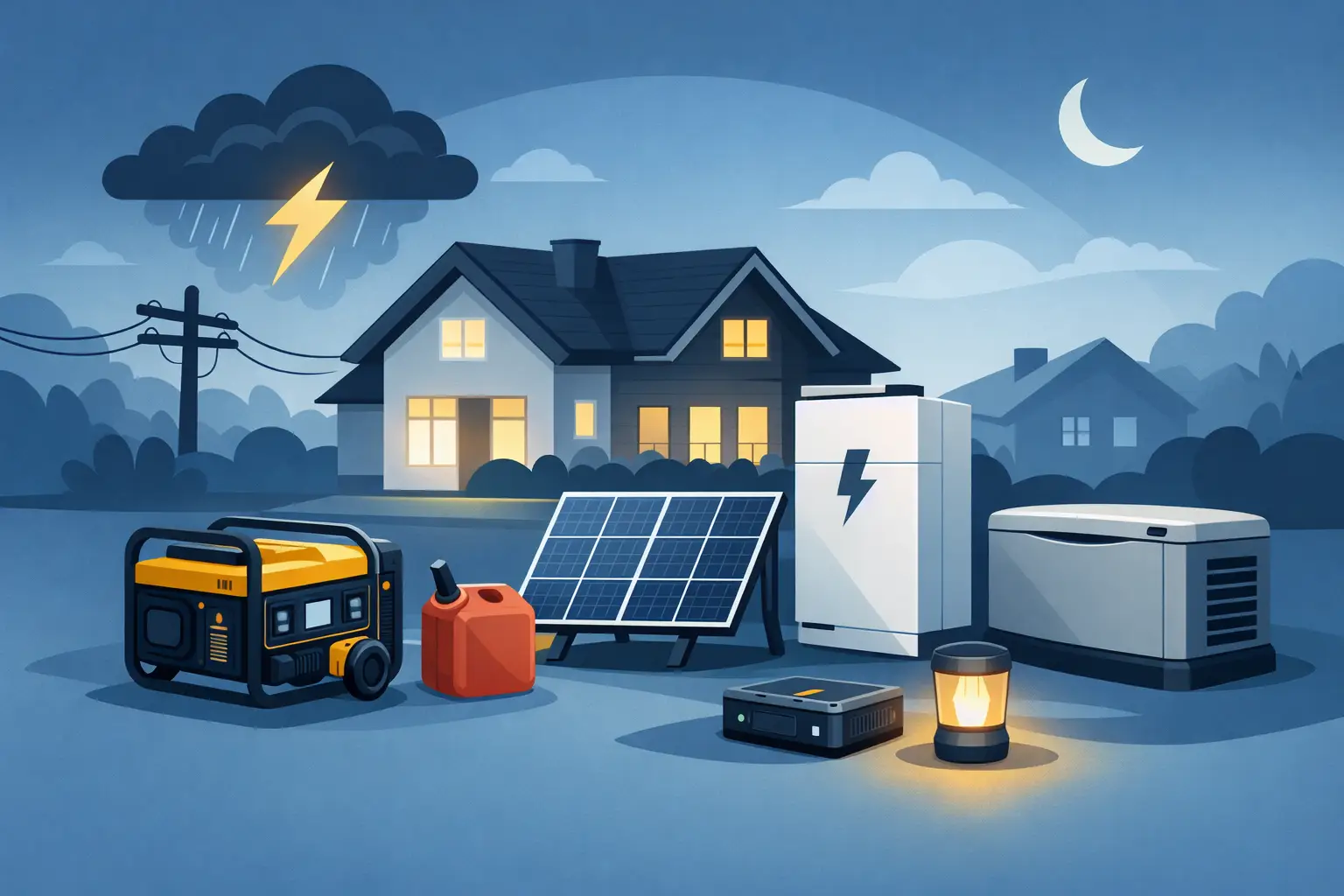
Most homeowners are choosing between three main categories: portable generators, standby generators, and battery power stations with or without solar charging. Each solves a different problem.
Portable generators are often the most affordable entry point. They can power critical appliances during an outage, and many models are flexible enough for jobsite, camping, or RV use when they are not serving as home backup. The trade-off is that they require manual setup, safe outdoor placement, fuel storage, and careful load management.
Standby generators are the most automated option. These units are installed permanently outside the home and paired with an automatic transfer switch. When the power fails, they can start on their own and restore selected circuits or even much of the whole house. They offer the most convenience, but they also cost more upfront and require professional installation.
Battery power stations are quiet, low-maintenance, and easy to use indoors because they do not produce exhaust. They are excellent for electronics, medical devices, lights, routers, and some smaller appliances. Their limitation is runtime and output. A battery backup may keep your essentials going for a few hours, but it usually cannot replace a fuel-powered generator for large loads unless you invest in a larger system.
How to choose among home emergency power solutions
Start with the loads you actually need, not the fantasy list you wish you could run. During an outage, most households do better by identifying essentials first. That usually includes refrigeration, lighting, phone charging, internet equipment, a microwave, a sump pump, or heating system components. If you have municipal water, your needs may be lower than a home with a well pump or septic system.
Power sizing is where many buyers go wrong. Running watts tell you what an appliance needs continuously. Starting watts matter for anything with a motor, such as refrigerators, freezers, pumps, and some HVAC equipment. If your backup source can handle the running load but not the startup surge, you may still have tripped breakers or stalled appliances.
That is why a small inverter generator can be perfect for one household and completely inadequate for another. If your goal is to support a few essentials with good fuel efficiency and quieter operation, an inverter model may be the smart fit. If you need to run multiple heavy loads at once, you may need a larger portable generator or a standby unit.
Fuel also shapes the decision more than many shoppers expect. Gasoline is easy to find in normal conditions, but it has a shorter shelf life and can be difficult to obtain during extended emergencies. Propane stores longer and burns cleaner, but refill access depends on local supply. Natural gas is convenient for standby systems because it provides continuous fuel in many areas, but it is only available if your home already has gas service. Dual-fuel and tri-fuel units can offer valuable flexibility if one fuel source becomes unavailable.
Portable generators: the practical middle ground
For many homeowners, a portable generator is the most realistic balance of cost, performance, and flexibility. It can deliver meaningful backup power without the installation expense of a standby system. That makes it one of the most common home emergency power solutions for storm season and short-to-medium outages.
The biggest advantage is value. A properly sized portable unit can keep essential appliances and circuits running at a fraction of the cost of a whole-home standby setup. Some models also support transfer switch or interlock kit use, which allows safer and more convenient power distribution to selected household circuits.
But portable generators come with real responsibilities. They must never run indoors, in a garage, or near open windows because of carbon monoxide risk. They need fuel on hand, regular test runs, and maintenance such as oil changes and stabilization practices for stored gasoline. They also require you to think through extension cord quality,
inlet box compatibility, and wattage limits before an emergency happens.
If you are looking at portable options, noise, outlet selection, electric start, fuel type, and low-throttle efficiency all deserve attention. A unit that looks strong on paper is not always the best ownership experience if it is difficult to move, overly loud, or poorly matched to your transfer setup.
Standby generators: convenience at a price
If you live in an area with frequent long outages, severe weather, medical equipment needs, or a home business that cannot afford downtime, a standby generator may be worth the investment. The biggest benefit is automatic operation. You do not need to wheel anything out, refuel in the rain, or manually reconnect loads in the dark.
Standby systems can cover either essential circuits or broader whole-home loads depending on generator size and electrical design. That makes them especially useful for homes with larger HVAC demands, deep freezers, well pumps, or other systems that are difficult to manage with a smaller portable unit.
The downside is not just the equipment price. Installation, permits, gas plumbing, electrical work, and routine service all add to the total cost of ownership. For some households, that expense is justified by peace of mind. For others, a well-planned portable setup covers the same critical needs for much less.
Battery backup: clean and quiet, but limited
Battery power stations have become more capable, and for the right user they are extremely useful. If your main concern is keeping communication devices, CPAP equipment, laptops, lighting, and small electronics powered, a battery system is simple and effective. It is also the easiest option for apartment dwellers or homeowners who cannot store fuel comfortably.
Where batteries struggle is high-demand equipment and long outages. Refrigerators can sometimes be supported, but runtime varies widely. Space heaters, central air conditioners, electric water heaters, and large pumps can drain batteries quickly or exceed output limits altogether. You can expand some systems with extra battery modules or solar input, but cost rises fast.
That does not mean battery systems are a poor choice. It means they are best viewed as a targeted backup tool rather than a universal answer for every household. In some homes, the smartest plan is a battery for short outages and sensitive electronics, paired with a generator for longer events.
Safety and setup matter as much as generator size
No discussion of home backup power is complete without safety. A generator that is powerful enough but connected the wrong way is still a bad solution. Backfeeding a home through a dryer outlet or other improvised method is dangerous and can put utility workers, neighbors, and your own electrical system at risk.
A proper transfer switch or approved interlock arrangement gives you a controlled way to power selected circuits. It also makes outage use far simpler because you know exactly what the generator is meant to support. If your home has sensitive electronics, an inverter generator or a well-designed power management plan may also help reduce risk to those devices.
Maintenance is another piece buyers often underestimate. Backup equipment is only useful if it starts when needed. That means routine test runs, fuel rotation, battery checks, and service intervals that match the manufacturer guidance. Even the best-rated unit can become a frustrating failure point if it sits ignored for a year.
The best backup plan is the one you will actually use
A lot of shoppers start by asking what the most powerful or most advanced option is. The better question is what setup fits your home and your habits. If you want automatic, low-hassle protection and your budget supports it, standby power makes sense. If you want strong value and flexible use, a portable generator is often the better buy. If you mainly need quiet indoor power for smaller essentials, a battery station may be enough.
At TopGeneratorsOnline, the most practical advice is usually the least flashy: size for your real essentials, choose a fuel plan you can manage, and build around safe connection methods from the start. The right backup system should feel dependable, not complicated. When the next outage arrives, you want a solution that works the way you expected it to – with enough power for what matters most and no surprises when the lights go out.