As an Amazon Associate I earn from qualifying purchases.
Introduction
Power reliability matters when an outage leaves your refrigerator, heating or cooling system, sump pump, internet equipment, and other essential appliances without electricity. In 2026, homeowners have more backup power options than ever, ranging from portable inverter generators to large standby systems designed to power most or all of a home.
The right choice depends on how much power you need, which appliances you want to run, what fuel is available, and whether you want a portable system or automatic backup. This guide compares several high-output generators and explains what to look for before choosing one for whole-home or essential-circuit backup.
Inverter generators are designed to produce stable electricity with low harmonic distortion, which can be useful for modern electronics and other sensitive loads. However, clean power is only part of the decision. You also need enough running and starting wattage for the appliances you plan to use.
Some portable models include a 120/240V connection that can be used with a properly installed transfer switch or other approved transfer equipment. That setup can connect the generator to selected household circuits, but a portable generator should not be assumed to provide automatic whole-home backup unless the specific system is designed and installed for that purpose.
Product Data Table
| Generator | Type | Fuel | Running Output | Best For |
|---|---|---|---|---|
| Westinghouse 11000 Peak Dual Fuel | Inverter | Gasoline/Propane | Up to 9,000W | High-output portable backup |
| DuroMax XP13000EH Dual Fuel | Conventional Portable | Gasoline/Propane | Up to 10,500W | High-output portable backup |
| Generac Guardian 22kW Standby | Standby | Natural Gas/Propane | Up to 22,000W | Automatic whole-home backup |
| Champion 11,000-Watt Wireless Remote | Inverter | Gasoline | 9,000W | High-output inverter backup |
| AIVOLT 8000W Dual Fuel Super Quiet | Inverter | Gasoline/Propane | Up to 6,100W | Smaller homes and essential loads |
In-Depth Product Overview
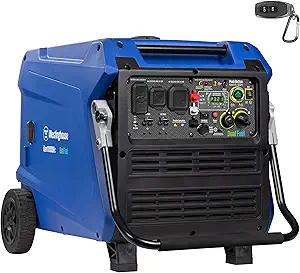
Westinghouse iGen11000DFc Dual Fuel Inverter Generator
The Westinghouse iGen11000DFc is a high-output dual-fuel inverter generator designed for portable backup power. It produces up to 11,000 peak watts and 9,000 running watts on gasoline, while propane provides lower output. Its 120/240V capability and transfer-switch-ready connection make it a practical option for properly configured home backup systems.
- Fuel: Gasoline or propane
- Starting: Electric start, remote key fob, and recoil backup
- Safety: Carbon monoxide sensor with automatic shutdown
- Output: Up to 11,000 peak watts and 9,000 running watts on gasoline
- Connection: 120/240V output with a transfer-switch-ready connection
- Best for: High-output portable backup where inverter technology is preferred
Why Choose It: A strong option for homeowners who want a high-wattage portable inverter generator with dual-fuel flexibility and remote starting.
DuroMax XP13000EH Dual Fuel Portable Generator
The DuroMax XP13000EH is a high-output conventional portable generator rather than an inverter model. It is designed for homeowners who prioritize available wattage and dual-fuel flexibility over the quieter operation and low-THD output associated with inverter generators.
With up to 13,000 starting watts, this generator can handle demanding loads when properly sized and connected to the home’s electrical system. Its gasoline and propane capability also gives homeowners another fuel option during an extended outage.
- Fuel: Gasoline or propane
- Starting: Electric start with recoil backup
- Type: Conventional portable generator
- Output: Up to 13,000 starting watts
- Best use: High-output emergency and home backup
- Home connection: Can be used with appropriate transfer equipment when installed according to electrical codes
Why Choose It: The XP13000EH makes sense for shoppers who want a powerful dual-fuel portable generator and do not specifically require inverter technology.
Generac Guardian 22kW Standby Generator
The Generac Guardian 22kW is a permanently installed standby generator designed for homeowners who want automatic backup rather than a portable generator they have to move and start manually. Depending on the configuration, Guardian models can operate on natural gas or propane and work with an automatic transfer switch.
Unlike portable generators, a standby system is installed in a fixed location and can automatically respond to a utility power outage when the generator and transfer equipment are properly configured.
- Power: Up to 22,000 watts, depending on fuel and configuration
- Fuel: Natural gas or propane
- Start: Automatic operation during a utility outage when properly installed
- Monitoring: Wi-Fi connectivity is available on applicable Guardian models
- Installation: Requires permanent installation and appropriate transfer equipment
- Best for: Homeowners who want automatic whole-home backup
Why Choose It: This is the better category for homeowners who want a permanent, automatic backup system rather than a portable inverter generator. Professional installation is required, and the exact transfer-switch configuration should be verified before purchase.
Champion 11,000-Watt Wireless Start Inverter Generator
The Champion 11,000W Wireless Start Inverter Generator combines high output with inverter technology and convenient remote starting. It produces 11,000 starting watts and 9,000 running watts on gasoline, with 120/240V output for demanding household loads.
Its wireless remote can start and stop the generator from up to 80 feet away, while the enclosed inverter design provides cleaner power for electronics and helps reduce operating noise compared with many conventional portable generators.
- Starting watts: 11,000W
- Running watts: 9,000W
- Fuel: Gasoline
- Start: Recoil, electric, and wireless remote
- Remote range: Up to 80 feet
- Noise rating: 64 dBA at 23 feet
- Safety: CO Shield automatic carbon monoxide shutdown
- Best for: High-output portable backup with inverter technology
Why Choose It: It is a strong choice for homeowners who want the combination of high output, inverter technology, 120/240V capability, and wireless starting.
The CO Shield system provides an additional carbon monoxide safety feature, but it does not make the generator safe to operate indoors or in an enclosed area.
AIVOLT 8000W Dual Fuel Super Quiet Inverter Generator
The AIVOLT 8000W Dual Fuel Inverter Generator is a portable inverter model rated for 8,000 starting watts and 6,100 running watts. Its dual-fuel design, electric start, and relatively low noise rating make it an option for homeowners who need backup power without moving up to a much larger generator.
- Starting watts: 8,000W
- Running watts: 6,100W
- Fuel: Gasoline and propane
- Engine: 322cc 4-stroke OHV
- Start: Electric start
- Noise: About 62 dBA at 23 feet under the manufacturer’s stated test conditions
- Safety: CO sensor and low-oil shutdown
- Best for: Smaller homes and essential backup loads
Why Choose It: The AIVOLT is worth considering when quiet operation, inverter output, and dual-fuel flexibility are more important than maximum whole-home capacity.
What to Consider When Choosing a Whole-Home Backup Generator
1. Power Output and Starting Watts
Generator size should be based on the appliances you actually plan to run at the same time. Do not choose a generator solely by its peak wattage. Pay attention to both running watts and starting watts, especially for appliances with motors or compressors.
A smaller generator may be enough for essential circuits such as a refrigerator, lights, internet equipment, sump pump, or selected appliances. Larger systems may be needed for central air conditioning, electric water heaters, well pumps, multiple refrigerators, or broader whole-home coverage.
Before buying, make a list of the loads you expect to use during an outage and check their running and starting watt requirements. When in doubt, have an electrician evaluate the planned load and transfer-switch configuration.
2. Fuel Type
Fuel availability can make a significant difference during a long outage.
- Gasoline: Widely available and commonly used by portable generators, but it requires proper storage and may become harder to obtain during widespread emergencies.
- Propane: Has a long shelf life when stored properly and gives dual-fuel generators another option when gasoline is unavailable.
- Natural Gas: Commonly used with permanently installed standby generators because the generator can draw fuel from the home’s natural gas supply.
Dual-fuel generators provide an additional fuel option, which can be useful when gasoline availability is limited or when homeowners prefer to keep propane available for emergencies.
3. Start Mechanism
The starting system affects how convenient the generator is to use during an outage.
- Recoil Start: Simple and common on portable generators, but requires manual effort.
- Electric Start: Lets you start the generator with a battery-powered switch.
- Wireless Remote Start: Available on some portable models and allows starting or stopping from a distance.
- Automatic Start: Used by permanently installed standby systems that are connected to an automatic transfer switch.
A portable generator with electric or wireless starting is still different from a standby generator with automatic transfer equipment. Do not assume that a transfer-switch connection automatically gives a portable generator automatic startup.
4. Transfer Switch and Home Connection
If you want to connect a portable generator to household circuits, the electrical connection needs to be designed to prevent dangerous backfeeding into the utility system. A properly installed transfer switch or other approved transfer equipment isolates generator power from utility power.
A transfer switch does not automatically turn a portable generator into a standby generator. The generator still needs to be started and operated according to its instructions unless the specific system supports automatic starting.
Because generator connections involve electrical safety and local code requirements, installation should be handled by a qualified electrician.
5. Portability vs. Permanence
Your preferred generator type will depend partly on how you expect to use it.
- Portable Generators: Can be moved when needed and are generally suitable for temporary emergency power, projects, and other situations where permanent installation is not necessary.
- Standby Generators: Installed permanently and designed to start automatically when utility power fails and the system is properly configured.
Portable generators generally require more hands-on operation, including outdoor placement, fuel management, and starting the unit. Standby systems require a larger upfront installation but provide a more automated backup experience.
6. Noise Level and Power Quality
Noise matters when a generator will operate near a home, neighbors, or other occupied areas. Inverter generators are often quieter because their engine speed can adjust according to the electrical load, although actual noise varies by model and operating conditions.
Total harmonic distortion (THD) is a separate consideration. Lower THD generally indicates a cleaner electrical waveform, which can be desirable for sensitive electronic equipment. However, low THD does not mean that a generator provides surge protection, and it does not replace the need for appropriate electrical protection.
When comparing generators, look for the manufacturer’s published noise rating and test conditions rather than assuming that every inverter generator will operate at the same volume.
Generator Safety: What Homeowners Should Know
Portable fuel-powered generators should always be operated outdoors and away from the home. The U.S. Environmental Protection Agency recommends placing portable generators outside and at least 20 feet away from buildings. They should also be positioned so exhaust does not enter doors, windows, vents, or other openings.
Never operate a portable fuel-powered generator inside a home, garage, basement, crawlspace, shed, or another enclosed or partially enclosed area. Carbon monoxide from generator exhaust can build up quickly and can be fatal.
A carbon monoxide sensor or automatic shutdown feature is an important additional safety feature, but it does not make indoor operation safe.
Always follow the generator manufacturer’s instructions, local electrical codes, and applicable installation requirements. Never connect a portable generator directly to a home’s electrical system without properly installed transfer equipment.
Final Thoughts
The best backup generator for your home depends on how much power you need, how you want the system to operate, and whether you prefer portability or automatic backup.
High-output inverter generators such as the Westinghouse iGen11000DFc and Champion 11,000W offer a combination of substantial power and inverter technology. The AIVOLT 8000W is a smaller option for homeowners with more limited loads. The DuroMax XP13000EH is a conventional portable generator that prioritizes high output and dual-fuel flexibility. For homeowners who want automatic whole-home backup, the Generac Guardian 22kW belongs in a different category as a permanently installed standby system.
Before purchasing, calculate your expected running and starting loads, verify fuel availability, and determine whether your home’s electrical system requires a transfer switch or other approved transfer equipment. For permanent installations or connections to household wiring, consult a qualified electrician.
Quick Takeaways
- Best automatic whole-home option: Generac Guardian 22kW for homeowners who want permanently installed standby power.
- Best high-output inverter option: Westinghouse iGen11000DFc for shoppers who want portable power with inverter technology and dual-fuel capability.
- Best high-output conventional portable option: DuroMax XP13000EH for buyers prioritizing wattage and dual-fuel flexibility.
- Best remote-start inverter option: Champion 11,000W Wireless Start Inverter for high-output portable backup with wireless starting.
- Best smaller inverter option: AIVOLT 8000W for homeowners who need less output and prefer a quieter dual-fuel inverter design.