As an Amazon Associate I earn from qualifying purchases.
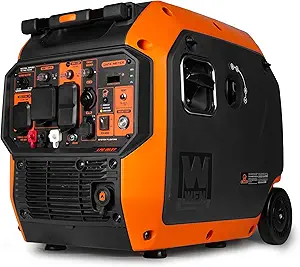
When you need portable power for a home backup system, RV, workshop, or off-grid application, a 240V inverter generator gives you an important advantage over a basic 120V portable generator: it can supply both 120V and 240V power for equipment that requires a higher-voltage connection.
That makes 120/240V inverter generators particularly useful for selected well pumps, larger appliances, transfer-switch installations, some HVAC equipment, power tools, and other loads that cannot run from a standard 120V outlet.
In 2026, however, choosing a 240V inverter generator is about more than looking at the largest wattage number. You also need to consider the generator’s running watts, starting watts, 240V amperage, fuel type, outlet configuration, noise level, CO protection, runtime, and transfer-switch compatibility.
Below are five models worth considering, followed by the most important things to know before buying one.
Best 240V Inverter Generators for 2026
| Generator | Fuel | Running Watts | Starting Watts | 240V Capability | Best Use |
|---|---|---|---|---|---|
| WEN DF680iX | Gas/Propane | 5,100 / 4,500W | 6,800 / 6,000W | 120/240V | Budget home backup, RV and EV charging |
| Westinghouse iGen11000DFc | Gas/Propane | 9,000 / 8,100W | 11,000 / 10,000W | 120/240V | Higher-output home backup |
| Champion 8500W Dual Fuel | Gas/Propane | 7,000 / 6,300W | 8,500W | 120/240V | Home backup and RV use |
| Champion 9000W Tri-Fuel | Gas/Propane/NG | 7,250 / 6,525 / 5,875W | 9,000W | 120/240V | Fuel flexibility |
| A-iPower SUA7600iED | Gas/Propane | 6,100 / 5,500W | 7,600 / 6,900W | 120/240V | Portable backup and general use |
The exact power available depends on the fuel being used and the specific load. Always check the manufacturer’s specifications and your equipment requirements before making a purchase.
What Is a 240V Inverter Generator?
A 240V inverter generator is a portable generator that can provide 240-volt AC power in addition to standard 120-volt power.
In the United States, many household circuits use 120V, while larger equipment may use 240V. Examples can include certain well pumps, air-conditioning equipment, electric water heaters, workshop equipment, and other larger loads.
The important point is that a generator advertising 120/240V capability does not automatically mean it can power every 240V appliance in your home.
You also need enough running watts and amperage for the particular load.
For example, the Westinghouse iGen11000DFc produces up to 9,000 running watts on gasoline and provides 37.5 amps at 240V under its gasoline rating.
That is a much more useful specification than simply seeing “11,000 watts” in a product title.
Why Choose an Inverter Generator?
Traditional generators and inverter generators both produce electrical power, but inverter technology can provide cleaner electrical output and allows the engine to adjust its speed according to demand.
This can reduce fuel consumption and noise under lighter loads.
The models in this guide are designed to produce relatively clean power suitable for many modern electronics. For example, WEN specifies total harmonic distortion below 0.3% at no load and below 1.2% at full load for the DF680iX, while several other models in this class specify less than 3% THD.
That does not mean you should ignore the manufacturer’s instructions. Sensitive equipment should always be connected according to its requirements, and surge protection can still be useful.
1. WEN DF680iX 6800-Watt Dual Fuel Inverter Generator
Check Amazon Price Click Here
The WEN DF680iX is an interesting choice if you want 240V capability without moving into the much heavier high-output generator category.
It uses a 224cc engine and can operate on either gasoline or propane. On gasoline, WEN rates it at 6,800 starting watts and 5,100 running watts. On propane, the ratings are 6,000 starting watts and 4,500 running watts.
The generator has a 120/240V L14-30R receptacle, along with standard 120V outlets and an RV-ready TT-30R outlet. WEN also describes the DF680iX as having a bonded-neutral 240V configuration and compatibility with its 240V parallel kit.
Key Features
- 6,800 starting / 5,100 running watts on gasoline
- 6,000 starting / 4,500 running watts on propane
- Gasoline and propane dual-fuel operation
- 120/240V L14-30R receptacle
- CO Watchdog automatic shutdown
- Electric and recoil start
- 2.9-gallon gasoline tank
- Up to approximately 6.1 hours at half load on gasoline
- Approximately 94.8 lb
- Less than 3% THD, with WEN specifying particularly low THD under its test conditions
- 3-year limited warranty
Why Consider the WEN DF680iX?
Its biggest advantage is the combination of 240V capability, dual-fuel operation, inverter technology, and relatively low weight.
At roughly 95 pounds, it is substantially easier to move than many 8,000- to 11,000-watt portable inverter generators.
It can make sense for buyers who need 240V capability but do not need enough output to run a large collection of household circuits simultaneously.
One additional feature worth knowing about is its bonded-neutral 240V configuration, which WEN says can support low-power Level 2 EV charging applications when properly configured.
2. Westinghouse iGen11000DFc 11,000-Watt Dual Fuel Inverter Generator
Check Amazon Price Click Here
If your priority is significantly more output for home backup, the Westinghouse iGen11000DFc moves into a different class.
It produces 11,000 peak watts and 9,000 running watts on gasoline, or 10,000 peak watts and 8,100 running watts on propane. It provides 120/240V output and includes both a 14-50R receptacle and an L14-30R transfer-switch-ready outlet.
Key Features
- 11,000 peak / 9,000 running watts on gasoline
- 10,000 peak / 8,100 running watts on propane
- Dual-fuel operation
- 120/240V output
- 14-50R 120/240V outlet
- L14-30R 120/240V transfer-switch-ready outlet
- CO sensor with automatic shutdown
- Electric, remote and recoil start
- 457cc engine
- 7.92-gallon fuel tank
- Up to 17 hours at 25% load on gasoline
- Approximately 187.4 lb dry
- Less than 3% THD
- 64 dBA according to the manufacturer’s specifications
- 3-year limited residential warranty
Why Consider the Westinghouse iGen11000DFc?
The combination of high output and 240V capability makes this model much more appropriate for demanding home-backup applications than a smaller 5,000- or 6,000-watt generator.
The 14-50R outlet is particularly useful for applications requiring a higher-capacity 120/240V connection, while the L14-30R outlet can be used with compatible transfer-switch installations.
The tradeoff is portability. At more than 180 pounds dry, this is not a generator most people will want to move around frequently.
For a stationary backup role where the generator will normally remain stored in one location and be moved only when necessary, that weight may be acceptable.
3. Champion 8500-Watt Dual Fuel Inverter Generator
Check Amazon Price Click Here
The Champion 8500W Dual Fuel Inverter Generator is another strong option for buyers who want 240V capability without stepping all the way up to an 11,000-watt machine.
Champion’s current specifications for model 201177 list 8,500 starting watts and 7,000 running watts on gasoline, with 8,500 starting and 6,300 running watts on propane.
Key Features
- 8,500 starting / 7,000 running watts on gasoline
- 8,500 starting / 6,300 running watts on propane
- Gasoline or propane
- 120/240V output
- 14-50R 120/240V outlet
- L14-30R 120/240V locking outlet
- Two 120V 20A GFCI duplex outlets
- CO Shield automatic CO shutdown
- Electric start
- 420cc engine
- Up to 14 hours at 25% load on gasoline
- Up to 12 hours at 25% load on propane
- 61 dBA according to Champion’s current specifications
- Less than 3% THD
- 3-year limited warranty
Why Consider the Champion 8500W?
This model occupies a useful middle ground.
It has enough output for substantial emergency loads while still offering dual-fuel flexibility and 240V capability. The 14-50R and L14-30R outlets also give it more connection flexibility than many smaller portable generators.
The 61 dBA rating is another reason to consider it if noise matters. Champion’s inverter design allows engine speed to decrease as electrical demand falls, which can reduce fuel consumption and noise at lighter loads.
4. Champion 9000-Watt Tri-Fuel Inverter Generator
Check Amazon Price Click Here
If fuel flexibility is one of your biggest priorities, the Champion 9000W Tri-Fuel Inverter Generator deserves attention.
The model 201176 can operate on gasoline, propane, or natural gas, giving homeowners another option during extended outages.
The actual output depends on the fuel:
- Gasoline: 9,000 starting / 7,250 running watts
- Propane: 9,000 starting / 6,525 running watts
- Natural gas: 9,000 starting / 5,875 running watts
Key Features
- Gasoline, propane and natural gas operation
- 120/240V output
- 9,000 starting watts
- Up to 7,250 running watts on gasoline
- 14-50R 120/240V outlet
- L14-30R 120/240V locking outlet
- CO Shield automatic shutdown
- Electric start
- 420cc engine
- Economy Mode
- Intelligauge
- Less than 3% THD
- Approximately 72 dBA
- Up to 14 hours at 25% load on gasoline
- Up to 12 hours at 25% load on propane
- 3-year limited warranty
Why Consider the Champion 9000W?
The biggest advantage is not simply the 9,000-watt rating. It is the ability to choose among three fuels.
Gasoline is convenient and generally provides the highest output. Propane can be easier to store for emergency preparedness. Natural gas can be particularly attractive for homeowners who already have an appropriate natural-gas connection.
The generator also provides both 14-50R and L14-30R 120/240V connections, making it more versatile for home-backup applications.
5. A-iPower SUA7600iED 7600W Dual Fuel Inverter Generator
Check Amazon Price Click Here
The A-iPower SUA7600iED is a practical choice for buyers looking for a mid-size dual-fuel inverter generator with selectable 120V/240V output.
Its current manufacturer specifications list 7,600 starting watts and 6,100 running watts on gasoline, or 6,900 starting watts and 5,500 running watts on propane.
Key Features
- 7,600 starting / 6,100 running watts on gasoline
- 6,900 starting / 5,500 running watts on propane
- Gasoline and propane operation
- 120/240V AC output
- L14-30R 120/240V outlet
- L5-30R 120V outlet
- Two 120V 20A outlets
- Electric and recoil start
- CO Sentry protection
- 322cc engine
- 3.6-gallon gasoline tank
- Up to 10.5 hours at 25% load on gasoline
- Approximately 130 lb
- Less than 3% THD
- Low-idle mode
- Parallel capability
An Important 120V/240V Detail
The SUA7600iED uses a voltage selector switch.
That means you need to select the desired voltage before operation. According to the manual information, the generator should be turned off before changing between 120V and 240V, and the available outlets behave differently depending on the selected voltage.
That is an important distinction compared with simply assuming that every outlet will provide 120V and 240V simultaneously.
How Many Watts Do You Need From a 240V Generator?
Wattage is one of the easiest specifications to misunderstand.
A generator has both running watts and starting watts.
Running watts represent the power the generator can continuously provide. Starting watts are the temporary extra capacity available for appliances and equipment with electric motors that require additional power when they start.
A refrigerator, well pump, air conditioner, compressor, or power tool may have a substantially higher starting demand than its normal operating wattage.
For that reason, do not size a generator based only on the combined running watts of your appliances.
A better approach is:
- List the equipment you want to operate.
- Determine the running watts for each load.
- Identify starting/surge requirements for motor-driven equipment.
- Decide which loads must operate at the same time.
- Make sure the generator has sufficient running watts.
- Verify that its 240V output and amperage meet the requirements of your 240V equipment.
240V Generator: 30A vs. 50A
The outlet configuration matters almost as much as the generator’s wattage.
A 30A 120/240V connection can provide substantially less current at 240V than a 50A connection.
For example, a 30A 240V circuit has a theoretical maximum of:
30A × 240V = 7,200 watts
A 50A 240V connection has a theoretical maximum of:
50A × 240V = 12,000 watts
That does not mean a generator automatically delivers those exact amounts. The generator’s actual rated output and outlet rating remain the limiting factors.
This is why two generators with similar advertised peak wattage can have very different usefulness for a particular home-backup installation.
Can a 240V Inverter Generator Power a Whole House?
Sometimes, but not automatically.
Having a 240V outlet does not mean a portable generator can power every circuit in your house.
The generator must have enough capacity for the circuits you intend to run, and the home needs an appropriate connection method.
For a permanent or semi-permanent home-backup installation, this may involve a properly installed transfer switch or approved interlock and generator inlet.
Never connect a portable generator directly to a household wall outlet. A qualified electrician should determine the appropriate connection method for your electrical system.
For larger homes, it is often more practical to identify a limited set of essential circuits rather than attempting to operate everything simultaneously.
What Can You Run With a 240V Inverter Generator?
Depending on the generator’s capacity, a 240V inverter generator may be suitable for combinations of:
- Refrigerators and freezers
- Sump pumps
- Well pumps
- Selected air-conditioning systems
- Furnaces and heating controls
- Lights
- Televisions and computers
- Microwave ovens
- Battery chargers
- Power tools
- Workshop equipment
- RV equipment
- Selected 240V appliances
The actual load requirements vary considerably.
For example, a well pump may have a high starting surge even if its normal operating wattage looks relatively modest. The same applies to compressors and air-conditioning equipment.
Always check the nameplate or manufacturer’s specifications for your specific appliance.
Fuel Type: Gasoline, Propane or Natural Gas?
Fuel flexibility can be extremely valuable during a prolonged outage.
Gasoline
Gasoline generally provides strong output and is widely available, but it has a limited storage life and requires appropriate fuel storage practices.
Propane
Propane can be stored for much longer than gasoline when handled correctly and can be useful for emergency preparedness.
The tradeoff is that many generators produce slightly less power on propane than gasoline.
Natural Gas
Natural gas is especially attractive for homeowners who already have a suitable natural-gas supply.
The main advantage is convenience during long outages because you are not relying entirely on stored gasoline or propane.
The Champion 9000W model, for example, supports all three fuels and has different running-watt ratings depending on the fuel being used.
How Important Is Generator Noise?
Noise matters more than many buyers realize.
An inverter generator can be quieter than a comparable conventional open-frame generator because the engine can slow down when electrical demand is low.
However, “quiet” does not mean silent.
The five models in this guide have manufacturer-listed noise figures ranging from approximately the low 60s to the low 70s dBA depending on the model and test conditions.
If you will use the generator near a home, campsite or RV, look at the stated dBA rating as well as the test distance and load condition.
CO Safety Is Non-Negotiable
Every portable generator in this category should be treated as a serious carbon-monoxide hazard.
A generator must never be operated inside a house, garage, basement, shed, or other enclosed or partially enclosed space.
Carbon monoxide is colorless and odorless and can accumulate rapidly.
Modern generators increasingly include automatic CO shutoff systems. WEN calls its system CO Watchdog, Champion uses CO Shield, and A-iPower uses CO monitoring/shutdown technology.
These systems are valuable safety features, but they are not permission to operate a generator indoors.
Use the generator outdoors and follow the manufacturer’s required clearance, exhaust-direction and operating instructions.
Which 240V Inverter Generator Should You Choose?
The best model depends on how you intend to use it.
For a lighter and more portable 240V option
The WEN DF680iX is worth considering if you want 240V capability, dual-fuel operation and substantially lower weight than the larger generators in this comparison.
For higher-output home backup
The Westinghouse iGen11000DFc provides significantly more running wattage and combines 120/240V output with a 14-50R outlet and transfer-switch-ready L14-30R connection.
For a balanced dual-fuel setup
The Champion 8500W Dual Fuel Inverter offers a useful combination of 240V capability, dual-fuel operation, inverter technology and a relatively low 61 dBA manufacturer rating.
For maximum fuel flexibility
The Champion 9000W Tri-Fuel is particularly interesting if you want gasoline, propane and natural gas in one generator.
For a mid-size dual-fuel alternative
The A-iPower SUA7600iED combines 120/240V output, dual-fuel capability, electric start and a voltage selector in a package weighing about 130 pounds.
Final Thoughts
The best 240V inverter generator for 2026 is not necessarily the one with the largest peak-watt number.
Start with the equipment you actually need to run. Then compare running watts, starting watts, 240V amperage, outlet type, fuel options, noise, runtime, CO protection and transfer-switch compatibility.
For lighter-duty 240V needs, the WEN DF680iX offers a combination of portability and dual-fuel flexibility. For more demanding home backup, the Westinghouse iGen11000DFc provides considerably more output and useful 120/240V connections. The Champion 8500W offers a middle-ground dual-fuel option, while the Champion 9000W adds natural-gas capability. The A-iPower SUA7600iED provides another mid-size dual-fuel option with selectable 120V/240V operation.
Most importantly, do not buy based on the peak wattage printed on the box alone. Verify the continuous running wattage and actual 240V connection requirements of the equipment you plan to operate.
And before connecting any portable generator to a home’s electrical system, make sure the installation uses the appropriate equipment and is completed according to local electrical requirements and manufacturer instructions.