As an Amazon Associate I earn from qualifying purchases.
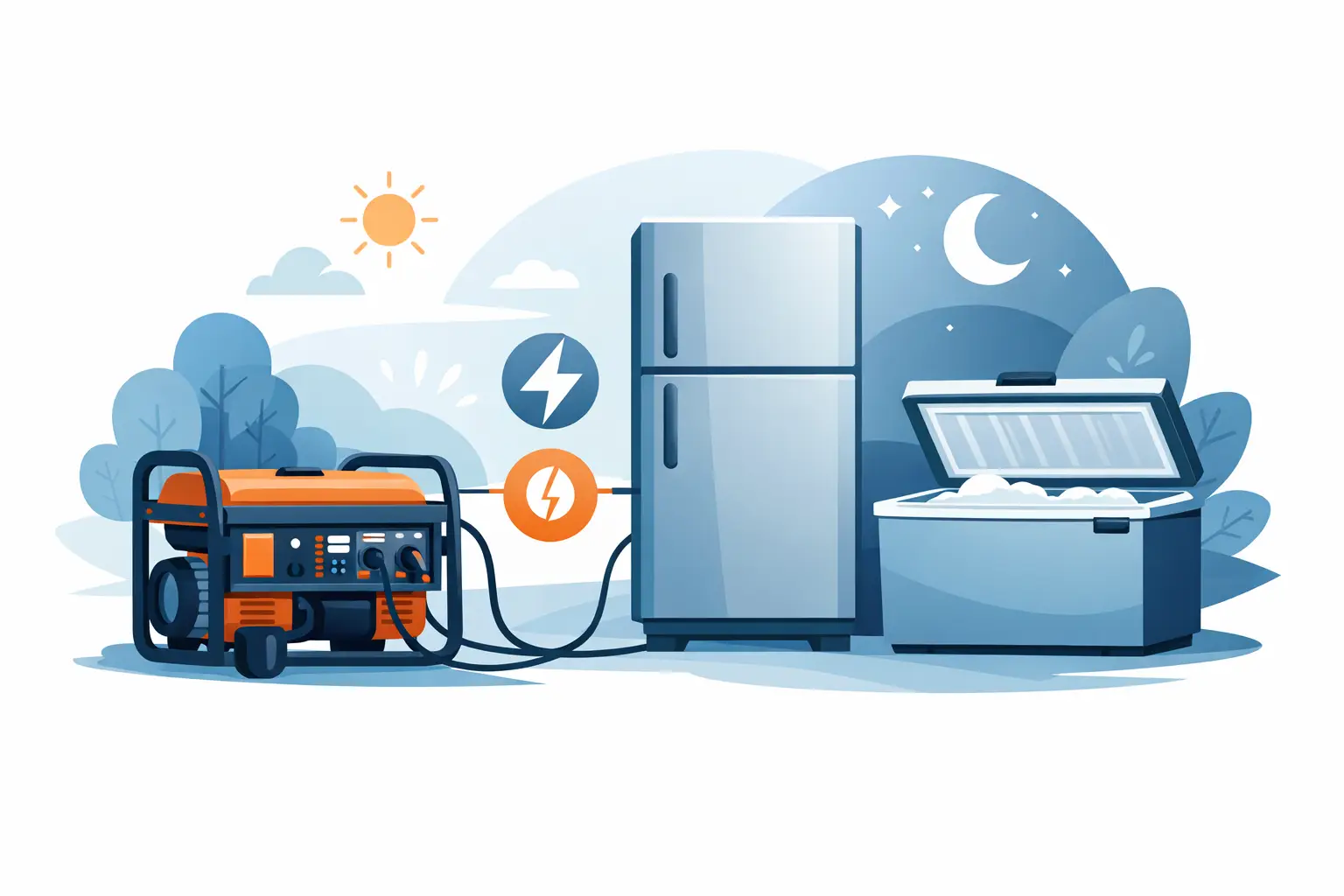
Portable solar generators have become a practical option for camping, RV trips, emergency preparedness, and short power outages. Unlike traditional gas generators, these systems store electricity in a battery and can be recharged from a wall outlet, a vehicle, or compatible solar panels. That makes them especially useful when you want backup power without fuel, engine noise, or exhaust.
Modern solar generators and portable power stations use battery technologies such as LiFePO4 or lithium-ion, depending on the model. They typically include AC outlets, USB ports, DC outputs, and solar charging inputs, allowing them to run or recharge everyday electronics, lights, communication equipment, and selected small appliances.
One important distinction: a solar generator is not the same as a conventional fuel generator. It does not produce electricity from an engine while you use it. Instead, it stores energy in a battery and supplies that stored power through an inverter. Solar panels recharge the battery, while AC and vehicle charging can usually be used when sunlight is unavailable.
Top Solar Generators of 2026
| Model | Capacity | AC Output | Battery | Best For |
|---|---|---|---|---|
| Jackery Solar Generator 1000 v2 | 1,070Wh | 1,500W | LiFePO4 | Home backup, RVs, camping |
| Jackery Solar Generator 240 v2 | 256Wh | 300W | LiFePO4 | Camping and personal electronics |
| MARBERO 237Wh Solar Generator | 237Wh | 300W | Lithium-ion | Emergency devices and camping |
| Jackery Solar Generator 300 | 293Wh | 300W | Lithium-ion | Travel and light electronics |
| Apowking 146Wh Solar Generator | 146Wh | 100W | Lithium-ion | Lightweight emergency power |
Why Solar Generators Matter in 2026
The solar generator market now covers everything from small battery stations designed for phones and laptops to larger systems capable of powering refrigerators, appliances, RV equipment, and selected home circuits.
In 2026, the biggest differences between models are battery capacity, inverter output, solar input, recharge speed, weight, expandability, and the types of devices they can safely power.
Unlike gasoline generators, battery power stations do not have combustion engines. That means they do not produce the carbon monoxide exhaust associated with fuel-powered generators and can operate much more quietly.
Common advantages include:
- No engine exhaust: Battery power stations do not produce the carbon monoxide emissions associated with gasoline generators.
- Very quiet operation: Without a combustion engine, they are substantially quieter than conventional gas generators.
- Low maintenance: There is no engine oil, spark plug, or fuel system to maintain.
- Indoor convenience: They can generally be used indoors when operated according to the manufacturer’s instructions.
- Solar recharging: Compatible solar panels can recharge the battery when grid power is unavailable.
- Different capacity options: Models range from lightweight units for phones and laptops to large systems designed for extended backup power.
They are particularly useful for camping, road trips, remote work, emergency kits, and short power interruptions.
In-Depth Overview of the Top Solar Generators
1. Jackery Solar Generator 1000 v2
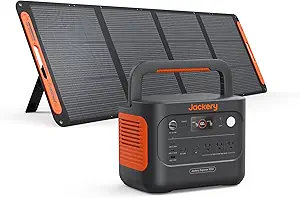
The Jackery Solar Generator 1000 v2 is the largest-capacity model in this particular lineup and is designed for users who need more than a small camping power station can provide.
It combines a 1,070Wh LiFePO4 battery with 1,500W of continuous AC output and up to 400W of solar input. That makes it suitable for a wider range of equipment than the smaller models in this guide, including laptops, lights, refrigerators, coolers, CPAP equipment, and selected small appliances.
The unit weighs about 23.8 pounds, which is relatively portable for a power station in the 1,000Wh class. It also provides three AC outlets, USB-C connections, USB-A, and a 12V car port.
The LiFePO4 battery is rated for 4,000 cycles to at least 70% of its original capacity under Jackery’s stated conditions. Jackery also markets the battery as providing 10+ years of use.
Its fast AC charging is one of its biggest advantages, while solar charging provides an off-grid option when grid power is unavailable. Actual solar charging time depends on panel wattage, sunlight, temperature, positioning, and other conditions.
Best For: Portable home backup, RV use, camping, emergency preparedness, refrigerators, coolers, and more demanding electronics.
2. Jackery Solar Generator 240 v2
The Jackery Solar Generator 240 v2 is designed for people who want a much smaller and easier-to-carry power station.
It combines a 256Wh LiFePO4 battery with 300W AC output and up to 100W of solar input. At about 7.7 pounds, it is considerably easier to carry than larger 1,000Wh-class stations.
The 240 v2 is better suited to lower-power equipment such as phones, cameras, laptops, lights, small fans, and other portable electronics. It is not intended to replace a large home backup system.
Jackery lists approximately 3.3 hours of solar charging when paired with a 100W SolarSaga panel under its stated test conditions. It can also use AC charging and a rapid charging mode for faster recharging when electricity is available.
Actual solar charging times vary with weather, panel positioning, temperature, and sunlight intensity.
Best For: Camping, hiking, travel, emergency phone charging, cameras, laptops, and personal electronics.
3. MARBERO 237Wh Solar Generator
The MARBERO 237Wh solar generator is a compact lithium-ion power station designed for users who need portable electricity without moving up to a much heavier battery system.
The unit has a 237Wh battery and 300W rated AC output, while the current kit includes a 60W solar panel for off-grid recharging.
Its output selection includes AC outlets, USB-A, USB-C, and DC connections. This gives users flexibility when charging phones, tablets, cameras, small lights, communication equipment, and other relatively low-power devices.
One useful feature is the built-in LED lighting, which can be helpful during nighttime camping or a power outage.
The main limitation is its battery capacity. A 237Wh station cannot provide the same runtime as a 1,000Wh or 2,000Wh system, particularly when running high-draw appliances.
Best For: Car camping, emergency lighting, phones, laptops, communication equipment, and small electronics.
4. Jackery Solar Generator 300
The Jackery Solar Generator 300 remains a compact option for users who need more capacity than the 240 v2 without moving into the 1,000Wh class.
The Explorer 300 has a 293.8Wh lithium-ion battery and a 300W pure sine wave AC output. Its size makes it suitable for laptops, cameras, lights, phones, small fans, and other relatively low-power electronics.
At roughly 7.1 pounds, it is easy to move between a vehicle, campsite, home office, or emergency kit.
Charging speed depends on the input method, and solar charging varies considerably with panel size and sunlight conditions. That makes it better to view the Explorer 300 as a flexible portable power station rather than a fast home-backup system.
If you are comparing the Explorer 300 with newer Jackery models, pay attention to the exact model name. Jackery’s newer 300-series products can have different battery chemistry and specifications.
Best For: Travel, remote work, camping, photography, laptops, cameras, and light electronics.
5. Apowking Solar Powered Generator
The Apowking 146Wh solar generator is designed for lightweight power needs rather than appliance-level backup.
It has a 146Wh lithium-ion battery, 100W rated AC output, and 200W peak output, while weighing about 3.3 pounds. The version sold with a solar panel includes a 40W monocrystalline panel.
Its compact size makes it convenient for emergency bags, car kits, camping, road trips, and situations where carrying a larger power station would be unnecessary.
The Apowking is best suited to devices such as phones, cameras, lights, tablets, small fans, and other electronics that stay below its 100W continuous AC rating.
It should not be viewed as a replacement for a larger backup battery. Its main advantage is portability.
Best For: Emergency kits, backpacking, lightweight camping, phones, cameras, lights, and low-power electronics.
Solar Generator vs. Gas Generator: What’s the Difference?
A solar generator and a conventional gas generator solve the same broad problem—providing electricity when grid power is unavailable—but they work in very different ways.
A gas generator uses an engine to produce electricity as fuel is consumed. A solar generator stores electrical energy in a battery and then delivers that stored energy through an inverter.
This creates several practical differences.
Solar generators are generally quieter and do not produce engine exhaust. They also eliminate the need to store gasoline and perform routine engine maintenance.
The tradeoff is that battery capacity is limited. Once the battery is depleted, it must be recharged. Solar panels can recharge it away from the grid, but the process depends heavily on sunlight and the size of the solar array.
For short outages and portable electronics, a battery power station can be very convenient. For extended outages involving large appliances or heating and cooling equipment, a much larger system may be necessary.
What Can a Solar Generator Power?
The answer depends on both battery capacity and inverter output.
Small stations in the 100Wh to 300Wh range are generally better suited to:
- Smartphones
- Tablets
- Cameras
- LED lights
- Wi-Fi routers
- Laptops
- Small fans
- Portable electronics
Larger stations around 1,000Wh can handle a wider range of equipment, depending on the device’s wattage and startup requirements.
For example, a refrigerator may have a relatively modest running wattage but require considerably more power when its compressor starts. That is why both the continuous and surge ratings of a power station matter.
A simple way to estimate theoretical runtime is:
Battery capacity in Wh ÷ device power consumption in W = approximate runtime in hours
Real-world runtime will normally be lower because of inverter losses, battery reserve, temperature, and other factors.
Common Benefits of Portable Solar Generators
Although these five models differ substantially in size and battery technology, they share several practical advantages.
Very Quiet Operation
Without a combustion engine, battery power stations are substantially quieter than conventional gas generators. Some units may still produce fan noise when operating under heavier loads.
No Fuel Storage
A battery power station does not require gasoline or propane for normal operation. This can make storage and preparation easier for occasional emergency use.
Solar Recharging
When compatible panels are available, the station can be recharged using sunlight. This can be useful during extended outages or off-grid trips.
Multiple Charging Options
Most portable power stations can be charged through AC power, while many also support solar and vehicle charging.
Low Routine Maintenance
There is no engine oil, spark plug, carburetor, or fuel filter to maintain. However, the battery and electronics should still be stored and operated according to the manufacturer’s instructions.
Pure Sine Wave Output
Models with pure sine wave AC output are designed to provide cleaner AC power for electronics and equipment that may be sensitive to waveform quality.
How to Choose the Right Solar Generator in 2026
1. Capacity (Wh)
Battery capacity is measured in watt-hours (Wh). A higher number generally means more stored energy, but it does not tell you exactly how long a device will run.
Actual runtime depends on the device’s power draw, inverter losses, battery reserve, temperature, and other factors.
A 1,070Wh power station is therefore in a very different class from a 146Wh unit and is better suited to longer backup sessions.
2. Solar Input (W)
Solar input determines how much power the station can accept from compatible solar panels.
A higher maximum input can reduce recharge time, but real-world solar production is affected by cloud cover, panel angle, temperature, shading, and the panels themselves.
Always check the station’s voltage and amperage limits before connecting solar panels.
3. Power Output (W)
Check both the continuous AC output and the surge rating.
Resistive loads such as lights are relatively straightforward, while refrigerators, pumps, compressors, and other motor-driven equipment can require additional starting power.
A station rated at 1,500W continuous output is not automatically suitable for every appliance that happens to have a similar wattage rating.
4. Home Backup Compatibility
A portable solar generator can provide useful emergency power, but it should not be treated as a whole-home generator unless the system is specifically designed for that purpose.
If you want to connect a power station to household circuits, use the manufacturer’s approved equipment and installation method.
Never improvise a connection through a standard wall outlet or attempt to backfeed a home’s electrical system.
5. Port Options
Look at the number and type of outputs rather than simply counting ports.
USB-C Power Delivery can be particularly useful for modern laptops and phones, while AC outlets are needed for conventional household plugs.
A 12V car-style output can also be useful for camping and vehicle accessories.
6. Weight and Portability
A lightweight station is easier to carry for camping, hiking, and emergency kits, while larger units may offer much more capacity but become difficult to move.
Consider where you will store the unit and whether you may need to move it during a power outage.
7. Solar Panel Size and Recharge Time
The solar panel’s wattage should match the power station’s input limits.
A larger panel does not automatically mean faster charging if the station cannot accept the additional power.
Weather also matters. The advertised panel wattage represents ideal test conditions rather than guaranteed real-world output.
8. Battery Chemistry and Cycle Life
LiFePO4 batteries have become common in newer portable power stations because they are designed for substantially more charge cycles than many older lithium-ion systems.
However, battery chemistry is only one part of the equation. Storage temperature, charging habits, depth of discharge, and the manufacturer’s battery-management system also affect long-term performance.
Solar Generator Safety Tips
Portable power stations are generally easier to use than fuel-powered generators, but they still need to be operated correctly.
Keep these points in mind:
- Follow the manufacturer’s charging and operating instructions.
- Use compatible solar panels and cables.
- Do not exceed the station’s voltage or wattage limits.
- Keep ventilation openings clear.
- Keep the unit away from excessive heat and moisture unless it is specifically rated for those conditions.
- Do not connect a portable power station to household wiring unless the manufacturer provides an approved method for doing so.
- Check the power requirements of appliances before plugging them in.
- Store the battery according to the manufacturer’s recommended temperature and charge level.
Remember that a solar generator is still a high-energy lithium battery system. Proper storage and charging are important for both performance and safety.
Which Size Solar Generator Do You Need?
The right size depends on what you want to power.
Around 100–300Wh
This range is suitable for personal electronics, phones, cameras, lights, laptops, and small camping equipment.
The Apowking 146Wh, MARBERO 237Wh, Jackery 240 v2, and Jackery 300 fall into this general portable category.
Around 1,000Wh
A station around 1,000Wh offers substantially more stored energy and is better suited to longer camping trips, RV use, emergency preparedness, and selected household appliances.
The Jackery Solar Generator 1000 v2 is the largest model in this particular lineup.
Above 2,000Wh
If you need to operate multiple appliances for longer periods, larger power stations become more relevant.
Some current 2026 systems are designed to expand with additional batteries or connect to home-backup equipment. These systems are considerably different from the small portable models listed above and should be evaluated as home energy systems rather than simple camping power banks.
Final Thoughts: Choosing a Solar Generator in 2026
The best solar generator for you depends less on the product name and more on how much electricity you actually need.
A compact model such as the Apowking 146Wh makes sense when portability is the priority. The MARBERO 237Wh and Jackery 300 provide more capacity for electronics and camping equipment, while the Jackery 240 v2 offers a newer LiFePO4 battery in a compact package.
The Jackery Solar Generator 1000 v2 moves into a different class, providing substantially more battery capacity and AC output for users who need longer runtime and support for higher-powered equipment.
Here is a quick way to think about the five models:
- Jackery Solar Generator 1000 v2: Higher-capacity portable backup for outages, RVs, camping, refrigerators, and more demanding electronics.
- Jackery Solar Generator 240 v2: Compact LiFePO4 option for camping and personal electronics.
- MARBERO 237Wh: Small power station with a 300W output and a convenient solar-panel bundle.
- Jackery Solar Generator 300: Compact 293Wh option for laptops, cameras, lights, and other electronics.
- Apowking 146Wh: Lightweight option for low-power emergency and outdoor use.
The most important step is to calculate the wattage of the devices you actually plan to run, determine how many hours you need them to operate, and then choose a battery capacity and inverter rating that provide enough margin.
For occasional camping and small electronics, a compact power station may be all you need. For extended outages, refrigerators, medical equipment, RV appliances, or household backup, moving into a larger expandable system may make more sense.