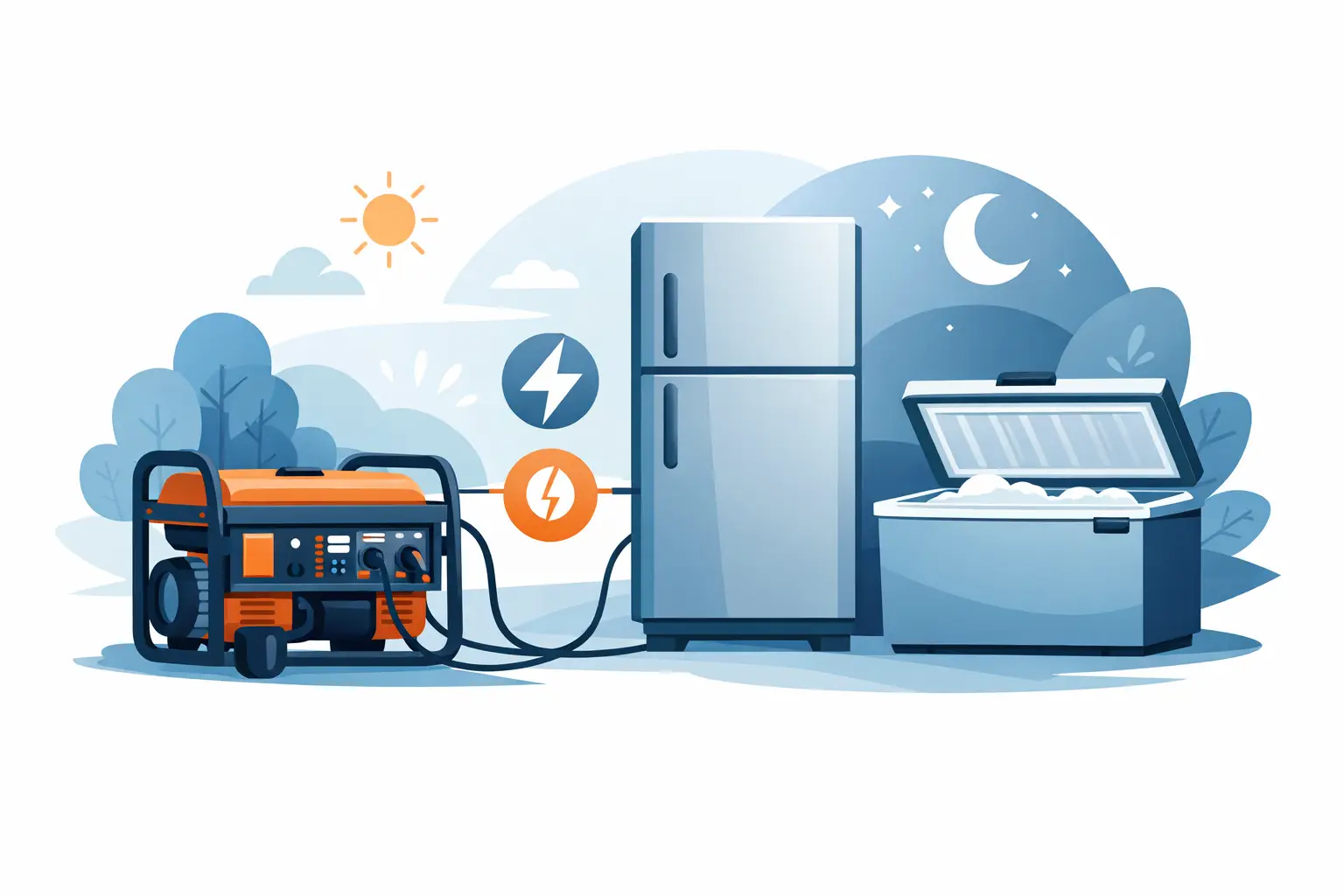
A refrigerator can usually survive a short outage. A freezer full of meat during a summer blackout is a different story. If you are shopping for a generator for refrigerator and freezer backup, the real goal is not just keeping the lights on – it is protecting food, avoiding compressor damage, and choosing a unit that starts reliably when the power goes out.
This is one of the most common generator sizing questions because refrigerators and freezers look simple on paper but behave differently at startup. Their running wattage may seem low, yet the compressor can pull a much higher surge for a few seconds. If you size a generator too close to the label wattage, it may trip, struggle, or fail to start both appliances at the same time.
How much generator do you need for a refrigerator and freezer?
For most homes, a generator in the 2,000 to 3,500 running watt range can handle one standard refrigerator and one standalone freezer, assuming you are not trying to run major extras at the same time. In many cases, the actual continuous load is modest. A typical refrigerator may run around 100 to 800 watts depending on size and efficiency, while a chest or upright freezer often falls into a similar range.
The catch is startup surge. Compressors need more power for a brief moment when they kick on. That surge can be two to three times the running wattage, and sometimes more on older appliances. If your refrigerator and freezer try to start at nearly the same time, your generator needs enough overhead to absorb that moment without bogging down.
That is why buying by running watts alone is a mistake. You need to consider both running watts and starting watts, plus a safety margin. A generator that looks oversized on paper often ends up being the right call in real use.
Refrigerator and freezer wattage is not always what buyers expect
Newer Energy Star appliances often use less electricity over the course of a day, but that does not automatically mean they have a tiny startup demand. Older units may also draw more than expected due to wear, dirty coils, or less efficient compressors. Defrost cycles, ambient temperature, and how often doors are opened can all affect real-world demand.
If you want a practical estimate, start with the appliance nameplate or manual. Look for running amps or watts. If you only see amps, multiply amps by voltage. Most household refrigerators and freezers in the US are 120V. A 6-amp appliance at 120V is roughly 720 watts running. Then allow extra room for startup.
If the exact startup number is not listed, a safe planning method is to assume at least 2x the running wattage for compressor startup. Some buyers use 3x for older or less predictable units, which is often the safer approach when buying a portable generator.
What size generator for refrigerator and freezer backup makes sense?
A small inverter generator can work if your only goal is preserving cold storage and charging a few small devices. For example, a quality unit around 2,000 running watts may be enough for an efficient fridge and freezer if you manage loads carefully. That usually means not adding a microwave, coffee maker, or space heater into the mix.
A 3,000 to 4,000 watt generator is a more forgiving choice for many households. It gives you room for startup surges and lets you run a few additional essentials, such as lights, a router, or a fan. If your outage plan includes more than refrigeration, this size range often offers the best balance of cost, portability, and useful headroom.
Going larger can make sense, but it depends on your setup. A 5,000 watt or bigger portable generator may let you support more circuits through a transfer switch, but it also tends to be heavier, louder, and less fuel-efficient at lighter loads. Bigger is not automatically better if your main concern is just a refrigerator and freezer.
Inverter vs conventional generator for refrigerator and freezer use
For modern appliances, an inverter generator is often the better fit. It produces cleaner power, usually runs quieter, and adjusts engine speed based on demand. That can be helpful when your refrigerator and freezer cycle on and off rather than drawing full load continuously.
Conventional generators can still do the job well, especially if you need more wattage for less money. Many homeowners choose them for emergency backup because they offer strong surge capability and straightforward performance. The trade-off is more noise, more weight in some cases, and power quality that may be less ideal for sensitive electronics.
If your outage plan includes only a refrigerator, freezer, and a few small electronics, inverter models are worth a close look. If you want broad whole-room backup at a lower initial cost, a conventional portable generator may offer more watts per dollar.
Fuel type matters more than many buyers think
Gasoline generators are common, widely available, and easy to compare. They are often the first choice for emergency home backup. The downside is fuel storage. Gasoline degrades over time, and shortages can happen during major outages.
Dual-fuel generators add flexibility by allowing propane as well as gasoline. For refrigerator and freezer backup, propane can be especially appealing because it stores longer and starts cleaner. The trade-off is that generators typically produce a bit less power on propane than on gasoline, so you need to account for that when sizing.
If you live in an area with frequent storms, fuel planning is part of generator planning. A generator that can run your appliances is only useful if you can keep it fed safely for the length of the outage.
Safe setup is not optional
A generator should never be run indoors, in a garage, under open windows, or near doors. Carbon monoxide risk is serious and non-negotiable. Place the generator outdoors in a well-ventilated area, following the manufacturer’s clearance guidance.
For a refrigerator and freezer, many people use heavy-duty extension cords during outages. That can work, but the cords need to be rated properly for the load and outdoor use if exposed to the elements. Keep cord runs as short as practical to reduce voltage drop.
If you want a cleaner and more permanent solution, a transfer switch or inlet box setup is often worth considering. It lets you energize selected circuits safely without backfeeding the grid. For homeowners who expect recurring outages, this is usually the better long-term approach.
A few buying mistakes to avoid
The first mistake is underestimating startup surge. The second is forgetting that the generator may be asked to start both appliances while also handling lights or chargers. The third is focusing only on peak wattage in marketing materials instead of the running watt rating you can actually live with over hours of operation.
Noise is another overlooked factor. If you live in a neighborhood or plan to run overnight to protect frozen food, a loud open-frame generator may become frustrating fast. Runtime matters too. A generator that runs only a few hours before refueling may be less convenient than a slightly pricier model with better fuel efficiency.
Portability also deserves attention. If the generator is too heavy to move into position before a storm or outage, it will not be much help when you need it most.
A simple way to choose the right generator
If you are buying strictly for one refrigerator and one freezer, start by adding their estimated running watts, then leave generous space for startup. In practical terms, many buyers are well served by a generator around 3,000 running watts, especially if they want flexibility for a few extra essentials.
If your appliances are newer and efficient, and you are disciplined about load management, a smaller inverter generator may work. If your appliances are older, larger, or you expect to power additional household items, size up rather than cutting it close.
At TopGeneratorsOnline, we generally advise buyers to shop for confidence rather than minimum survival. A generator that handles your refrigerator and freezer without strain is more likely to start cleanly, run efficiently, and leave room for the unexpected.
When the outage hits, the best generator is not the one with the most hype. It is the one that starts your appliances reliably, fits your fuel plan, and gives you enough margin that you are not standing in the dark doing watt math while the freezer warms up.