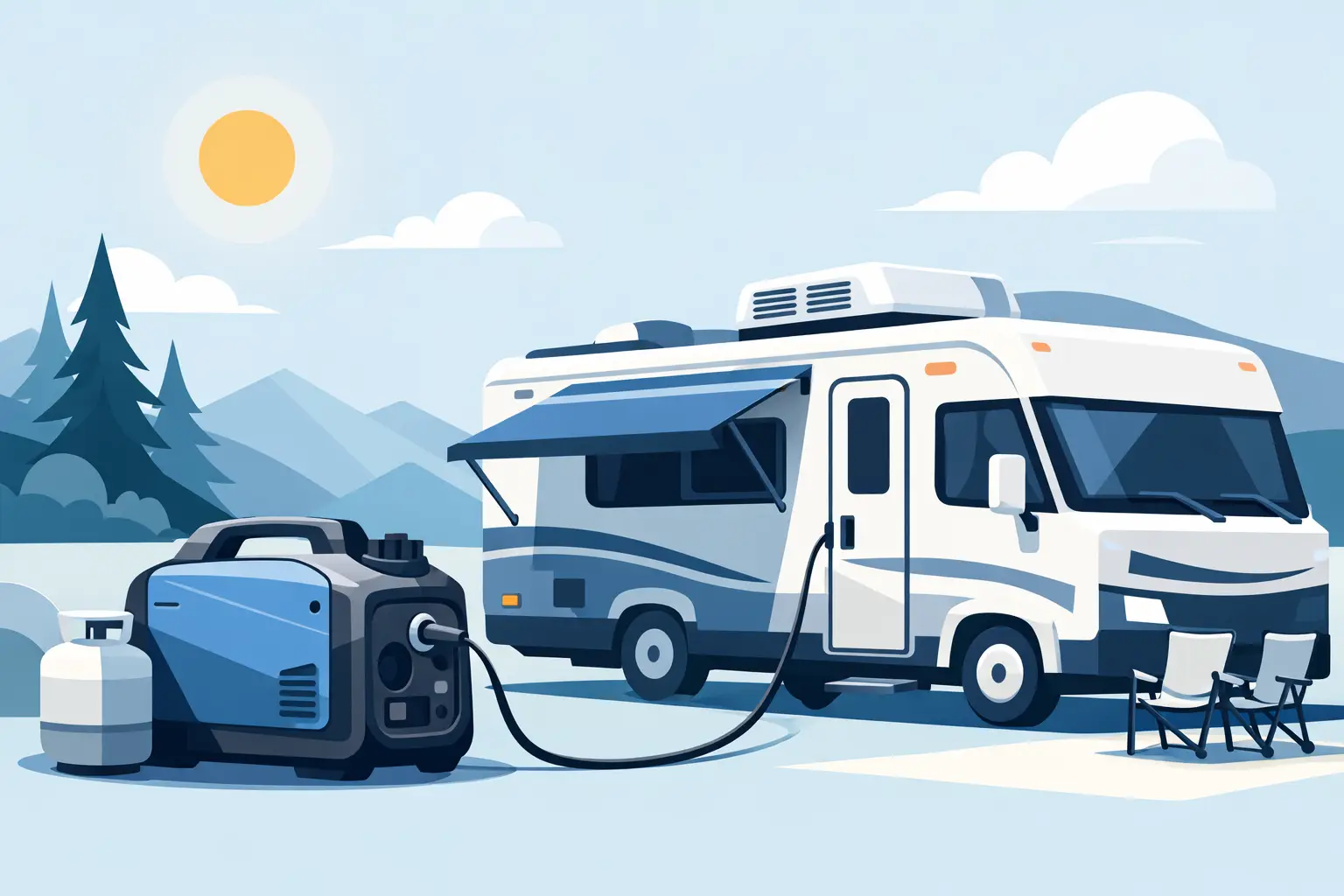
When your RV air conditioner kicks on, it asks for a lot more power than most first-time buyers expect. That is why choosing the best generator for RV air conditioner use is less about chasing the biggest wattage number and more about matching starting power, running power, noise, fuel capacity, and campground practicality.
If you get the sizing wrong, the generator may trip overload protection, struggle on startup, or run at full throttle all day. If you get it right, you get steady cooling, fewer headaches, and a setup that feels much closer to plug-in shore power.
How to choose the best generator for RV air conditioner use
The first thing to understand is the difference between running watts and starting watts. Your RV AC may only run at 1,300 to 1,800 watts once it is going, but startup surge can be much higher for a few seconds. That surge is what causes trouble.
A small 2,000-watt inverter generator might run some 13,500 BTU air conditioners under ideal conditions, especially if the RV has a soft start installed. Without that help, many RV owners find that a single 2,000-watt unit is not enough. For a more dependable setup, a generator in the 3,000 to 4,500 starting watt range is usually a safer target for one air conditioner.
For larger 15,000 BTU units, hot weather use, or situations where you also want to run a microwave, converter, or battery charger at the same time, your power needs go up quickly. In those cases, many buyers are better served by a stronger inverter generator or a parallel setup using two compatible portable units.
Start with your RV AC size, not the generator ad
Generator marketing can make every model sound universal. In practice, your air conditioner dictates the baseline.
For a 13,500 BTU RV air conditioner
This is one of the most common sizes. Many owners can run it with a quality 3,000-watt class inverter generator. If the AC has a high startup draw, you may need more overhead or a soft start device to reduce the surge.
A single 2,000-watt unit is the borderline option here. It can work in some rigs, but it is rarely the most confidence-inspiring choice if reliable air conditioning is the goal.
For a 15,000 BTU RV air conditioner
This size usually benefits from more capacity. A generator around 3,500 to 4,500 starting watts gives you a better margin, especially in summer heat when compressor loads are higher. If you want to run anything else at the same time, extra headroom matters even more.
For two air conditioners
Once you move into dual-AC territory, the conversation changes. A standard portable generator setup often becomes less practical unless you are stepping into much larger output. Some RV owners use a built-in generator system for this reason. Others manage load carefully and run only one AC at a time.
What type of generator is best for an RV air conditioner?
For most RV owners, an
inverter generator is the best fit. It is quieter, generally more fuel-efficient under variable loads, and better suited to campgrounds where noise matters. It also provides cleaner power, which is helpful when your RV includes sensitive electronics.
A conventional portable generator may offer more wattage for the money, but the trade-off is noise, weight, and a less campground-friendly experience. For tailgating, remote jobsite use, or
off-grid setups where sound is less of a concern, that trade-off may be acceptable. For typical RV travel, inverter models are usually the smarter choice.
The real buying criteria that matter most
Wattage is the headline spec, but it is not the whole story. The best generator for RV air conditioner performance should also be judged on how it behaves in real use.
Noise level matters if you camp near other people. A generator that technically runs your AC but drones loudly for hours can turn a good purchase into an annoying one. Inverter generators often sit in the low-to-mid 50s or 60s dB range at partial load, while open-frame conventional units are usually much louder.
Fuel runtime matters too. Air conditioning can keep a generator under steady load for long stretches, especially in the South or Southwest. A small tank may require frequent refueling, which is inconvenient and sometimes not practical overnight.
Weight and portability are easy to overlook until you need to lift the machine into a truck bed or storage compartment. Some larger RV-ready generators solve the power problem but create a handling problem. Wheels help, but total weight still matters.
Outlet configuration is another detail buyers miss. Many RV setups need a 30-amp TT-30 outlet or an appropriate
adapter strategy. If the generator does not support your connection needs cleanly, setup becomes more complicated than it needs to be.
Should you use one bigger generator or two smaller ones?
This depends on how you travel.
A single larger generator is simpler. You fuel one machine, maintain one engine, and connect one power source. It is often the easiest path for buyers who mainly want guaranteed AC performance.
Two smaller inverter generators in parallel can be a smart alternative. This setup gives you flexibility. For lighter trips, you may only bring one unit for battery charging and small appliance loads. For hot-weather camping, you bring both and combine their output for the air conditioner. The downside is cost, added complexity, and twice the maintenance points.
For many RV owners, the sweet spot is a pair of parallel-capable inverter generators in the 2,000 to 2,500-watt range or one solid inverter generator in the 3,000 to 4,000-watt class. The better choice comes down to whether portability or simplicity matters more to you.
Why a soft start can change your generator options
If your RV air conditioner has a hard startup surge, a soft start device can reduce that initial hit. That can make a major difference in whether a smaller generator can handle the load.
This is one of the most practical upgrades for RV owners who want quieter, more portable power without jumping to a much larger machine. It does not reduce the ongoing running load of the air conditioner, but it can smooth the startup enough to improve generator compatibility.
That said, a soft start is not a magic fix for every underpowered setup. If you plan to run the AC plus other appliances, you still need enough total capacity.
Common mistakes when shopping for an RV AC generator
One of the biggest mistakes is buying based on peak wattage alone. A generator may advertise a strong starting number but have limited running watt output. Since your air conditioner needs both successful startup and steady operation, you have to look at the full picture.
Another mistake is ignoring elevation and temperature. Generators lose power at higher elevations, and hot weather can make both your AC and generator work harder. A setup that looks fine on paper at sea level may feel underpowered in the mountains.
Many buyers also forget about everything else running inside the RV. Your converter, fridge on electric mode, microwave, coffee maker, and water heater element can all add load. If the goal is comfortable, low-stress power, leaving some reserve capacity is worth it.
A practical sizing rule for most buyers
If you want the simplest recommendation, match one 13,500 BTU RV air conditioner with a quality inverter generator around the 3,000-watt class at minimum, and lean higher if you want extra room. For a 15,000 BTU unit, start thinking in the 3,500 to 4,500 starting watt range, especially without a soft start.
If you already own a small inverter generator and are trying to make it work, a soft start may be worth considering before replacing the unit. If you are buying from scratch and air conditioning is the priority, it usually makes sense to size for dependable performance from the start rather than hope to squeak by.
Which RV owners need more than the minimum?
If you camp in mild weather and mostly want to cool the RV for short periods, you may be fine with a tighter setup. If you spend time in humid, high-heat regions, want to run the AC for hours, or use additional appliances at the same time, minimum sizing becomes less appealing.
That is where a little extra generator capacity pays off. It reduces strain, improves startup confidence, and gives you a more usable power system overall. The cheapest workable option is not always the best long-term value.
At TopGeneratorsOnline, we generally see the happiest RV buyers land on setups with enough margin to handle real conditions, not just ideal test conditions. That approach usually costs more upfront, but it also cuts down on overload trips, power management hassles, and second-guessing after purchase.
The best generator for your RV air conditioner is the one that starts the compressor reliably, runs quietly enough for the places you camp, and leaves you with enough headroom to actually enjoy the trip instead of managing power every hour.
CHECK OUT THE BEST GENERATORS AT THE BEST PRICE ON AMAZON 🛒