As an Amazon Associate I earn from qualifying purchases.
When the power goes out, most people learn the same lesson fast: backup power is not really about watts on a spec sheet. It is about what keeps your house safe, livable, and functional when the grid is down. This home backup power guide is built to help you sort through the real choices, avoid common sizing mistakes, and buy a setup that matches how you actually live.
What a home backup power guide should help you decide
The first question is not which generator is best. It is how much of your home you need to keep running, for how long, and with how much effort. Some homeowners want to run a few essentials during occasional outages. Others need near-whole-home coverage because of medical equipment, a sump pump, well water, or frequent storms.
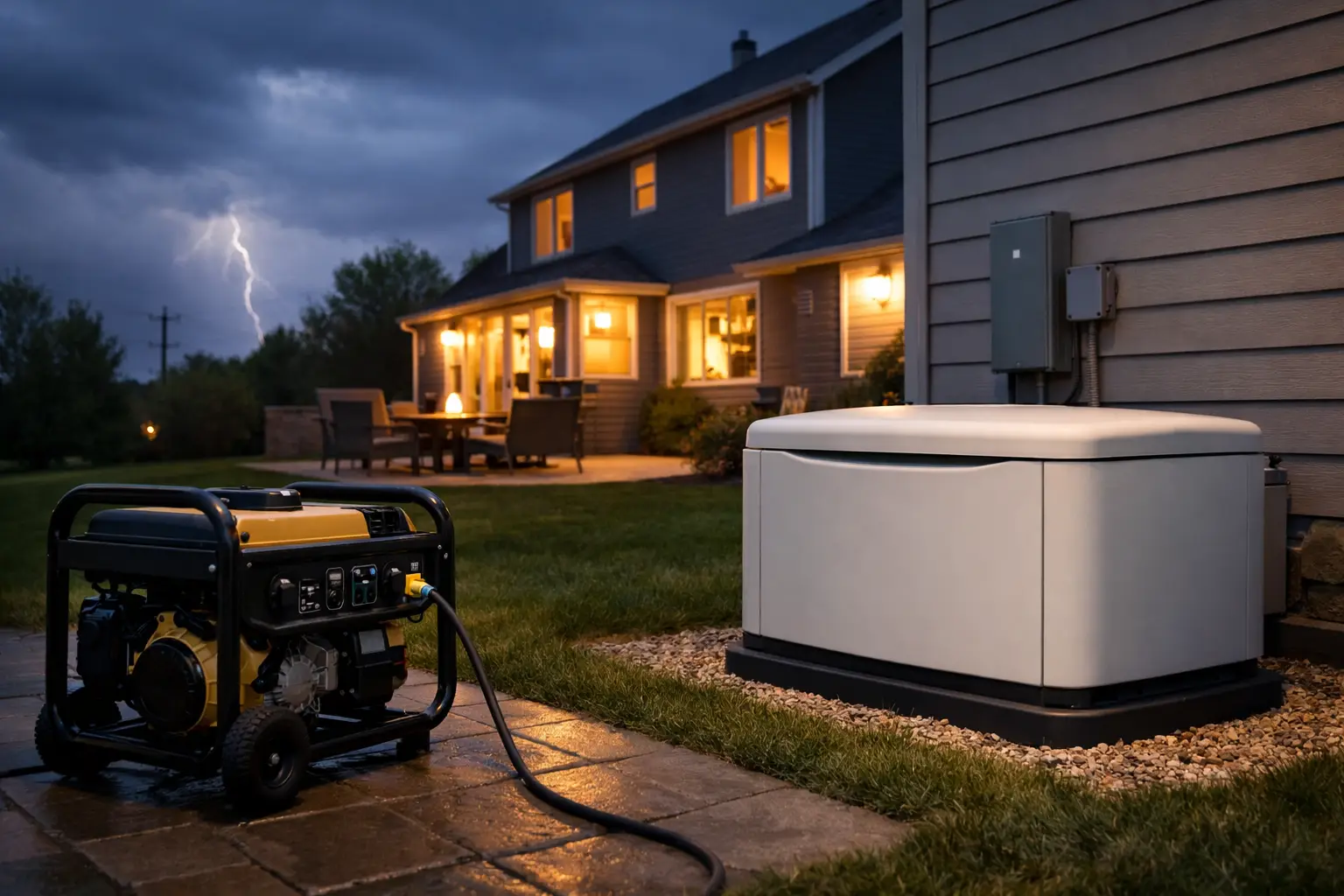
That distinction matters because backup power falls into a few very different categories. Portable generators are usually the most affordable entry point. They can run refrigerators, lights, internet equipment, and small appliances, but they require manual setup, refueling, and correct connection methods. Inverter generators are quieter and better for sensitive electronics, though their output is often lower unless you move into larger premium models.
Standby generators sit on the opposite end of the spectrum. They are permanently installed, tied into your fuel supply, and start automatically through an automatic transfer switch. They cost much more, but they deliver convenience and much better outage response, especially for households that cannot afford downtime.
Home battery systems are another option, especially for short outages and lower-noise operation. They are excellent for electronics, refrigeration, and selected circuits, but long multi-day outages can expose their limits unless you pair them with solar or another charging source. For many buyers, the real decision is not generator versus battery in the abstract. It is whether you need high surge capacity, long runtime, automatic operation, quiet use, or some combination of those.
Sizing your backup power the right way
A good home backup power guide has to spend
time on sizing, because this is where expensive mistakes happen. Buying too small leaves you tripping breakers and juggling appliances. Buying far too large can mean unnecessary fuel burn, extra noise, and more money spent than your needs justify.
Start by separating essentials from nice-to-haves. Essentials often include a refrigerator, freezer, a few lights, phone charging, internet equipment, microwave use, furnace blower, sump pump, or well pump. In hot climates, some buyers also need a window AC unit or limited central air support. Nice-to-haves might include electric ranges, dryers, full-house central AC, or noncritical entertainment loads.
Then look at both running watts and starting watts. Motors matter here. A refrigerator, sump pump, furnace blower, and well pump may need a brief startup surge that is much higher than their normal operating load. This is why a generator that seems large enough on paper can still struggle in real use.
As a rough buying framework, smaller
portable units in the 2,000 to 4,000 watt range work for light essentials and selective use. Mid-range portables from around 5,000 to 8,000 watts cover more realistic emergency household needs, especially when paired with a manual transfer switch or interlock setup. Once you move into 10,000 watts and above, you are usually looking at heavier portable units or standby systems designed for larger home loads.
If you are shopping for a generator, pay attention to the outlet configuration as much as the wattage. A high-output unit without the right 120V or 240V outlet may not support the connection plan you have in mind. This is where many first-time buyers get caught – they compare peak wattage but miss compatibility with transfer equipment.
Choosing between portable, inverter, standby, and battery
Portable generators make sense for budget-conscious homeowners who are comfortable with manual setup and routine maintenance. They are widely available, offer strong watt-per-dollar value, and can support a well-planned essentials circuit setup. The trade-off is work. You need to move them, protect them from weather while keeping them outside, store fuel safely, and start them when needed.
Inverter generators are often the better fit if quiet operation matters, or if you want cleaner power for electronics and modern appliances. They are especially attractive in neighborhoods where noise is a concern. The downside is cost. Per watt, they are usually more expensive than conventional portables, and larger inverter models can still be a significant investment.
Standby generators are the easiest to live with once installed. They are ideal for homes in storm-prone areas, households with critical loads, or buyers who want automatic protection while away from home. They also remove much of the hassle around refueling if they run on natural gas. But installation is not simple. You are paying for the equipment, pad placement, electrical integration, transfer switch, fuel connection, permits, and ongoing service.
Battery backup systems deserve serious attention if your outages are usually short or if low noise and indoor-friendly operation are priorities. They can be excellent for refrigerators, routers, lighting, and device charging. They are less ideal if you need to run large resistive loads or motor-heavy circuits for extended periods. Some households end up with a hybrid approach: a battery for daily resilience and a generator for long outages.
Fuel type changes the ownership experience
Fuel is not just a runtime issue. It affects storage, maintenance, cold-weather behavior, and long-term convenience.
Gasoline is easy to find and common for portable generators, but it has storage limitations and requires fuel management. During widespread outages, gas stations may be crowded or unavailable. Propane stores longer and burns cleaner, which many homeowners appreciate for emergency readiness. The trade-off is somewhat lower power output on many dual-fuel models, plus the need to keep enough tank capacity on hand.
Natural gas is attractive for standby systems because it removes most refueling concerns. If your gas service stays active during outages, it is one of the easiest backup power solutions to live with. Diesel has a place too, especially for certain heavy-duty applications, but it is less common for average residential buyers.
Dual-fuel and tri-fuel generators are worth a look because they give you options. A dual-fuel portable can let you run propane for storage convenience and switch to gasoline if needed. A tri-fuel model can be particularly appealing if you want portable flexibility with the possibility of natural gas use at home. You still need to review real output numbers by fuel type, not just the headline rating.
The connection method matters as much as the generator
One of the most important parts of any home backup setup is how power enters the house. Extension cords can work for very limited use, but they are rarely the best long-term solution. Once you need multiple critical circuits, a transfer switch or an interlock-supported inlet setup becomes much more practical.
A manual transfer switch gives you organized control over selected circuits and reduces the chaos of outage response. An interlock kit can also be a cost-effective option for some homes when installed correctly and legally. Both are far safer and more functional than improvised methods.
Backfeeding a home through a dryer outlet or another unsafe workaround is never acceptable. It puts utility workers, your home, and your equipment at risk. If you are not fully sure how your intended generator will connect, treat that as part of the buying process, not an afterthought.
Safety and maintenance are part of the purchase decision
Backup power equipment only helps if it starts, runs safely, and gets used correctly. Carbon monoxide risk is one of the biggest hazards with portable generators. They must stay outside, well away from doors, windows, and attached garages. Covered operation requires a proper open-air generator tent or shelter designed for ventilation, not a garage with the door cracked.
Maintenance is equally important. Portable generators need regular exercise runs,
oil checks,
fuel stabilization if stored with gasoline, and occasional battery attention if electric start is included. Standby units need scheduled service and periodic inspections. Battery systems need less routine engine maintenance, but they still require planning around capacity, charge state, and expected outage duration.
This is also where product selection gets more practical. Features like electric start, fuel gauge visibility, low-oil shutdown, CO shutoff technology, wheel kits, and remote monitoring are not fluff if they make outage use safer and easier. The best choice is often the one you will actually maintain and feel comfortable operating.
A practical buying path for this home backup power guide
If you are just starting, begin with your essential loads and your likely outage pattern. A homeowner dealing with two or three short outages a year has different needs than someone in a rural area with frequent storm-related disruptions. Match the equipment to the problem.
If you want affordable emergency coverage, a mid-size portable generator plus a proper transfer setup is often the strongest value. If quiet operation and electronics support matter most, a quality inverter generator may be the better buy. If convenience is your top priority and outages are serious, a standby system is usually worth the higher upfront cost. If your outages are brief and you hate engine noise, battery backup can make more sense than many shoppers expect.
At TopGeneratorsOnline, we see many buyers focus first on brand or maximum wattage, when the better question is whether the system fits the house, fuel plan, and connection method. That is what separates a smart purchase from a frustrating one.
The best backup power setup is the one that feels boring when the lights go out – because your fridge stays cold, your critical circuits stay on, and you are not outside in the dark wishing you had planned better.
CHECK OUT THE BEST GENERATORS AT THE BEST PRICE ON AMAZON 🛒