As an Amazon Associate I earn from qualifying purchases.
A generator that looks great on a product page can be a bad fit the minute you try to run your refrigerator, charge a laptop, or keep the campsite quiet after dark. That is why the inverter generator vs portable generator question matters so much. These two categories overlap in purpose, but they behave very differently once you factor in noise, fuel use, sensitive electronics, startup wattage, and the kind of loads you actually need to support.
For most buyers, the decision is not about which type is universally better. It is about matching the generator to the job. If you want cleaner power, quieter operation, and easier portability, an inverter model often makes more sense. If you need more watts for the money and plan to run heavier tools or more home circuits during an outage, a conventional portable generator may be the smarter buy.
Inverter generator vs portable generator: the core difference
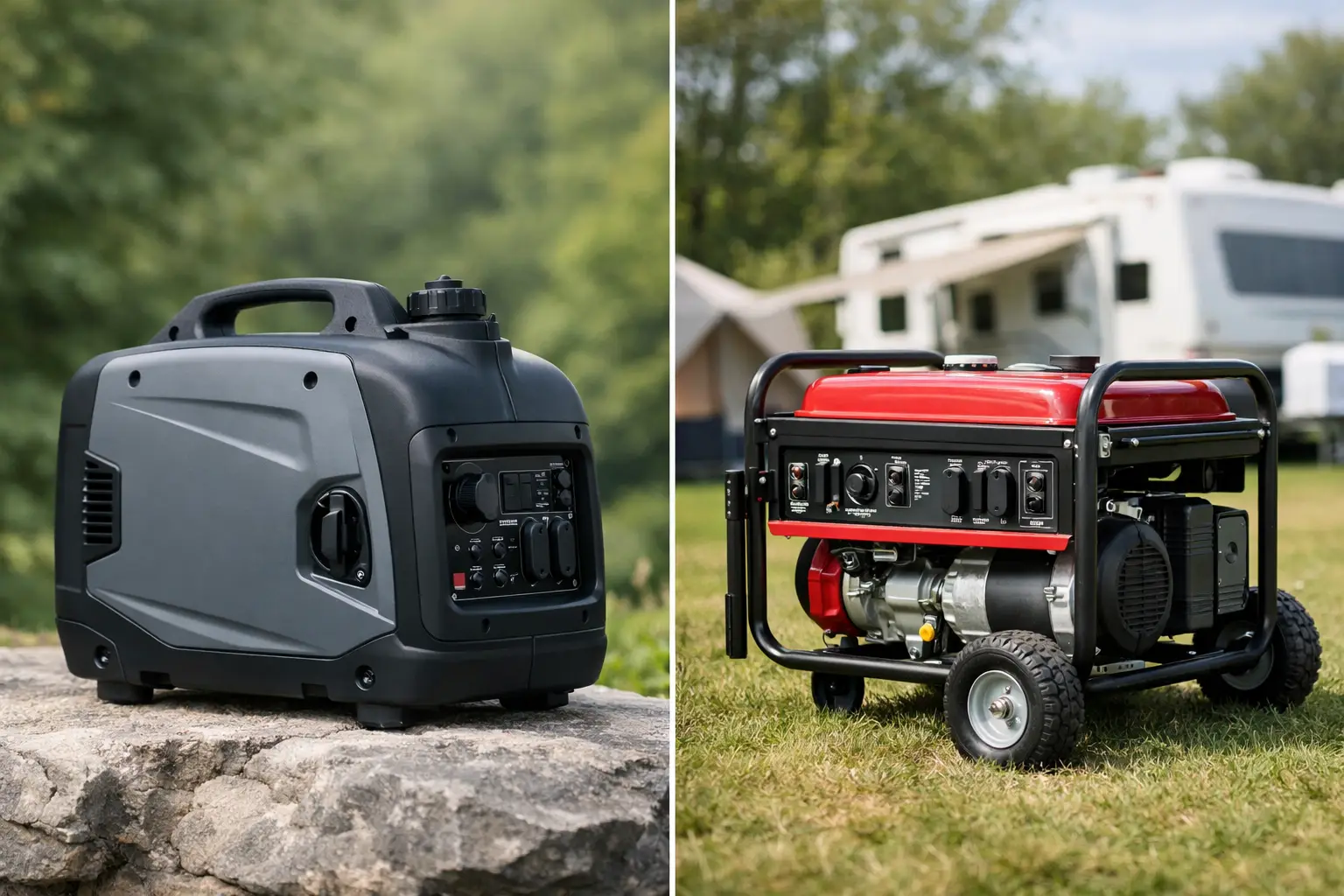
A portable generator is the broader category. It usually refers to a fuel-powered unit that produces AC electricity directly from the engine and alternator. These models are common for home backup, jobsites, and general-purpose emergency use. They are often larger, louder, and more affordable on a cost-per-watt basis.
An inverter generator is technically portable too, but it uses a different process to deliver power. It generates AC power, converts it to DC, and then inverts it back to cleaner, more stable AC output. That extra step is what makes inverter units especially appealing for electronics like laptops, phones, TVs, CPAP machines, and modern RV systems.
This is the first big trade-off. Inverter generators usually produce better power quality and less noise, but they tend to cost more and often offer lower total output than similarly priced conventional portable models.
Power quality matters more than many buyers expect
If your generator will power basic resistive loads like incandescent lights or a simple space heater, both generator types can do the job. But many homes and travel setups now rely on electronics with circuit boards and sensitive components. Think Wi-Fi routers, battery chargers, pellet stoves, gaming systems, and variable-speed appliances.
This is where inverter generators earn their reputation. They usually produce low total harmonic distortion, often under 3 percent. That cleaner sine wave is much safer for sensitive electronics. Conventional portable generators vary more. Some are perfectly acceptable for many household uses, while others produce rougher power that is not ideal for delicate devices.
If you are shopping for emergency home backup and know you will be running a furnace control board, modem, computer, or refrigerator with modern electronics, checking power quality is not optional. It is a practical buying step.
Noise is often the deciding factor
Many buyers start by comparing wattage and price, then realize the real issue is noise. A conventional portable generator can be very loud, especially under load. For a jobsite, that may be tolerable. For a neighborhood outage, a tailgate, or an RV campground, it gets old fast.
Inverter generators are usually much quieter because the engine can throttle down based on demand. If you are charging a few devices or running light loads, the engine does not need to scream at full speed. That lower RPM behavior also helps with fuel economy.
This is one reason models like the Honda EU2200i and comparable inverter units remain popular despite their higher price. They are easier to live with. If you plan to use your generator regularly rather than once every few years, comfort matters.
Fuel efficiency and runtime
In practical ownership, fuel efficiency can shape your long-term costs more than the purchase price difference suggests. Inverter generators are generally better at sipping fuel when the load is low or variable. For camping, tailgating, and overnight RV use, that can mean fewer refueling stops and longer runtime from a smaller tank.
Portable generators without inverter technology often run at a more constant engine speed. That can make them less efficient during partial-load use. However, if you are drawing a heavier, steady load, the efficiency gap may matter less than the need for more available wattage.
For home backup during a storm, fuel planning should always be part of the purchase decision. A larger conventional unit may power more appliances, but it may also burn through gasoline much faster. If fuel access is limited after severe weather, that changes the equation quickly.
Inverter generator vs portable generator for home backup
Homeowners often assume bigger is automatically better. Sometimes it is. If your goal is to keep a well pump, refrigerator, freezer, sump pump, and a few lights running, a higher-output portable generator may be the most cost-effective path. Many open-frame models provide strong surge capacity and enough wattage to cover multiple household essentials.
But there are limits. If you want whole-house style comfort, you need careful load planning, transfer equipment, and enough starting watts for motor-driven appliances. A small inverter generator will not replace a larger backup setup just because it has cleaner power.
That said, inverter models still make sense for selective home backup. A larger inverter generator can quietly handle essentials, especially if you are focused on refrigeration, internet, lighting, device charging, and one or two key circuits. Some dual-fuel inverter models now bridge the gap nicely for homeowners who want quieter operation without giving up too much flexibility.
Which type is better for camping, RVs, and travel?
For camping and RV use, inverter generators usually win. Quieter operation, cleaner power, and easier carrying weight all matter more in those settings. Many RV owners also appreciate parallel capability, which lets you connect two compatible inverter units for more power when needed. That setup gives you flexibility: one generator for lighter trips, two when the air conditioner needs support.
A conventional portable generator can still work for RV use, especially if budget is the top concern, but it is often less pleasant. More noise, more weight, and rougher power make it a harder fit for campgrounds and electronics-heavy setups.
If you are deciding between a single larger portable unit and a pair of smaller inverter generators, think about how often you move the equipment. Two manageable units are often easier to transport and store than one heavy machine.
Jobsites and heavy loads
For construction, farm work, or demanding outdoor projects, portable generators often make more sense. They tend to offer higher wattage for the money and are well suited to tools, compressors, and equipment with heavier startup demands. If the environment is already noisy and the generator is there to work hard, the downsides of a conventional design matter less.
This is where open-frame models remain relevant. They are not refined, but they can be effective. Some newer open-frame inverter generators try to blend jobsite power with improved efficiency and lower noise, and for some buyers that middle ground is worth a look.
Price, maintenance, and value over time
Up front, portable generators usually have the advantage. If you compare similar wattage classes, conventional models often cost less. That makes them attractive for buyers who need emergency power but want to control spending.
Still, price alone can be misleading. A generator that is too loud to use comfortably, too dirty for electronics, or too fuel-hungry during an outage may not feel like a bargain later. Inverter models often justify their price through ease of use, lower noise, and better suitability for modern devices.
Maintenance basics are similar across both types. You still need to manage oil changes, fresh fuel, storage prep, spark plugs, and periodic exercise. What changes is ownership experience. A generator you can start easily, move without a struggle, and use without annoying everyone around you is more likely to be maintained properly and used when needed.
So which one should you buy?
If your priority is quiet operation, fuel efficiency, and safe power for electronics, buy an inverter generator. That is usually the right call for camping, RVs, tailgating, and lighter backup use around the house.
If your priority is maximum wattage for the money, stronger support for heavier loads, or broader emergency coverage during outages, buy a portable generator. That is often the better fit for homeowners running multiple essentials or buyers powering tools and equipment.
There is also a middle ground. Some buyers are best served by a larger inverter model, especially if noise and power quality matter, while others should look at dual-fuel portable generators for longer-term flexibility. At TopGeneratorsOnline, that is usually where the best buying decisions happen – not by chasing a single feature, but by matching runtime, wattage, outlet options, and real use conditions.
The best generator is the one that fits your actual load plan, not the one with the most impressive spec sheet. Before you buy, write down what you need to run, how long you need to run it, and where the generator will be used. That small step will save you from buying too little power, or paying for a machine that solves the wrong problem.