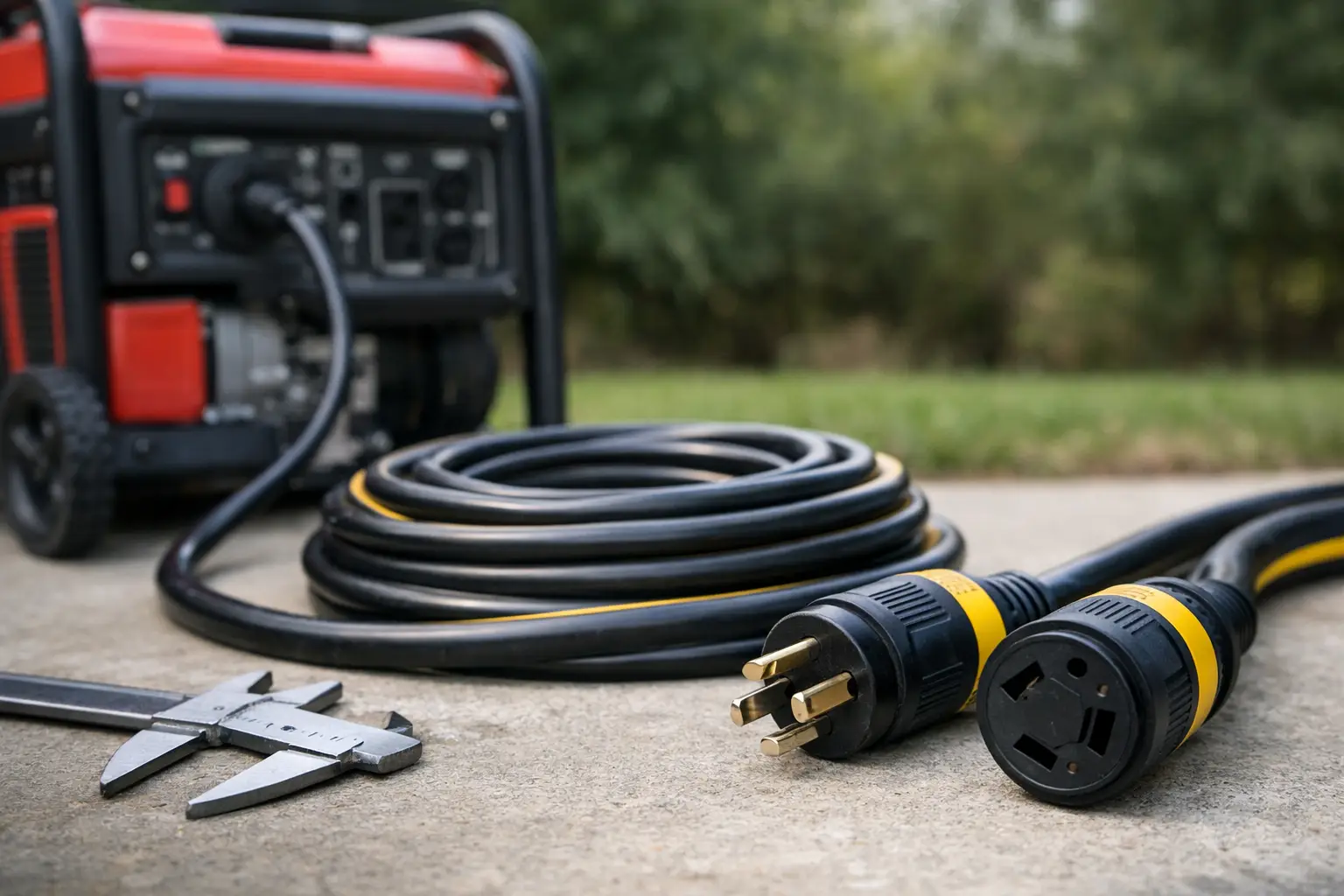
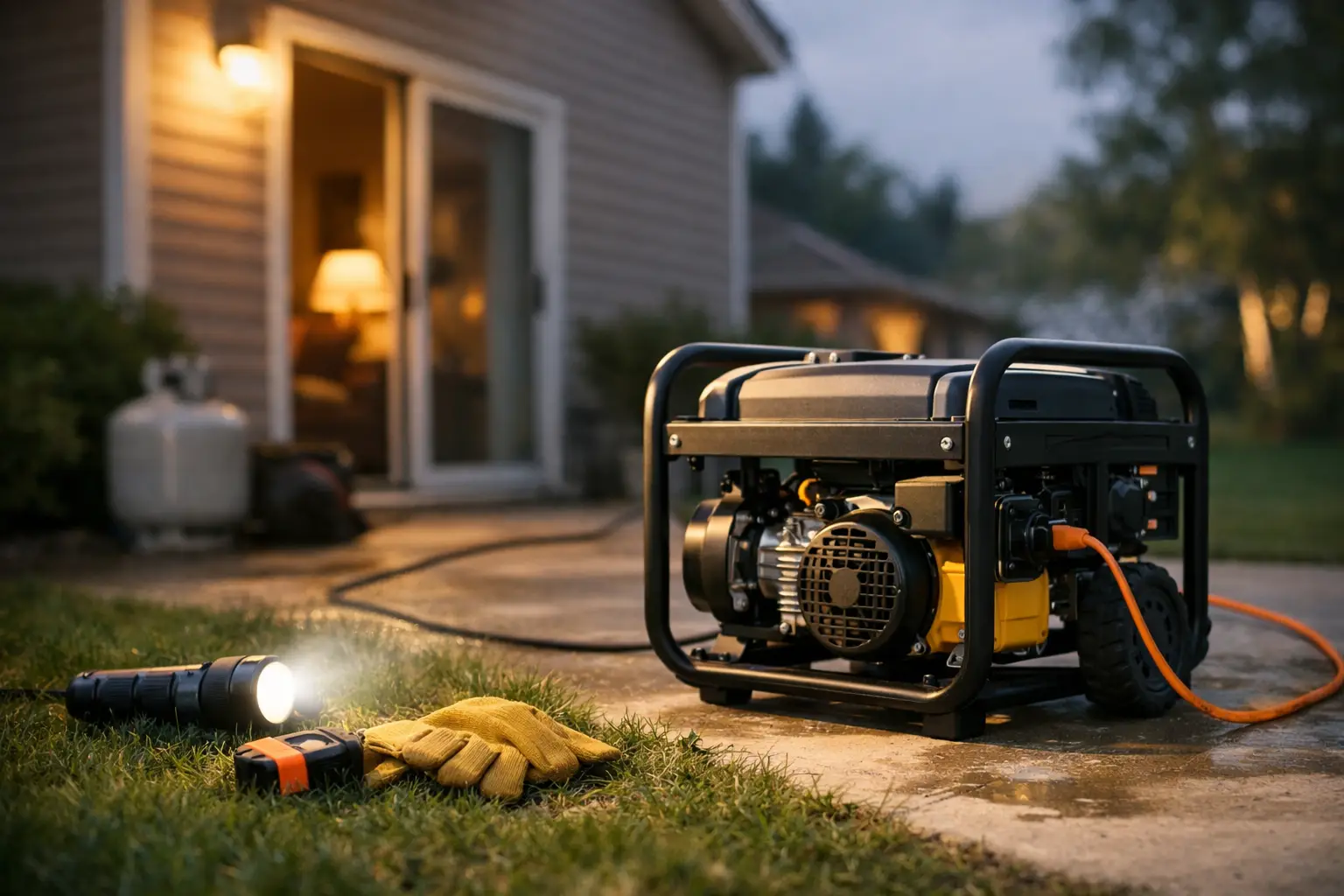
A generator that starts on the first pull or fires up during an outage is only half the job. If the cord between the generator and your equipment is undersized, you can end up with voltage drop, overheated insulation, nuisance breaker trips, or tools and appliances that simply do not perform the way they should. This generator cord sizing guide is built to help you choose a cord that matches your generator, your load, and the distance involved.
Why cord sizing matters more than most buyers expect
Many shoppers focus on generator wattage and forget that the extension cord is part of the power system. The longer the cord, the more resistance it adds. The smaller the wire, the more heat it can build under load. That is why a generator that runs a refrigerator perfectly with a short heavy-duty cord may struggle when the same appliance is connected through a long light-duty cord.
The real issue is not just whether the plug fits. It is whether the cord can carry the amperage safely and still deliver enough voltage at the far end. Sensitive electronics, power tools with startup surges, sump pumps, and RV air conditioners all expose weak cord choices quickly.
Generator cord sizing guide basics
The two specs that matter most are amperage and wire gauge. Amperage tells you how much current the load pulls. Wire gauge, usually shown as AWG, tells you how thick the conductors are. Lower AWG numbers mean thicker wire. A 10-gauge cord is heavier and carries more current than a 12-gauge cord.
For many consumer setups, the practical starting point looks like this: 16 AWG is for light loads and short runs, 14 AWG handles moderate loads, 12 AWG is a common all-around choice for heavier household and jobsite use, and 10 AWG is the better option for high-draw equipment or longer distances. Once you move into 30-amp generator connections, 10-gauge often becomes the minimum sensible choice, and some applications call for even larger conductors depending on the connector type and circuit design.
Cord length changes the equation. A 25-foot cord may be fine in 12-gauge, while the same load at 100 feet may need 10-gauge to control voltage drop. That is where buyers get into trouble. They shop by price or convenience, not by distance.
How to size a generator cord correctly
Start with the generator outlet you plan to use. A standard 120V household-style outlet on a portable generator is often tied to a 15-amp or 20-amp circuit. A larger locking outlet, such as a
30-amp receptacle, is designed for heavier loads like transfer switch connections, RV service, or larger power distribution setups.
Next, look at the load. If you are powering a single appliance, check the running watts or amps on the nameplate. If you are powering several items from a generator through a distribution box or splitter, add the expected running load and account for startup surges. Motors usually need more power for a few seconds when they start.
Then measure the actual cord run. Do not guess. If the generator sits 75 feet from the house for noise or exhaust reasons, size for 75 feet. If the cord snakes around a worksite, use the real path, not the straight-line distance.
Finally, choose the cord based on the highest current you expect and the total length. For light-duty electronics or chargers close to the generator, a smaller cord may be acceptable. For refrigerators, freezers, window AC units, saws, compressors, or well pumps, a heavier gauge is the safer call.
A practical gauge guide for common situations
For loads up to about 15 amps at short distances, 14 AWG can work, but 12 AWG is often the smarter buy because it gives you more margin and better voltage delivery. That is why many homeowners keep 12-gauge outdoor-rated cords as their standard generator extension cords.
For 15 to 20 amps, especially at 50 feet or more, 12 AWG is usually the minimum you should consider. If the load is motor-driven or the run is long, stepping up to 10 AWG is often worth it.
For 20 to 30 amps, 10 AWG becomes the practical baseline in many portable generator setups. This is common with RV-ready generators, transfer switch inlet cords, and locking 30-amp connections. If you are buying a generator power cord for a 30-amp outlet, the cord, plug ends, and connectors all need to be rated correctly, not just the wire.
For 50-amp service, which shows up more often with larger standby-style connections or bigger RV applications, the cord design is a different category entirely. At that point, matching the exact inlet, voltage, and conductor size matters enough that many buyers should follow the generator and inlet manufacturer specs directly rather than improvising.
Voltage drop and why long cords cause trouble
Voltage drop is the power you lose as electricity travels through the cord. Too much drop means your equipment gets less voltage than it expects. Lights dim, motors run hotter, and electronics may behave unpredictably.
This is especially noticeable with long runs. A 100-foot cord carrying a heavy load can perform very differently from a 25-foot cord of the same gauge. That is why long-distance generator setups often need thicker cords than buyers expect.
If you know you will regularly place the generator far from the load, either because of noise, weather shielding, or carbon monoxide safety spacing, buy for that reality now. A heavier 10-gauge cord costs more up front, but it is usually cheaper than replacing overheated cords, troubleshooting weak appliance performance, or damaging equipment over time.
Matching the cord to the use case
For home backup, the most common mistakes are using indoor extension cords, running too many appliances from one small cord, or trying to reach the entire house from a portable generator with a patchwork of cheap cords. If you are powering a refrigerator, freezer, sump pump, and a few lights directly, heavy-duty 12-gauge or 10-gauge outdoor cords are usually where you want to be.
For RV use, check whether the generator is truly RV-ready and confirm the receptacle type. A
30-amp TT-style RV setup is not the same as a standard household cord. Adapter chains can work, but every added connection is another failure point and another place where rating mismatches happen.
For jobsite tools, startup current matters. A circular saw or air compressor may trip problems that a simple wattage estimate misses. Contractors and DIY users are usually better served by fewer, heavier cords than more light-duty ones.
For camping and tailgating, loads are lighter, but weather exposure still matters. Outdoor-rated jackets, grounded plugs, and proper strain relief are just as important as gauge.
What to look for when buying a generator cord
A good cord should be rated for outdoor use, have the correct plug configuration for your generator outlet, and use wire gauge appropriate for both the amperage and the distance. Look for clear markings on the jacket that show gauge and rating. If that information is vague or missing, skip it.
Build quality matters too. Thick insulation, molded plug ends, and visible weather resistance are signs of a better cord. Budget cords often look acceptable online but feel noticeably lighter than they should because the conductors are smaller or the jacket quality is poor.
This is one category where it makes sense to buy once and buy correctly. A well-made 25-foot or 50-foot 10-gauge cord from a reputable power equipment brand often serves across multiple generators and use cases.
Common mistakes to avoid
The biggest mistake is choosing by outlet shape alone. Just because a cord plugs in does not mean it is rated for the current. Another common issue is overextending cord length by chaining multiple cords together. Every extra connection adds resistance and another chance for heat buildup.
Do not ignore the environment either. Cords used around standing water, sharp edges, hot mufflers, or vehicle traffic need more protection and more attention. And never run a generator indoors or in an enclosed space just to shorten the cord. Safe generator placement always comes first.
When it makes sense to go heavier than required
If you are between sizes, the heavier cord is usually the better choice. It runs cooler, handles startup surges better, and gives you more flexibility if your power needs grow. That is especially true for buyers who are building a
backup power kit and may add a larger portable generator, transfer switch cord, or RV connection later.
At TopGeneratorsOnline, we generally see more regret from buying too light than too heavy. A slightly bulkier cord can be inconvenient to store, but an undersized cord becomes a recurring problem every time you need dependable power.
The right cord should disappear into the background. You plug it in, your equipment runs properly, and you do not have to wonder whether the weak link in your setup is hiding in plain sight.
CHECK OUT THE BEST PORTABLE GENERATOR CORDS AT THE BEST PRICE ON AMAZON 🛒