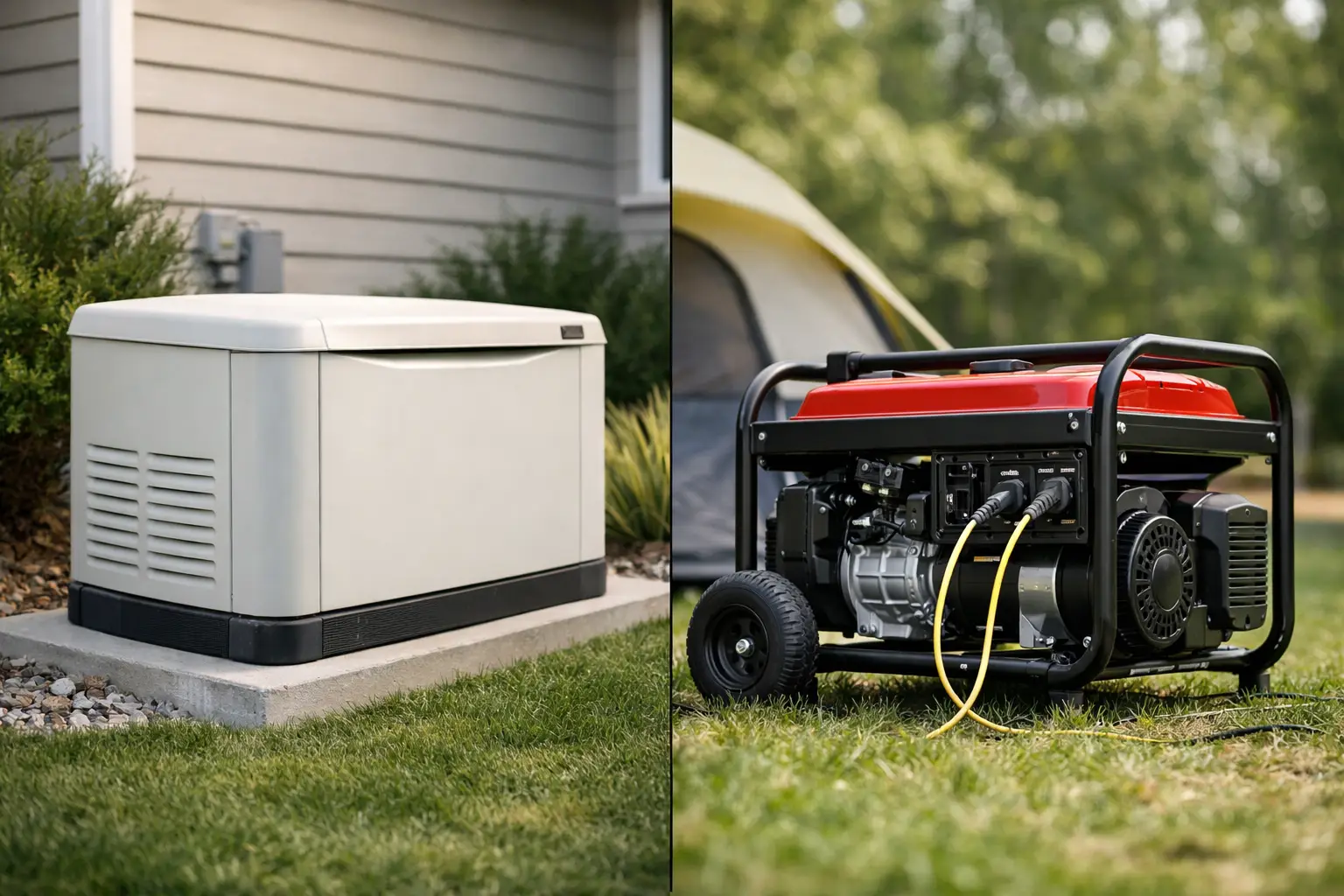
When the power goes out at 2 a.m., the difference between a standby generator vs portable generator stops being theoretical fast. One turns on by itself and keeps the house running with barely any effort from you. The other can cost much less up front, but only if you are ready to wheel it out, fuel it, connect it safely, and manage your loads.
That is why this comparison matters. Both generator types can be the right choice, but they solve different problems. If you are shopping for backup power for a home, RV, jobsite, or emergency prep plan, the better option depends on how much power you need, how often outages happen, and how much work you want to do when the lights go out.
Standby generator vs portable generator: the core difference
A standby generator is a permanently installed backup power system. It usually sits on a pad outside the home, connects to a fuel supply such as natural gas or propane, and works with an automatic transfer switch. When utility power fails, it detects the outage and starts automatically.
A portable generator is a movable unit that typically runs on gasoline, propane, or dual-fuel setups. It is stored until needed, then moved outdoors and started manually. In most home backup setups, it powers selected appliances through extension cords or a manual transfer switch with an inlet box.
That simple difference changes almost everything else, including cost, convenience, fuel management, safety, and long-term ownership.
When a standby generator makes more sense
If your priority is whole-home backup or near-whole-home backup, a standby unit is usually the cleaner solution. It is built for homeowners who want the furnace, well pump, sump pump, refrigerator, lights, and sometimes central air to keep running without scrambling during an outage.
This matters most in places with frequent storms, long outages, or homes with critical electrical needs. If someone in the house depends on medical equipment, if you work from home and cannot afford downtime, or if you travel often and want protection while you are away, automatic operation is a real advantage.
Standby systems also remove a lot of the stress from outage response. You do not need to drag a machine out of storage in bad weather, check fuel cans, or decide which appliances get power first. A properly sized standby model handles that as part of the system design.
The trade-off is cost. A standby generator is not just a machine purchase. You are also paying for professional installation, transfer equipment, electrical work, and often gas plumbing. For many buyers, that is the biggest hurdle.
When a portable generator is the smarter buy
A portable generator fits buyers who want flexibility and lower upfront cost. If your main goal is keeping essentials running during occasional outages, you may not need a permanently installed system.
A good portable model can handle a refrigerator, freezer, some lights, phone charging, a microwave, and in some cases a sump pump or window AC, depending on wattage. For many households, that is enough. You are not trying to run every circuit. You are trying to stay safe, protect food, and keep life manageable until utility power returns.
Portable units also make sense if your needs go beyond home backup. The same generator may support a camper, tailgate setup, food truck, remote work area, or light-duty jobsite. That kind of versatility is something a standby unit cannot offer.
For buyers who want quieter operation and cleaner power for electronics,
inverter generators are especially appealing. Models from brands like Honda, Yamaha, Champion, and Westinghouse are often considered by shoppers who need portable backup plus recreational use.
Power output and what you can realistically run
This is where many buying mistakes happen. People shop by generator type before they shop by power demand.
Standby generators usually start at a level that supports more of the home at once. Many residential standby units fall into ranges that can cover essentials or a large portion of the house, and higher-capacity models can support central air and other heavy loads if the system is sized correctly.
Portable generators vary much more. Smaller inverter units may be perfect for camping or running a few essentials. Mid-sized portable generators can handle several household circuits. Larger open-frame portable models can power more equipment, but they still may require careful load management, especially during startup surges from motors.
If you are comparing standby generator vs portable generator for home backup, start with a load list. Write down what actually needs to run during an outage, not what would be nice to run. Refrigeration, heat, sump pump, medical devices, garage door access, internet, and a few kitchen outlets often matter more than whole-house comfort.
Fuel type changes the ownership experience
Fuel is not just a spec sheet detail. It affects storage, maintenance, runtime, and outage readiness.
Standby generators often run on natural gas or propane. Natural gas is convenient because there is no refueling during an outage if utility gas service remains available. Propane can also work well, especially in rural areas, but runtime depends on tank size.
Portable generators often run on gasoline, though
dual-fuel and tri-fuel options have become more popular. Gasoline is easy to find most of the time, but storing it safely and rotating it regularly takes effort. During major storms, getting more fuel can become a problem. Propane stores longer and burns cleaner, but some generators produce slightly less power on propane than on gasoline.
If you want a lower-maintenance fuel strategy, that pushes the decision toward standby or at least toward a dual-fuel portable model.
Installation, transfer switches, and safety
This is one of the biggest practical differences between the two options.
A standby generator is a system, not just a product. It needs proper siting, code-compliant installation, and a transfer switch setup that separates generator power from utility power. That work should be done by qualified professionals.
A portable generator can be as simple as extension cords, but that is rarely the best long-term setup for home backup. A manual transfer switch or
interlock kit with a power inlet gives you a much safer and more organized way to run selected circuits. It also reduces cord clutter and lowers the chance of misuse.
Backfeeding a home through a dryer outlet or other improvised method is dangerous and should never be part of the plan. Carbon monoxide safety matters too. Portable generators must stay outdoors and well away from doors, windows, and vents. Models with CO shutoff add another layer of protection, but they do not replace good placement.
Cost now vs cost over time
Portable generators win the upfront price comparison almost every time. That is what makes them attractive. You can often buy a capable unit for a fraction of the installed cost of a standby system.
But total value depends on how you use it. If outages are rare and short, a portable generator may be the most sensible investment. If outages are frequent, lengthy, or highly disruptive, the convenience and broader coverage of a standby system can justify the higher cost.
Maintenance also differs. Standby units need regular service, battery checks, and periodic testing, but they are designed for long-term readiness. Portable generators also need maintenance, plus fuel stabilization, storage planning, and occasional exercise runs if you want confidence they will start when needed.
Which generator is better for your situation?
If you own a larger home, have critical loads, want automatic operation, and plan to stay in the property for years, standby usually makes more sense. Brands like Generac, Kohler, and Briggs & Stratton often come up in that category because buyers are looking for installed home backup systems rather than general-purpose machines.
If you are budget-conscious, need backup for essentials only, rent your home, want something multi-use, or are still figuring out your long-term power needs, portable is often the better fit. A well-chosen portable generator with the right transfer setup can be a very practical middle ground.
There is also an in-between buyer. This person does not need full standby power but wants something more capable than a small recreational unit. For that situation, a larger dual-fuel portable generator with electric start and transfer-switch compatibility can be a smart compromise.
The best choice depends on what failure looks like in your life
The right answer is less about which generator is better on paper and more about what happens when your power goes out. If losing power is mostly inconvenient, a portable generator may be all you need. If losing power affects safety, property, work, or health, a standby system starts to look less like a luxury and more like infrastructure.
A good buying decision comes from matching the generator to your real outage plan, not the biggest number on the box. If you shop that way, you are much more likely to end up with backup power that actually feels dependable when you need it most.
CHECK OUT THE BEST GENERATORS AT THE BEST PRICE ON AMAZON 🛒