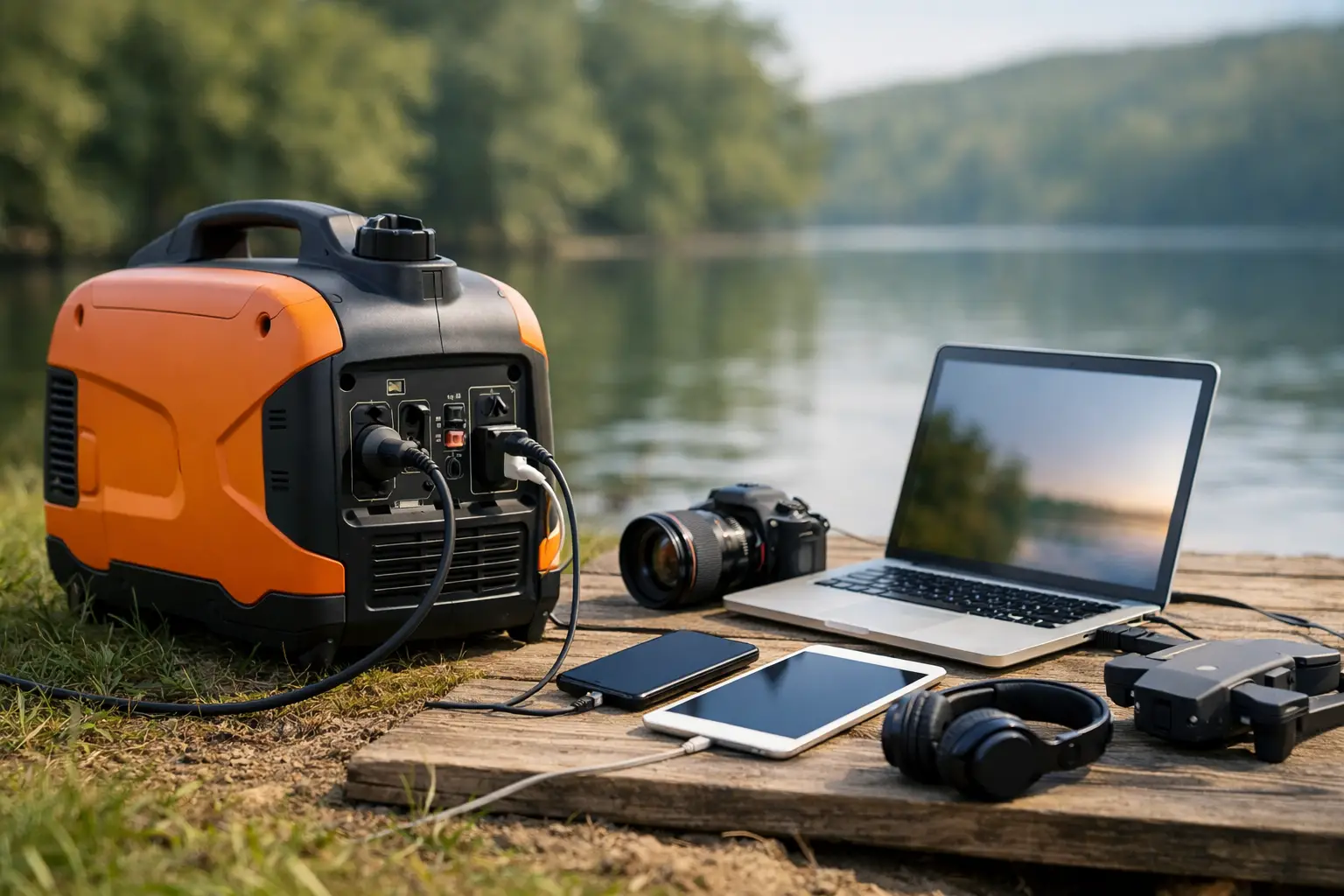
A laptop charger that runs hot, a CPAP that suddenly shuts off, a TV that flickers during an outage – those are the moments when the best inverter generator for electronics stops being a nice-to-have and starts looking like the only smart option. Sensitive devices do not just need power. They need stable power, low harmonic distortion, and enough capacity to handle startup loads without voltage swings.
That is where inverter generators separate themselves from conventional portable models. They produce cleaner electricity by generating AC power, converting it to DC, and then inverting it back to a more stable AC output. For everyday buyers, that translates into safer power for laptops, phones, routers, gaming consoles, medical devices, and modern appliances with circuit boards.
What makes an inverter generator safe for electronics?
The short version is clean sine wave power and low total harmonic distortion, often listed as THD. For sensitive electronics, you generally want THD at 5% or less, and many better inverter generators are comfortably under 3%. That cleaner output reduces the risk of glitches, charger issues, and long-term stress on delicate components.
Voltage regulation matters just as much. A generator can claim to be inverter-based, but if it struggles under changing loads, your electronics may still see unstable performance. This is why build quality, engine response, and inverter design all matter. A bargain unit may power a light bulb just fine, yet behave very differently when a refrigerator cycles on while your modem and computer are plugged in.
Noise and fuel efficiency are also part of the equation. If you are using a generator for overnight backup, camping, or RV travel, a loud open-frame machine can be hard to live with. Most enclosed inverter models are quieter and throttle down when the load is light, which helps with fuel use and runtime.
How to choose the best inverter generator for electronics
Start with wattage, but do not stop there. Many buyers focus only on running watts and ignore surge capacity. Electronics themselves usually have modest power needs, but the real-world setup often includes a mix of items. You might be powering a router, TV, laptop, phone chargers, and a small refrigerator at the same time. In that case, the fridge startup draw may matter more than the electronics.
For charging devices and running a small office or communications setup, a 1,800 to 2,200-watt inverter generator is often enough. Models in this range are popular because they are portable, quiet, and efficient. If you want more flexibility for home backup, RV use, or small appliances alongside electronics, stepping up to the 3,000 to 4,500-watt class makes more sense.
You should also pay attention to outlet selection. USB ports are convenient, but standard 120V household outlets are still the main workhorses. If you plan to power a transfer switch, RV, or jobsite gear in addition to electronics, look for the right receptacles up front. It is easier to buy the right generator than to solve outlet limitations later with adapters.
Best-fit generator sizes by use case
Small electronics and charging setups
If your goal is keeping phones, tablets, laptops, cameras, routers, and a few lights running, a compact inverter generator around 2,000 watts is usually the sweet spot. The Honda EU2200i is still one of the most trusted examples in this category because it combines very clean output, excellent reliability, and quiet operation. The downside is price. You are paying for proven performance and resale value.
The Yamaha EF2200iS is another strong option, especially for buyers who want premium-level output and quiet operation without guessing about quality. It is also known for being easy to live with in camping and backup scenarios.
For more budget-conscious shoppers, models like the WEN 56203i or Champion 2000-watt inverter generator can make sense for lighter electronics loads. They are not always as refined as Honda or Yamaha, but for occasional use, many buyers find the value compelling.
Home backup with sensitive electronics
If you want to run electronics plus a refrigerator, internet equipment, lights, and possibly a TV or small microwave, you will usually be happier in the 3,000-watt and up range. The Honda EU3200i stands out here because it bridges the gap between portability and serious usable power. It is compact enough for one person to manage while giving you more headroom for mixed household loads.
The Champion 4250-watt open-frame inverter is worth a look if you need more output at a lower cost than a fully enclosed premium model. The trade-off is noise. It is cleaner than a conventional generator, but not as quiet as an enclosed suitcase-style inverter. For backyard outage use, that may be acceptable. For campsites or overnight close-range use, maybe not.
The Westinghouse iGen4500 is another practical pick for home backup and RV users. It offers strong runtime, remote start on many versions, and enough capacity for a wider set of electronics and appliances. For many households, this is where value and usability line up well.
Features that matter more than marketing claims
Parallel capability is one feature that deserves more attention. If you are not sure how much power you will need long term, buying a smaller inverter generator that can pair with a second unit later is a smart approach. Honda, Yamaha, Champion, and several others offer this. It gives you flexibility without forcing you into a heavier machine today.
CO shutoff is now common and worth having, but it is not a substitute for safe placement. Never run any generator indoors, in a garage, or near doors and windows. Clean power for electronics means very little if the setup is unsafe for people.
Fuel type also changes the buying decision. Gasoline inverter generators are the most common and often the simplest choice.
Dual-fuel models add flexibility during outages because propane stores longer and can be easier to keep on hand. The trade-off is that propane usually reduces total output and sometimes runtime under load. If your electronics setup is modest, that reduction may not matter much.
Electric start is convenient, especially on larger units. Recoil start is fine on small generators, but once you move into the heavier 3,500-watt and above range, push-button or remote start can be a real quality-of-life upgrade.
Common mistakes when powering electronics
One mistake is buying too much generator and then using it only for light loads. Large generators running tiny loads are often less fuel-efficient and noisier than a properly sized inverter model. Another mistake is buying too little and leaving no buffer. A generator pushed close to its limit can struggle when loads cycle on and off.
Extension cords are another weak spot. Long, undersized cords can cause voltage drop, which is not ideal for sensitive devices. Use heavy-duty cords rated for the load and keep runs as short as practical.
Grounding and bonding also create confusion. Some inverter generators use a
floating neutral, which may affect compatibility with certain transfer switches, surge protectors, or RV electrical systems. This is one of those details that gets overlooked until setup day. If you are connecting to home circuits, an RV, or specialized equipment, confirm neutral bonding requirements before you buy. That kind of practical compatibility issue matters just as much as wattage.
So which model is the best choice?
It depends on how you plan to use it. If your top priority is premium clean power, quiet performance, and proven long-term reliability for electronics, the Honda EU2200i is still one of the safest recommendations in the small portable class. If you need more whole-setup flexibility, the Honda EU3200i or Westinghouse iGen4500 will fit more households better.
If budget matters most, Champion and WEN offer inverter models that can handle electronics safely when sized correctly, though you may give up some refinement, noise control, or long-term durability. That does not make them bad choices. It just means the best inverter generator for electronics is not always the most expensive model. It is the one with clean output, enough headroom for your actual loads, and a design you will realistically maintain and use.
At TopGeneratorsOnline, we have seen buyers get the best results when they treat generator shopping as a matching problem, not a brand contest. Start with the electronics and appliances you truly need to run, add a sensible power buffer, and choose the quietest, cleanest inverter unit that fits your budget. When the next outage hits, that extra care up front is what keeps your essentials powered without second-guessing every outlet.