When the power goes out, losing running water usually becomes a bigger problem than losing lights. If you are figuring out how to power well pump equipment during an outage, the key is not just getting any generator – it is matching the pump’s electrical needs, startup surge, and connection method so the system runs safely.
Why powering a well pump is trickier than it looks
A well pump is a motor load, and motor loads are demanding at startup. Many homeowners see the running watt number on a generator and assume that is enough. Then the pump tries to kick on, the generator bogs down, and nothing works reliably.
That happens because a pump usually needs far more power for a brief moment when it starts than it does while running. A 1 HP well pump does not simply ask for a flat, easy load. It can draw a startup surge that is two to four times its running demand, sometimes more depending on pump type, wire length, depth, age, and pressure conditions.
That is why the real question is not only how to power well pump systems, but how to power them without voltage drop, nuisance tripping, or damage to the motor and control components.
Start with the pump specs, not the generator
Before you shop for a portable generator, inverter generator, or standby unit, look at the pump motor data plate or the control box. You want the voltage, amperage, horsepower, and phase. Most residential well pumps in the US are 240V, though some shallow well or jet pump setups may be 120V.
Horsepower gives you a rough starting point, but it should not be your only sizing method. Two pumps with the same HP rating can behave differently at startup. If the label shows running amps, that is more useful. If you also have access to the pump manual, use its startup or locked rotor information whenever possible.
If you cannot find exact specs, use a conservative estimate. That usually means sizing the generator above the bare minimum instead of trying to get away with the smallest unit possible.
Typical well pump power ranges
A small 1/2 HP pump may run on roughly 1,000 to 1,500 watts, but startup can jump much higher. A 3/4 HP or 1 HP pump often needs 2,000 to 3,000 running watts or more, with surge demand commonly landing in the 4,000 to 6,000 watt range. Deeper wells, older motors, and pumps under pressure can push that higher.
These are planning numbers, not guarantees. If you are buying backup power for a whole home water system, caution pays off.
Generator sizing for a well pump
For many homeowners, the safest approach is to choose a generator with enough 240V output and enough surge capacity to start the pump while still handling a few essentials. That matters because your well pump may not be the only thing running. You may also want a refrigerator, freezer, lights, furnace blower, or battery chargers.
If the generator is dedicated only to the pump, you can size more tightly. If it will support part of the house, leave extra headroom. Running a generator near its limit every time the pump cycles on is hard on the equipment and usually frustrating in actual use.
As a general rule, many residential setups work best with a generator in the 5,000 to 7,500 running watt range if a well pump is one of the main loads. Larger pumps or homes with more simultaneous needs may justify 8,000 watts or more. This is one reason conventional portable generators remain popular for backup water needs – many inverter models are quiet and fuel-efficient, but not all offer strong 240V output for motor starting.
Inverter vs conventional generator
For a well pump, the best option depends on the pump size and whether you need 240V. A conventional portable generator often gives you more affordable 240V power and stronger startup capability for larger motor loads. An inverter generator can still work if it has true 240V output and enough surge capacity, but smaller recreational inverter units are often not a fit.
If quiet operation matters and your pump load is modest, a larger enclosed inverter generator may be worth the premium. If your main goal is dependable startup under emergency conditions, a traditional open-frame generator is often the more practical choice.
How to connect power to the pump safely
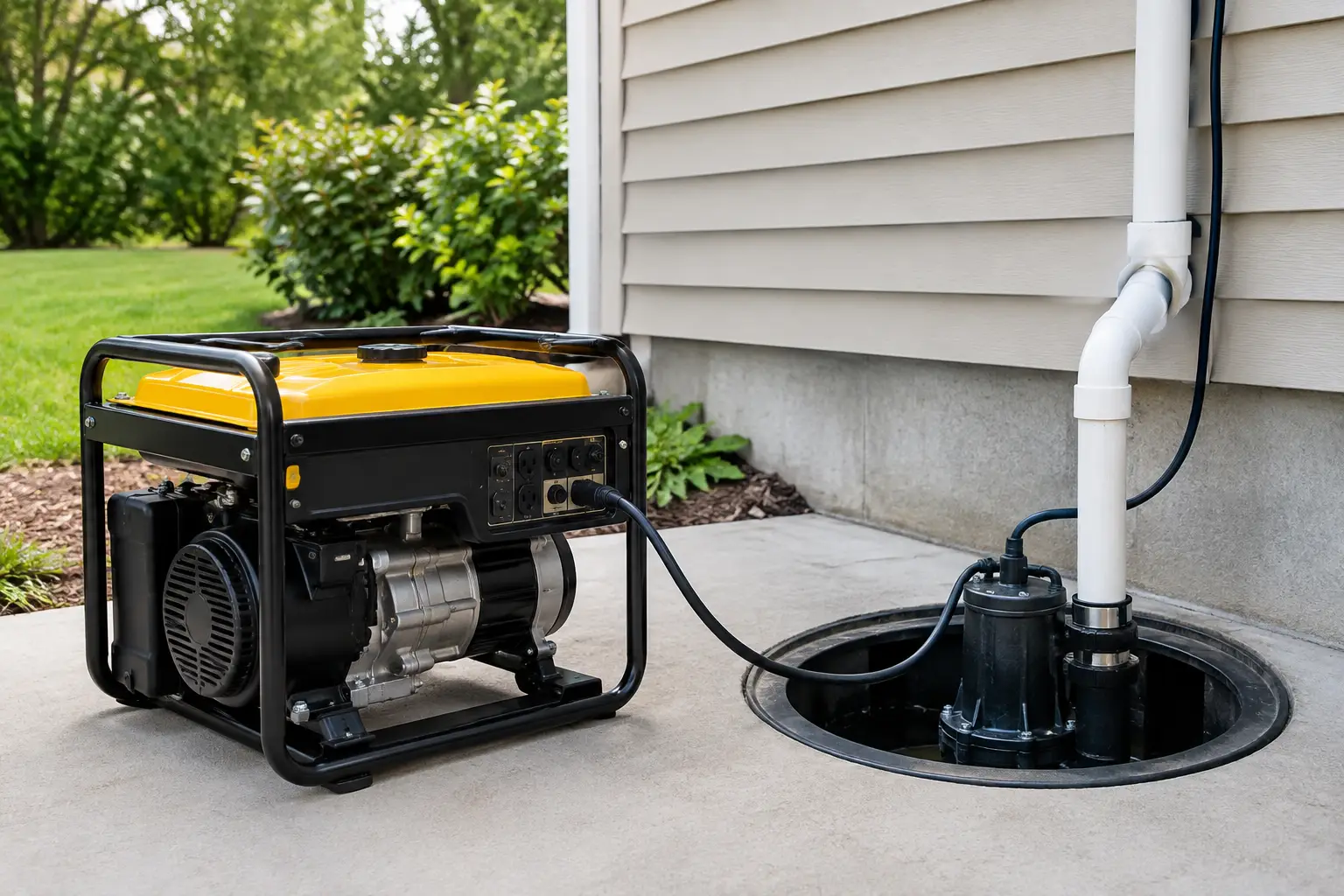
This is where many homeowners make the wrong call. Do not backfeed a panel through a dryer outlet, and do not improvise cords or adapters. A well pump should be powered through a proper transfer method.
The cleanest setup is a transfer switch or an interlock kit installed by a qualified electrician. That lets you feed selected circuits, including the well pump breaker, without sending power back into utility lines. It is safer, code-aware, and much easier to use when the outage happens at night or in bad weather.
If your pump can be isolated and connected through a dedicated inlet arrangement, that can also work well. The right choice depends on your panel, pump circuit, and whether the generator is for whole-home backup or limited emergency use.
Extension cords are usually not the answer
Most deep well pumps are hardwired on a 240V circuit. That means you typically cannot just plug them into a standard heavy-duty extension cord the way you would with a sump pump or appliance. Even when a pump setup is technically cord-connectable, cord size, voltage drop, and weather exposure all matter.
For well pumps, a permanent or semi-permanent generator connection setup is usually the better route.
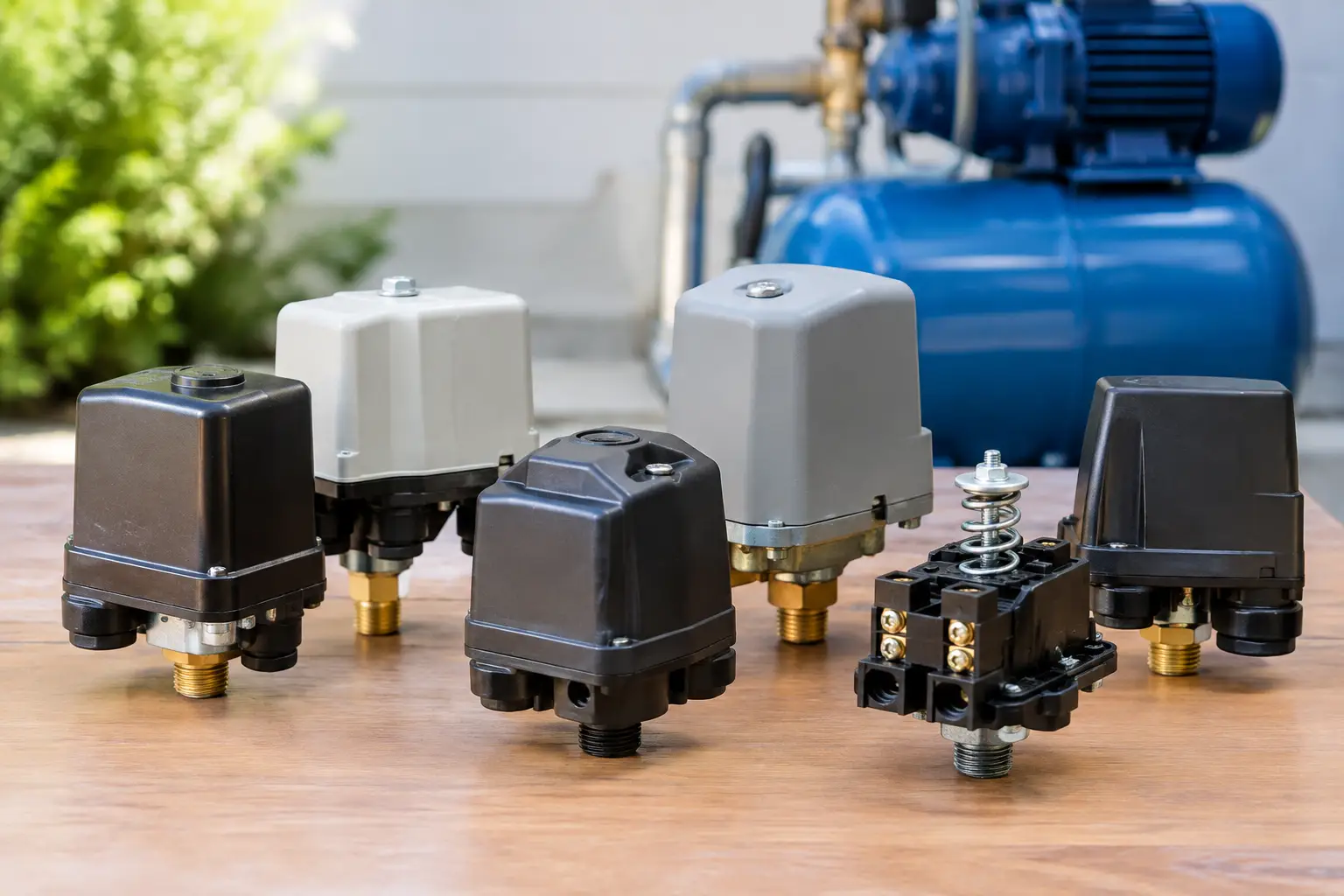
What about soft starts and pump controllers?
Some homeowners use a soft start device to reduce startup surge. That can help in certain motor applications, and it may allow a smaller generator to start the pump more easily. But it is not a universal fix.
Compatibility depends on the pump motor and control system. Some three-wire pumps with control boxes behave differently than two-wire pumps. Some modern pump controllers are more generator-friendly than others. If you are considering this route, verify compatibility with the pump manufacturer or an electrician who has real experience with well systems.
Soft start technology can improve the situation, but it should not be used to excuse undersizing the generator too aggressively.
Fuel choice and runtime matter more than people expect
A generator that can start your well pump but runs out of fuel every few hours is only a partial solution. During extended outages, runtime and fuel storage become part of the buying decision.
Gasoline portable generators are common and widely available, but fuel storage is less convenient over the long term. Dual-fuel models are attractive for many homeowners because propane stores much better and starts cleaner, though power output may drop slightly on propane. Diesel and standby natural gas systems can make sense too, but those are usually larger investments.
For a household relying on a private well, backup water is essential enough that runtime should carry real weight in the decision. A larger tank, better fuel economy, and easier refueling may be more valuable than chasing the cheapest unit on paper.
A few common mistakes to avoid
The biggest mistake is buying only for running watts and ignoring surge. The second is choosing a generator that does not supply 240V when the pump requires it. The third is using an unsafe connection method because it seems easier in the moment.
Another issue is forgetting that pumps cycle. A generator may start the pump once when nothing else is on, then struggle later when the refrigerator compressor and furnace blower happen to start at the same time. Real-life load overlap matters.
This is also why product comparisons should go beyond headline wattage. Receptacle type, 240V capability, THD, fuel flexibility, electric start, and transfer compatibility all affect whether a generator is actually a good fit.
What to buy if your goal is reliable well pump backup
If your pump is a core outage load, look for a generator with confirmed 240V output, healthy surge capacity, and enough continuous wattage to leave breathing room. A dual-fuel portable model in the mid-to-upper wattage range is often a smart balance for homeowners who want flexibility without stepping up to a full standby system.
If you want quieter operation and cleaner power, a larger 240V inverter generator may be worth considering, but check the surge specs carefully. If your outages are frequent or long, a standby generator tied into a transfer switch can be the most convenient answer, especially if water access is critical for livestock, home heating systems, or a larger household.
At TopGeneratorsOnline, this is where practical buying guidance matters most – not every generator that looks powerful on a category page is a good match for a motor-driven well system.
Final thought on how to power well pump systems
The right setup gives you more than water during an outage. It gives you confidence that the pump will start when pressure drops, keep cycling normally, and do it without risking the pump motor, your panel, or your safety. If you size the generator from the pump backward instead of from the generator forward, you will usually make a much better decision.