As an Amazon Associate I earn from qualifying purchases.
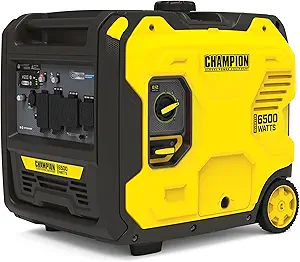
A 6000 watt inverter generator can be a practical middle ground for homeowners, RV owners, contractors, and anyone who needs more power than a compact camping generator can provide without moving all the way into a large conventional generator.
But there is an important detail to understand before buying: 6,000 watts does not always mean 6,000 watts of continuous power. Generator manufacturers commonly advertise starting or surge watts, while the lower running or rated wattage is the amount the generator is designed to deliver continuously.
That difference matters when you are trying to run a refrigerator, sump pump, well pump, portable air conditioner, RV air conditioner, power tools, lights, or several appliances at the same time.
For 2026, the models below represent a range of options around the 6,000-watt inverter-generator category, including dual-fuel models and one higher-output option for buyers whose actual load is above this class.
Best 6000 Watt Inverter Generators for 2026
| Generator | Starting Watts | Running Watts | Fuel | Best For |
|---|---|---|---|---|
| Champion 6500W Dual Fuel Inverter | Up to 6,500W | Up to 5,250W gas | Gas/Propane | Home backup and RV use |
| WEN DF680iX | 6,800W gas | 5,100W gas | Gas/Propane | Value and flexible fuel |
| Pulsar NEX60BiSRCO | 6,000W gas | 5,400W gas | Gas/Propane | RV and outdoor power |
| K&S Könner&Söhnen 6000W | Varies by configuration | Varies by configuration | Gas/Propane | Alternative dual-fuel option |
| Westinghouse iGen11000DFc | 11,000W gas | 9,000W gas | Gas/Propane | Loads above the 6000W class |
Important: Generator specifications can vary by model revision and retailer listing. Check the current Amazon listing and manufacturer’s documentation before purchasing.
1. Champion 6500W Dual Fuel Inverter Generator
Check Amazon Price Click Here!
The Champion 6500W Dual Fuel Inverter is one of the most interesting choices for buyers searching for a generator in the 6000-watt class because it combines inverter technology with gasoline and propane capability.
The current Champion 201532 specification lists 6,500 starting watts and 5,250 running watts on gasoline, while propane provides up to 6,500 starting watts and 4,725 running watts. It also provides 120/240V output and a 30A RV receptacle.
That makes the distinction between starting and running watts particularly important. If your connected equipment requires close to 5,250 watts continuously, this generator is operating near its rated gasoline capacity even though the product name says 6500W.
Key Features
- Dual-fuel operation
- 6,500W gasoline starting output
- 5,250W gasoline running output
- 120/240V capability
- 30A RV outlet
- Enclosed inverter design
- CO Shield carbon monoxide shutdown system
- Economy mode
- Intelligauge monitoring
- Approximately 64 dBA
- Wheels for easier transportation
Champion lists up to 18 hours of gasoline runtime at 25% load and a 4.5-gallon gasoline tank for this model.
Who Should Consider It?
This model makes sense for someone who wants a relatively high-output inverter generator for RV use, emergency backup, outdoor projects, and essential household loads.
It should not automatically be considered a whole-house generator. Your actual load calculation determines whether the available running watts are sufficient.
Best for: Buyers who want dual-fuel flexibility and 120/240V inverter power in a portable package.
2. WEN 6800-Watt Dual Fuel Inverter Generator
Check Amazon Price Click Here!
The WEN DF680iX is another strong option for shoppers looking for a generator around the 6000-watt range.
The important specification is that the generator produces 6,800 starting watts and 5,100 running watts on gasoline. On propane, it produces 6,000 starting watts and 4,500 running watts. It supports 120/240V operation.
That makes it a good example of why buyers should compare running watts rather than relying only on the number in the product name.
The WEN also has electric start, a digital display, low-oil shutdown, overload protection, and dual-fuel capability. Current specifications list a 2.9-gallon fuel tank, with approximately 6.1 hours of runtime at half load on gasoline and about 9 hours on LPG.
Key Features
- 6,800W gasoline starting power
- 5,100W gasoline running power
- 6,000W LPG starting power
- 4,500W LPG running power
- Gasoline and propane operation
- 120/240V output
- Electric start
- CO shutdown system
- Digital display
- Low-oil shutdown
- Overload protection
- RV-ready configuration
One advantage of this model is its relatively compact design for the amount of power it provides. However, noise specifications should be checked against the current listing rather than relying on older 52 dBA claims. Current retail specifications show approximately 63 dBA.
Who Should Consider It?
The WEN is worth considering if you want dual-fuel flexibility, inverter power, electric start, and a relatively compact generator without moving into a much larger generator class.
Best for: RV owners, emergency backup users, tailgating, outdoor projects, and buyers who want a flexible dual-fuel inverter.
3. Pulsar 6000 Watt Dual Fuel Inverter Generator
Check Amazon Price Click Here!
The Pulsar NEX60BiSRCO takes a slightly different approach to the 6000-watt category. It is advertised as a 6000-watt dual-fuel inverter generator, but its actual continuous output is lower than its peak output.
Current specifications list 6,000 peak watts and 5,400 running watts on gasoline, with 5,400 peak watts and 4,600 running watts on propane. The unit is also listed with remote start, a CO sensor, parallel capability, and a 120V/240V configuration.
Its listed weight is approximately 93.5 pounds, making it considerably easier to move than many larger open-frame generators.
Key Features
- 6,000W gasoline peak output
- 5,400W gasoline running output
- 5,400W propane peak output
- 4,600W propane running output
- Dual-fuel operation
- Remote start
- CO sensor
- Digital hour meter
- Parallel capability
- RV-ready outlet
- Approximately 67 dBA
- Portable wheel-and-handle design
The Pulsar is especially interesting for RV owners because the package combines substantial output with a comparatively manageable weight.
One Important Limitation
Do not assume that the 6,000W peak rating means you can continuously operate a 6,000W load.
For extended operation, use the 5,400W gasoline running rating as the more important number.
Propane also reduces available output compared with gasoline, so this should be considered when calculating your emergency load.
Best for: RVs, camping, outdoor work, and homeowners who want a relatively portable dual-fuel inverter generator.
4. K&S Könner&Söhnen 6000W Dual Fuel Inverter Generator
Check Amazon Price Click Here!
K&S Könner&Söhnen offers generators in this power class aimed at buyers who want a dual-fuel inverter configuration with a more equipment-oriented design.
The exact specifications can vary by model and market configuration, so this is one product where buyers should pay particular attention to the current Amazon listing before ordering.
Rather than choosing this generator simply because the product title contains “6000W,” compare its rated running watts, peak watts, voltage configuration, fuel-specific output, noise rating, and available receptacles with the other models on this list.
What to Check Before Buying
- Gasoline running watts
- Propane running watts
- Starting watts
- 120/240V capability
- RV outlet configuration
- Electric versus recoil start
- Noise rating
- CO protection
- Parallel capability
- Warranty and parts availability
The main advantage of considering K&S is having another option in the dual-fuel inverter segment rather than limiting your comparison to the most heavily advertised brands.
Who Should Consider It?
This model is better suited to buyers who have already calculated their electrical requirements and want to compare an additional dual-fuel inverter option based on current specifications and price.
Best for: Workshops, outdoor projects, backup power, and buyers comparing dual-fuel inverter configurations.
5. Westinghouse 11,000 Peak Watt Dual Fuel Inverter Generator
Check Amazon Price Click Here!
The Westinghouse iGen11000DFc is not actually a 6000-watt-class generator. It belongs in this guide because some shoppers searching for 6000 watts discover that their calculated electrical load is higher than expected.
This model provides 11,000 peak watts and 9,000 running watts on gasoline, or 10,000 peak watts and 8,100 running watts on propane. It also offers 120/240V output, inverter technology, parallel capability, transfer-switch readiness, and a maximum listed THD of 3% or less.
Key Features
- 11,000W gasoline peak output
- 9,000W gasoline running output
- 10,000W propane peak output
- 8,100W propane running output
- Dual-fuel operation
- 120/240V output
- Transfer-switch ready
- Parallel capable
- Electric, remote, and recoil starting
- CO sensor
- Economy mode
- Approximately 64 dBA
- 7.92-gallon fuel tank
Westinghouse lists up to 17 hours of gasoline runtime at 25% load and approximately 9.8 hours on propane at the same load.
Why Include an 11,000W Generator?
Because choosing a generator based solely on the keyword you searched can lead to buying the wrong size.
If your calculated continuous load is around 5,000 watts, a generator in the 6000-watt class may make sense.
If your load is closer to 7,000 or 8,000 watts, buying a smaller generator simply because it appears in the search results for “6000 watt generator” would not solve the problem.
Best for: Larger home backup loads, multiple essential circuits, and buyers who discover that their actual power requirements exceed the 6000W class.
What Can a 6000 Watt Inverter Generator Run?
A 6000-watt-class inverter generator can handle a substantial combination of appliances, but you need to calculate both running watts and starting watts.
For example, a simplified emergency load might look like this:
| Appliance or Tool | Approximate Running Watts |
|---|---|
| Refrigerator | 150–800W |
| Freezer | 100–500W |
| LED lighting | 50–200W |
| Wi-Fi router | 10–30W |
| Television | 50–200W |
| Microwave | 900–1,500W |
| Sump pump | 800–1,500W |
| Portable air conditioner | 1,000–1,500W |
| Power tools | 500–2,000W |
These are only examples. Always check the actual nameplate or manufacturer’s specifications for your equipment.
The bigger issue is motor startup.
A refrigerator, pump, compressor, or air conditioner may require significantly more power for a short period when the motor starts.
That is why a generator that appears to have enough running watts can still overload when several motor-driven appliances start simultaneously.
Running Watts vs. Starting Watts
This is one of the most important concepts when shopping for a 6000-watt inverter generator.
Running watts are the amount of power the generator can provide continuously.
Starting watts, also called surge watts, are the additional short-term capacity available for starting motors and other equipment with higher startup demand.
For example, a generator advertised as 6,800 watts may actually provide approximately 5,100 watts continuously.
That is completely normal.
When comparing generators, look at the specifications in this order:
- Running watts
- Starting watts
- Running watts on your chosen fuel
- Voltage configuration
- Available outlets
- Fuel consumption
- Noise
- Safety features
For a dual-fuel generator, always check both gasoline and propane output.
How to Choose a 6000 Watt Inverter Generator
1. Calculate Your Actual Load
Start by making a list of everything you want to operate simultaneously.
Add the running wattage of those devices.
Then identify equipment with electric motors, compressors, pumps, or other high-starting-current loads.
You do not necessarily need to add every possible appliance in your home. The goal is to determine what you realistically need to operate at the same time during an outage.
2. Give Running Watts More Weight Than the Product Name
A generator called a “6000W” or “6800W” generator may provide substantially less continuous power.
That is why a model with 6,000 peak watts is not necessarily more capable than another generator with 5,400 running watts.
For emergency backup, rated running wattage is usually the more useful comparison number.
3. Decide Whether You Need Dual Fuel
Dual-fuel generators can run on gasoline or propane.
Gasoline
Gasoline is widely available and usually provides higher output than propane on dual-fuel generators.
Propane
Propane can be attractive for emergency preparedness because properly stored propane does not degrade in the same way gasoline can.
The trade-off is that many dual-fuel generators produce fewer watts on propane.
If you plan to use propane during outages, calculate your load using the generator’s propane running-watt rating, not the gasoline rating.
4. Check 120V and 240V Capability
At this power level, 120/240V capability can be important.
Some larger household loads and certain equipment require 240V.
If you plan to connect a generator to a home’s dedicated inlet through an appropriate transfer switch or interlock system, verify that the generator’s output and the home’s electrical system are compatible.
Do not assume that every 6000-watt inverter generator can supply the same type of 240V power.
5. Consider RV Requirements
If you are buying a generator for an RV, check the outlet before purchasing.
A 30A RV usually uses a TT-30 connection, while a 50A RV uses a different connection and can have substantially higher electrical demands.
Also check whether your RV air conditioner can start using the generator’s available surge capacity.
A generator that can run your RV’s normal loads may still struggle with air-conditioner startup if other high-demand appliances are operating simultaneously.
6. Compare Noise Ratings Carefully
Inverter generators are generally designed to reduce engine speed when electrical demand is lower, which can help reduce noise and fuel consumption.
However, do not compare two noise numbers without checking how and where they were measured.
Noise can change depending on:
- Distance from the generator
- Electrical load
- Fuel type
- Operating mode
- Test conditions
- Generator enclosure
A generator rated around 60–65 dBA can still be noticeably louder when operating under heavy load than when running a light electrical load.
7. Look for CO Protection
Modern portable generators may include a carbon monoxide sensor or automatic CO shutdown system.
This is a useful safety feature, but it does not make a generator safe to operate indoors.
Never operate a gasoline or propane generator inside a house, garage, basement, shed, or other enclosed or partially enclosed space.
Carbon monoxide is odorless and can accumulate quickly.
Always follow the manufacturer’s required outdoor operating distance and exhaust-clearance instructions.
8. Think About Home Connection
If the generator is intended for emergency home backup, consider how you will connect it before purchasing.
A properly installed transfer switch or approved interlock and generator inlet can allow selected household circuits to be powered safely.
Never connect a portable generator to a household wall outlet as a substitute for a proper generator connection.
Backfeeding can energize electrical lines that utility workers believe are disconnected and can create a serious electrocution hazard.
For permanent or semi-permanent home backup installations, have the electrical connection installed according to local requirements by a qualified electrician.
9. Consider Portability
A 6000-watt-class generator is not a lightweight camping accessory.
Even relatively compact models can weigh close to 100 pounds, while larger units can exceed 150 or 200 pounds.
Wheels and folding handles make a major difference.
Before buying, think about where the generator will be stored and how you will move it from storage to its operating location.
Inverter Generator vs. Conventional Generator
Why choose an inverter generator at this power level?
An inverter generator produces electricity through an electronic inverter system rather than relying on a conventional alternator output alone.
The result can include:
- Cleaner electrical output
- Better control of engine speed
- Lower noise at lighter loads
- Improved fuel efficiency at partial load
- Better suitability for many sensitive electronic devices
However, inverter generators can cost more than conventional open-frame generators with similar maximum wattage.
If your priority is simply maximum wattage at the lowest purchase price, a conventional generator may be worth considering.
If you care about noise, fuel efficiency, portability, and cleaner power, the inverter design becomes more attractive.
Is a 6000 Watt Inverter Generator Enough for Whole-House Backup?
Sometimes, but not automatically.
The phrase “whole-house backup” can be misleading.
A 6000-watt generator might power essential circuits such as:
- Refrigerator
- Freezer
- Lights
- Internet equipment
- Television
- Selected kitchen appliances
- Sump pump
- Some heating equipment
But it may not be enough to run all of those loads plus central air conditioning, electric water heating, an electric range, well pumps, and other large loads simultaneously.
The correct approach is to calculate your essential loads first.
If your calculated demand exceeds the generator’s continuous output, moving to a larger generator may be a better solution than trying to make a 6000W unit do too much.
6000 Watt Generator Fuel and Runtime
Runtime depends heavily on load.
A generator running a refrigerator and a few lights will consume much less fuel than one operating near its maximum rated output.
That means advertised “up to” runtime numbers should not be interpreted as how long the generator will run under heavy load.
When comparing models, look for runtime figures at a clearly stated load such as 25% or 50%.
Also remember that gasoline and propane runtime can differ significantly.
For long outages, fuel storage and availability may be just as important as generator size.
Safety Tips for Portable Inverter Generators
A portable generator should always be treated as an engine producing dangerous exhaust.
Follow these basic rules:
- Operate the generator outdoors.
- Keep exhaust away from doors, windows, and vents.
- Never operate it inside a home or garage.
- Keep the generator dry and protected from direct weather exposure according to the manufacturer’s instructions.
- Use appropriately rated extension cords.
- Do not overload the generator.
- Allow the engine to cool before refueling.
- Store gasoline and propane according to applicable safety requirements.
- Test the generator periodically before an emergency.
- Follow the manufacturer’s maintenance schedule.
- Keep working carbon monoxide alarms installed in the home.
A built-in CO shutdown system is an additional safety measure, not permission to operate the generator in an enclosed space.
Which 6000 Watt Inverter Generator Should You Buy?
There is no single generator that is right for every 6000-watt buyer.
The Champion 6500W Dual Fuel Inverter is a strong choice for buyers who want dual-fuel capability, 120/240V output, RV compatibility, and a relatively high output in this class.
The WEN DF680iX is worth considering if you want a dual-fuel inverter with electric start and a compact form factor.
The Pulsar NEX60BiSRCO is particularly interesting for RV and outdoor users who value portability, remote start, CO protection, and parallel capability.
The K&S Könner&Söhnen option is worth comparing when its current specifications and price make sense for your requirements.
If your load calculation shows that you actually need substantially more than 6,000 watts, the Westinghouse iGen11000DFc represents a significant step up rather than trying to stretch a smaller generator beyond its limits.
Final Verdict: Best 6000 Watt Inverter Generators for 2026
The most important thing to remember is that running watts matter more than the number printed in the product name.
A generator marketed as 6000W may provide 5,000–5,400 watts continuously, while a larger model may provide considerably more.
For most buyers, the right process is simple:
- Calculate your running wattage.
- Identify startup requirements.
- Decide whether gasoline or dual fuel makes sense.
- Check 120/240V requirements.
- Check RV or transfer-switch compatibility.
- Compare noise and portability.
- Verify CO safety features.
- Check the current manufacturer’s specifications before ordering.
If your calculated load fits within the continuous output of a 6000-watt-class inverter generator, this category can provide an excellent balance of power, portability, fuel flexibility, and cleaner electrical output.
If your actual load is substantially higher, moving to a larger generator is usually a better solution than relying on peak-wattage numbers.
For emergency preparedness, RV power, outdoor projects, and jobsite use, choosing the generator based on your actual electrical requirements—not just the biggest number in the product title—will give you a much more reliable backup-power setup.