As an Amazon Associate I earn from qualifying purchases.
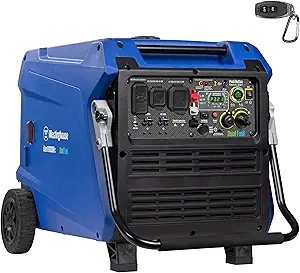
A 50 amp inverter generator can be a practical solution when you need more than the typical 30 amp RV connection can provide. The right model can deliver enough power for large RVs, multiple air conditioners, refrigerators, pumps, tools, and selected household circuits during a power outage.
But there is an important detail that is easy to overlook: not every generator advertised with a 50 amp outlet can provide the same type of 50 amp power. Some offer a NEMA 14-50 receptacle for RV use, while others can provide 120/240V output suitable for more demanding applications.
For 2026, the models below stand out for different reasons, including high output, dual- or tri-fuel operation, inverter technology, remote starting, and 50 amp connectivity.
50 Amp Inverter Generators for 2026
| Generator | Starting Watts | Running Watts | Fuel | 50A Connection |
|---|---|---|---|---|
| Westinghouse iGen11000DFc | 11,000W | 9,000W | Gas/Propane | 120/240V 14-50R |
| AIVOLT 11250W | 11,250W | 9,000W | Gas/Propane | 120/240V 14-50R |
| GENMAX GM10500XiT | 10,500W | 7,800W | Gas/Propane/Natural Gas | 120/240V 14-50R |
| Champion 8500W | 8,500W | 7,000W gas | Gas/Propane | 14-50 receptacle |
| WEN DF680iX | 6,800W | 5,100W gas | Gas/Propane | 30A; not a true 50A output |
The last two models deserve special attention because their 50 amp capability is not identical to the 120/240V 50 amp output offered by the Westinghouse, AIVOLT, and GENMAX models. That distinction matters if you are buying a generator specifically for a large 50 amp RV or a home backup connection.
Westinghouse iGen11000DFc: High-Power 50 Amp Inverter Generator
The Westinghouse iGen11000DFc is one of the strongest options in this group for users who need substantial portable power without giving up inverter technology.
It produces up to 11,000 peak watts and 9,000 running watts on gasoline. On propane, output is rated at 10,000 peak watts and 8,100 running watts. Westinghouse also specifies less than 3% total harmonic distortion, making the generator suitable for many modern electronic loads when used according to the manufacturer’s instructions.
The control panel includes a 120/240V 14-50R receptacle, a 120/240V 30A outlet, household 120V outlets, and parallel connections. The generator also includes electric start, remote start, an economy mode, CO sensing, low-oil shutdown, and GFCI protection.
Why the Westinghouse iGen11000DFc stands out
The combination of output and 50 amp connectivity makes this model particularly interesting for large RVs and home backup applications. It can deliver up to 9,000 running watts on gasoline, giving you considerably more operating headroom than smaller inverter generators.
Westinghouse lists a gasoline runtime of up to 17 hours at 25% load using its 7.92-gallon tank. The generator weighs approximately 187 pounds, so it is portable in the technical sense, but it is not something most people will want to lift into a truck without assistance.
The main drawback is its size and weight. If your RV only needs a few thousand watts, buying a generator this large may simply add unnecessary weight and fuel capacity.
Best for: Large RVs, home backup, well pumps, air conditioners, and users who want high output with a 50 amp connection.
AIVOLT 11250W Dual Fuel Inverter Generator: Maximum Output
The AIVOLT 11250W Dual Fuel Inverter Generator is another high-output option designed for users who want a 50 amp connection and the flexibility of gasoline or propane.
AIVOLT rates the generator at 11,250 starting watts and 9,000 running watts on gasoline. Propane output is rated at 10,570 starting watts and 8,450 running watts. The generator uses a 459cc four-stroke engine and includes a 120/240V 50A 14-50R outlet.
The control panel also includes 120V 20A GFCI outlets, a 120V 30A twist-lock outlet, a 120/240V 30A L14-30R outlet, a 12V outlet, and an ATS connection. AIVOLT also lists 240V parallel capability for connecting two compatible units.
What makes the AIVOLT interesting
The biggest advantage is its combination of high wattage, dual-fuel capability, and a 50 amp outlet.
The generator can be useful for a large RV where air conditioning startup loads can quickly consume available power. It can also be considered for selected home backup loads when connected correctly through an appropriate transfer system.
AIVOLT lists a runtime of up to 19 hours under its specified test conditions, although actual runtime will vary substantially depending on load and fuel type.
The company also provides an owner’s manual for this model, which is worth consulting before installation or connection to an RV or home electrical system.
Best for: Large RVs, high-power portable backup, food trucks, job sites, and users who want dual-fuel flexibility.
GENMAX GM10500XiT: Tri-Fuel Flexibility with 50 Amp Output
If fuel flexibility is one of your priorities, the GENMAX GM10500XiT deserves a close look.
This tri-fuel inverter generator can operate on gasoline, propane, or natural gas. GENMAX rates it at 10,500 peak watts and 7,800 running watts on gasoline. Propane and natural gas provide lower output, so buyers should not assume that the advertised 10,500 watts applies to every fuel.
The GM10500XiT includes a 120/240V 50A 14-50R outlet along with a 120/240V 30A L14-30R outlet and 120V 20A outlets. Its control system also includes a voltage selector, digital display, CO alarm, electric start, remote start, and parallel connections.
One especially useful feature is the ability to use natural gas. For homeowners with an appropriate natural gas supply, this can reduce the need to store gasoline or propane for extended outages.
A practical consideration
The GM10500XiT is not a lightweight generator. Its open-frame design and approximately 123-pound weight make it easier to move than some larger enclosed units, but it is still substantial equipment.
Also, the 50 amp receptacle does not mean the generator can continuously deliver 50 amps at 240V by itself under every operating condition. The generator’s total wattage remains the limiting factor.
Best for: Home backup, 50 amp RVs, job sites, and users who want gasoline, propane, and natural gas flexibility.
Champion 8500W Dual Fuel Inverter Generator: A Strong Mid-Size Option
The Champion 8500W Dual Fuel Inverter Generator is a useful choice for buyers who want a large inverter generator without moving all the way into the 10,000- to 11,000-watt class.
Champion rates this model at 8,500 starting watts and 7,000 running watts on gasoline, while propane output is rated at 8,500 starting watts and 6,300 running watts. It uses a 420cc engine and supports both electric and recoil starting.
It also has Champion’s CO Shield carbon monoxide shutdown system and an EZ Start Dial. Champion lists a noise rating of 61 dBA and a gasoline runtime of up to 14 hours at 25% load.
The control panel includes a 14-50 receptacle, but this is where buyers should pay attention to the specifications. The presence of a 14-50 receptacle does not automatically make this equivalent to a generator delivering full 120/240V 50 amp service.
For an RV application, the actual electrical configuration and the RV’s requirements should be checked before purchase.
Best for: Emergency backup, RV use where its output is sufficient, and buyers who prefer Champion’s controls and CO safety system.
WEN DF680iX: Smaller Dual-Fuel Alternative
The WEN DF680iX is worth mentioning because it appears in many searches for high-output inverter generators, but it should not be treated as a direct equivalent to the larger 50 amp models above.
WEN rates the DF680iX at 6,800 starting watts and 5,100 running watts on gasoline, or 6,000 starting watts and 4,500 running watts on propane. It uses a 224cc engine and supports 120/240V operation.
However, the generator’s primary large receptacle is an L14-30R 30 amp connection, not a native 50 amp generator output. WEN also includes a TT-30R RV receptacle.
That makes the WEN a different proposition from the Westinghouse, AIVOLT, and GENMAX models.
Why consider the WEN?
Its smaller size and lower output can make sense for users who do not need a full 50 amp generator.
It also features WEN’s Watchdog CO shutdown sensor, electric start, fuel shutoff, wheels, and a telescoping handle. WEN states that the generator can provide low-power Level 2 charging for certain battery and hybrid electric vehicles through its 240V configuration.
At about 95 pounds, it is considerably easier to move than the larger 10,000-plus-watt models.
Best for: Smaller RVs, emergency power, camping, and users who need less power and value portability.
What Does “50 Amp Inverter Generator” Actually Mean?
This is one of the most important things to understand before buying.
A 50 amp RV service typically uses a NEMA 14-50 connection. But the presence of a 14-50 receptacle does not tell you how much power the generator can actually deliver.
For example, 50 amps at 120 volts represents:
120V × 50A = 6,000 watts
If you have true 120/240V split-phase output and 50 amps available on both legs, the theoretical maximum is:
240V × 50A = 12,000 watts
But the generator’s rated wattage is still the limiting factor.
An 8,500-watt generator cannot suddenly produce 12,000 watts simply because it has a 14-50 receptacle.
This is why you should always compare the generator’s running watts, starting watts, voltage configuration, and outlet rating rather than shopping by the outlet alone.
Running Watts vs. Starting Watts
When comparing generators, running watts are usually more important than the largest number printed on the box.
Running watts are the amount of power the generator can continuously provide.
Starting watts are the additional short-term power available to start equipment with electric motors or compressors.
Air conditioners, refrigerators, well pumps, compressors, and some power tools can require substantially more power during startup.
For example, a generator may have enough running watts to operate an air conditioner once it is running but still struggle to start the compressor.
This is why soft-start equipment and proper load management can make a meaningful difference when operating a 50 amp RV or household backup system.
How to Choose a 50 Amp Inverter Generator
1. Check the Actual 50 Amp Outlet
Look for the specific receptacle type.
A NEMA 14-50R is commonly associated with 50 amp RV connections, but check whether the generator provides 120V only or 120/240V operation.
This distinction becomes particularly important when powering household circuits or equipment that requires 240V.
2. Compare Running Watts First
Do not choose a generator solely because it has the highest starting-watt number.
For regular operation, running watts determine how much equipment can remain powered simultaneously.
As a general rule, make a list of the appliances you expect to use at the same time and add their running wattage. Then account for the starting requirements of equipment with motors or compressors.
3. Consider Dual Fuel or Tri-Fuel
Dual-fuel generators typically run on gasoline and propane.
Tri-fuel models add natural gas.
Gasoline generally offers strong power output and is easy to refuel, while propane can be stored for longer periods. Natural gas can be convenient during an extended outage if your property already has an appropriate gas connection.
However, output normally changes depending on the fuel being used.
4. Look at Inverter Technology
Inverter generators electronically produce and regulate their electrical output rather than relying on the same operating method as traditional open-frame generators.
Many modern inverter models are designed to produce low-THD power suitable for electronics.
That does not mean every generator is appropriate for every electronic device, however. Always check the manufacturer’s specifications and the requirements of the equipment you plan to connect.
5. Check Noise Ratings Carefully
Noise ratings are measured under specific test conditions.
A generator advertised at a certain dBA level may be louder when operating under a heavier load.
For RV camping, noise can be especially important. For home backup during an outage, the available wattage and correct electrical connection may matter more.
6. Consider Weight and Mobility
A 10,000- or 11,000-watt inverter generator can weigh well over 100 pounds.
Wheels and folding handles help, but these machines are still not easy to load into a vehicle.
If you regularly transport your generator, consider whether you really need the largest model available.
Best 50 Amp Inverter Generator by Use Case
| Use Case | Models to Consider | What to Look For |
|---|---|---|
| Large 50A RV | Westinghouse, AIVOLT, GENMAX | 120/240V, 14-50R, high running watts |
| Home backup | Westinghouse, AIVOLT, GENMAX | Transfer-switch compatibility and sufficient running watts |
| Tri-fuel backup | GENMAX | Gasoline, propane, and natural gas |
| Mid-size emergency power | Champion | 8,500W class, dual fuel |
| Smaller portable setup | WEN | Lower weight and lower power requirements |
| Long outages | GENMAX, AIVOLT, Westinghouse | Fuel flexibility and runtime |
| Sensitive electronics | Inverter models | Low THD and proper grounding/connection |
Can a 50 Amp Inverter Generator Power an Entire House?
Sometimes, but the answer depends on the house and the generator.
A portable generator in this size range may be capable of powering a selection of essential household circuits, including refrigerators, lights, internet equipment, sump pumps, some HVAC equipment, and other appliances.
It does not automatically mean that every appliance in a house can run simultaneously.
Large central air conditioners, electric water heaters, electric ranges, dryers, well pumps, and other high-demand loads can quickly consume available generator capacity.
For whole-panel or selected-circuit backup, the generator must be connected using the appropriate transfer switch, interlock system, inlet, wiring, and overcurrent protection.
A qualified electrician should determine the correct installation for the home’s electrical system.
50 Amp RV Generator Safety
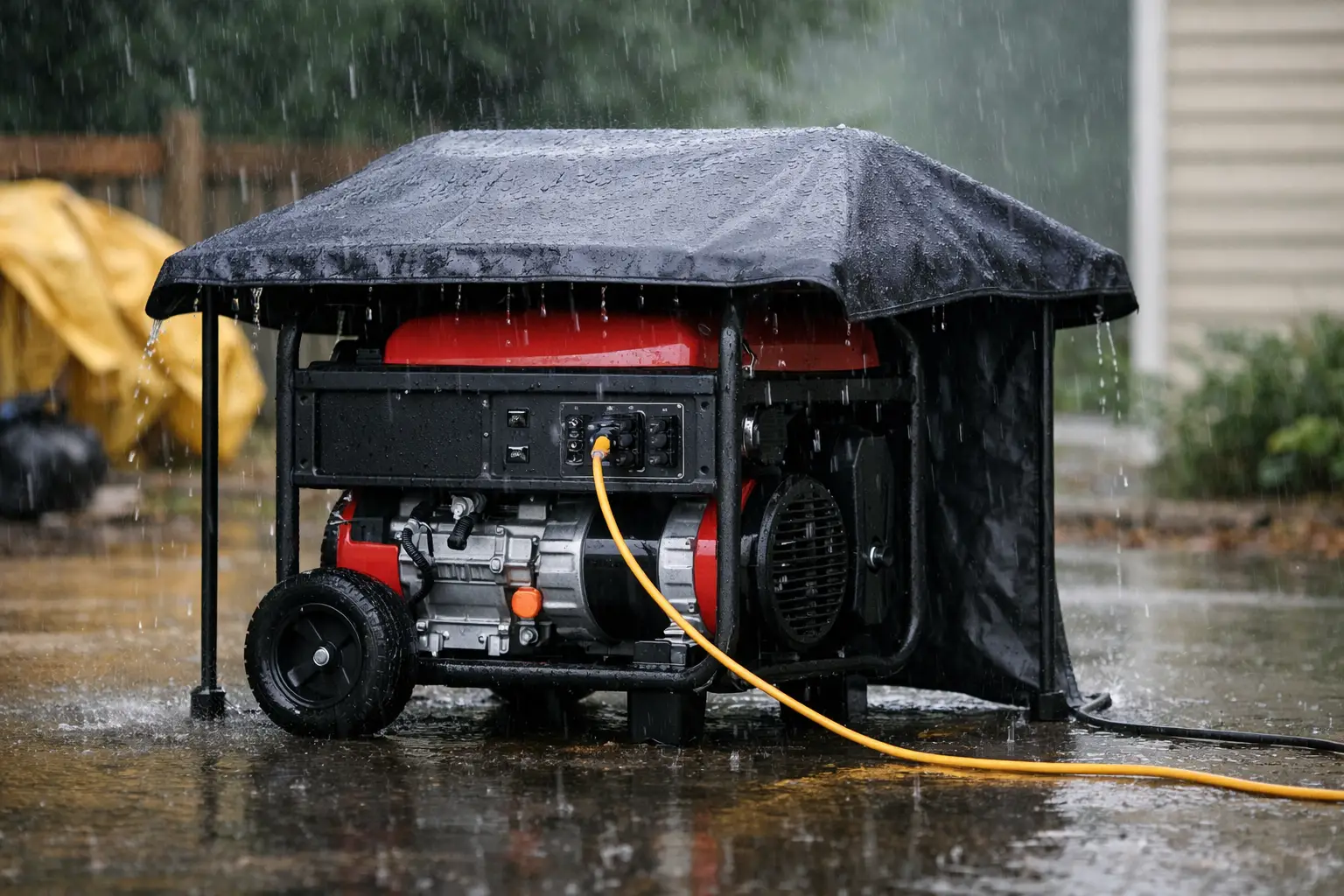
Never operate a gasoline, propane, or natural-gas portable generator inside a house, garage, enclosed porch, RV, or other enclosed area.
Carbon monoxide is colorless and odorless, and generator exhaust can become dangerous very quickly.
The generator should be operated outdoors in a properly ventilated location away from doors, windows, and other building openings. Follow the minimum clearances specified by the generator manufacturer and local regulations.
Do not connect a portable generator directly to a home’s electrical panel using an improvised cable. A properly installed transfer switch or approved interlock system is required for the applicable installation.
Also remember that a 50 amp plug does not mean you can safely exceed the generator’s rated wattage.
Generator Maintenance for 2026
A high-output inverter generator can last for years when it is maintained according to the manufacturer’s schedule.
Rather than using one universal maintenance interval for every model, follow the service schedule in the owner’s manual.
Important maintenance tasks generally include:
- Checking engine oil before operation
- Changing oil at the interval specified by the manufacturer
- Inspecting and cleaning the air filter
- Checking the spark plug
- Inspecting fuel lines and connections
- Using fresh fuel
- Treating gasoline appropriately when storing the generator
- Inspecting propane hoses and fittings
- Checking wheels, handles, and fasteners
- Testing the generator periodically
- Inspecting the CO safety system
- Storing the generator in a dry, appropriate location
Fuel storage deserves particular attention. Gasoline can degrade during extended storage, so follow the manufacturer’s recommendations for fuel stabilizer and storage procedures.
Final Thoughts
The best 50 amp inverter generator for 2026 depends on what you actually need to power.
The Westinghouse iGen11000DFc offers a combination of high output, dual-fuel operation, inverter technology, remote starting, and a 120/240V 14-50R connection. Westinghouse rates it at 9,000 running watts on gasoline and 8,100 watts on propane.
The AIVOLT 11250W is another high-output dual-fuel option with a 120/240V 50A outlet and 9,000 running watts on gasoline.
The GENMAX GM10500XiT is particularly notable if fuel flexibility is important because it supports gasoline, propane, and natural gas while providing a 120/240V 14-50R connection.
The Champion 8500W offers a lower-output alternative with dual-fuel operation, electric start, CO Shield, and a 14-50 receptacle, although buyers should verify the exact voltage configuration required for their application.
Finally, the WEN DF680iX makes more sense for buyers who need a smaller dual-fuel inverter generator rather than a true high-capacity 50 amp setup. Its 30 amp configuration and lower output put it in a different category from the larger models.
Before buying, focus on the specifications that actually determine whether the generator will work for your setup: running watts, starting watts, 120/240V capability, receptacle type, fuel type, noise, weight, CO protection, and the electrical requirements of your RV or home.
A 50 amp label alone is not enough. The generator has to provide the right combination of voltage, amperage, and total wattage for the equipment you intend to operate.
Frequently Asked Questions
What is the best wattage for a 50 amp RV generator?
A 50 amp RV can theoretically use up to 12,000 watts with full 120/240V 50 amp service, but the generator does not necessarily need to provide 12,000 watts. Many RV owners use generators in the 7,000- to 12,000-watt class depending on air-conditioning loads, appliances, and startup requirements.
Can a 50 amp generator run two RV air conditioners?
It can, provided the generator has enough running and starting capacity. Two large rooftop air conditioners can consume several thousand watts, and compressor startup can temporarily require substantially more. Check the actual wattage and startup requirements of your specific air conditioners.
Is a 50 amp inverter generator better than a conventional generator?
Inverter generators generally offer electronically regulated output, and many produce low-THD electricity. They can also operate more quietly and efficiently at lighter loads. However, conventional generators can still be useful when high output and lower purchase cost are more important than noise or inverter technology.
Can I use a 50 amp generator for home backup?
Yes, some portable generators can be used for home backup when their electrical output and connection are compatible with the home’s system. A proper transfer switch or approved interlock and generator inlet are required for the applicable installation.
Does a 50 amp outlet mean the generator produces 12,000 watts?
No. A 14-50 receptacle can be rated for 50 amps, but the generator’s total rated output may be considerably lower than 12,000 watts. Always use the generator’s running-watt and voltage specifications to determine its actual capacity.
Is propane better than gasoline for a generator?
Neither fuel is universally better. Gasoline often provides higher output, while propane can be convenient for storage and long-term emergency preparedness. Dual-fuel generators give you the ability to use either depending on the situation.
Are inverter generators safe for sensitive electronics?
Many inverter generators are designed to produce stable, low-THD electricity suitable for electronics. However, always check the generator’s specifications and the requirements of the equipment being powered.
Can I charge an electric vehicle with a 50 amp inverter generator?
Some generators can provide power suitable for EV charging, but the charging rate and electrical configuration vary significantly. A generator should never be overloaded simply to achieve a faster charging rate. Check both the generator and EV charger’s electrical requirements before connecting them.
Updated 2026 Takeaway
A high-output inverter generator is not automatically the right generator just because it has a 50 amp receptacle. For a large RV or home backup application, the more useful comparison is the complete electrical package: true 120/240V capability, available running watts, starting watts, fuel flexibility, outlet configuration, safety features, and the way the generator will be connected to the load.
That approach makes it much easier to choose a generator that actually matches your power requirements rather than simply buying the largest number on the specification sheet.