As an Amazon Associate I earn from qualifying purchases.
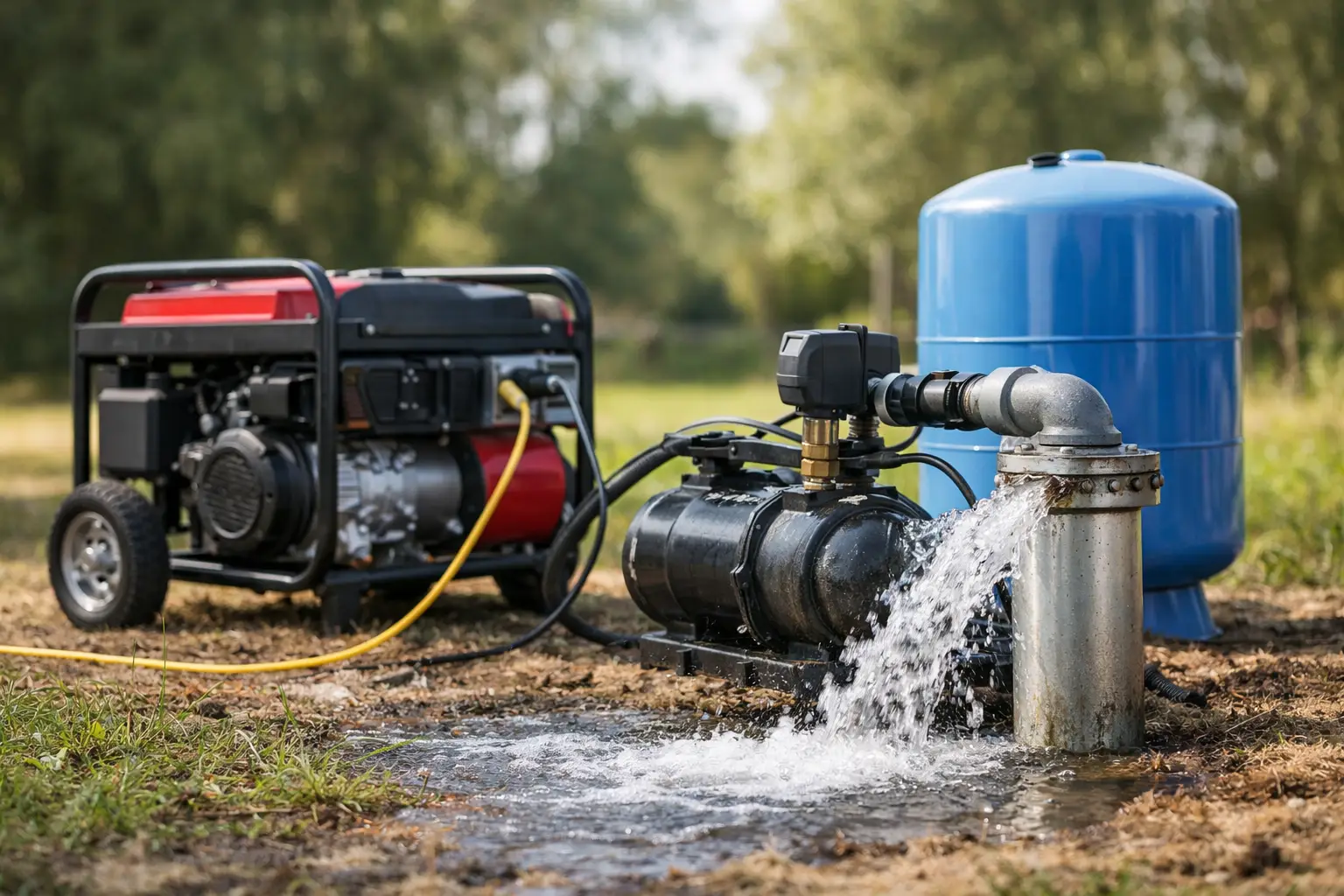
A well pump is one of the easiest loads to underestimate during a power outage. It may run quietly most of the time, but the startup surge can overwhelm a generator that looked adequate on paper. If you are trying to find the best generator for well pump backup, the right answer starts with your pump’s starting watts, voltage, and whether you need to run anything else at the same time.
That matters because a generator that powers a few lights and a refrigerator may still fail to start a
1 HP well pump. The goal is not just to keep the pump running once it is on. The goal is to give it enough surge power to start reliably, especially in cold weather or when the system cycles under load.
How to choose the best generator for well pump needs
Most homeowners should start with the pump itself, not the generator. Check the well pump label or control box for horsepower, voltage, and amperage. Many residential well
pumps are 120V or 240V and fall in the 1/2 HP to 1 HP range, though deeper wells and larger homes may use bigger systems.
Here is the catch: running watts and starting watts are not the same thing. A 1/2 HP pump may only need modest power once it is operating, but startup can briefly require two to four times as much. That is why a generator with a healthy surge rating is usually more important than one with a barely adequate continuous rating.
If you do not know the exact startup requirement, use conservative estimates. A 1/2 HP well pump often needs around 1,000 to 2,000 running watts and significantly more to start. A 3/4 HP or 1 HP pump can push startup needs much higher. If the generator will also support a pressure tank control, freezer, furnace blower, or a few kitchen circuits, add those loads before you decide.
Portable or standby generator?
For many buyers, the decision comes down to budget, convenience, and how often outages happen.
A portable generator is the most common choice for well pump backup. It costs less upfront, gives you flexibility, and works well if outages are occasional. Models in the 5,000 to 8,500 running watt class are often the sweet spot for homeowners with a typical well pump and a few essential circuits. Units like the Westinghouse WGen7500, DuroMax XP8500EH, and Champion 7500-Watt class generators are popular because they usually provide 240V output and enough surge capacity for many residential pump setups.
A
standby generator makes more sense if your well is your only water source, outages are frequent, or you want the system to come on automatically. Brands like Generac and Kohler offer home standby units that can cover the well pump plus major household loads without extension cords or manual startup. The trade-off is cost. Installation, transfer equipment, and fuel setup raise the price quickly.
For most readers comparing products online, a portable generator paired with a proper transfer switch or interlock kit is the practical middle ground.
The generator features that matter most
When comparing models, wattage is only the first filter. Voltage matters just as much. Many well pumps require 240V, so a generator with only 120V outlets is a nonstarter, no matter how high the wattage looks.
Surge capacity is the next priority. Manufacturers may list running watts and starting watts, and for a pump application, that starting number deserves extra attention. If you are close to the limit, the generator may trip, bog down, or struggle every time the pump cycles.
Fuel type affects ownership more than many buyers expect. Gasoline portable generators are widely available and usually cheaper, but fuel storage is less convenient for long outages.
Dual fuel models offer a useful advantage because propane stores longer and burns cleaner. If you are buying for emergency readiness, a dual fuel generator is often worth the extra money.
Electric start is not essential, but it is very helpful during storms, freezing temperatures, or nighttime outages. Low oil shutdown is also worth having. It protects the engine and reduces the chance of damage during long runs.
Noise is another trade-off. Open-frame generators often deliver more power for the money, but they are louder. If your main job is starting a well pump during emergencies, that may be acceptable. If you also want something for occasional home backup or RV use, an inverter generator with 240V output can be attractive, though those models are usually more expensive per watt.
Best generator sizes for common well pump scenarios
There is no single best generator for well pump backup because well systems vary. Still, a few size ranges make sense for typical homes.
If you have a small 1/2 HP pump and only need water service plus a handful of lights, a generator in the 4,000 to 6,000 running watt range may be enough, provided it offers strong starting watts and 240V output if required by the pump.
For a 3/4 HP or 1 HP pump, many homeowners land in the 6,500 to 8,500 running watt range. This is often the safest all-around category because it gives you headroom for startup surge and lets you run a refrigerator or furnace blower without constantly managing every circuit.
If you want to power the well pump along with broader whole-house essentials, especially central heating components, sump pump, kitchen loads, and lighting, moving into the 9,000-watt-plus portable range or a standby system is often the better fit.
Sizing up slightly is usually smarter than sizing too close. An oversized generator is not always ideal, but an undersized one is frustrating and can be hard on both the generator and the pump controls.
Product types that fit well pump backup best
A conventional portable generator remains the best value for most pump applications. Models from DuroMax, Westinghouse, Champion, and Pulsar regularly show up in this category because they offer 240V outlets, decent surge power, and manageable pricing.
Dual fuel portable generators are especially attractive for preparedness-minded homeowners. A model like the DuroMax XP12000EH or similar large-frame units can give you room to start a well pump and support other necessities, while propane storage simplifies outage planning.
240V inverter generators are a newer option worth considering if quiet operation and cleaner power matter. They are often better suited to mixed loads that include electronics, but they tend to cost more and may not match the surge value of a traditional open-frame unit at the same price point. For a pump-first buying decision, conventional generators still win on pure value in many cases.
Installation and safety matter as much as the generator
A generator can have perfect specs and still be the wrong setup if the connection plan is poor. Running a well pump safely usually means using a transfer switch or an interlock kit installed to code. Backfeeding through a dryer outlet is dangerous and should not be part of any serious backup plan.
You also need to confirm the generator outlet and inlet compatibility. Many well pump backup setups use a 240V twist-lock connection, but not every generator includes the same receptacle style. Buyers often catch the wattage details and miss the plug configuration until installation day.
Grounding and neutral bonding can also matter depending on your transfer setup. This is one reason homeowners benefit from checking the generator manual and their transfer equipment requirements before buying. A generator that works great on a jobsite may need a different setup in a residential backup application.
Common mistakes buyers make
The most common mistake is buying based on running watts alone. Pumps are startup-heavy loads, and if the generator cannot handle that surge, the rest of the spec sheet does not help.
The second mistake is ignoring voltage. A lot of confusion starts when a buyer chooses a high-output 120V generator for a 240V pump. Plenty of portable units are marketed for home backup, but not all of them are suitable for a well system.
The third mistake is planning too tightly. If your well pump is the main target, but you know you will also want refrigeration, battery charging, or heat circulation, leave margin. Real outages rarely go exactly by the worksheet.
So what is the best generator for well pump backup?
For most homeowners, the best choice is a 240V portable generator with enough starting watts to comfortably handle the pump and enough running watts to support a few essentials. In practical terms, that usually means a quality generator in the 6,500 to 8,500 running watt range, with dual fuel and electric start as strong bonus features.
If your well pump is larger, your home depends heavily on electric heating equipment, or outages are frequent enough that manual setup becomes a burden, stepping up to a larger portable unit or a standby generator is the better long-term move.
The right purchase is less about buying the biggest machine and more about matching the generator to the way your water system actually works. Get the pump specs first, leave room for startup surge, and think through how you will connect and fuel the unit before the lights go out. That extra planning is what turns backup power from a guess into real peace of mind.