As an Amazon Associate I earn from qualifying purchases.
A second portable generator can be a smarter upgrade than replacing a dependable unit you already own. But learning
how to parallel two generators is not as simple as plugging two machines into the same outlet. The generators must be designed to synchronize with each other, the connection needs the proper equipment, and the added wattage still has limits. Done correctly, paralleling gives homeowners, RV users, and campers more usable power without committing to one larger, heavier generator.
What paralleling generators actually does
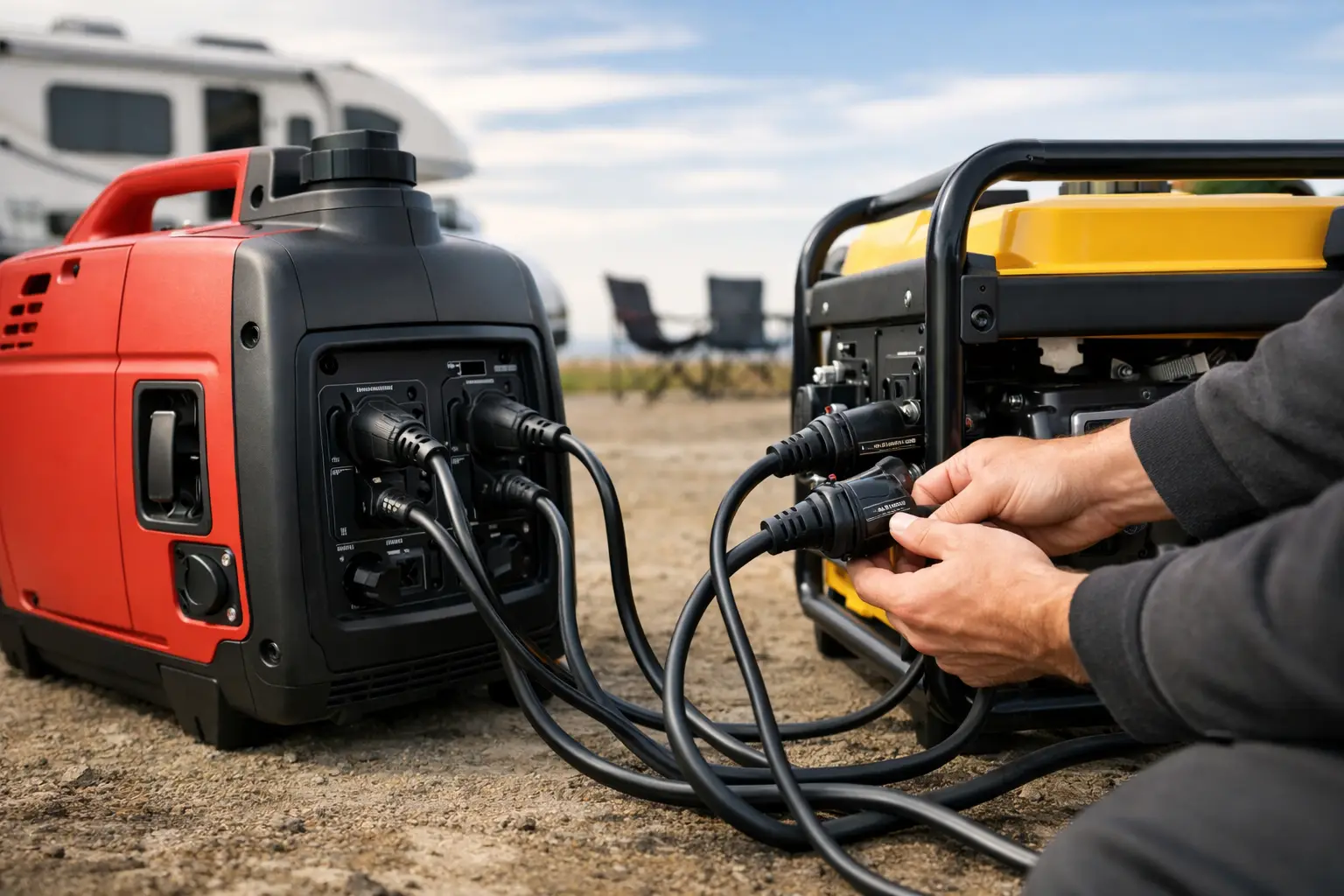
Paralleling connects two compatible inverter generators so they share an electrical load and feed it through a single parallel outlet or distribution panel. Instead of one generator carrying all demand, both units contribute power. Two 2,000-watt inverter generators, for example, may provide roughly 3,200 to 3,600 running watts together, depending on their rated output.
This is different from running two generators separately. If one generator powers a refrigerator and another powers lights, they are independent systems. Parallel operation combines their output for one larger load, such as an RV air conditioner plus kitchen appliances, or essential household circuits through a properly installed
transfer switch.
The practical advantage is flexibility. One small inverter generator may be enough for a quiet camping weekend or a refrigerator during a brief outage. When demand increases, bring out the second unit and connect them in parallel. You can also split run time and maintenance hours between two machines.
Can any two generators be paralleled?
No. This is the most important rule. Only parallel-ready inverter generators should be connected in parallel, and ideally they should be the same model. Manufacturers design their inverter electronics to communicate, match voltage and frequency, and share the load through designated parallel ports.
A pair such as two Honda EU2200i generators, two Champion 2000-watt class inverter generators, or two compatible Westinghouse iGen inverter models can often be paralleled with the manufacturer-approved cable or a model-specific equivalent. Check the owner’s manual for the exact compatible model numbers. Similar wattage ratings alone do not establish compatibility.
Do not attempt to parallel conventional open-frame generators by tying receptacles together, using a homemade adapter, or connecting outputs to a common power strip. If their electrical waveforms are not synchronized precisely, the result can be equipment damage, generator failure, shock hazards, or fire. Conventional generators require specialized synchronizing gear and professional-grade switchgear when used in parallel. That is a job for qualified electrical professionals, not a consumer portable-generator setup.
Before you connect: confirm power and compatibility
Start by checking the data plate or manual on both generators. Confirm that each is an inverter generator with parallel capability and that the manufacturer lists the other unit as compatible. The safest setup is two identical generators of the same model and generation.
Next, calculate the load you expect to run. Add the running watts for appliances that will operate at the same time, then account for starting watts from motors in refrigerators, sump pumps, air conditioners, and power tools. A generator pair might have enough running capacity for a 1,500-watt space heater and a refrigerator, but the refrigerator’s startup surge can still push the system beyond its limit if other loads are already near maximum.
Voltage matters as much as wattage. Many compact inverter generators provide 120-volt output only. Paralleling two 120-volt units generally increases available amperage at 120 volts; it does not create 240-volt power. If your well pump, central air conditioner, electric range, or transfer switch requires 240 volts, choose a generator system specifically designed to provide
120/240-volt output.
Also inspect the parallel kit. Some kits provide a 30-amp RV-style outlet, while others include a higher-capacity 30-amp or 50-amp receptacle for supported generator pairs. The outlet on the kit determines how you connect the load. It does not automatically mean every attached appliance can receive unlimited power.
How to parallel two generators safely
1. Place both generators outdoors
Set the generators on level ground outdoors, at least 20 feet from doors, windows, vents, and occupied spaces. Point exhaust away from the home, RV, tent, or work area.
Carbon monoxide is odorless and can become deadly quickly, so never operate either generator in a garage, shed, enclosed porch, or under a structure that restricts exhaust flow.
Keep the units dry and protected from direct rain with a purpose-built generator canopy or cover designed for operation. Do not drape a tarp over running generators. It can trap heat and interfere with ventilation.
2. Check fuel, oil, and operating condition
Fill both generators with the correct fuel and check engine oil before starting. If one unit has been stored for months, inspect its air filter, spark plug condition, and fuel quality first. A parallel system is only as dependable as its weaker generator.
Turn off Eco Mode or Economy Mode initially if the manufacturer recommends it for parallel startup or heavy loads. Many modern inverter generators can use eco-throttle while paralleled, but following the specific manual takes priority.
3. Start the generators with no load connected
Disconnect appliances from the parallel outlet and make sure each generator’s circuit breaker is in the recommended position. Start the first generator and allow it to stabilize for a minute. Then start the second generator and let it warm up as well.
Starting with no major load helps the inverter electronics establish stable operation before you ask the pair to carry appliances. It also makes unusual noises, warning lights, or fault indicators easier to notice.
4. Connect the approved parallel cable
Use the manufacturer’s parallel cable or an approved kit made specifically for your generator model. With both generators running and no load attached, connect the cable leads to the designated parallel ports. Follow the order stated in your manual because connector design and safety procedures vary by brand.
Never use damaged cables, loose adapters, or improvised wiring. The parallel ports are not ordinary household outlets, and a standard extension cord is not a substitute for a parallel kit.
5. Connect your load to the parallel kit outlet
Once the kit is connected, plug your RV cord, heavy-duty extension cord, or generator inlet cable into the outlet on the parallel kit. For a home backup setup, connect only through a listed transfer switch, interlock system, or power inlet installed for generator use.
Never plug a generator into a wall outlet to energize household circuits. This dangerous practice, often called backfeeding, can send power onto utility lines and endanger utility workers, neighbors, and your equipment.
6. Add loads gradually and monitor the system
Turn on large appliances one at a time. Listen for strain, watch for overload lights, and pay attention to circuit breakers. If either generator overloads, reduce the load immediately, shut down and investigate if needed, and reset only according to the manual.
A watt meter can be useful for understanding real demand, particularly in an RV or during a home outage. It is far better to discover that a microwave, coffee maker, and portable heater overload your setup under controlled conditions than during a storm.
Important limitations when using two generators
Paralleling increases available output, but it does not make two small generators equivalent to a large standby system. Fuel consumption rises under heavier loads, and two engines mean two oil-change schedules, two air filters, and twice the pre-season inspection work.
Noise is another trade-off. Inverter generators are generally quieter than conventional models, especially at light loads, but two operating units will be more noticeable than one. For campground use, confirm local quiet-hour rules and keep the generators positioned where exhaust and sound will not affect nearby campers.
Load sharing is managed by the inverter system, but it is still wise to use matched generators. Mixing compatible but different-capacity models may be allowed by some manufacturers, yet it can complicate output expectations. The smaller unit may limit the combined system or work harder under demand. For most buyers, two identical units and the factory-rated parallel kit provide the clearest, least complicated path.
When a parallel setup makes sense
A parallel pair is especially useful when portability matters. Two 45-pound inverter generators are easier for many people to move than one 100-pound-plus unit. You can take one unit tailgating or camping and reserve the second for RV air conditioning, jobsite tools, or extended outage coverage.
It may be less suitable if you routinely need 240-volt power, run high-demand equipment every day, or want automatic backup during an outage. In those cases, a larger 120/240-volt portable generator or a permanently installed standby generator may be the more practical investment.
Before relying on a paired setup for an emergency, test it on a normal day with the appliances you plan to use. Label your cords, keep the parallel cable with the generators, and store enough stabilized fuel for realistic run times. That small amount of preparation is what turns extra generator capacity into power you can depend on when it matters.