As an Amazon Associate I earn from qualifying purchases.
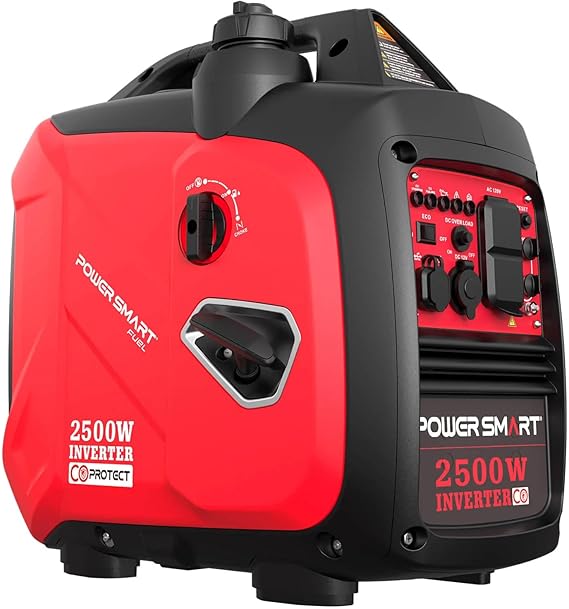
Finding reliable portable power does not always mean spending hundreds or even thousands of dollars. For camping, tailgating, outdoor activities, emergency kits, and short-term backup power, a small portable generator or battery power station can handle many everyday jobs without the cost and bulk of a large backup generator.
The important part is choosing the right type of power.
A gas-powered portable generator can provide continuous electricity as long as you have fuel, making it useful for longer outdoor use and higher loads. A portable power station, on the other hand, uses a rechargeable battery, operates quietly, produces no exhaust while running, and is particularly convenient for electronics, lighting, phones, laptops, cameras, and other smaller loads.
Below, we’ve kept the focus on low-cost portable power options, including compact gas generators and small battery power stations. We’ve also included the specifications and buying considerations that matter most when you’re trying to get useful power without overspending.
Budget Portable Generators and Power Stations for 2026
| Model | Type | Power / Capacity | Best For | Link |
|---|---|---|---|---|
| PowerSmart Gas Powered Portable 1200W | Gas generator | 1200W peak / 900W rated | Basic camping and emergency power | Amazon Link |
| PowerSmart 1200W PS50 | Gas generator | 1200W peak / 900W rated | Camping and small outdoor loads | Amazon Link |
| MARBERO Portable Power Station 88Wh | Battery power station | 88.8Wh / 80W continuous | Phones, lights and small electronics | Amazon Link |
| bailibatt Portable Power Station 300W | Battery power station | Up to 300W output | Electronics and light-duty backup | Amazon Link |
| GRECELL Portable Power Station 300W | Battery power station | Around 230Wh class / 300W output | Camping and portable electronics | Amazon Link |
Important: Specifications and availability can change between product versions and Amazon listings. Always check the current product page before purchasing.
1. PowerSmart Gas Powered Portable Generator 1200W
Check Amazon Price Click Here!
If you want a traditional gas-powered portable generator at a low entry price, this PowerSmart 1200W model is designed around portability and basic power needs.
It produces up to 1,200 watts of peak power and 900 watts of rated power, putting it firmly in the small-generator category. That makes it better suited to lights, chargers, small appliances and basic outdoor equipment than high-demand appliances.
Because this is a fuel-powered generator, it also requires the considerations that come with any gasoline engine: fuel storage, engine maintenance, ventilation, noise and safe outdoor placement.
Key Features
- Fuel: Gasoline
- Peak output: 1,200 watts
- Rated output: 900 watts
- Engine: 2-stroke
- Best for: Camping, tailgating, basic emergency power and outdoor use
- Starting: Recoil
- Design: Compact and portable
What I Like
The biggest advantage is simplicity. If you need more sustained power than a tiny battery pack can provide and don’t want to spend a lot on a larger inverter generator, a small gas generator can make sense.
It is also a better fit for situations where you expect to need power for several hours and have access to gasoline.
What to Consider
The 900-watt rated output limits what you can run at the same time. Large refrigerators, air conditioners, heaters, microwaves and power tools can exceed its capabilities, particularly when starting.
The 2-stroke engine also means this is not as maintenance-free as a battery power station.
For camping, remember that a fuel-powered generator must be operated outdoors and safely away from tents, campers, buildings, windows and vents.
Best for: Buyers who want inexpensive gasoline-powered backup power for relatively small loads.
2. PowerSmart 1200-Watt Portable Generator PS50
Check Amazon Price Click Here!
The PowerSmart PS50 is another compact 1200-watt-class gasoline generator aimed at buyers who want a relatively inexpensive source of portable electricity.
With approximately 1,200 watts of peak output and 900 watts of rated output, it occupies the same basic power category as the previous PowerSmart model.
That makes it more appropriate for camping, tailgating, lights, charging devices and small appliances than for whole-home emergency backup.
Key Features
- Fuel: Gasoline
- Peak output: 1,200 watts
- Rated output: 900 watts
- Engine: Two-cycle
- Best for: Camping, outdoor activities and basic backup
- Starting: Recoil
- Design: Lightweight portable format
Why Consider a Small Gas Generator?
One advantage of gasoline power is that the battery doesn’t determine your total runtime. Once the generator needs fuel, you can refuel it and continue operating, assuming safe operating conditions and sufficient fuel.
That’s different from a battery power station, which eventually has to be recharged.
The trade-off is that a gas generator produces exhaust and engine noise and requires more attention during operation.
Best Use Cases
The PS50 makes the most sense for someone who needs a small generator for camping or basic emergency loads and values fuel-based runtime more than silent operation.
It should not be confused with larger RV generators or home backup generators. Its approximately 900-watt rated output places it in the compact-generator category.
Best for: Simple, low-cost gasoline power when portability matters more than high output.
3. MARBERO Portable Power Station 88Wh
Check Amazon Price Click Here!
If your idea of portable power is primarily charging electronics rather than running appliances, the MARBERO 88Wh Portable Power Station is a completely different type of product from the PowerSmart generators.
The MARBERO M82 is an approximately 88.8Wh battery power station with an advertised 80W continuous AC output and 120W peak output. MARBERO also lists multiple USB, DC and AC outputs, along with AC and optional solar charging.
That makes it particularly useful for lightweight camping and travel.
Key Features
- Battery capacity: 88.8Wh
- Continuous AC output: Up to 80W
- Peak output: Up to 120W
- Charging: AC adapter and compatible solar panel
- Outputs: AC, USB, USB-C and DC
- Best for: Phones, tablets, lights, cameras and other small electronics
- Portable design: Approximately 3-pound class
What Can You Run?
A small power station like this is designed for low-wattage electronics.
Good examples include:
- Smartphones
- Tablets
- LED lights
- Cameras
- GPS devices
- Small fans
- Other low-power USB devices
It is not intended to replace a 1,000W-plus generator.
One of its biggest advantages is that there is no gasoline engine running beside your campsite. You don’t have fuel fumes, engine vibration or conventional generator noise.
Solar Charging
MARBERO lists solar charging as an option, but the solar panel is sold separately.
That can be useful for longer trips where access to an electrical outlet is limited.
Keep in mind that solar charging time depends heavily on panel wattage, sunlight, temperature, charging efficiency and the battery’s state of charge.
Best for: Backpacking, day trips, emergency electronics and campers who need lightweight battery power rather than appliance-level output.
4. bailibatt Portable Power Station 300W
Check Amazon Price Click Here!
The bailibatt 300W Portable Power Station moves up into a more capable battery-power category than the MARBERO 88Wh unit.
With up to 300 watts of rated output, it is designed for a broader range of low-power electronics and small devices.
This type of power station can be especially useful for camping because it produces no tailpipe emissions while operating and can be used quietly around your campsite.
Key Features
- Maximum output: Up to 300W
- Battery: Rechargeable lithium battery
- Outputs: AC, USB and DC connections
- Design: Compact portable format
- Best for: Camping, travel, electronics and emergency charging
What Makes a 300W Power Station Useful?
The difference between a very small power bank and a 300W-class power station becomes noticeable when you need to operate equipment rather than simply charge a phone.
Depending on the device’s actual power draw, you may be able to run:
- Laptops
- Cameras
- Small fans
- LED lighting
- Small electronics
- CPAP equipment within the unit’s output and runtime limits
However, always check the actual wattage requirements of a medical device before relying on a portable power station for overnight operation.
Don’t Confuse Watts With Watt-Hours
This is one of the most common mistakes when shopping for portable power.
Watts (W) describe how much power the unit can deliver at a given time.
Watt-hours (Wh) describe energy storage.
For example, a 300W power station can have considerably different runtime depending on whether its battery stores 200Wh, 300Wh, 500Wh or more.
That’s why output alone isn’t enough when comparing portable power stations.
Best for: Campers and travelers who want quiet battery power for several types of small electronics.
5. GRECELL 300W Portable Power Station
Check Amazon Price Click Here!
The GRECELL 300W Portable Power Station is another compact battery option for camping, travel and emergency electronics.
GRECELL’s current 300W product information lists a compact power station with approximately 230.8Wh of capacity and 330W output, along with AC, USB-A, USB-C and DC connections. The manufacturer also lists multiple recharge options, including AC, solar and vehicle charging.
Because product versions can change, check the exact specifications on the Amazon listing before ordering.
Key Features
- Output class: 300W
- Battery capacity: Approximately 230Wh class for the current model
- USB-C: Up to 60W PD on the listed configuration
- AC outlets: Multiple AC outputs depending on version
- Charging: AC, solar and vehicle charging
- Best for: Camping, travel, cameras, laptops and small electronics
Why It Stands Out
The main appeal of the GRECELL is the combination of compact battery storage, multiple ports and 300W-class AC output.
The USB-C PD port is particularly convenient if much of your camping equipment charges through USB-C.
It’s also much quieter than a conventional gas generator because there is no gasoline engine operating while the battery is supplying power.
What It Can’t Do
A 300W-class power station is still a small power station.
Don’t expect it to operate a microwave, electric heater, large coffee maker, air conditioner or other high-wattage appliance.
It is better viewed as a portable electronics and small-device power source.
Best for: Campers who want a compact rechargeable power station with multiple charging options and useful USB-C capability.
Gas Generator vs. Portable Power Station: Which Type Do You Need?
The most important decision isn’t necessarily which model you buy. It’s whether you need a fuel-powered generator or a battery power station.
| Feature | Gas Generator | Battery Power Station |
|---|---|---|
| Fuel | Gasoline | Rechargeable battery |
| Exhaust | Yes | No exhaust while operating |
| Engine noise | Yes | Very quiet |
| Runtime | Can continue with fuel | Limited by battery capacity |
| Recharge | Refuel | AC, car or solar depending on model |
| Maintenance | Engine maintenance required | Much less maintenance |
| Best for | Longer runtime and higher loads | Electronics and quiet camping |
| Weight | Often heavier | Usually easier to carry at small sizes |
| Indoor use | Never | Different from fuel generators, but always follow manufacturer instructions |
For camping, a battery power station is often convenient when your main needs are phones, lights, laptops, cameras and other electronics.
A gas generator becomes more useful when you need longer operating time or more power than a small battery unit can provide.
How to Choose a Low-Cost Portable Generator in 2026
1. Start With the Devices You Need to Power
Don’t start by shopping for a specific wattage. Start with the equipment.
Write down everything you expect to use:
- Phone chargers
- Lights
- Laptop
- Fan
- TV
- Refrigerator
- CPAP
- Coffee maker
- Microwave
- RV air conditioner
- Power tools
Then determine the running wattage of each device.
For equipment with motors or compressors, also consider startup or surge power.
A refrigerator, for example, may require substantially more power when its compressor starts than it uses once it is running.
2. Understand Running Watts vs. Peak Watts
This is especially important with inexpensive gas generators.
Rated or running watts are the power the generator can continuously provide.
Peak or surge watts are the higher output available for short periods when equipment starts.
Don’t choose a generator based only on the larger peak number printed on the box.
For example, a generator advertised as 1,200W peak and 900W rated should generally be treated as a 900W continuous-output generator, not a 1,200W continuous generator.
3. For Battery Stations, Check Watt-Hours
If you’re buying a portable power station, look for the Wh rating.
A simple way to think about it is:
Estimated runtime ≈ battery capacity (Wh) ÷ device power (W)
Real-world runtime will be lower because of inverter losses and other efficiency factors.
For example, a 200Wh-class battery does not necessarily provide exactly 2 hours at a 100W load.
The actual result depends on the unit’s efficiency, battery condition, temperature and operating conditions.
4. Consider Weight
Portability matters more than many buyers expect.
A small power station weighing a few pounds can easily be carried to a picnic table or tent site.
A gasoline generator can be substantially heavier once you move into higher-output models.
If you plan to carry the unit long distances, weight should be one of your primary selection criteria.
5. Check Noise Before Camping
Noise can make or break the camping experience.
Gasoline generators produce engine noise even when you’re only running a small load.
Battery power stations are substantially quieter during normal operation, although their cooling fans may still activate under load.
Also remember that campground rules vary. Quiet hours and generator restrictions can be stricter than the generator’s advertised noise rating.
6. Look at Charging Options
For a battery power station, check whether it supports:
- AC wall charging
- Car charging
- Solar charging
- USB-C charging, where applicable
Solar charging can be useful for longer trips, but don’t assume a small solar panel will rapidly recharge a depleted battery.
Solar output changes throughout the day with weather, shade, panel orientation and other conditions.
7. Don’t Ignore Safety Features
For gas generators, look for features such as carbon monoxide shutoff systems, overload protection and appropriate electrical safety features.
CPSC recommends looking for portable generators with a carbon monoxide shutoff safety feature.
For battery power stations, look for reputable safety protections against conditions such as overcharging, overheating, short circuits and overloads.
Portable Generator Safety: What You Need to Know
Safety is more important than saving a few dollars.
Gas-powered portable generators produce carbon monoxide (CO), an odorless and colorless gas that can become deadly quickly.
The CDC recommends operating portable generators outdoors and more than 20 feet away from windows, doors and vents. Never operate one inside a home, garage or other enclosed area.
CPSC similarly recommends keeping portable generators outside and at least 20 feet from homes, with the exhaust directed away from windows, doors and vents.
Follow These Basic Rules
- Never run a gasoline generator inside a home.
- Never use one in a garage, even with the garage door open.
- Keep the generator at least 20 feet from the house and other occupied buildings.
- Point exhaust away from doors, windows and vents.
- Keep the generator dry and follow the manufacturer’s instructions for wet-weather operation.
- Use a working carbon monoxide alarm in the home.
- Let the generator cool before refueling.
- Store gasoline safely and according to local requirements.
- Read the owner’s manual before operating the generator.
A small generator is still an engine producing combustion gases. Its compact size does not make it safe to use indoors.
Can a Cheap Portable Generator Run a Refrigerator?
Sometimes, but you need to look beyond the refrigerator’s normal running wattage.
A refrigerator compressor can require additional power when it starts. This means a generator that appears adequate based only on the refrigerator’s running consumption may still overload when the compressor starts.
A small 900W-rated generator should not automatically be considered suitable for every refrigerator.
If refrigerator backup is an important goal, check the appliance’s specifications and compare both its running and startup requirements with the generator’s rated and surge output.
For battery power stations, you also need enough Wh capacity to keep the refrigerator running for the desired period.
Can You Use a Portable Generator for Camping?
Yes, but the type of generator matters.
A small gas generator can be useful for car camping, tailgating and other outdoor situations where you need continuous fuel-powered electricity.
However, campground rules vary, and many locations have specific generator hours or noise restrictions.
A battery power station is often easier for quiet camping because it does not produce combustion exhaust while operating.
For either option, make sure the equipment is appropriate for the environment and follow campground rules.
Are Portable Power Stations Better Than Gas Generators?
Neither technology is automatically better for every situation.
A portable power station makes sense when you prioritize quiet operation, portability, simple charging and electronics.
A gas generator makes more sense when you need longer operation without waiting for a battery to recharge or need more output than a small power station can provide.
Your choice should depend on the equipment you need to operate and how long you expect to use it.
How Much Power Do You Need for Camping?
Your ideal power level depends on your camping style.
Lightweight camping
If you mainly need:
- Phones
- Cameras
- GPS
- LED lights
- Small USB devices
An 88Wh to 300Wh-class power station may be enough.
Car camping
If you want to add:
- Laptop
- Larger lighting setup
- Small fan
- Small electronics
- Longer charging sessions
A larger power station can provide more useful runtime.
RV camping
If you’re trying to operate:
- Refrigerator
- Microwave
- Coffee maker
- Air conditioner
- Other high-draw appliances
You may need substantially more output than the low-cost models covered here.
At that point, a larger inverter generator or larger portable power station may be more appropriate.
Frequently Asked Questions
What is the cheapest type of portable power?
Small battery power stations are often the least complicated option for charging phones, lights and other electronics. Small gasoline generators can provide more sustained power for the money when fuel availability and runtime are important.
Is a 300W power station enough for camping?
It can be enough for basic camping electronics, including phones, lights, cameras and many laptops. Whether it is enough depends on your actual loads and how long you need to run them.
Can a 1200W generator run a refrigerator?
It depends on the refrigerator’s running and startup requirements. A 1200W-peak/900W-rated generator may be too small for some refrigerators, particularly if the compressor startup surge exceeds the generator’s available capacity.
How long will an 88Wh power station last?
Runtime depends on the device. A 20W load theoretically uses 88Wh in about 4.4 hours, but actual runtime will be shorter because of conversion losses and other factors.
Are battery power stations safe for camping?
They are designed for portable use, but you should still follow the manufacturer’s instructions, protect the unit from unsuitable weather and avoid exceeding its rated output or charging specifications.
Are gas generators safe in a tent?
No. A gasoline generator should never be operated inside a tent, camper, garage or other enclosed or partially enclosed space. Carbon monoxide can accumulate rapidly. The CDC recommends using portable generators outdoors and more than 20 feet from windows, doors and vents.
Do I need a solar panel for a portable power station?
No. Solar panels are optional for most portable power stations. You can normally recharge from an AC outlet, and many models also support vehicle charging. Solar becomes useful when you want to recharge away from the electrical grid.
What is more important: watts or watt-hours?
Both matter, but they answer different questions. Watts determine what the unit can run, while watt-hours help determine how long a battery power station can run it.
Final Thoughts on Low-Cost Portable Power in 2026
You don’t need a huge generator to have useful backup power.
The right low-cost option depends on what you’re actually trying to power.
The PowerSmart 1200W models are aimed at buyers who want a small gasoline generator and don’t need the output of a larger RV or home-backup generator.
The MARBERO 88Wh is a much smaller battery solution for lightweight electronics, lighting and emergency charging.
The bailibatt 300W and GRECELL 300W move into a more versatile battery-power category for campers who want more output without dealing with gasoline.
The biggest mistake is buying based solely on the largest wattage number in the product title. Look at rated output, surge capability, battery capacity, runtime, weight, charging options, noise and your actual equipment requirements.
For gasoline generators, safety should always come first. Follow the manufacturer’s instructions and current CDC and CPSC guidance, especially the requirement to operate fuel-powered generators outdoors and at least 20 feet away from windows, doors and vents.
Once you know how much power you really need, choosing an affordable portable generator or power station becomes much easier—and you can avoid paying for capacity you’ll never use.