As an Amazon Associate I earn from qualifying purchases.
The wrong generator choice usually shows up at the worst possible moment – when the power is out, the refrigerator is warming up, and you realize the unit you bought cannot start the well pump or central AC. If you are asking what generator runs a house, the real answer is not a single model. It depends on how much of the house you want to power, which appliances need startup wattage, and whether you want a portable backup setup or an automatic standby system.
For most homeowners, the first decision is not brand. It is scope. Do you want to keep the essentials running during an outage, or do you want the house to feel almost normal? Those are two very different power demands, and they lead to different generator categories.
What generator runs a house depends on your load
A house does not have one fixed power requirement. A small home using a refrigerator, lights, internet equipment, and a gas furnace blower may need far less power than a larger all-electric home with central air, an electric water heater, and a well pump.
That is why generator sizing starts with wattage, not square footage. Running watts tell you what an appliance uses continuously. Starting watts matter for anything with a motor or compressor, such as refrigerators, sump pumps, well pumps, and air conditioners. A generator that covers running watts but cannot handle startup surge may still trip or stall at the exact moment you need it.
As a rough guide, a portable generator in the 5,000 to 8,000 running watt range often covers essentials for many homes. That usually means refrigerator, freezer, lights, charging, television, microwave used one at a time, and possibly a furnace blower or small window AC. If you want to run a central air conditioner, electric range, dryer, or several large loads together, you are usually looking at a larger portable unit in the 10,000 to 13,000 watt class or a whole-house standby generator starting around 14kW and going much higher.
Partial-home backup vs whole-house backup
This is where many buyers either overspend or buy too little.
Partial-home backup is the practical choice for a lot of households. Instead of trying to power everything, you choose critical circuits. That might include the refrigerator, kitchen outlets, a few lighting circuits, garage door opener, internet gear, furnace, sump pump, and bedroom outlets. A properly sized portable generator connected through a transfer switch or interlock can handle this very well.
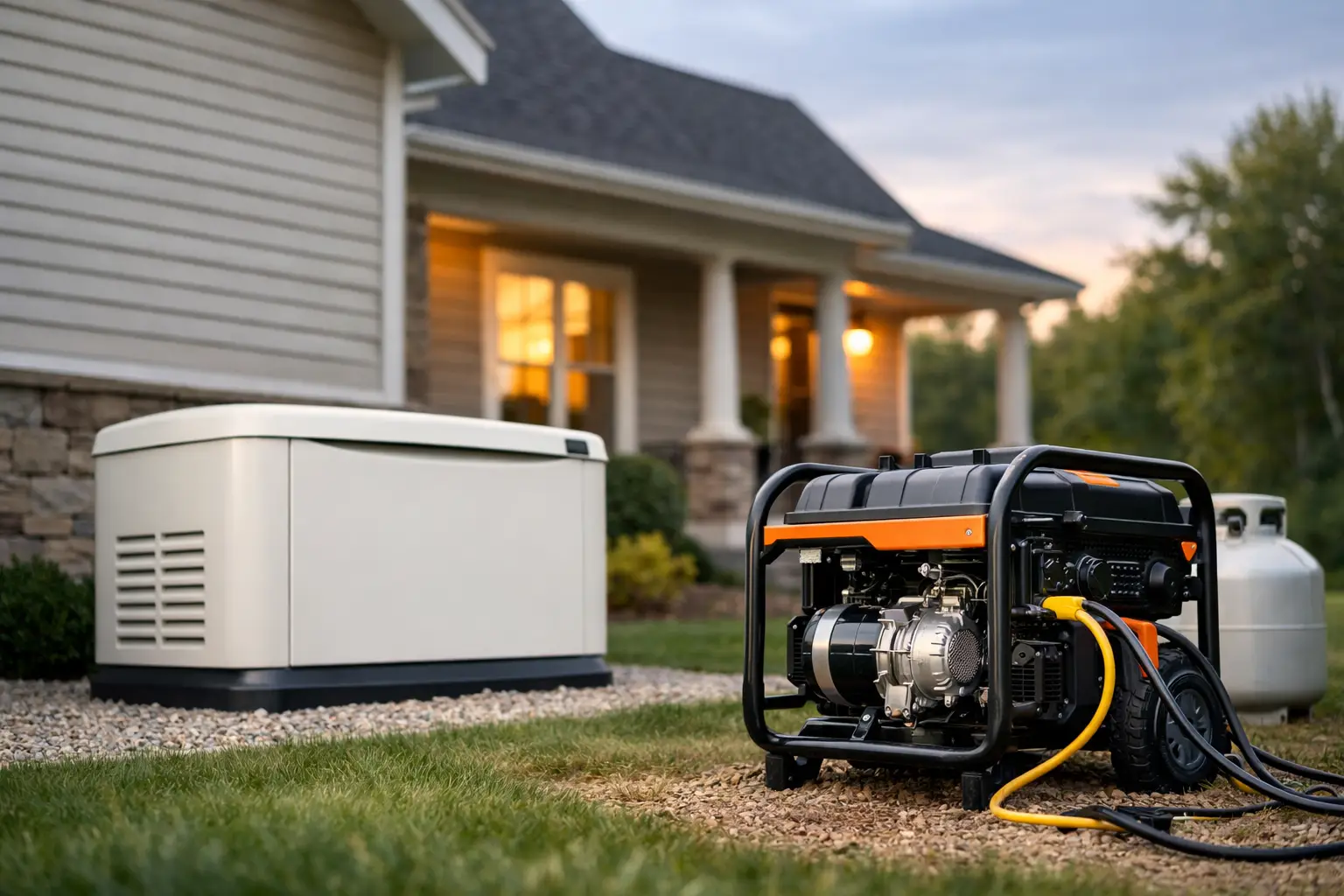
Whole-house backup aims to power nearly everything, sometimes with load management to stage heavy appliances. This is where standby generators shine. They sit outside like an AC unit, connect to natural gas or propane, and start automatically when utility power fails. They cost more up front, but they remove a lot of hassle.
If your outage plan involves rolling a generator out of the garage, fueling it in bad weather, and manually managing extension cords or selected circuits, portable is the budget-friendly route. If your priority is convenience, automatic startup, and keeping the home running even when you are away, standby is usually the better fit.
What size generator do you need for a house?
The most reliable way to answer this is to make a load list. Write down the appliances and systems you actually want to run, then compare both running and starting wattage.
A refrigerator often needs around 600 to 800 running watts, but startup can be much higher. A sump pump may run around 800 to 1,500 watts with a larger surge. A gas furnace blower often lands near 600 to 1,200 watts. A central air conditioner can demand several thousand running watts and a significant startup spike. Electric water heaters, ovens, and dryers are major loads that quickly push you into large-generator territory.
For an essentials-only plan, many homeowners land in the 7,500 to 9,500 running watt range. For a larger partial-home setup with pump loads and more convenience circuits, 10,000 to 12,500 running watts is common. For true whole-house backup, standby units in the 18kW to 24kW range are often where serious residential coverage begins, though some homes need more and some need less.
It depends on your equipment. A home with natural gas heat and water heating needs less backup power than a home relying on electric resistance heat and all-electric appliances.
Portable generators that can run a house
Portable generators can absolutely run a house, at least in part, when paired with the right transfer equipment. This is often the best value for buyers who want solid backup power without standby-generator pricing.
If you are shopping in this category, look closely at 240V capability. Many house circuits and transfer switches require 240V output, especially if you need to support a well pump or larger loads. Also check the outlet configuration, total running watts, fuel tank size, and whether the unit is conventional or inverter-based.
Conventional portable generators are usually the go-to choice for higher-output home backup because they provide more wattage per dollar. Models from brands like Westinghouse, DuroMax, Champion, and Generac are often strong candidates in the 8,000 to 12,000 watt range for residential emergency use. Inverter generators are quieter and cleaner for electronics, but whole-home-capable inverter units tend to be expensive, and smaller inverter models are better for selective loads rather than broad home backup.
Dual-fuel portable generators are worth serious consideration. Being able to run on gasoline or propane gives you more flexibility during outages. Gasoline often provides slightly higher output, but propane stores longer and is cleaner to manage. For preparedness-focused homeowners, that trade-off matters.
Standby generators for whole-home coverage
If your question is really what generator runs a house automatically with minimal effort, the answer is a
standby generator with an automatic transfer switch.
These systems monitor utility power and turn on within seconds of an outage. They are permanently installed and usually fueled by natural gas or a large propane tank. That eliminates much of the storage and refueling headache that comes with portable generators.
Standby generators from Generac, Kohler, and Briggs & Stratton are common in the residential market. The best fit comes down to sizing, dealer support, warranty terms, and how the transfer switch and load management are configured. A 14kW unit may cover a smaller home with careful load planning. An 18kW to 24kW unit is more realistic for broader home coverage, especially if central AC or multiple major appliances are part of the plan.
The trade-off is cost. Equipment, pad prep, gas hookup, electrical work, and permitting can make standby a major investment. But for homeowners in outage-prone areas, or those with medical equipment, basement flood risk, or frequent storm exposure, that cost can be justified quickly.
Fuel type matters more than many buyers expect
When comparing what generator runs a house best, fuel type is not a side detail. It affects runtime, storage, maintenance, and real-world convenience.
Gasoline is widely available and often supports strong portable-generator performance, but it has a limited shelf life unless treated and rotated. During long outages, refueling can become a problem.
Propane stores well and burns cleaner. It is excellent for preparedness, especially with a larger tank on hand. The downside is a slight reduction in power output on many dual-fuel generators.
Diesel is less common for typical home buyers, but it can be appealing for durability and fuel efficiency in certain heavy-duty applications.
Natural gas is the easiest option for many standby systems because it offers continuous fuel supply as long as gas service remains active. That makes it hard to beat for convenience, though some areas or outage scenarios may still favor propane standby setups.
Safe house connection is not optional
A generator should never be plugged into a home through a dryer outlet or any improvised backfeeding method. That is dangerous, illegal in many areas, and a serious risk to utility workers and your home.
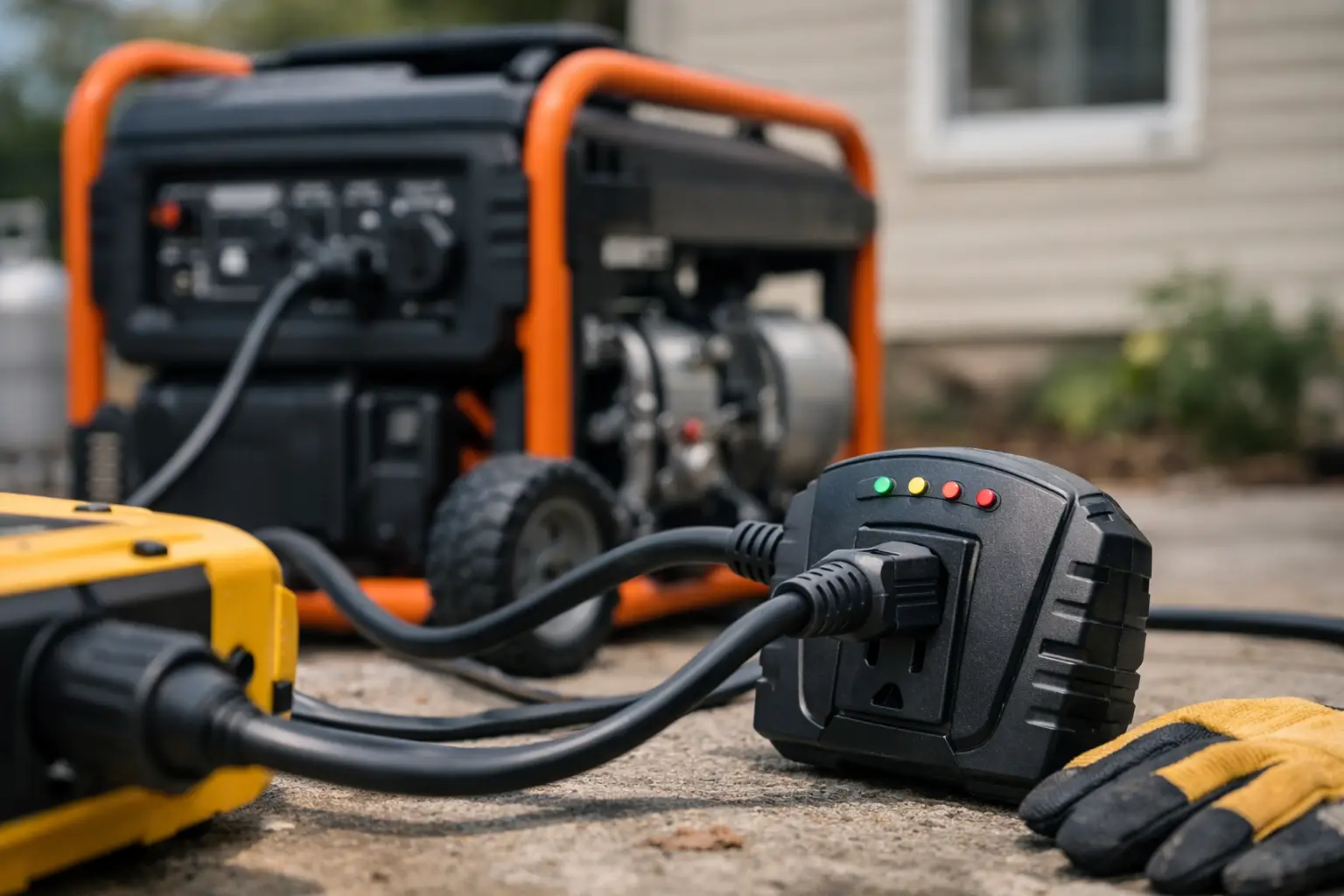
For a house connection, use a transfer switch or a properly installed interlock kit with an
inlet box. This lets you feed selected circuits safely and keeps utility and generator power isolated. If you are using a portable unit, you also need to think about neutral bonding, grounding requirements, cord sizing, and placement far enough from the home to prevent carbon monoxide hazards.
This is one area where cutting corners is a bad bargain. A good generator setup is not just about watts. It is about safe power delivery under stress.
So what generator runs a house best?
For many homeowners, the sweet spot is a 7,500 to 12,000 watt portable generator with 240V output, paired with a transfer switch or interlock for essential circuits. It gives meaningful backup capability without the price of standby installation.
If you want near-normal living during outages, automatic startup, and no manual fuel handling, a standby generator is the better answer. That is especially true for larger homes, homes with pumps or central air, or households that cannot afford downtime.
The best choice is the one that matches your real loads, fuel situation, and tolerance for manual setup. Buy for the outage you are most likely to face, not the fantasy where one small generator somehow powers every circuit in the panel. A little planning now is what keeps backup power from becoming backup disappointment later.