As an Amazon Associate I earn from qualifying purchases.
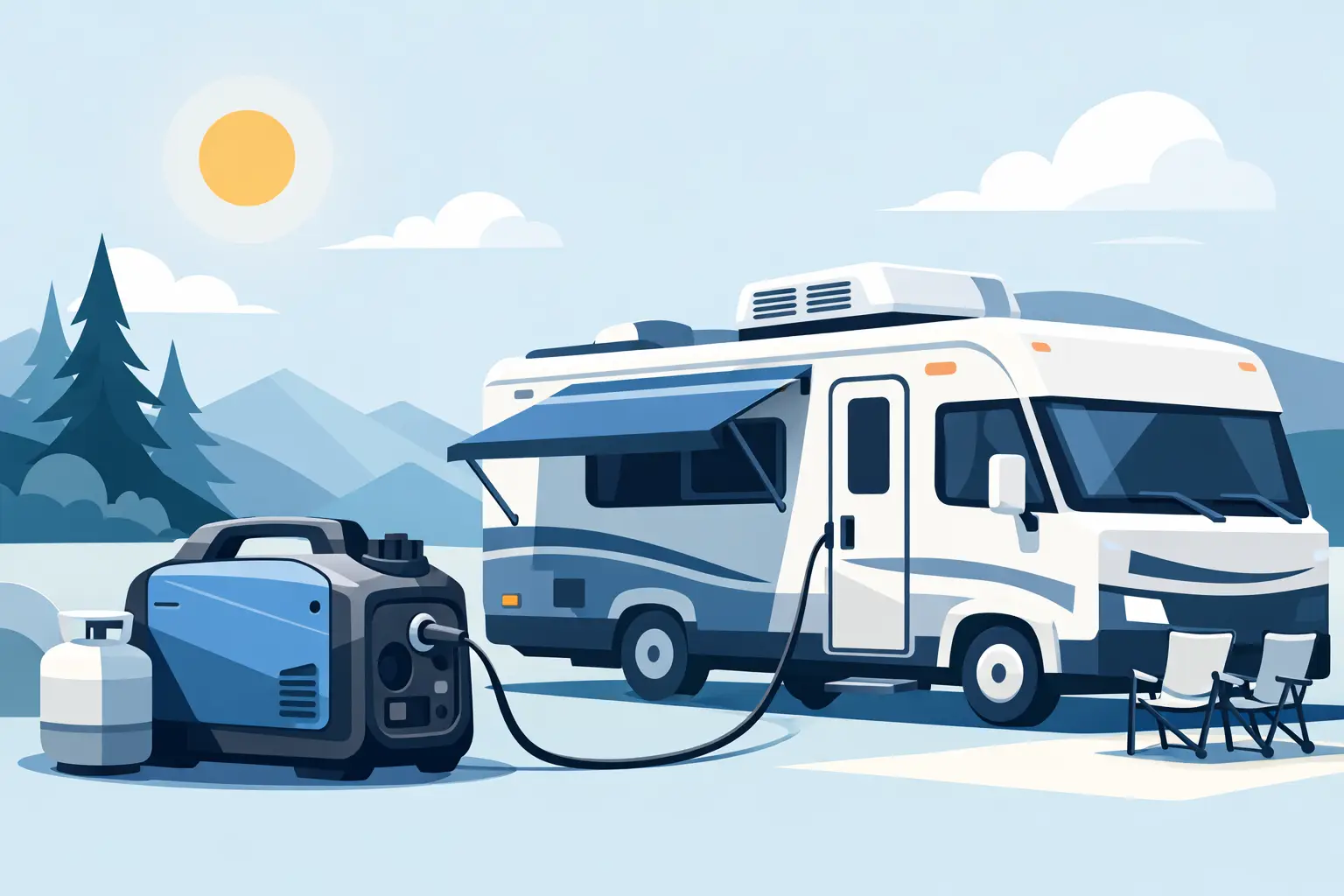
Choosing a compact generator starts with one basic question: what kind of power do you actually need? Diesel generators can make sense for users who prioritize diesel fuel, long-duty operation, and work-site use, while gasoline and dual-fuel models can be easier to find and more practical for RVs, camping, and emergency backup.
In this 2026 guide, we compare compact diesel and portable generator options by power output, fuel type, portability, runtime, noise, and safety features. Because these generators are designed for different jobs, the goal is not simply to find the highest wattage, but to understand which type of generator fits a particular application.
Compact Diesel and Portable Generator Options
| Generator | Fuel Type | Main Use |
|---|---|---|
| WEN 11,000-Watt Dual Fuel Generator | Gasoline / Propane | Home backup and heavy-duty portable power |
| Westinghouse WGen14500TFc | Gasoline / Propane / Natural Gas | Large-home backup |
| Champion 4,000-Watt RV Inverter Generator | Gasoline | RVs and camping |
| WEN 6,800-Watt Dual Fuel Inverter Generator | Gasoline / Propane | RVs, backup, and portable power |
| Futchoy 196cc Diesel Portable Generator | Diesel | Small equipment and low-demand portable power |
Compact Generator Comparison for 2026: What Each Model Is Best For
These generators are not interchangeable. The Futchoy is the only true diesel option in this group, while the WEN and Westinghouse models focus on higher-output dual- or tri-fuel operation, and the Champion is designed primarily around portable RV power.
The differences in output, fuel, weight, and intended use matter more than the wattage number alone.
1. WEN 11,000-Watt Dual Fuel Generator
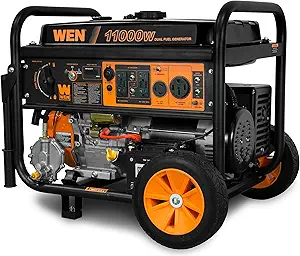
The WEN DF1100T is a large open-frame dual-fuel generator designed for users who need substantially more power than a typical RV inverter can provide. It produces up to 11,000 starting watts and 8,300 running watts on gasoline, or 9,500 starting watts and 7,500 running watts on propane.
The generator also has a 120V/240V selector, electric start, a 6.6-gallon fuel tank, and a wheel-and-handle kit. Its control panel includes four 120V GFCI outlets, a 120V 30A twist-lock outlet, a 120V/240V 50A outlet, and a 12V DC outlet.
Key points:
- Gasoline: 11,000 starting watts / 8,300 running watts
- Propane: 9,500 starting watts / 7,500 running watts
- 120V/240V operation
- Electric start
- 6.6-gallon gasoline tank
- Four 120V GFCI outlets
- NEMA 14-50R 120V/240V outlet
- Wheel and handle kit
Its size and weight make it less convenient than a small inverter generator, but the higher output makes it more appropriate for demanding home-backup and job-site applications.
2. Westinghouse WGen14500TFc Tri-Fuel Generator
The Westinghouse WGen14500TFc is considerably larger than the other portable models in this comparison. It operates on gasoline, propane, or natural gas and produces up to 18,000 peak watts and 14,500 running watts on gasoline.
On propane, it produces up to 16,000 peak watts and 13,000 running watts. Natural gas operation provides up to 14,400 peak watts and 11,600 running watts.
The generator is designed for demanding backup applications rather than lightweight portability. It includes electric start, remote start, a transfer-switch-ready L14-30R outlet, a 50A 14-50R outlet, and a CO sensor with automatic shutdown.
Key points:
- Gasoline: 18,000 peak / 14,500 running watts
- Propane: 16,000 peak / 13,000 running watts
- Natural gas: 14,400 peak / 11,600 running watts
- 713cc engine
- Electric and remote start
- Transfer-switch ready
- CO sensor with automatic shutdown
- Heavy-duty wheels and handle
Westinghouse lists up to 12 hours of gasoline runtime at 25% load. Because of its size and weight, this model makes more sense for larger backup applications than for casual camping or frequent transport.
3. Champion 4,000-Watt RV Inverter Generator
The Champion 4000W inverter is the most portable option in this group and is specifically suited to RV use, camping, tailgating, and powering a limited number of essentials.
It produces 4,000 starting watts and 3,000 running watts from a 149cc gasoline engine. Champion rates the generator at 64 dBA from 23 feet and up to 10 hours of runtime at 25% load.
At 48.1 pounds, it is substantially easier to move than the large open-frame generators in this comparison. It includes a 120V 30A TT-30R RV outlet, a 120V household outlet, a 12V DC outlet, and parallel capability.
The inverter produces less than 3% THD, making it suitable for many sensitive electronic devices.
One important limitation is worth noting: Champion states that this particular model is not recommended for emergency home backup. That makes it a better fit for portable recreational power than whole-home backup.
Key points:
- 4,000 starting watts
- 3,000 running watts
- Gasoline powered
- 149cc engine
- 48.1-pound weight
- 64 dBA at 23 feet
- Up to 10 hours at 25% load
- 120V 30A RV outlet
- Less than 3% THD
- CO Shield carbon monoxide auto-shutoff
- Parallel capable
4. WEN 6,800-Watt Dual Fuel Inverter Generator
The WEN 6,800-watt dual-fuel inverter is aimed at users who want more output than a small RV inverter while still benefiting from inverter-style power.
Its gasoline and propane flexibility can be useful during outages, at remote locations, or for portable applications where access to one fuel source may be limited.
The inverter design is also relevant for users who plan to power electronics and other equipment that can benefit from stable electrical output.
For electric vehicle charging, however, compatibility depends on the vehicle, charger, connection method, and the generator’s available running wattage. Buyers should verify those requirements before relying on a portable generator for EV charging.
Key points to check before buying include:
- Gasoline and propane operation
- Inverter power output
- Available 120V/240V connections
- Electric-start configuration
- CO monitoring
- Wheel and handle design
- Runtime at the load you expect to use
This generator occupies a middle ground between smaller RV-focused inverters and large open-frame backup generators.
5. Futchoy 196cc Diesel Portable Generator
The Futchoy 196cc is the only dedicated diesel option in this comparison, but it is important to understand what it is designed to do.
Available specifications list a 196cc single-cylinder, air-cooled diesel engine, approximately 2.2 kW of output, a 3-liter fuel tank, and recoil starting.
That makes it more appropriate for small equipment, basic portable power, and low-demand applications than for running an entire home.
It is also a very different type of product from the high-output WEN and Westinghouse generators above. If your priority is specifically diesel fuel in a compact package, this is the relevant model in this list. If you need 5,000 watts or more, a larger purpose-built diesel generator is a more appropriate category to investigate.
Key points:
- Diesel fuel
- 196cc single-cylinder engine
- Approximately 2.2 kW output
- 3-liter fuel tank
- Recoil start
- Air-cooled design
- Compact format
- Better suited to lower-demand applications
What Counts as a Compact Diesel Generator?
A compact diesel generator is not necessarily a lightweight inverter generator. Diesel engines and larger fuel systems can make these machines considerably heavier than small gasoline models.
For example, the Generac XD5000E is a 5,000-watt diesel generator with a 435cc Yanmar engine, a 12-gallon fuel tank, and a listed runtime of 32.4 hours at 50% load. Generac lists the unit at 252 pounds, which illustrates the trade-off between diesel capability and portability.
This distinction matters when shopping. If you need a genuinely small generator for an RV or campsite, a gasoline inverter may be more practical. If you specifically need diesel fuel and longer-duty operation, expect a larger and heavier machine.
Choosing a Compact Generator by Use Case
Emergency Home Backup
The Westinghouse WGen14500TFc and WEN DF1100T are the higher-output choices in this group. Their 120V/240V capability and fuel flexibility make them more suitable for demanding backup applications than the smaller RV inverter.
For a permanent or semi-permanent backup setup, make sure the generator and connection equipment are compatible with your home’s electrical system. A transfer switch or other approved connection method should be installed according to local electrical requirements and the generator manufacturer’s instructions.
RV and Camping
The Champion 4,000W RV Inverter Generator is the most compact option in this group. At 48.1 pounds and 64 dBA from 23 feet, it is designed around portability and RV/camping use.
Its 120V 30A TT-30R outlet is particularly relevant for RV owners, while the inverter system provides clean electrical output for many common electronic devices.
Portable Backup and Higher-Demand Equipment
The WEN 11,000W Dual Fuel Generator provides considerably more output than a compact RV inverter. Its gasoline/propane capability also gives users more flexibility when choosing a fuel source.
The larger Westinghouse model takes this approach further with tri-fuel operation and substantially higher output.
EV Charging
The WEN 6,800W Dual Fuel Inverter can be considered for higher-demand portable applications, including some EV-charging setups, but compatibility should be confirmed with the vehicle and charger before purchase.
EV charging can consume a substantial amount of continuous power, so buyers should compare the generator’s running-watt capacity with the charger’s actual requirements rather than focusing only on peak watts.
Diesel-Powered Portability
The Futchoy 196cc Diesel Generator is the diesel-specific option in this group and is better suited to lower-demand applications than the larger home-backup generators.
If your priority is diesel fuel rather than maximum portability, it is also worth comparing larger diesel generators before making a decision.
What to Look for in a Compact Generator
When comparing compact generators in 2026, look beyond the advertised starting-watt number. Fuel type, continuous running watts, runtime, noise, weight, outlet configuration, and safety features can have a bigger effect on whether a generator actually fits your needs.
Fuel Type
Dual- and tri-fuel models offer more fuel flexibility, while diesel can be attractive for users who specifically need diesel-powered equipment and longer-duty operation. Actual fuel cost and efficiency depend on load, fuel prices, and the generator.
Running Watts vs. Starting Watts
Starting watts are the temporary surge of power available when the generator starts equipment with a motor or compressor.
Running watts are more important when calculating whether a generator can continuously operate your appliances, tools, or other equipment.
Before buying, add up the running wattage of the equipment you expect to use and allow additional capacity for appliances with high startup demands.
Runtime
Compare runtime at a stated load rather than relying on a large headline number. A generator’s runtime can change substantially depending on electrical demand and fuel type.
A generator that runs for many hours at a light load may have a much shorter runtime when operating near its rated capacity.
Noise
Noise can become a major consideration when using a generator around an RV, campsite, home, or work area.
Inverter generators are often designed with noise reduction in mind, while larger open-frame generators generally prioritize output and durability over compact, quiet operation.
Portability
Weight, wheels, handles, lifting points, and overall dimensions all affect how practical a generator is to move.
A 4,000-watt inverter weighing under 50 pounds is a very different portability proposition from a large diesel generator weighing hundreds of pounds.
Safety
CO detection and automatic shutdown can provide an additional layer of protection, but they do not make a fuel-burning generator safe for indoor use.
Portable generators should be operated outdoors and positioned according to the manufacturer’s instructions, away from doors, windows, and vents.
Never operate a gasoline, propane, natural-gas, or diesel generator inside a home, garage, basement, crawl space, tent, or other enclosed area where exhaust gases can accumulate.
Compact Diesel vs. Gasoline and Dual-Fuel Generators
The main reason to choose diesel is not simply because it is a different fuel. The better question is whether your application benefits from a diesel engine.
Diesel can make sense for users who already use diesel equipment, have convenient access to diesel fuel, or need a generator for demanding work-site or longer-duty applications.
Gasoline generators, meanwhile, are widely available and include many lightweight inverter models designed for RVs, camping, and portable electronics.
Dual-fuel generators add another layer of flexibility by allowing gasoline or propane operation. Tri-fuel models go further by adding natural gas, which can be useful for home backup when a suitable natural-gas connection is available.
There is no single fuel type that fits every use case. The right choice depends on power requirements, available fuel, portability, runtime, and how frequently the generator will be used.
Final Considerations for 2026
A compact generator should be selected according to the job rather than the largest number printed on the box.
For diesel-specific requirements, the Futchoy 196cc provides a compact diesel option for lower-demand applications. For higher-output portable backup, the WEN DF1100T offers gasoline and propane operation, while the Westinghouse WGen14500TFc adds natural-gas capability and substantially higher output.
For RV and camping use, the Champion 4000W inverter focuses on portability, quieter operation, and clean inverter power. The WEN 6,800W dual-fuel inverter sits between smaller recreational generators and larger open-frame backup models.
Before buying, compare running watts rather than only starting watts, verify the outlets you need, check expected runtime at your typical load, and confirm the generator’s safety and connection requirements.
If you specifically want a diesel generator, also be prepared for a larger and heavier machine than a typical compact gasoline inverter. That trade-off is one of the most important factors to understand before purchasing.