As an Amazon Associate I earn from qualifying purchases.
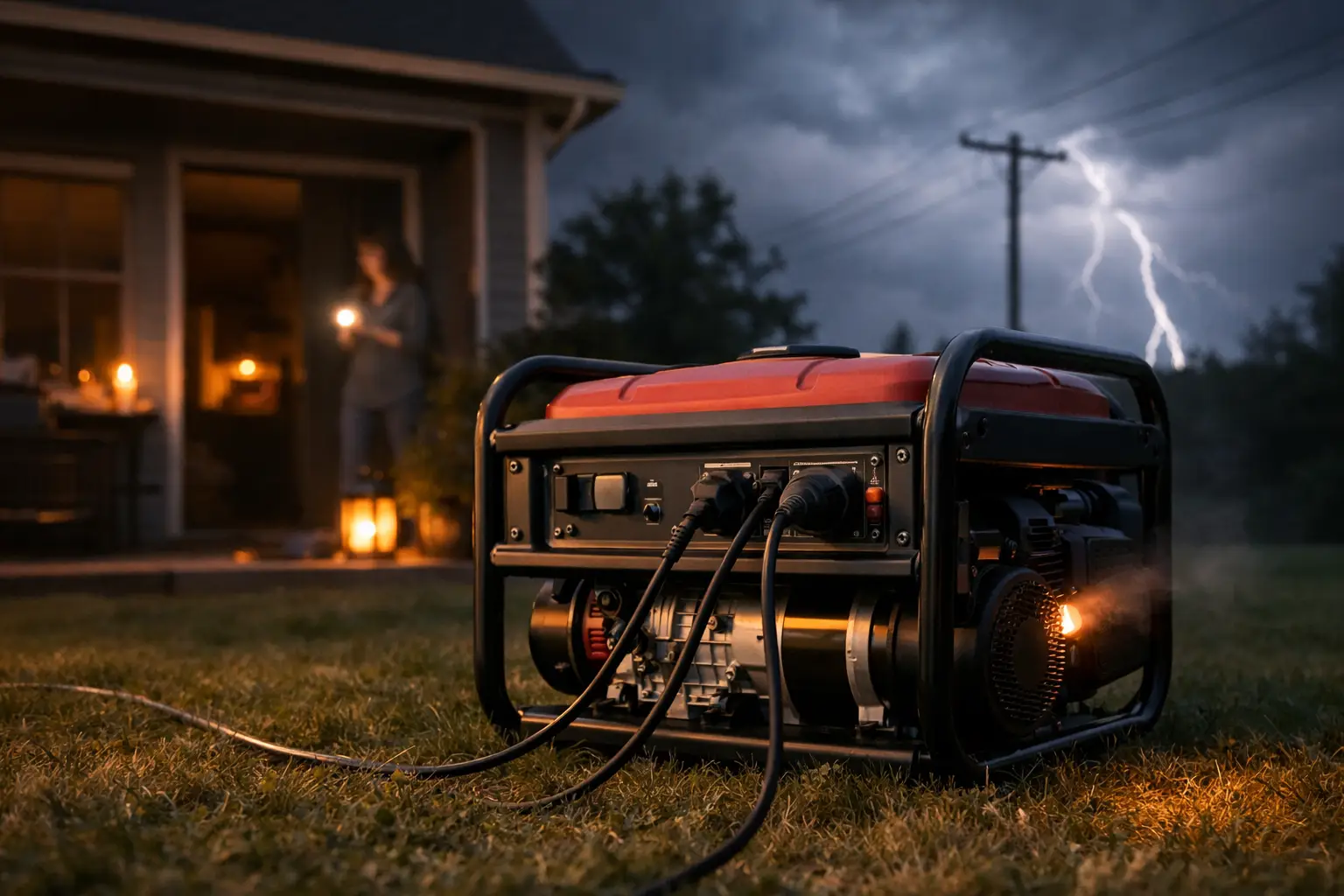
A portable generator can keep your refrigerator running, protect a basement from flooding, and provide essential power during an outage. But before choosing an exhaust extension, there is one important thing to understand: generator exhaust contains carbon monoxide (CO), a poisonous gas that can cause serious injury or death.
The best generator exhaust extensions are designed to work with a specific generator’s exhaust system and help direct hot exhaust away from occupied outdoor areas. However, an extension is not a replacement for proper generator placement, and it does not make an enclosed space safe for generator operation.
If you’re comparing exhaust extension kits, the most important things to consider are compatibility, connection design, heat resistance, exhaust flow, and the manufacturer’s recommendations. Some systems attach with bolts, others require welding, and some are designed specifically for recreational vehicles or permanent outdoor installations.
Below, I’ll explain seven generator exhaust extension options, what makes each one different, and what to consider before buying.
What Makes a Generator Exhaust Extension a Good Choice?
The right extension begins with a proper fit at the generator’s exhaust outlet. Portable generators use different muffler shapes and outlet diameters, so a kit advertised as universal may still require an adapter or clamp that does not fit your model. Measure the outside diameter of the exhaust outlet before ordering anything, and check the generator manual for any warnings about exhaust modifications.
Heat resistance is equally important. Generator exhaust can become hot enough to burn skin, melt ordinary plastic, damage vinyl siding, or ignite dry leaves. Look for components made for high-temperature exhaust service, such as stainless steel tubing, flexible metal exhaust hose, and rated clamps. A dryer vent hose, standard HVAC duct, PVC pipe, or plastic flex tube does not belong on a generator exhaust outlet.
A good setup also keeps resistance low. Shorter, straighter runs with gentle bends are generally safer for the engine than long routes with tight turns. The goal is to redirect exhaust, not build a complicated chimney system. If the engine begins running poorly, loses power, sounds strained, or the muffler becomes unusually hot after installation, shut the generator down and reassess the setup.
7 Best Generator Exhaust Extension Types
There is no single best option for every household. Your generator, operating location, and expected outage routine should determine which style makes sense.
1. Model-specific exhaust extension kits
For most homeowners, a kit designed for a specific generator model is the safest starting point. These kits may include a fitted adapter, high-temperature flex hose, clamps, and mounting hardware. Because the adapter is intended for that exhaust outlet, it is less likely to leak or loosen than a generic connection.
This option is especially worthwhile when your generator runs for several hours at a time during storm outages. The trade-off is cost and availability. Model-specific kits can be harder to find for older or less common generators.
2. Stainless steel flexible exhaust hose kits
Stainless steel flex hose is a practical choice when the generator needs to sit outside a shed, behind a privacy screen, or near a covered work area while the exhaust is directed into open air. It handles heat better than thin aluminum venting and can accommodate a modest change in direction.
Choose a hose with a diameter that matches the outlet or an approved adapter. Avoid crushing or sharply bending the hose, since restrictions increase backpressure. Support the hose so its weight does not hang entirely from the generator muffler.
3. Rigid stainless steel pipe extensions
Rigid pipe works well for a more permanent outdoor generator location, particularly on rural properties with a dedicated equipment pad or open-sided generator shelter. It offers a smooth interior path and can be securely supported along a planned route.
It requires more careful installation than flexible tubing. Every connection must be properly secured, and the pipe needs clearance from wood, siding, fuel containers, landscaping, and other combustible materials. Rigid pipe is best treated as a planned installation, not a quick fix during a storm.
4. Vertical exhaust stacks with rain caps
A vertical stack can move exhaust higher above ground level, which may help prevent fumes from drifting directly across a patio or low-lying work area. Some setups use a rain cap to reduce the chance of water entering the pipe when the generator is off.
Height alone does not make an installation safe. Wind can still push exhaust toward windows, roof overhangs, attic vents, or neighboring areas. A vertical stack must also be well supported. Never let a tall, heavy pipe rest solely on the generator’s muffler outlet.
5. Side-discharge deflectors
A deflector is a simple attachment that changes the direction of exhaust without adding much length. It can be useful when the generator’s factory outlet points toward a wall, walkway, or sitting area, but there is plenty of open outdoor space in another direction.
This is often the least disruptive option for engine operation because it adds minimal restriction. It will not carry fumes far from the generator, though, so placement remains critical.
6. Through-wall exhaust pass-through systems
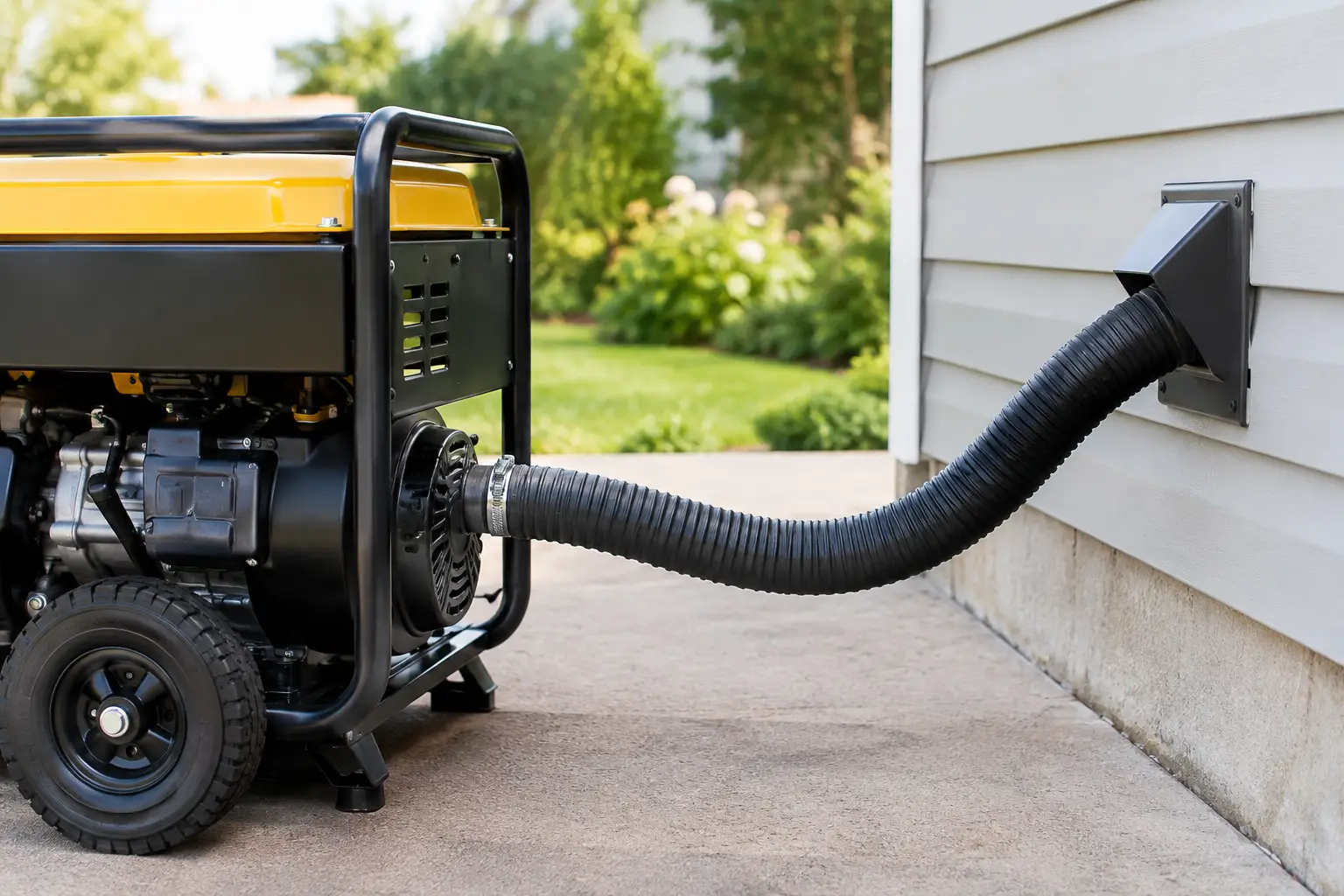
Some homeowners want to operate a portable generator just outside a detached garage, workshop, or equipment shed and route the exhaust through a wall. A purpose-built, heat-rated pass-through can protect the wall opening and maintain clearance around the hot pipe.
This approach requires special caution. Never run a portable generator inside a garage, shed, basement, crawlspace, or enclosed room, even with an exhaust pipe installed. Carbon monoxide can leak from connections, migrate through openings, or accumulate if ventilation changes. A through-wall system is only for a generator that remains fully outdoors.
7. Custom fabricated exhaust systems
Custom systems are best reserved for unusual generator installations, frequent-duty use, or larger units where standard kits do not fit. A qualified small-engine technician or exhaust fabricator can size pipe correctly, create secure supports, and avoid excessive bends.
Custom work can solve real fitment problems, but it is not automatically better than a well-made kit. It costs more, and a poorly designed custom system can place too much stress on the engine. If your generator is under warranty, confirm whether modifications affect coverage before proceeding.
How to Size and Install an Extension Safely
Start by reading the generator manual. Some manufacturers prohibit exhaust modifications, while others provide approved accessories or limits for extension length. Follow those instructions first, even if a popular online kit claims to fit.
Measure the exhaust outlet carefully and compare that measurement to the adapter’s inside diameter. A connection should be secure without forcing parts into place. Use heat-rated clamps, and inspect them periodically because vibration can loosen hardware over time.
Keep the route as short and direct as possible. Do not reduce the pipe diameter below the generator outlet size unless the manufacturer specifically permits it. Smaller pipe restricts exhaust flow, while long runs and multiple elbows can create similar problems.
The outlet should discharge into clear, open air. Keep it away from doors, windows, vents, soffits, crawlspace openings, vehicle interiors, and areas where children or pets play. The U.S. Consumer Product Safety Commission advises operating portable generators at least 20 feet from homes, with exhaust directed away from the house. Your owner’s manual may require even greater distance.
Before relying on the system during an outage, test it outdoors on a calm day. Let the generator reach operating temperature, then check for exhaust leaks around the adapter and joints. Do not touch hot metal. Watch for rattling, sagging hose, unusual engine behavior, or any signs that exhaust is blowing toward the home.
Safety Rules an Exhaust Extension Cannot Replace
An extension does not make it safe to run a generator in an enclosed or partially enclosed space. Carbon monoxide is invisible and odorless, and it can become deadly quickly. Keep working carbon monoxide alarms with battery backup inside the home, especially near sleeping areas.
Do not place the generator under a deck, in a doorway, beneath an open window, or near an attached garage. If rain is expected, use a generator cover designed to protect the equipment while it operates outdoors, not a tarp draped over the generator. The engine still needs cooling airflow.
Also remember that exhaust routing is only one part of a safe backup-power plan. Use a properly sized outdoor-rated generator cord, inlet box, transfer switch, or approved interlock arrangement to prevent dangerous backfeeding into utility lines. If you are unsure about the electrical connection or exhaust layout, a licensed electrician or qualified generator technician can help you avoid an expensive and unsafe mistake.
Choosing the Right Setup for Your Home
For occasional emergency use, a short model-specific kit or simple deflector is usually the most sensible choice. It keeps the installation manageable and minimizes changes to the generator’s exhaust flow. For a dedicated outdoor generator location, a supported stainless steel pipe system may offer a cleaner long-term arrangement.
The best choice is the one that fits your generator correctly, preserves safe engine operation, and supports proper outdoor placement. Treat an exhaust extension as one layer of protection in a well-planned setup, and your family can rely on backup power with greater comfort and confidence when the grid goes quiet.
Frequently Asked Questions About Generator Exhaust Extensions
Can you extend the exhaust pipe on a portable generator?
Some portable generators can accommodate aftermarket exhaust extensions, but not all manufacturers permit these modifications. Check the owner’s manual and the exhaust system specifications before purchasing an accessory.
Do generator exhaust extensions reduce carbon monoxide?
An exhaust extension does not eliminate carbon monoxide production or make an unsafe location safe. Its purpose is to redirect exhaust, not remove the carbon monoxide hazard.
How long can a generator exhaust extension be?
There is no single safe maximum length for every generator. The allowable configuration depends on the engine, original muffler, pipe diameter, bends, and manufacturer specifications.
Can I run a generator inside a garage with an exhaust extension?
No. Never operate a portable generator inside a garage, even if the garage door is open or an exhaust extension passes through an exterior wall. Carbon monoxide can escape into occupied areas and become deadly.
Is stainless steel better than aluminum for generator exhaust extensions?
Material selection depends on the product’s construction, temperature rating, and intended application. Stainless steel is used in many exhaust components, but its presence alone does not prove that an extension is suitable for a particular generator.
Do generator exhaust extensions affect engine performance?
They can. An incorrectly sized or restrictive extension may increase exhaust backpressure and affect engine performance. Follow the generator manufacturer’s requirements before making modifications.
Can an exhaust extension void a generator warranty?
It depends on the manufacturer’s warranty terms and the specific modification. Some manufacturers restrict aftermarket exhaust modifications. Check the warranty documentation before proceeding.
Final Thoughts
A generator exhaust extension can be useful in certain applications, but choosing the right one requires more than matching a pipe to an exhaust outlet.
Start with the generator manufacturer’s recommendations, verify the connection design, and make sure any accessory is specifically intended for engine exhaust service.
Most importantly, remember that an extension does not replace safe outdoor generator placement. Keep the generator at least 20 feet from your home, direct exhaust away from openings, and maintain working carbon monoxide alarms.
When it comes to backup power, a compatible accessory is important, but protecting your household always comes first.