As an Amazon Associate I earn from qualifying purchases.
A generator that starts on the first pull or push button usually has one thing behind it – fuel that was stored the right way. When people ask how to store generator fuel, they are usually trying to avoid two expensive problems at once: a generator that will not run when the power goes out, and a fuel supply that has become unsafe to keep around the house.
The good news is that safe storage is not complicated. The catch is that small mistakes matter. The wrong container, too much heat, old gasoline, or a forgotten vent cap can shorten fuel life fast. If you rely on a portable generator for storms, home backup, RV travel, camping, or jobsite use, your fuel plan deserves as much attention as the generator itself.
How to store generator fuel without damaging it
The best way to store generator fuel depends on the fuel type your generator uses. Gasoline is the most common for portable units, but many homeowners now buy
dual-fuel generators that can run on gasoline and propane. Diesel and natural gas are different cases, but for most consumer buyers, the decision is usually gasoline versus propane.
Gasoline gives you easy availability and strong portability, but it degrades faster. Propane stores longer and burns cleaner, but it requires proper cylinder storage and may affect runtime or output depending on the generator model. If you are still shopping, this is one reason dual-fuel models appeal to preparedness-minded buyers. They give you more flexibility when one fuel is hard to find.
For gasoline, the goal is to slow oxidation and moisture problems. For propane, the goal is secure cylinder storage and keeping tanks in the right environment. In both cases, you want a cool, dry, well-ventilated storage area away from living spaces and ignition sources.
Use the right fuel container
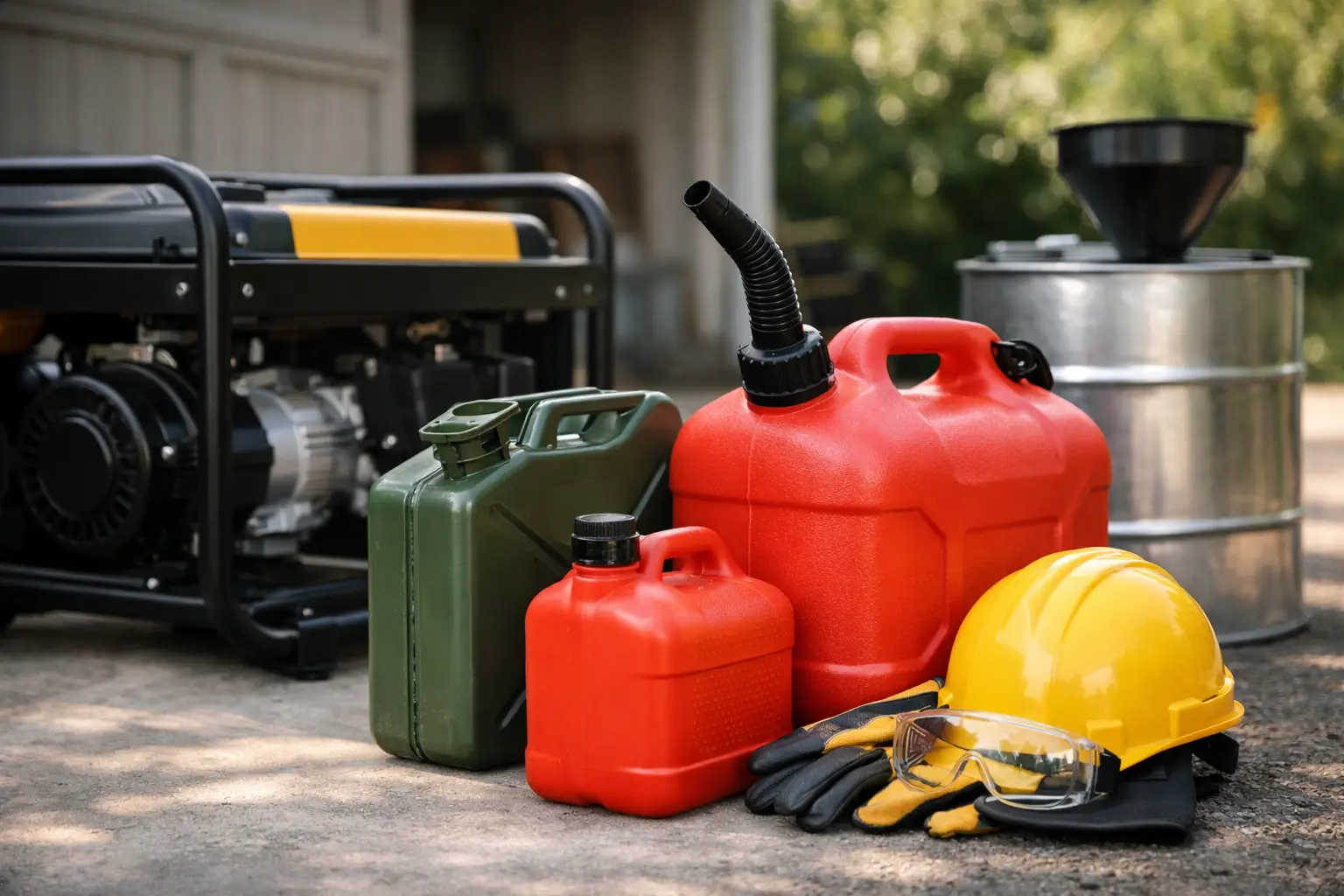
This is the first place people cut corners, and it is not worth it. Gasoline should be stored only in approved fuel cans designed for flammable liquids. A proper can seals correctly, reduces vapor release, and handles expansion better than improvised containers. Plastic and metal safety cans can both work, as long as they are rated and in good condition.
Do not use old milk jugs, random hardware buckets, or unmarked containers. Even if they hold liquid, they are not built for fuel vapor, temperature swings, or safe pouring. If you keep multiple fuels for different machines, label each can clearly so gasoline does not get mixed with diesel, mixed oil fuel, or kerosene.
For propane, use approved cylinders only and inspect them for rust, dents, valve damage, or signs of leakage. If a tank looks questionable, replace it rather than trying to get one more season out of it.
Pick the right storage location
Fuel should never be stored inside your house, basement, utility room, or attached living space. A detached shed or detached garage is usually a better fit, provided it stays ventilated and does not trap excessive heat. You also want the area away from water heaters, furnaces, freezers, direct sunlight, and anything else that can spark or generate heat.
This is where real-world trade-offs come in. A garage may feel convenient, but if it gets extremely hot in summer, gasoline will age faster and vapor pressure becomes more of a concern. A shed may be cooler and safer, but only if it is dry and secure. The best location is the one that balances ventilation, temperature control, and separation from where people live.
If you are storing propane cylinders, keep them upright and outdoors or in a storage area specifically appropriate for propane. Do not store propane tanks indoors.
How long generator fuel lasts in storage
Gasoline does not stay fresh nearly as long as many buyers expect. Untreated gasoline can start to degrade within a few months, and ethanol-blended fuel often creates more storage headaches because it attracts moisture. That moisture can lead to phase separation, gum buildup, and hard starting.
If you want gasoline to last longer, add a fuel stabilizer when the gas is fresh, not months later when it is already going stale. Stabilizer can significantly extend storage life, but it does not make fuel immortal. You still need to rotate stock. For many homeowners, a practical system is to date each can and use the oldest fuel first in a generator, vehicle, or approved outdoor power equipment before replacing it with fresh fuel.
Propane is easier from a shelf-life standpoint. It does not degrade the way gasoline does, which is one reason it is so attractive for emergency backup. The limitation is less about fuel age and more about safe cylinder condition, regulator compatibility, and how much fuel you have on hand.
Ethanol-free gasoline is often the better choice
If it is available in your area, ethanol-free gasoline is often the better storage option for generators. It tends to be more stable over time and reduces the moisture-related issues common with standard pump gas. It usually costs more, so the trade-off is upfront price versus fewer maintenance problems later.
For occasional-use generators, that extra cost can be worth it. A machine that sits for long stretches is exactly the kind of equipment that benefits from cleaner, more storage-friendly fuel.
A simple fuel rotation plan that works
A lot of generator owners buy fuel with good intentions, then forget about it until storm season. That is how bad fuel ends up in the tank right when backup power matters most.
A better system is simple. Mark each gasoline can with the purchase month and whether stabilizer was added. Keep a small log on your phone or in the shed. Every few months, inspect the cans, check for swelling or leaks, and rotate the oldest fuel out. Then refill with fresh gas and stabilizer.
If your generator supports propane, your rotation plan gets easier. You still need to inspect cylinders and monitor fill levels, but you are not racing the same fuel-aging clock. Many buyers choose to keep propane for long-term emergency reserve and gasoline for more frequent use. That combination works well if your generator is dual-fuel and you want both convenience and storage flexibility.
Before you store fuel, think about generator compatibility
Not every generator handles stored fuel the same way. A carbureted portable generator is usually more sensitive to stale gasoline than an engine with better fuel management.
Small inverter generators, especially those used for camping or RV trips, still need careful fuel handling even though they are often easier to live with overall.
This matters when comparing products. If you are shopping for a generator and know it may sit for months between uses, a dual-fuel model or a unit known for easier maintenance may save you frustration later. The generator itself, your storage setup, and the fuel type all work together. At TopGeneratorsOnline, this is one of those ownership details that can matter just as much as wattage or runtime on a spec sheet.
Keep the generator fuel system ready too
Storing fuel properly is only half the job. If fuel sits inside the generator carburetor or tank too long, you can still end up with starting issues. Follow your generator manual, but many owners either drain the carburetor for long-term storage or run stabilized fuel and exercise the generator on schedule.
There is no one right method for every machine. Draining the system can reduce varnish buildup, but some owners prefer to keep treated fuel in the system and run the unit monthly. What matters is consistency. A perfect fuel can on the shelf will not help much if the generator itself is full of stale gas.
Common mistakes to avoid when storing generator fuel
Most fuel problems come from a short list of avoidable mistakes. People use the wrong can, store fuel in a hot enclosed area, skip stabilizer, forget to rotate stock, or leave gasoline sitting in the generator too long. Another common issue is keeping more fuel than they can realistically manage. Larger fuel reserves sound smart until they become old, hard to monitor, and expensive to replace all at once.
It is also smart to avoid filling containers completely to the brim. Fuel needs room to expand with temperature changes. Follow the container guidance and keep caps sealed tightly after filling.
If you ever notice sour smell, darker color, visible contamination, or poor generator performance after refueling, stop and question the fuel before assuming the generator has a mechanical failure.
Safe storage habits matter more than stockpiling
The best fuel storage plan is not the biggest one. It is the one you can maintain safely, inspect regularly, and rotate without guesswork. For some households, that means a few properly labeled gasoline cans with stabilizer. For others, especially buyers who want simpler long-term storage, it may mean a
dual-fuel generator with propane cylinders handled and stored the right way.
If you treat fuel storage as part of generator ownership rather than an afterthought, you give yourself a much better chance of having dependable power when you actually need it. That is usually the difference between a backup plan that looks good on paper and one that works in the dark.