As an Amazon Associate I earn from qualifying purchases.
The quickest way to end up with the wrong generator is to shop by brand name or price before you know your actual power demand. A generator wattage calculator solves that problem by turning a vague list of appliances and tools into a realistic wattage target you can use when comparing models.
That sounds simple, but this is where many buyers get tripped up. Running watts, starting watts, motor loads, and real-life usage patterns all affect what size generator will work well. If you skip those details, you can easily buy a unit that looks good on paper but struggles the first time the refrigerator compressor and sump pump kick on together.
What a generator wattage calculator really does
A generator wattage calculator estimates how much electrical power you need a generator to supply at one time. Most calculators start with the appliances, devices, or tools you plan to run, then total their running wattage and account for any extra surge needed at startup.
That startup number matters because many common items do not pull the same amount of power all the time. A light bulb is straightforward. A microwave is fairly predictable. But a refrigerator, air conditioner, well pump, air compressor, or circular saw can draw a brief spike when the motor starts. Your generator has to handle that spike without bogging down or tripping overload protection.
In practical terms, a calculator helps answer a buying question, not just a math question. It helps you figure out whether a compact inverter generator is enough for weekend camping, whether a mid-sized portable unit can cover basic home backup, or whether you need a larger model with higher surge capacity for demanding loads.
Running watts vs starting watts in a generator wattage calculator
If you only remember one concept, make it this one. Running watts are the power an item needs to keep operating. Starting watts are the extra power some equipment needs for a short moment when it turns on.
For example, a refrigerator may run at a few hundred watts but require a much higher starting surge. A small window AC, freezer, shop vacuum, or table saw behaves the same way. That is why a generator that appears large enough based on total running load can still fail in real use.
A good generator wattage calculator separates these numbers instead of lumping everything into one total. When comparing generators, you want enough continuous output for your normal load and enough peak or surge capacity to absorb startup demands.
This is also where product marketing can confuse buyers. Some generators are promoted using peak wattage because it sounds bigger. For ownership and daily use, running wattage is usually the more honest number to anchor on. Peak output matters, but only if the generator can sustain your essential load after startup is over.
How to estimate your wattage needs accurately
The most reliable method is to list what you truly expect to run at the same time. That last part is where the real savings happen. You do not need to size a generator for every electrical item you own if those loads will never operate together.
For home backup, think in terms of priority circuits or must-have appliances. Many homeowners really need refrigeration, a few lights, internet equipment, a furnace blower, phone charging, and maybe a sump pump. That power target is very different from trying to run central air, an electric water heater, and an electric range all at once.
For RV use, your list may center on the air conditioner, microwave, battery charger, coffee maker, and outlets. For camping, the load might be much lighter, which is why smaller
inverter generators are so popular. For jobsites, the calculation often depends on whether you run one heavy tool at a time or several tools and chargers together.
If exact appliance labels are available, use them. If not, estimates are useful, but build in some margin. Nameplate data can also be misleading because actual startup behavior varies by age, temperature, and operating condition. Older motors and compressors sometimes surge harder than expected.
A simple way to use the calculator before you buy
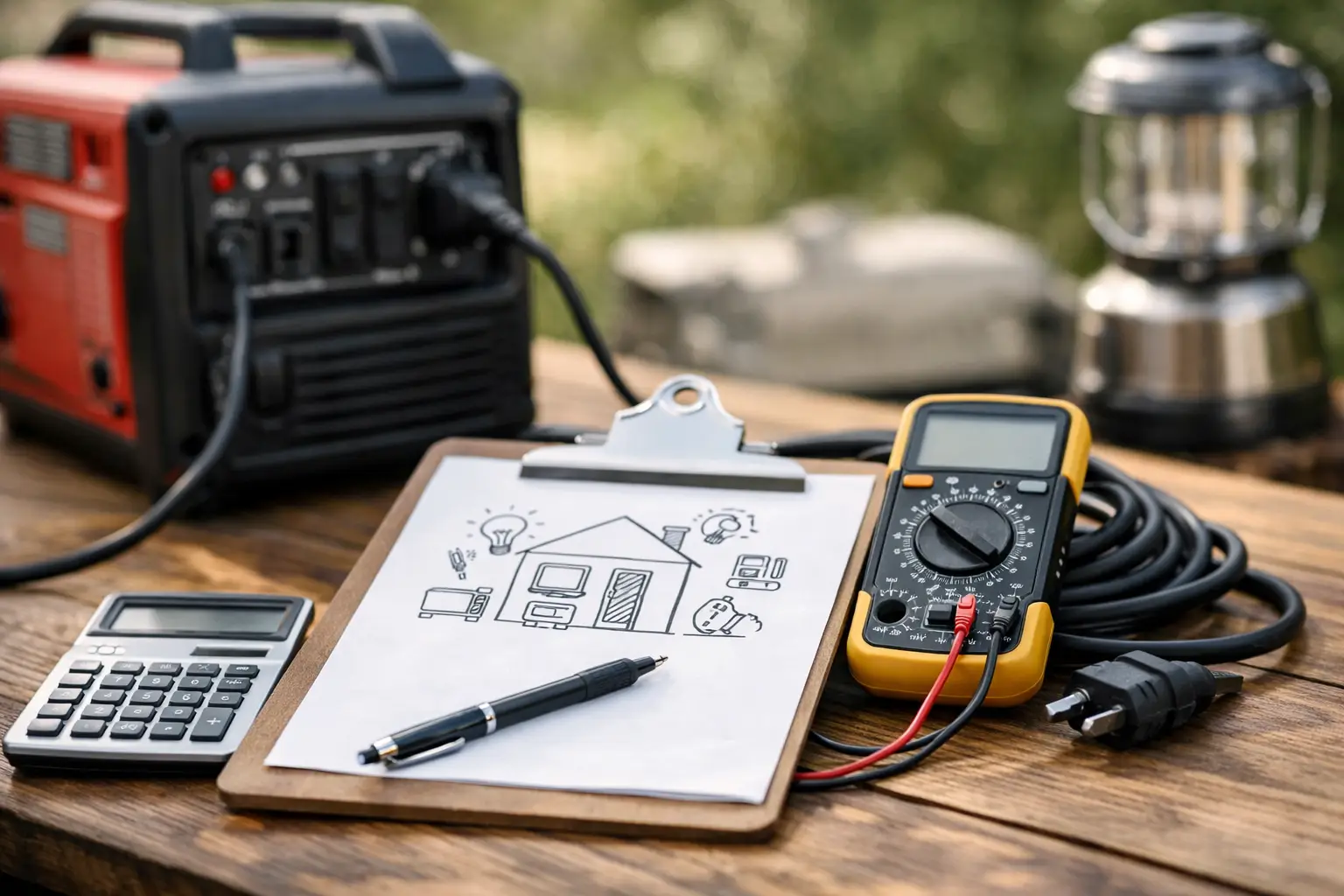
Start with your essentials and write down each item’s running wattage. Then identify which items have motors or compressors and note their starting wattage. Add all running watts for the devices you may use together, then add the single highest startup surge that could occur at that moment.
That last step is often misunderstood. You usually do not add the startup surge for every motor all at once unless they are likely to start simultaneously. In many real-world scenarios, one major surge event is the main concern. Still, if multiple motor loads can cycle together, it is smart to leave extra headroom.
Once you have your estimated total, do not shop right on the edge. Give yourself a safety cushion. A generator operating constantly near maximum output tends to be louder, less fuel-efficient, and more stressful to live with. It also leaves no room for an extra light, charger, fan, or unplanned load during an outage.
For many buyers, that means stepping up one size class from the bare minimum. If your calculation says you need around 3,500 running watts, a model closer to 4,000 to 4,500 running watts may be the better long-term choice, especially for home backup.
Where calculators help most – and where they do not
A generator wattage calculator is excellent for narrowing your buying range. It helps prevent the two most common mistakes: buying too small and overspending on far more capacity than you need.
It is especially useful when comparing inverter generators, conventional portable generators, and
dual-fuel models. Once you know your expected load, you can weigh other factors that actually affect ownership, such as noise level, runtime, fuel type, outlet selection, portability, and whether parallel capability makes sense.
But a calculator is still just a planning tool. It cannot tell you everything about real-world compatibility. Transfer switch setup, 120V vs 240V output, cord sizing, outlet configuration, and neutral bonding details all matter depending on how you plan to connect the generator. That is one reason buyers who only focus on wattage sometimes end up with a generator that is technically powerful enough but poorly matched to their setup.
Choosing the right generator after you calculate
Once your wattage target is clear, match it to your use case instead of chasing the biggest number. For sensitive electronics, an inverter generator is often the better fit because it provides cleaner power and usually runs quieter. That makes it a strong option for camping, RV use, tailgating, and light home essentials.
For heavier home backup or demanding work applications, a
larger portable generator may be the more practical choice. These models often provide better 240V support and more headroom for pumps, compressors, and larger appliances. Dual-fuel options can also be attractive if you want flexibility between gasoline and propane.
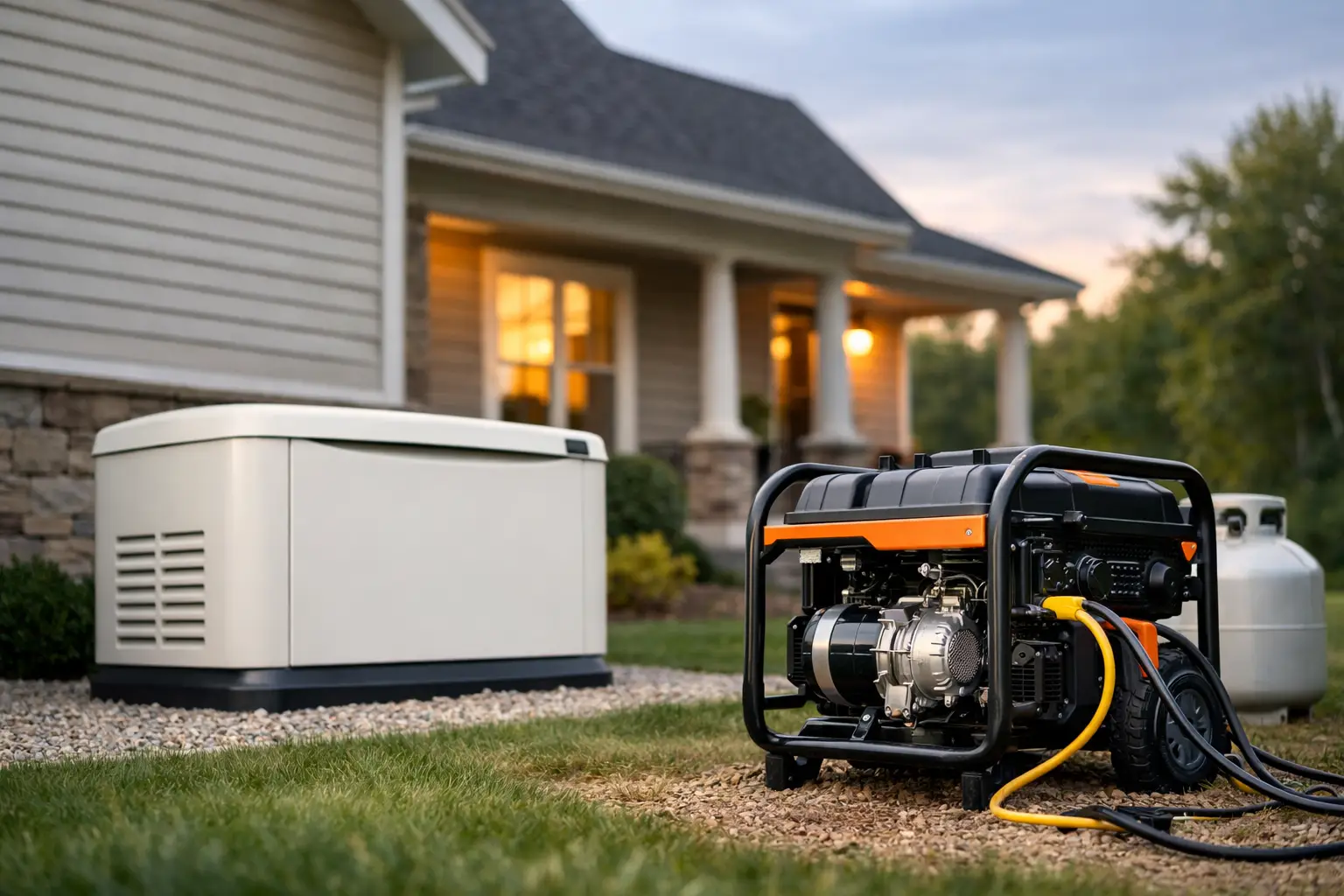
This is where product comparison becomes useful. A 4,000-watt inverter generator and a 6,500-watt conventional generator are not interchangeable just because both can power a basic refrigerator and lights. One may be easier to move, quieter, and better for electronics, while the other may handle larger startup loads and broader home backup duties.
At TopGeneratorsOnline, this is the point where buyers usually benefit most from review-based research. Once the math is done, the better purchase decision comes from matching that number to fuel strategy, outlet needs, runtime expectations, and the kind of ownership experience you actually want.
Common mistakes that throw off your wattage estimate
The biggest mistake is treating all watts as equal. Motor-driven equipment changes the equation, and startup demand is often what separates a generator that works from one that constantly overloads.
Another mistake is counting loads that will never run together. This leads to oversizing and paying for capacity you are unlikely to use. The opposite problem is just as common – forgetting small but essential loads like a modem, pellet stove, battery charger, or medical device.
Fuel choice can also affect output. Some dual-fuel generators produce slightly less wattage on propane than on gasoline. If your calculator result is close to a generator’s limit, that difference matters.
Finally, buyers often ignore future use. If you are already near the upper end of a generator’s capacity, think about whether you may later add a freezer, another tool, or an RV air conditioner. A little planning now is cheaper than replacing an undersized unit later.
A good wattage estimate gives you confidence, not just a number. When you know what you need your generator to run, shopping gets easier, comparisons get clearer, and you are far less likely to regret the purchase the first time the power goes out.