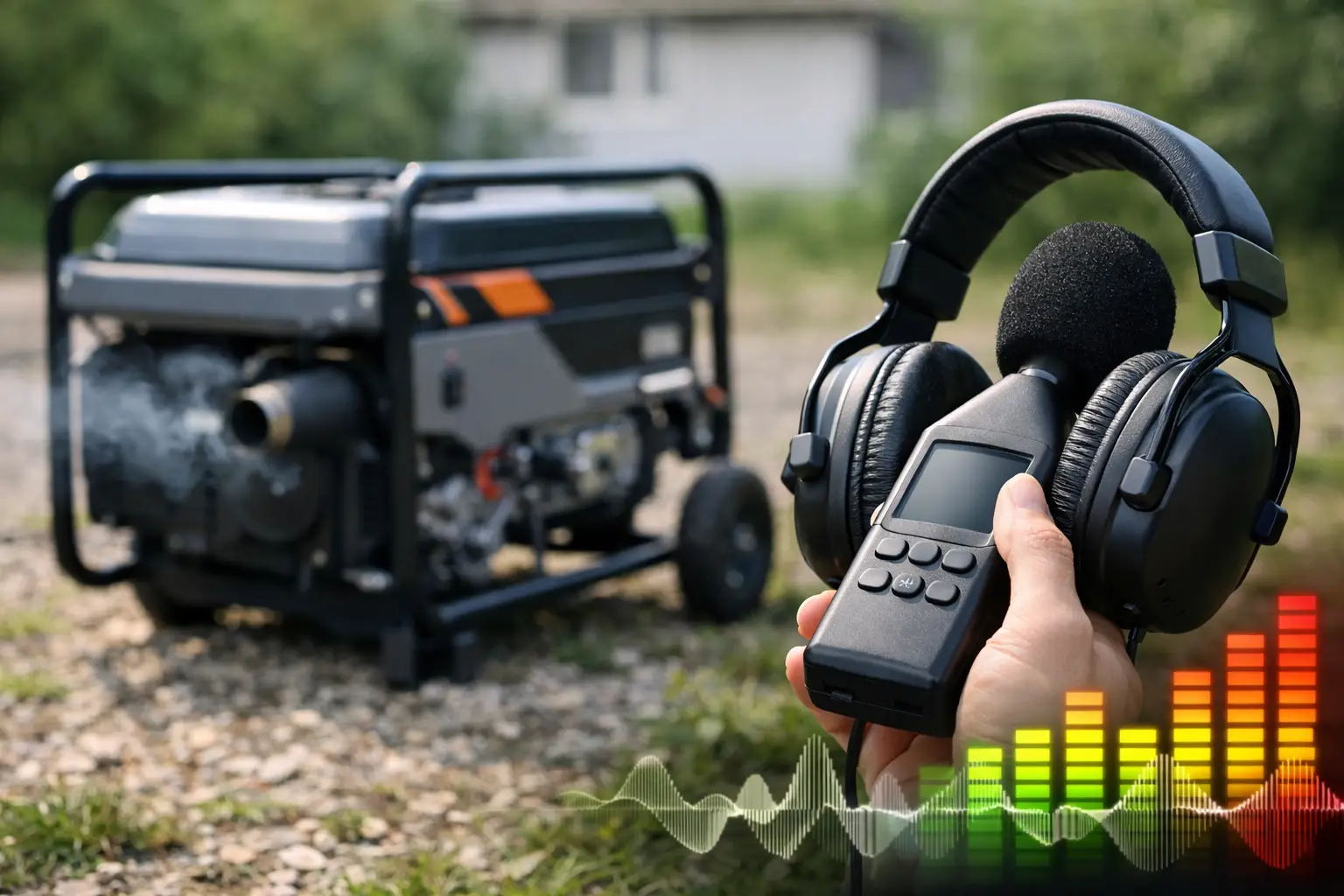
A generator that looks perfect on paper can become a frustrating purchase if it is too loud for where you plan to use it. Generator noise levels affect more than comfort: they can influence campground access, neighbor relationships, jobsite communication, and where you can safely place the unit. Understanding the decibel rating before you buy helps you choose power that will be useful when you actually need it.
What generator noise levels are measured in
Generator sound is measured in decibels, written as dB. The scale is logarithmic, not linear, so a small change in the number can represent a noticeable difference to your ears. A generator rated at 70 dB is not merely a little louder than one rated at 60 dB. Under comparable testing conditions, it produces roughly 10 times the sound intensity.
That does not mean you should compare every published dB number as if it were an exact real-world result. Manufacturers may take readings at different distances, at different electrical loads, and in different environments. A hard driveway, garage wall, or enclosed patio can reflect sound and make the same generator seem much louder than it does in an open field.
For a meaningful comparison, look for a stated measurement distance and load level. Many portable generator specifications use 23 feet or 25 feet, but not all do. A reading at 7 meters cannot be directly compared with a reading taken at 10 feet without considering the distance.
A practical decibel range for generators
Most portable generators fall into a few broad noise categories. These ranges are useful for shopping, but the model’s manual and spec sheet should always be the final reference.
| Typical sound range | What it is like | Common use case | |—|—|—| | 48-60 dB | Similar to quiet conversation or steady rainfall | Camping, RV use, close residential use | | 60-70 dB | Comparable to normal conversation through a loud vacuum-like background | General home backup and light work use | | 70-80 dB | Noticeably loud, especially nearby | Open jobsites and higher-output conventional units | | Over 80 dB | Difficult to ignore at close range | Large open-frame or high-output equipment |
Quiet inverter generators often operate in the lower part of the range, particularly at light load. Models such as the Honda EU2200i, Yamaha EF2200iS, and comparable inverter units from Champion are designed with enclosed housings, smaller engines, and engine-speed controls that reduce sound when demand is low.
Open-frame generators are usually louder. They are often a strong value when you need substantial wattage for a well pump, refrigerator, tools, or several household circuits, but their exposed engine and alternator do less to contain mechanical noise. For a home emergency setup, that trade-off may be reasonable if the generator will sit well away from the house and neighbors. For a campground, it often is not.
Why the advertised dB rating can change in real use
A generator rarely makes one fixed amount of noise. The engine must work harder as you add load, and more engine speed generally means more sound. This is especially noticeable with inverter generators that use an economy mode. Running a few LED lights and charging phones may keep the engine at a modest, quiet speed. Starting a microwave, air conditioner, compressor, or water pump can make it rev sharply.
The load percentage behind a sound claim matters. A generator advertised at 52 dB at 25% load may be significantly louder when supplying 75% of its rated output. That does not make the rating misleading, but it does mean buyers should ask whether the test matches their intended use.
Fuel type also plays a role, although design matters more than fuel alone. Propane can sometimes sound slightly different in operation than gasoline, while dual-fuel models may have their own operating characteristics. A well-designed enclosed inverter unit can still be quieter than a small conventional propane-capable unit.
Maintenance affects noise as well. A loose exhaust shield, worn rubber foot, rattling panel, damaged muffler, or low oil condition can make a generator sound harsher than normal. If an otherwise familiar generator suddenly becomes louder, shut it down after allowing it to cool and inspect it according to the owner’s manual.
Choosing the right noise level for your use
The best generator is not always the quietest one. It is the one that supplies enough starting and running power while fitting the environment where it will operate.
For home backup power
Homeowners should focus on a balance of output, run time, and neighborhood impact. A small inverter generator is easier to live with during an outage, but it may not start a central air conditioner or support multiple high-demand appliances at once. A larger inverter generator or a properly selected open-frame unit may be necessary for more demanding loads.
Consider where the generator will sit during an outage. It must operate outdoors only, well away from doors, windows, vents, and attached garages because of carbon monoxide risk. That distance often helps with noise, too. A longer, properly rated outdoor extension cord or a correctly installed transfer switch can allow safer placement without forcing you to keep the unit next to the house.
For RVs and campgrounds
Noise is often a deciding factor for RV owners. Many campgrounds have quiet-hour rules or generator-hour restrictions, and dispersed camping still calls for consideration when others are nearby. An inverter generator with a low-load economy mode is usually the most comfortable choice for charging batteries, operating small appliances, and supporting modest RV electrical needs.
If you need to run an RV air conditioner, verify both the generator’s output and its noise specification at the likely load. A soft-start device on an air conditioner can reduce startup demand, which may allow a smaller generator to handle the load. It does not make the generator silent, but avoiding constant high-output operation can reduce the overall sound burden.
For jobsites and outdoor work
On an open jobsite, wattage, durability, and receptacle selection may outweigh quiet operation. Still, excessive noise makes communication harder and adds fatigue during long workdays. An inverter generator can be worth the higher upfront cost for crews using sensitive electronics or working in residential areas. For heavier equipment, a larger conventional generator may be the better fit, provided it is positioned so exhaust and noise do not interfere with workers or the public.
How to make a generator quieter without making it unsafe
Placement is the most effective practical tool. Put the generator on a stable, level surface and orient the exhaust away from people and buildings. Increasing the distance between the unit and the listening area can make a major difference, provided you use suitable cords and follow all safety requirements.
Avoid placing a generator in a shed, garage, tent, enclosed porch, or improvised soundproof box. Restricting airflow can overheat the unit, and enclosed operation creates a serious carbon monoxide hazard. A quiet generator is never worth an unsafe setup.
A few simple habits can reduce avoidable noise:
- Keep the unit on firm ground rather than a hollow deck, truck bed, or other surface that can vibrate.
- Use the factory rubber feet or an appropriate vibration-reducing mat on stable ground.
- Tighten accessible fasteners only as directed in the manual, and inspect the muffler and heat shields periodically.
- Turn on economy mode when the generator and connected load allow it.
- Size the generator correctly so it is not constantly operating at its limit.
Portable sound barriers can help only when they are designed and positioned to preserve generous airflow and clear exhaust paths. In most consumer situations, greater distance and smart orientation are safer and more effective than attempting to enclose the generator.
Noise ratings are only one part of the buying decision
A low dB figure is attractive, but it should sit alongside output, surge capacity, runtime, fuel availability, portability, and outlet configuration. A very quiet 2,000-watt inverter generator is an excellent tool for camping or keeping essentials running, yet it may be underpowered for a home with a sump pump, electric water heater, or large HVAC load. Conversely, buying a loud 8,000-watt open-frame model for occasional phone charging and a small travel trailer creates unnecessary noise, fuel use, and storage demands.
When comparing models, write down the appliances or tools you expect to run at the same time, including startup watts for motors. Then compare generators with enough headroom for that load and check how each model reports its sound rating. That approach gives the decibel number context instead of treating it as a standalone promise.
The right generator should provide reassurance, not become another problem to manage during an outage or trip. Choose enough power for the work, give the unit safe outdoor space to operate, and treat a clearly stated noise rating as a practical sign of how comfortably it will fit into your routine.