As an Amazon Associate I earn from qualifying purchases.
When the power goes out, the transfer switch is the part that turns a generator from a loud machine in the driveway into usable backup power inside the house. If you are researching how to connect generator transfer switch equipment, the first thing to know is this: the physical connection itself is straightforward, but the safe, code-compliant installation is not always a DIY job.
For most homeowners, the smart approach is to understand the layout, choose compatible equipment, and handle only the parts that match your skill level. That matters because transfer switch mistakes can backfeed utility lines, damage appliances, or create a serious shock risk.
What a generator transfer switch actually does
A transfer switch safely shifts selected household circuits, or sometimes the whole service, from utility power to generator power. It isolates your home from the grid while the generator is running. That isolation is the entire point.
Without it, plugging a portable generator into a dryer outlet or another improvised connection is dangerous and illegal in many areas. A proper switch prevents power from feeding backward into utility lines, where it can injure lineworkers and destroy equipment.
There are two common types most buyers run into. A manual transfer switch lets you flip selected circuits over when the outage starts. An automatic transfer switch, usually paired with a
standby generator, senses the outage and changes over on its own. If you own a portable generator, you are usually looking at a manual transfer switch or an interlock-style setup approved for your panel.
Before you connect anything, check compatibility
The most common installation problem is not wiring technique. It is buying parts that do not match.
Start with the generator. Check its running watts, surge watts, outlet type, and whether it uses a bonded neutral or floating neutral design. Then check the transfer switch rating. A small 30-amp manual transfer switch paired with a portable generator is common for essential loads like a refrigerator, lights, furnace blower, sump pump, and a few receptacle circuits. Larger systems may use a 50-amp inlet and switch if the generator supports it.
You also need to match voltage. Most home backup setups use 120/240V split-phase generators. If your generator only provides 120V, it may not support a transfer switch intended to feed both legs of a typical home panel.
This is also where inlet boxes, power cords, and breaker sizes matter. A
30-amp generator setup needs components rated for that load throughout the chain. Mixing plug types or undersizing wire is where a simple project starts getting expensive.
How to connect generator transfer switch systems in a typical home
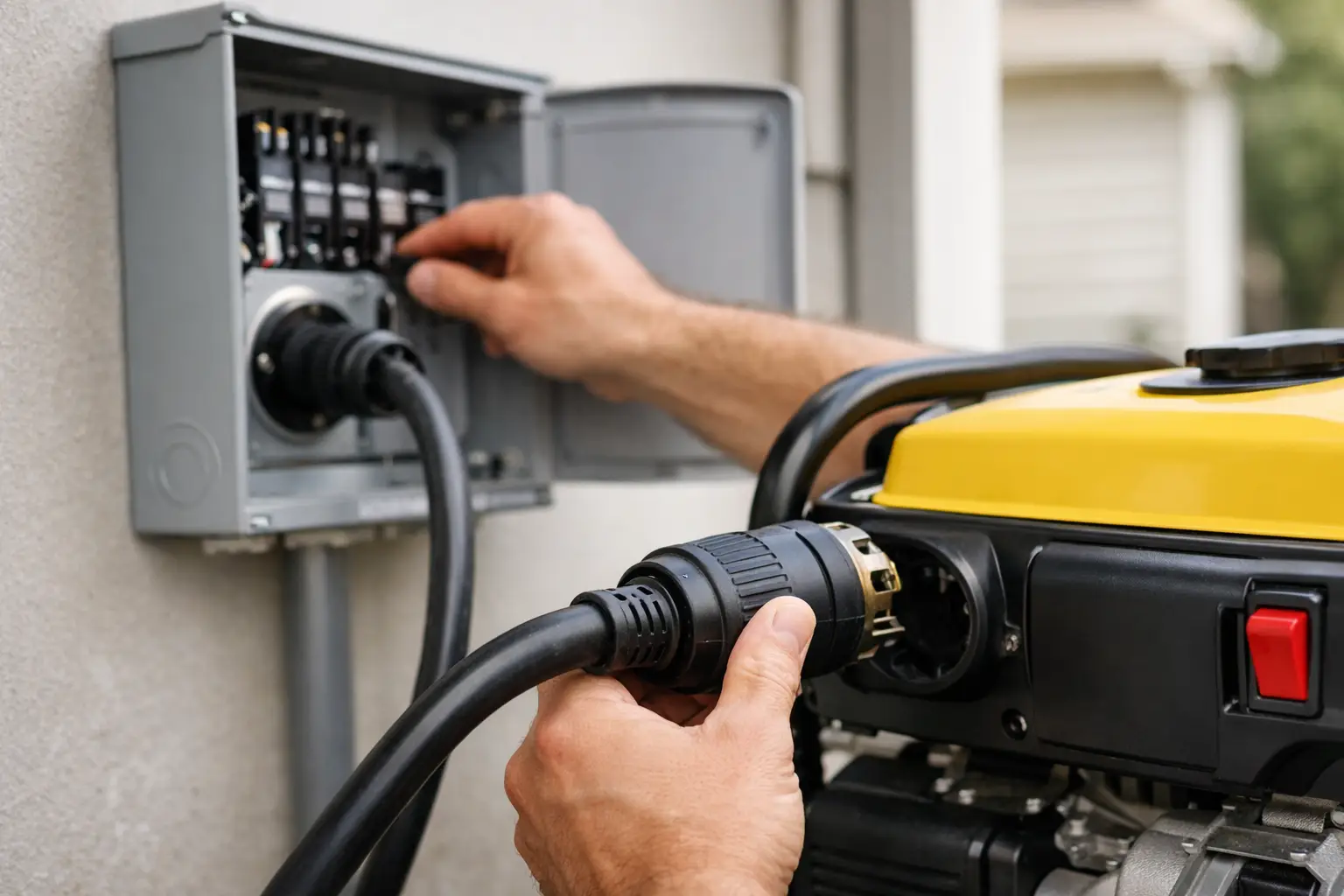
For a portable generator setup, the full system usually follows the same path. The generator stays outdoors. A generator cord runs from the generator outlet to a power inlet box mounted outside the home. Wiring from that inlet box runs to the manual transfer switch, which is installed near the main electrical panel. The selected branch circuits are then routed through the transfer switch.
That is the basic architecture, but the actual installation has several steps that need to be done in the right order.
Step 1: Size the transfer switch for real-world loads
Do not build the system around everything you wish you could run. Build it around what you actually need during an outage.
For many homes, that means refrigeration, some lighting, internet equipment, garage door access, medical devices if needed, and either a furnace blower or a small window AC depending on the season. Electric ranges, central AC units, and electric water heaters usually push portable generators past a practical limit unless you are using a larger unit.
This is where a six-circuit or ten-circuit manual transfer switch can make more sense than a whole-house solution. It costs less, installs more easily, and pairs well with popular
portable models from brands like Champion, Westinghouse, DuroMax, and Generac.
Step 2: Install the inlet box in the right location
The power inlet box is mounted outside where the generator cord can reach it easily, but not so close to windows, doors, or vents that generator exhaust becomes a hazard. The generator itself must stay outdoors and away from the home.
The inlet box wiring then routes indoors to the transfer switch. Wire type, conduit requirements, and conductor size depend on amperage, local code, and the distance of the run. This is one of the points where many homeowners stop and bring in an electrician, and that is usually money well spent.
Step 3: Mount the transfer switch near the main panel
Most manual transfer switches are installed beside the main breaker panel. That keeps branch circuit rerouting short and manageable. During installation, selected household circuits are removed from the main panel and connected through the transfer switch so they can be fed either by utility power or generator power.
This is not the same as adding a simple outlet. You are working inside the service area of the home electrical system, and that means panel compatibility, breaker sizing, grounding, and neutral handling all matter.
Step 4: Connect the selected circuits
Each supported load is assigned to a switch position. A common layout might give one switch to the refrigerator circuit, one to the furnace, one to kitchen outlets, and another to lighting. Better transfer switch kits include circuit labels and watt meters or load indicators so you can avoid overloading the generator.
This step is where beginners often realize why prewired transfer switch kits are popular. They reduce confusion, especially for homeowners comparing several accessory options online and trying to keep the project manageable.
Step 5: Test the system before you need it
Once installed, the setup should be tested under controlled conditions. That means starting the generator outdoors, plugging into the inlet box, switching the transfer switch from line to generator for the selected circuits, and confirming that each load operates correctly.
You also want to check whether the generator handles startup surge well. A refrigerator compressor or sump pump can draw more power at startup than the nameplate suggests. If the generator bogs down, the issue may be sizing rather than wiring.
When this is a DIY job and when it is not
There is a difference between understanding the system and being the right person to install it.
If you are comfortable with generator operation, cord selection, fuel handling, and routine testing, you can absolutely manage the generator side of the setup. You may also be able to mount a generator outdoors, connect the cord, and operate a manual transfer switch after installation.
But if the project involves opening the main panel, adding breakers, routing conductors through finished walls, or verifying bonding and grounding requirements, it usually crosses into electrician territory. In many areas, permits and inspections are required anyway.
That is not a drawback. It is often the cleanest path to a system you can trust during an actual outage.
Common mistakes that cause trouble later
The biggest mistake is treating transfer switches like a convenience accessory instead of a safety device. The second is buying parts based only on price.
Some homeowners buy a 50-amp inlet because it sounds better, then pair it with a 30-amp generator and the wrong cord set. Others choose a transfer switch with more circuits than their generator can realistically support. Another common issue is ignoring neutral configuration. Portable generators with bonded neutrals do not always play nicely with every transfer switch or panel arrangement unless the setup is designed correctly.
This is also why product selection matters. Better transfer switch kits tend to include clearer wiring diagrams, labeled harnesses, and circuit wattage guidance. If you are comparing options, those details are not fluff. They reduce mistakes.
Manual transfer switch vs interlock kit
If you are still deciding what to buy, it helps to know that a transfer switch is not your only option. An interlock kit lets the main breaker and generator backfeed breaker operate safely in a mutually exclusive way, assuming the panel is approved for that kit.
Interlock kits can be more flexible because they let you choose which circuits to energize at the main panel, rather than limiting you to a fixed set. On the other hand, a manual transfer switch is often easier for less experienced homeowners to operate and understand. It also gives a cleaner, more controlled setup for essential circuits.
If your priority is simplicity, a manual transfer switch is often the better fit. If your priority is flexibility and your panel supports it, an interlock may be worth a closer look.
How to use the system safely after installation
Once the transfer switch is installed, safe use is mostly about routine. Keep fresh fuel or a fuel plan ready, run the generator monthly if the manufacturer recommends it, and test the transfer process before storm season. Label your essential loads clearly so nobody tries to run the microwave, space heaters, and well pump at the same time on a small portable unit.
It also helps to keep the right accessories together – generator cord, weather cover if appropriate, funnel, oil, and maintenance items. The transfer switch is only one part of a reliable backup setup. The rest is preparation.
A good transfer switch installation should make outage response feel boring, and that is exactly what you want. When the lights go out, the best system is the one you do not have to second-guess.