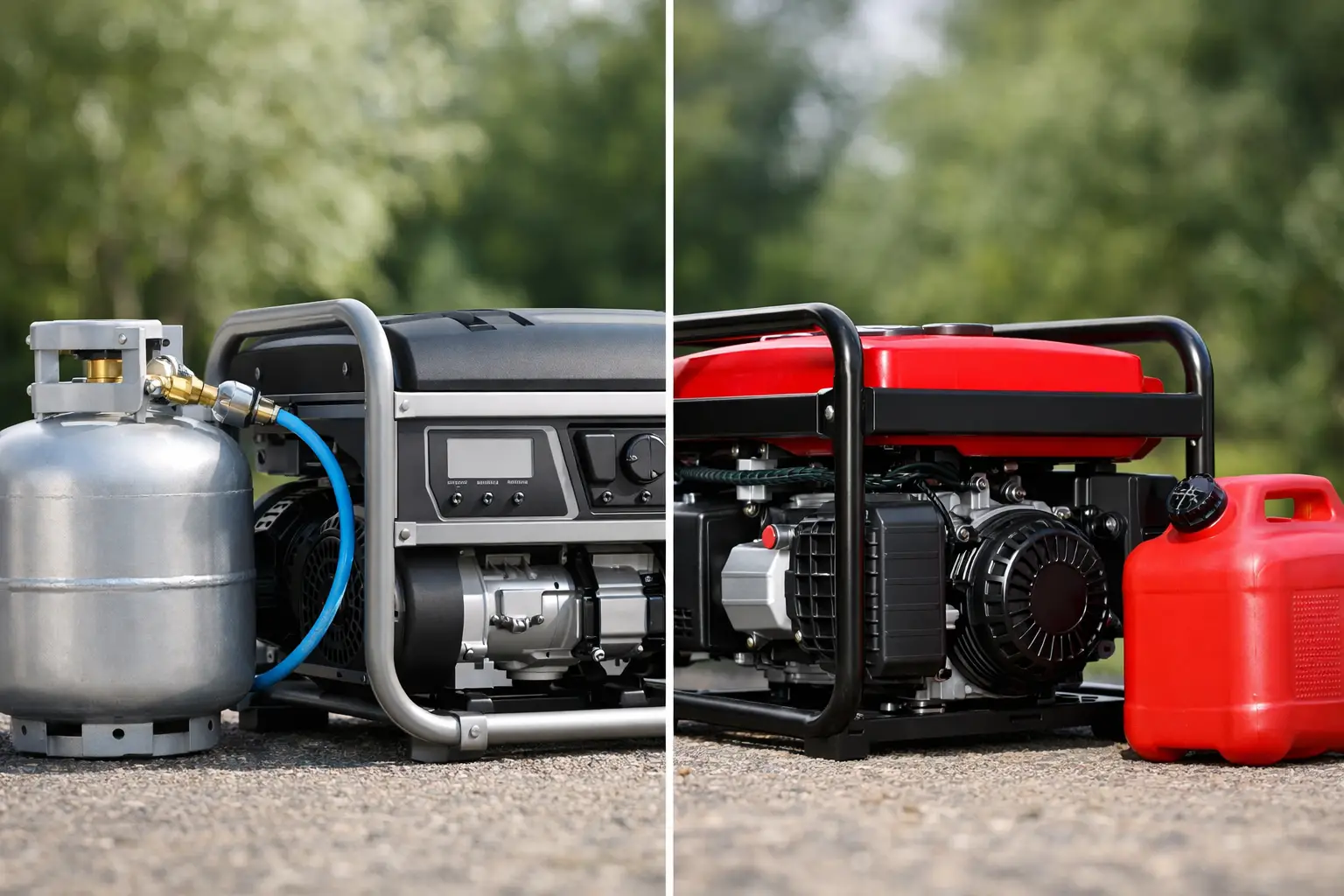
When the power goes out at 2 a.m. or you need reliable electricity at a campsite, the propane generator vs gasoline generator question gets real fast. This choice affects how easily you can store fuel, how much maintenance you deal with, how long your generator can run, and how confident you feel when you need power most.
For most buyers, there is no universal winner. A gasoline generator may be the better fit for one homeowner, while a propane model makes more sense for an RV owner or anyone focused on long-term emergency storage. The right pick depends on how you plan to use it, how often you expect to run it, and what trade-offs you are willing to accept.
Propane generator vs gasoline generator: what changes in real use?
On paper, these generators can look similar. You will still compare wattage, starting power, outlets, portability, noise level, and whether you want an inverter generator or a conventional open-frame model. The fuel type changes the ownership experience.
Gasoline is easier to find almost anywhere, which matters during storm season and for people who want quick refueling without managing separate tanks. Propane is cleaner-burning, stores longer, and often reduces some of the headaches that come with stale fuel and carburetor issues.
That difference shows up over time. If you use your generator regularly on jobsites or for weekend projects, gasoline may feel simpler and more cost-effective. If you want a backup unit that might sit for months before you need it, propane has a strong advantage.
Fuel availability and storage
Gasoline wins on convenience in normal conditions. It is available at nearly every gas station, and most people are already used to storing at least a small amount for lawn equipment or vehicles. If your generator runs on gasoline, you can usually top off quickly before a storm.
The problem is shelf life. Gasoline does not store well unless you treat it with a stabilizer and rotate it consistently. Even then, storage requires attention. Old gasoline can gum up the carburetor, make starting harder, and lead to maintenance you did not plan for.
Propane is the opposite. It is less casual day to day, because you need filled tanks on hand, but it stores far better. A sealed propane tank does not degrade like gasoline. For emergency preparedness, that matters. You can keep multiple 20-pound tanks or a larger stationary tank ready without worrying about stale fuel in the same way.
For standby-minded homeowners, propane often feels more dependable because the fuel can sit ready for extended periods. For frequent users, gasoline may still be easier simply because refueling is so familiar.
Runtime and efficiency
This is where buyers sometimes get surprised. Gasoline usually provides better energy density than propane, which means a gasoline generator often runs longer on the same size engine and comparable fuel volume. If runtime per tank is a top concern, gasoline often has the edge.
Propane-powered generators can burn through fuel faster under load, especially when connected to smaller portable cylinders. That does not automatically make propane worse, but it does mean you need to think through tank size. Running a portable generator from a standard grill-style propane tank is convenient, but you may need more refills than you expect during an extended outage.
If long runtime is critical, a larger gasoline tank can be very practical. On the propane side, pairing a generator with a larger external tank changes the equation and can make propane much more appealing.
Starting reliability and maintenance
This is one of propane’s strongest selling points. Propane burns cleaner than gasoline, and that tends to reduce deposits inside the engine and fuel system. A propane generator that sits unused for long periods is less likely to suffer from the classic stale-fuel carburetor problem.
Gasoline generators need more fuel-system attention. If you forget to drain the carburetor, skip the stabilizer, or store fuel too long, starting can become frustrating. That does not mean gasoline generators are unreliable. It means they reward owners who stay on top of maintenance.
For a buyer who wants minimal hassle, propane is appealing. For someone comfortable with regular maintenance and fuel rotation, gasoline remains a solid option.
Many
dual-fuel generators exist for this exact reason. A dual-fuel inverter generator or portable backup model lets you run propane for storage convenience and switch to gasoline when you want easier access or longer runtime. That flexibility is often worth paying for if your needs vary across home backup, camping, and storm prep.
Power output and performance under load
When comparing propane generator vs gasoline generator performance, gasoline typically delivers slightly more power from the same engine. Many dual-fuel generators list a higher starting wattage and running wattage on gasoline than on propane.
That gap may be small, but it matters if you are close to the limit. If you need to start a
well pump, a refrigerator, a sump pump, or a larger window AC unit, every bit of starting wattage counts. In those cases, gasoline can offer more headroom.
For lighter loads like charging devices, running lights, powering a TV, or supporting a few kitchen essentials, propane’s lower output may not matter much. The real question is whether your expected load leaves enough margin.
This is where product selection matters more than fuel type alone. A high-quality inverter generator from brands buyers commonly compare, such as Champion, Westinghouse, DuroMax, or Honda, can outperform a weaker unit regardless of fuel choice if the sizing is right.
Cost to operate
Fuel cost depends on your local market, season, and whether you are buying small propane cylinders, refilling larger tanks, or purchasing gasoline at retail pump prices. There is no permanent winner.
In many cases, gasoline offers a lower upfront cost per hour of operation, especially for portable units used regularly. Propane can become more expensive if you rely on small exchange tanks. On the other hand, propane’s cleaner burn and lower fuel-system maintenance may offset some ownership costs over time.
The smarter way to think about cost is total ownership. Ask yourself whether you care more about day-to-day fuel economy or long-term readiness with less maintenance risk. Those are not the same goal.
Best use cases for each fuel type
A gasoline generator often makes more sense for frequent use, high-load applications, and buyers who want the easiest refueling path. It is a strong fit for jobsites, weekend projects, and homeowners who expect to run the generator often enough to keep fuel fresh.
A propane generator is often the better match for emergency backup, occasional use,
RV owners who already use propane, and shoppers who want easier long-term fuel storage. It is especially attractive if your biggest fear is pulling out the generator during an outage and finding that old fuel caused starting problems.
Campers and tailgaters often lean propane because it is cleaner to handle and pairs naturally with other propane gear. Homeowners with larger backup demands may prefer gasoline, unless they already have a propane storage setup.
Which should you buy?
If you want the simplest answer, buy based on your usage pattern, not on marketing claims. Choose gasoline if you run your generator often, need maximum output for the engine size, and do not mind fuel management. Choose propane if you value storage life, cleaner operation, and lower risk of fuel-related maintenance problems.
If you are stuck between the two, a dual-fuel generator is often the most practical compromise. It gives you options during outages and makes the generator more adaptable over time. For many TopGeneratorsOnline readers, that flexibility ends up being the best long-term value, especially when the generator may serve home backup one month and camping duty the next.
The best generator is not the one with the most claims on the box. It is the one you can fuel, start, and trust when the lights go out.