As an Amazon Associate I earn from qualifying purchases.
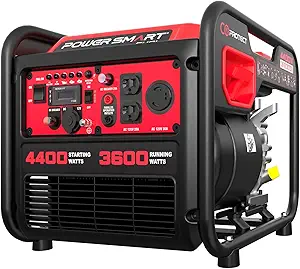
The PowerSmart DL5040C is a 4,400-watt portable inverter generator designed for home backup, RV use, camping, job sites, and other situations where portable gasoline power is needed. It produces 4,400 starting watts and 3,600 running watts, giving it enough capacity for many essential appliances, tools, and RV equipment without moving into the much larger class of whole-home standby generators.
The DL5040C uses a 223cc four-stroke OHV engine and inverter technology, with a 120V 30A outlet that makes it particularly relevant to RV owners as well as homeowners and campers. It also includes Eco mode, overload protection, low-oil shutdown, carbon monoxide detection, and parallel ports. These features make the generator more versatile than a basic conventional portable generator, although its gasoline-only design and 3,600-watt running capacity are important considerations before buying.
One of the main reasons to consider the DL5040C is its inverter design. PowerSmart describes the generator as providing clean, stable power for electronics, while Eco mode can reduce engine speed when electrical demand is lower. Its CO detection system adds another layer of protection, but it does not change the basic rule for portable generators: the unit must always be operated outdoors and away from doors, windows, vents, and other openings.
Here are the key PowerSmart DL5040C specifications to know before buying. Because product listings can change, check the current listing and owner’s manual for the exact configuration being sold.
PowerSmart DL5040C Specifications
| Feature | PowerSmart DL5040C Specification |
|---|---|
| Model | PowerSmart DL5040C |
| Starting Power | 4,400 watts |
| Running Power | 3,600 watts |
| Fuel Type | Gasoline |
| Engine | 223cc 4-stroke OHV |
| Fuel Tank | 1.6 gallons |
| Runtime | Up to about 11 hours at 25% load; about 5.1 hours at 50% load |
| Voltage | 120V |
| AC Outlets | 2 × 120V 20A + 1 × 120V 30A |
| DC Output | 12V DC |
| Parallel Capability | Yes |
| Start Type | Recoil |
| Inverter Technology | Yes |
| CO Protection | CO detection/shutdown |
| Safety Features | Low-oil shutdown and overload protection |
| Eco Mode | Yes |
| Warranty | 2-year limited warranty |
| Noise | About 59 dBA at 25% load and up to about 76 dBA at full load, measured from 23 ft |
Important: Runtime depends heavily on electrical load. The commonly cited 11-hour figure applies to a much lighter 25% load, not continuous operation at half or full capacity.
Power and Performance
The PowerSmart DL5040C uses a 223cc four-stroke OHV engine and produces 4,400 starting watts with 3,600 running watts. That distinction matters: 4,400 watts is the short-term starting capacity, while 3,600 watts is the output users should use when calculating the generator’s sustained electrical load.
The 3,600-watt running capacity can handle a useful combination of household essentials, electronics, refrigerators, lighting, and selected power tools, provided their combined running and startup demands remain within the generator’s limits.
High-draw appliances require more careful planning. Electric space heaters, air conditioners, pumps, microwaves, and large power tools can consume a significant portion of the available capacity. Some equipment also requires substantially more power when its motor starts.
For practical use, the DL5040C makes the most sense when you need portable 120V power rather than whole-house backup. Before connecting several appliances, calculate their running watts and startup requirements and keep the total within the generator’s operating limits.
Fuel Efficiency and Runtime
The DL5040C uses a 1.6-gallon gasoline tank, and runtime depends heavily on electrical load. Current product information lists approximately 5.1 hours at 50% load, while the longer 11-hour figure is associated with a much lighter 25% load.
In other words, the generator should not be expected to run for 11 hours while delivering half of its rated output.
Eco mode can reduce engine speed when electrical demand is lower, which can help reduce fuel consumption during lighter loads. For emergency use, however, it is better to plan around the actual appliances you need to operate rather than relying on the maximum advertised runtime.
This difference becomes important during a power outage. Running a refrigerator, several LED lights, a modem/router, television, and phone chargers is very different from running an air conditioner, electric heater, microwave, or other high-wattage appliances at the same time.
Noise Level and Real-World Use
The DL5040C is marketed as a low-noise inverter generator, but its noise level depends on how hard the engine is working. Current specifications list approximately 59 dBA at 25% load and up to about 76 dBA at full load when measured from 23 feet.
That means it can be relatively unobtrusive when powering lighter loads, while operation becomes noticeably louder as electrical demand increases. This makes the DL5040C more suitable for camping, RV use, and residential backup than many conventional open-frame generators, but buyers should not interpret “quiet” as silent.
If you plan to use the generator in a neighborhood or campground, local noise rules and campground quiet hours still apply.
Portability and Design
The DL5040C is built as an open-frame inverter generator, giving it a different design from the fully enclosed suitcase-style inverter generators often used for camping. Its compact footprint makes storage easier than with many larger conventional generators, while its relatively manageable size makes it practical to move when necessary.
Keep in mind that a generator in this power class is still substantial equipment. For loading it into a vehicle or moving it over uneven ground, having another person available can be useful.
Its open-frame construction also means buyers should think about where they will store and operate it. Keep the generator protected from weather when it is not being used and always follow the manufacturer’s operating instructions.
Outlets and RV Compatibility
The DL5040C’s control panel provides two 120V 20A household-style outlets, a 120V 30A outlet, and a 12V DC outlet. It also includes parallel ports for connecting a compatible generator setup when additional capacity is required.
The 30A outlet is particularly relevant to RV owners because it gives the generator a more direct way to supply compatible RV equipment. For homeowners, the two 120V 20A outlets are useful for distributing power among appliances, lights, chargers, and other equipment.
Before connecting a load, check its running and starting wattage. A generator’s total wattage rating does not mean every outlet can independently deliver the full 3,600 watts.
The generator is also designed for parallel operation with a compatible unit and the appropriate parallel equipment. This can increase the available power of the combined setup, but compatibility and the manufacturer’s instructions should be checked before connecting two generators.
Safety Features and Carbon Monoxide Protection
The DL5040C includes several features intended to protect the generator and reduce operating risks. These include low-oil shutdown, overload protection, and a carbon monoxide detection system designed to shut the generator down when dangerous CO conditions are detected.
The CO system should never be treated as permission to operate the generator indoors. Portable gasoline generators must be operated outdoors in a well-ventilated location and kept well away from doors, windows, vents, and other openings where exhaust could enter a building.
Overload protection helps protect the generator when the connected electrical demand becomes excessive, while low-oil shutdown is designed to help prevent engine damage. These features are useful, but they do not replace basic generator safety practices or the instructions in the owner’s manual.
Never operate the generator inside a home, garage, basement, shed, or other enclosed or partially enclosed area. Carbon monoxide is colorless and odorless, and the risk remains even when doors or windows are open.
Starting and Maintenance
The DL5040C uses a recoil-start system. Starting a gasoline generator is straightforward when the correct fuel, oil level, choke position, and startup procedure are followed, but cold starts can require more attention than simply pressing a button.
Regular maintenance should include checking the engine oil, inspecting the air filter, maintaining the spark plug, and following the manufacturer’s recommendations for fuel storage and service intervals.
Fuel also deserves attention if the generator will sit unused for an extended period. Gasoline can deteriorate during storage, so follow the manufacturer’s recommendations for fuel stabilization, draining, and long-term storage.
The owner’s manual should be the final reference for maintenance procedures, oil specifications, inspection intervals, and storage requirements.
What Can a 4,400-Watt Generator Run?
A 4,400-watt generator such as the DL5040C can power a useful selection of household and recreational equipment, but the exact combination depends on startup and running wattage.
For example, a refrigerator, several LED lights, a modem/router, television, phone chargers, and other small electronics can generally be easier to manage than several high-draw heating or cooling appliances running at the same time.
RV owners should also pay attention to air-conditioner startup requirements. A generator that can handle the normal running load may still struggle if an appliance has a high starting surge.
The safest approach is to add the running wattage of everything you expect to use and then account for the highest startup demand. Keep the total below the generator’s 3,600-watt continuous rating and follow the owner’s manual for operating limits.
If you are preparing for a power outage, make a list of the appliances you consider essential before you need the generator. This makes it much easier to determine whether 3,600 running watts is enough for your particular situation.
Who Is the PowerSmart DL5040C Best For?
The DL5040C makes the most sense for buyers who need portable gasoline power in the 3,600-running-watt range rather than a whole-home standby system.
It may be a good fit for:
- Homeowners who want temporary backup power for selected appliances and electronics during an outage.
- RV owners who need a 120V 30A connection and portable gasoline power.
- Campers and tailgaters who need more capacity than a small 1,000- or 2,000-watt inverter generator can provide.
- DIY users and contractors who need portable power for compatible tools.
- Buyers who want inverter technology rather than a traditional conventional generator.
It may not be the right choice if:
- You need automatic whole-house backup.
- You want to run several high-wattage appliances simultaneously.
- You need an electric-start generator.
- You want a dual-fuel or tri-fuel model.
- You need an extremely quiet enclosed inverter generator.
The most important question is not simply whether the generator produces 4,400 watts. It is whether 3,600 running watts is enough for the specific combination of appliances you plan to use.
PowerSmart DL5040C Pros and Cons
Pros
- 4,400 starting watts and 3,600 running watts
- Inverter technology for clean, stable power
- 120V 30A outlet for RV applications
- CO detection and automatic shutdown
- Eco mode for lighter loads
- Low-oil shutdown and overload protection
- Parallel capability
- Relatively compact for its power class
Cons
- Gasoline-only operation
- Recoil start rather than electric start
- Full-load noise is considerably higher than the light-load rating
- 3,600 running watts limits how many high-demand appliances can operate simultaneously
- Runtime drops substantially as electrical load increases
The DL5040C is therefore better viewed as a portable backup and recreational power source than as a replacement for a permanently installed whole-house generator.
Conclusion
The PowerSmart DL5040C is a portable 4,400-watt inverter generator aimed at homeowners, RV owners, campers, and other users who need gasoline-powered backup electricity without moving up to a much larger generator. Its 3,600 running watts, 120V 30A outlet, inverter technology, Eco mode, parallel capability, and CO protection give it a useful combination of features for its class.
The biggest point to understand before buying is the difference between starting and running power. The DL5040C is rated for 4,400 starting watts but 3,600 running watts, and its runtime depends heavily on load. The commonly listed 11-hour figure applies to a lighter 25% load, while current product information lists approximately 5.1 hours at 50% load.
For someone looking for a portable inverter generator for selected home loads, RV equipment, camping, or job-site use, those specifications are more useful than simply focusing on the 4,400-watt headline number.
Before purchasing, calculate the running and startup wattage of the equipment you actually plan to operate and verify the current configuration and warranty terms. If the DL5040C matches those requirements, it offers a practical middle ground between smaller portable inverter generators and much larger backup systems.